








Description: Top-Rated Concrete Batching Plant Manufacturer: 20+ Years of Engineering Excellence. Find your ideal concrete plant supplier! High-quality concrete batch plants designed for optimal mix concrete.
Let’s talk about what actually happens when a mixing facility goes down in the middle of a massive 500-yard continuous pour. Your mixer trucks are stacked up at the gate. The concrete is getting hot in the drums. The site superintendent is screaming on the phone.
This is the ugly reality of the construction machinery business. If your iron isn’t heavy enough to handle the daily grind, you bleed money.
For over twenty years, ماكينات تونغشين has been building equipment for operators who physically cannot afford downtime. We don’t just assemble steel; we operate as a dedicated مصنع خلط الخرسانة manufacturer focused strictly on the brutal, high-wear realities of making cement and rock mix perfectly every single day.
Let’s dig into what actually matters when you’re looking at concrete batch plants, how to avoid buying junk, and how to spec the exact system you need.
H2 The Financial Trap of “Cheap” Batch Plant Equipment
A lot of purchasing managers jump online, search for the top 10 مصنع خلط الخرسانة manufacturers worldwide, and immediately look for the lowest bottom-line number. That is usually how a business goes broke.
The initial price tag of a mix concrete plant means nothing if the gearboxes burn out after three months. The true cost of any plant includes your daily operational overhead and your mechanical downtime. When a cheap pneumatic valve sticks on a foreign-built rig, the entire site stops. Production of concrete halts.
As a veteran مصنع خلط الخرسانة supplier, we engineer out those stupid, preventable weak points. We use oversized drives. We weld thicker steel on the aggregate bins. We use standard electrical contactors so you aren’t held hostage by a plant manufacturer when you need a $50 part on a Saturday morning.
H2 Stationary vs. Mobile Concrete Batch Plant: Pick Your Battles
Selecting the right مصنع خلط الخرسانة is about knowing your land, your contracts, and your timeline. Let’s break down what works where.
H3 When to Build a Stationary Concrete Batching Plant
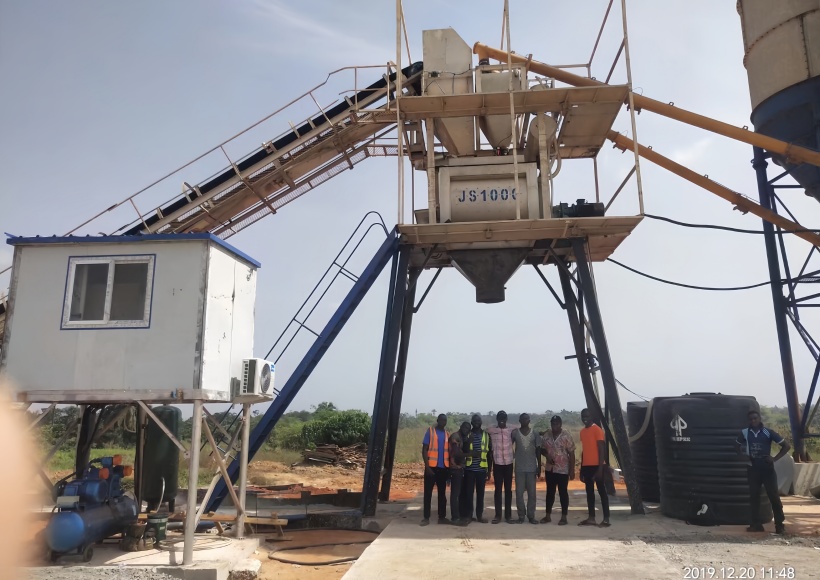
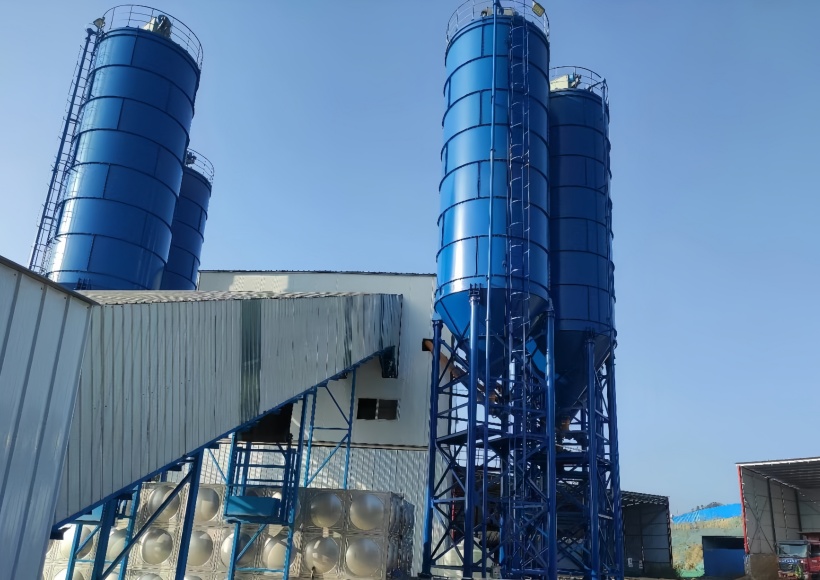
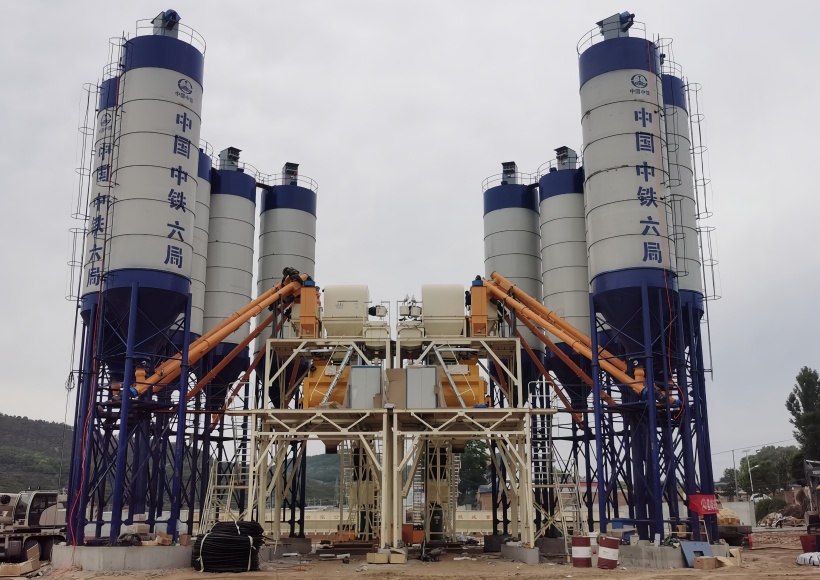
A permanent, stationary مصنع خلط الخرسانة is the heavy-duty workhorse of the concrete industry. These setups are anchored deep into the ground and are built to pump out massive volumes—anywhere from 60 to over 240 cubic meters an hour.
- Where they belong: Massive commercial ready-mix concrete yards, high-output precast concrete yards, and any serious block making plant.
- The reality: Stationary rigs let you stack massive aggregate hoppers and multiple high-capacity silos. You get unmatched wet mix consistency. But don’t kid yourself—they take serious civil engineering, massive footings, and weeks to fully erect and wire. If you want to supply the local metro area with high-quality concrete for the next decade, a stationary setup is what you buy.
H3 The Argument for Mobile Batch Plants
A mobile concrete batch plant totally flips project logistics. The whole system—the concrete mixer, the weigh scales, the control room—sits on a towable chassis.
- Where they belong: Highway paving jobs, remote wind turbine foundations, and temporary civil projects.
- The reality: A mobile batch plant requires almost zero foundation work. You drag it to the dirt, stand it up, and you can produce concrete in a matter of days. Yes, mobile concrete plants usually have smaller aggregate storage compared to stationary units. But if you bid on remote infrastructure jobs, towing your own portable concrete batching setup gives you a ridiculous advantage over guys paying for long-haul transit mixer deliveries.
H2 The Guts of the Machinery: What You Are Actually Buying
A concrete mixing plant isn’t just a giant blender. It is a massive, violent scale. It has to weigh sand, gravel, water, cement, and harsh chemical admixtures with dead-on accuracy, batch after batch.
H3 The Mixer Itself
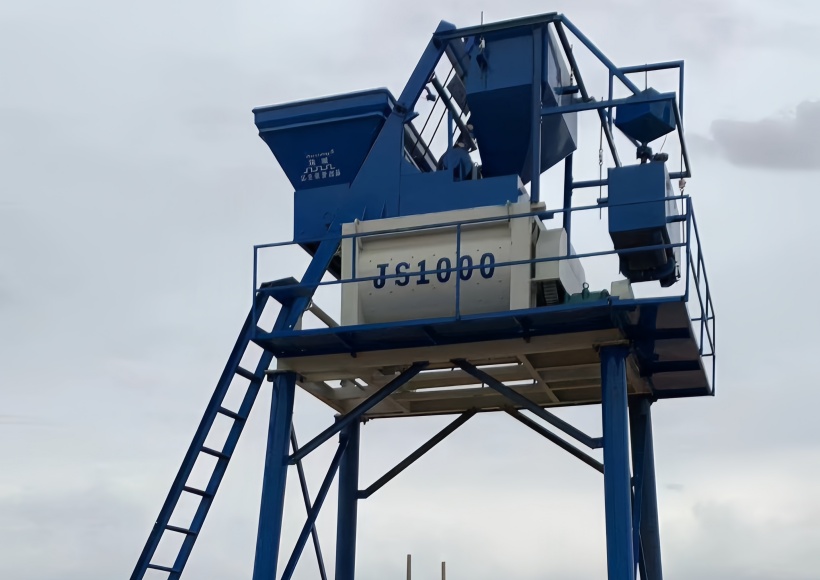
If you are running a wet mix plant, the twin-shaft concrete mixer is your bread and butter. Cheap equipment manufacturers throw thin liners in there that get chewed up by crushed rock in a few months. We line our twin-shafts with high-chromium wear plates. It costs us more to build, but your maintenance guys won’t be in there with a welding torch every weekend.
H3 Batch Plant Controls
You can have the best iron in the world, but if the software is lagging, your mix is trash. Some guys in the industry push super complex networks, like the new smartvh™ plant monitoring system. Those are fine. But our control cabins rely on brutally reliable, industrial PLCs. We give you 1% scale accuracy and instant moisture compensation without requiring a software engineering degree to run the screen.
H3 Dry Mix vs. Wet Mix
Know what you are getting into. A dry mix concrete plant just drops the raw materials into a transit truck, and the truck does the mixing on the road. A wet mix setup uses a central mixer to blend everything before it drops. If you are doing strict structural specs where the strength of concrete is heavily tested, wet mix is the only way to guarantee tight quality control.
H2 Where We Sit in the Global Market
If you are hunting for the best مصنع خلط الخرسانة, you’ll eventually look at the largest construction machinery manufacturers out there.
There are massive multinational company names dominating the space. You’ve got the heavy German company players like Liebherr and Putzmeister. You see Elba concrete plant systems out there. In the states, the Vince Hagan company builds solid plant equipment. These major construction machinery manufacturers build everything—from a massive tower crane down to a self-loading concrete mixer and a boom concrete pump.
So why buy from ماكينات تونغشين?
Because we don’t build cranes. We don’t mess with self-loading concrete mixers. Our company is a leading, hyper-focused manufacturer of محطات خلط الخرسانة. That is all we do.
When you buy from the top 10 concrete equipment giants, you pay a massive premium just for the paint job and the corporate overhead. As a major plant manufacturer in China, we deliver the exact same production capacities and use the same tier of pneumatics. We just don’t charge you for a nameplate. We exist to give you top-tier concrete mixing stations at a price that actually lets you see a return on investment this decade.
H2 The Bottom Line on Choosing Your Supplier
Buying heavy equipment for concrete is a marriage. Do not buy from a broker who will vanish when a belt tears. Deal directly with a manufacturer of concrete mixing equipment.
Ask the hard questions. Ask what the real discharge rate is, not just the theoretical maximum on the brochure. Make sure they send actual technicians to your site to help your crew commission the concrete equipment.
Stop losing sleep over inconsistent ready-mixed concrete and broken machinery. ماكينات تونغشين builds standard and custom plants designed to take a beating and keep running.
Take a hard look at our specs, review the layouts, and see why independent contractors trust our gear. Check out our full lineup of heavy-duty iron here: مصنع خلط الخرسانة.
Call our engineering desk. Tell us your target output, what kind of mix you’re pouring, and your yard dimensions. We will tell you exactly what you need to get the job done.
H2 الأسئلة الشائعة (FAQ)
H3 1. How long does it actually take to set up a stationary plant?
If your concrete footings are fully cured before we arrive, our crew usually gets the mechanical erection and electrical wiring done in about 10 to 14 days. Weather and local crane availability will dictate the final timeline.
H3 2. Do I have to buy replacement wear parts directly from you?
No. We purposely use standard high-chromium blades and liners. While we stock them, you aren’t locked in. You can easily source replacement pneumatics or bearings from your local industrial supply house if you are in a rush.
H3 3. Will you help us figure out the yard layout before we buy?
We have to. If your mixer trucks can’t turn around efficiently, the plant is useless. You provide your land dimensions, and our engineering team will draft the 2D and 3D traffic flow layouts before any money changes hands.
H3 4. Can your control cabin software talk to our existing dispatch system?
Almost always. Our PLCs push out standard data formats. If you happen to run a highly customized or older dispatch setup, just have your IT guy call our electrical engineers to map out the API handshake.
H3 5. What exactly isn’t covered by your warranty?
Wear items. Things like mixer paddle liners and rubber conveyor belts will naturally wear out, and their lifespan depends entirely on how abrasive your local rock is. We cover the structural steel, motors, and electronics for 12 months.