








Most procurement managers approach bulk powder storage with a dangerously simplified mindset: pick a capacity, pour a concrete slab, and bolt the steel down. If you run a concrete batching plant or a large-scale manufacturing facility, you already know that this brochure-level thinking is exactly how you end up with collapsed structural legs, massive product bridging, or a silo roof blown off by an over-pressurized pneumatic truck.
Storing 50 to 500 tons of cementitious materials is not just about volume. It is an exercise in managing fluid dynamics, dynamic structural loading, and geotechnical uncertainties. We are going to strip away the marketing fluff and look at the actual physics, logistical nightmares, and hard numbers behind specifying and installing a cement silo that won’t become a massive liability on your site.
Forget the Brochure: Capacity vs. True Working Volume
The first mistake rookies make is confusing water volume with usable powder capacity. You might order a 100-ton silo, but if you do not understand the bulk density fluctuations of your specific material, you are in for a rude awakening.
Standard Portland cement generally has an aerated bulk density around 1,100 to 1,200 kg per cubic meter, but when it settles and packs down after sitting for three weeks, that number jumps to 1,500 kg per cubic meter. Fly ash behaves entirely differently, often acting like a fluid when aerated and a solid brick when compacted. When determining your required capacity, you cannot just look at a theoretical tonnage chart. You have to account for the angle of repose. Cement typically stacks at a 40 to 45-degree angle inside the cone, meaning the top 10% to 15% of your cylindrical section is essentially dead space. If you need a continuous 100-ton throughput, you better specify a vessel built for at least 115 tons of raw volume.
Nailing Down Your cement silo dimensions
Selecting the physical size of your storage unit is a brutal compromise between your available footprint, local zoning height restrictions, and the absolute hell of over-the-road freight logistics.
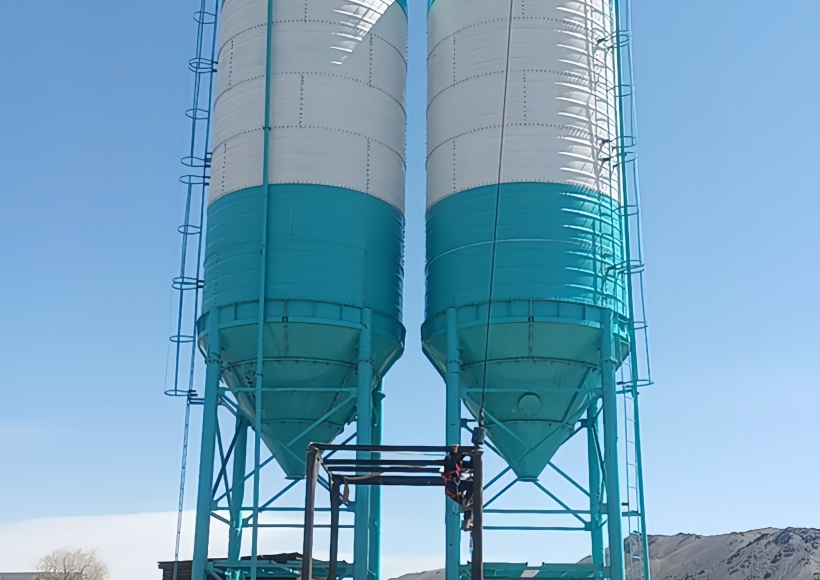
Let’s talk about the 50 to 200-ton standard configurations first. A typical 100-ton single unit usually runs about 3 meters in diameter. Why 3 meters? Because once you exceed 3.2 meters, you cross into oversized load territory in most jurisdictions. You are suddenly paying for escort vehicles, specialized routing, and highway permits that will destroy your equipment budget before the steel even arrives at your plant.
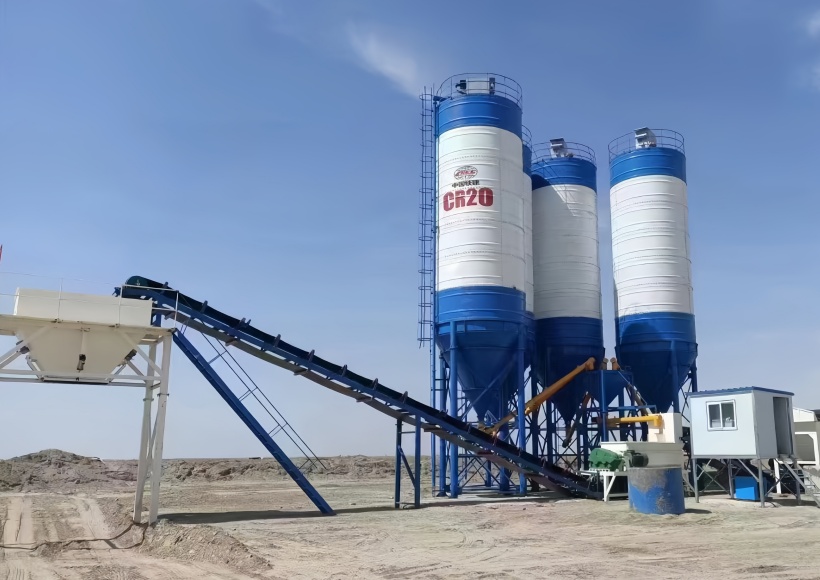
When evaluating your cement silo dimensions, you must balance diameter against height. If you have tight yard space, you push the height. But driving a silo up to 15 or 18 meters drastically changes the wind load moment at the base. A tall, skinny storage silo acts like a massive sail. If you are operating in a coastal area or a high-wind zone, the structural engineer will demand heavily reinforced stiffeners along the cylinder and oversized gussets at the leg attachments to prevent deformation.
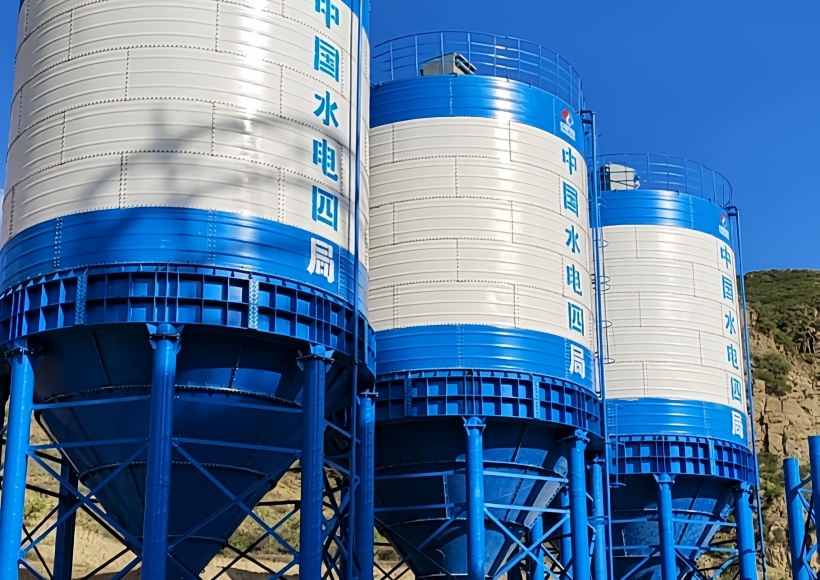
For high-capacity needs pushing up to 500 tons, you generally abandon standard shop-welded silos entirely. You pivot to bolted silos. These large-diameter modular units are shipped in panels and assembled on-site. While this solves the transportation bottleneck, it introduces a new risk: installation time and seal integrity. A poorly torqued bolt or a compromised rubber gasket during assembly means moisture infiltration. One heavy rainstorm, and you just manufactured a 500-ton concrete plug inside your own storage tanks.
This is where partnering with a hardened manufacturer like Tongxin Inji becomes non-negotiable. You need fabricators who understand plate thickness transitions—using thicker steel at the lower tiers where the hoop stress is immense, and tapering the thickness higher up to reduce dead weight and save costs without sacrificing rigidity.
The Bridging Nightmare: Cone Angles and Discharge Mechanics
Ask any batch plant operator what keeps them awake at night, and they will tell you it is material flowability. Cement is a miserable material to handle. It is hygroscopic, abrasive, and prone to ratholing and bridging.
Gravity discharge is a myth when it comes to bulk powder. If your silo cone angle is too shallow—say, less than 60 degrees—the friction against the steel walls will overpower the pull of gravity. The powder will form an arch across the outlet, and production stops dead.
To prevent cement from clumping and ensure a smooth discharge into your screw conveyor, you need an aggressive mechanical and pneumatic intervention system. This means installing aeration pads or fluidizing nozzles in the lower third of the cone. When compressed air is pulsed through these pads, it reduces the friction coefficient between the cement particles, restoring fluidity. However, inject too much air, and the material flushes right past your butterfly valve, flooding your weigh batcher and ruining your concrete mix design. It requires precise pressure relief valves and a dialed-in pneumatic system.
Foundation Requirements: Where Budgets Go to Die
I have seen companies spend $50,000 on a premium clinker silo only to drop it on a highly compromised, under-engineered concrete slab. A fully loaded 200-ton cement silo places a violent amount of point-load stress on its four supporting legs.
Geotechnical analysis is not optional; it is the absolute baseline. You must determine the allowable bearing capacity of your soil. If you are sitting on stiff clay or dense sand with a bearing capacity of 3,000 to 4,000 psf, a standard shallow spread footing or a monolithic reinforced mat slab might suffice.
But what if you are installing near a riverbank or on poorly compacted fill dirt? The static weight combined with the dynamic wind overturning forces will cause differential settlement. If one leg settles just two inches more than the others, the immense shear forces will buckle the support structure. In poor soil conditions, you are looking at driving piles or installing deep concrete piers tied together with a massive grade beam.
Do not even think about skimping on the anchor bolts. Standard wedge anchors are a joke for this application. You need heavy-duty, cast-in-place J-bolts or epoxy-set threaded rods with massive embedment depths. The pull-out strength required to resist a 100 mph wind gust on a 15-meter tall silo is staggering.
Integration with the Batching Plant
A silo is just a steel can until it is integrated into the production process. The connection points are where the real engineering happens. The dust collection system on the roof is a prime example. When a pneumatic truck is blowing bulk powder into your silo at 15 psi, it displaces an equal volume of air. If your dust filter is undersized or the cartridges are blinded by moisture, the internal pressure will spike. The pressure relief valve will pop, blowing a cloud of cement dust over your entire yard, leading to immediate environmental fines.
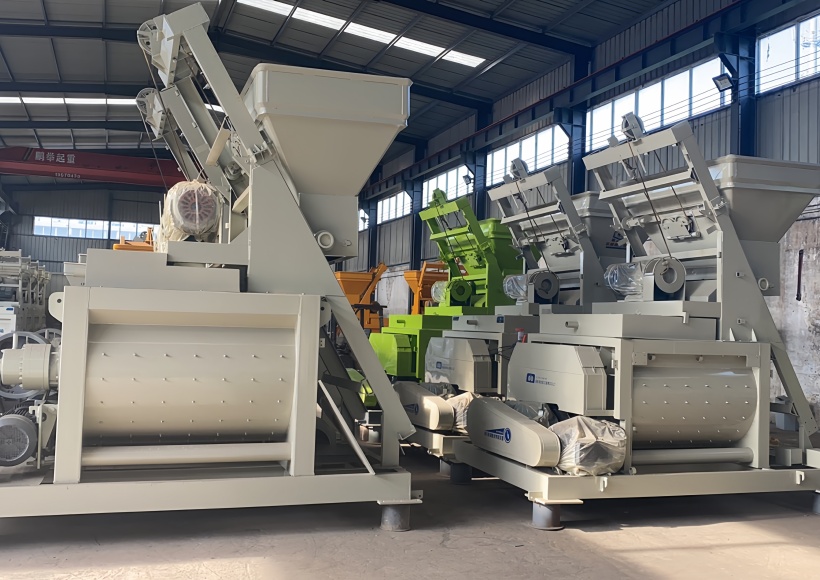
Whether you are running a single silo for a small-scale mobile setup or a battery of multiple silos feeding an aggregate plant, the control loop between your level indicators, the screw conveyor, and the weigh batcher must be flawless. Working with seasoned equipment providers like Tongxin Inji ensures that the transition from storage to batching is seamless, minimizing cycle times and eliminating material bottlenecks.
Real industrial efficiency isn’t found in a brochure. It’s found in the dirt, the steel, and the math. Respect the extreme forces at play, over-engineer your foundation, and never underestimate the stubbornness of bulk cement.
Tambayoyi da ake yawan yi (FAQ)
1. What are the standard cement silo dimensions for a 100-ton capacity unit?
Stop thinking in terms of “standard” because your site logistics dictate the reality. If you buy a factory-welded 100-ton unit, you are almost always locked into a 3-meter (9.8 ft) diameter. Why? Highway overpass clearances and wide-load DOT regulations. Once you hit 3.2 meters, your freight costs double due to escort vehicles and permits. To hit that 100-ton volume at a 3-meter diameter, the cylinder and cone need to stretch to about 12 or 13 meters tall. That’s assuming you need a standard 1.5-meter ground clearance under the butterfly valve for your screw conveyor inlet. If your batch plant requires a steeper cone angle for sticky fly ash, that overall height easily pushes 14 meters. You have to work backward from your discharge clearance limitations, not downward from the roof.
2. Why does my cement keep bridging in the cone despite having a vibrator?
Because slapping a vibrator on a cement cone is the fastest way to pack the powder into a solid brick. I see this mistake constantly in the field. Cement is not sand; it’s a compressible, hygroscopic powder. When you run an electric or pneumatic vibrator on the steel skin, you are literally vibrating the air out of the cement matrix. It densifies, locking the particles together into a massive, structural arch right above your outlet. You must rip that vibrator off and install aeration pads. You need low-pressure, high-volume air to fluidize the material—putting the air back between the particles so it flows like a liquid. Save the heavy vibrators for your coarse aggregate bins.
3. Do I need a special permit to install a 500-ton bolted silo?
Absolutely, and it’s going to be a nightmare if you don’t prep your paperwork. A 500-ton silo isn’t just a piece of equipment; it’s a massive vertical structure holding over a million pounds of dead weight, acting as a giant sail. Local municipalities do not care about your production schedule. You will need stamped, site-specific P.E. (Professional Engineer) drawings. They will demand a deep geotechnical soils report to prove your ground can handle the insane bearing pressure. Furthermore, because it’s a bolted silo, inspectors will likely require independent torque verification on the hundreds of high-tensile bolts securing the panels. If you try to sneak this past zoning as a “temporary structure,” they will shut your site down and fine you into oblivion.
4. How long does the concrete foundation need to cure before erecting the silo?
I’ve watched contractors drop an empty silo on a 7-day-old slab, and it makes my blood boil. Yes, the concrete might look dry, and your early slump tests might show it’s reached 3,000 psi, but early-age concrete has absolute garbage tensile strength. When you crane that empty steel structure into place and bolt it down, the wind load acting on that hollow 15-meter tube acts like a giant crowbar, trying to rip the J-bolts right out of the green concrete. You wait 14 days minimum before erecting the empty steel, and you do not blow a single ounce of bulk powder into that tank until you hit the full 28-day cure cycle and pass your final cylinder break tests. Rushing it saves you a week but risks a catastrophic overturning failure.
5. What is the difference between a load cell and a continuous level indicator?
It’s the fundamental difference between guessing and knowing. A continuous level indicator (like a guided wave radar or a mechanical plumb bob) just tells you where the physical top of the material is. It doesn’t account for ratholing inside the tank or varying bulk densities. You could have a massive hollow void in the center, and the radar says you’re at 80% capacity while your screw conveyor runs completely dry mid-batch. Load cells, on the other hand, are heavy-duty strain gauges mounted directly under the silo legs. They measure the absolute gravitational weight of the steel and the powder combined. If you need to know exactly how much cement you have down to the kilogram for strict inventory audits or high-spec DOT concrete mixes, load cells are the only truth. They cost five times as much and are a pain to calibrate initially, but they never lie.