








Most spec sheets lie. If a brochure claims a concrete batch plant produces 90 cubic meters per hour, the reality on a muddy, unpredictable construction site is entirely different. You will likely peak at 65 or 70 m3/h. Why? Because theoretical production capacity assumes zero truck queuing delays, perfectly dry aggregate, instantaneous gate operations, and a control system that never hangs. Real-world concrete production is a brutal, daily fight against logistics, moisture variations, and mechanical fatigue.
If you are an operations manager, a regional supplier, or a procurement director tasked with sourcing ready mix concrete plant equipment, you cannot afford to read another generic guide praising “high-quality concrete.” You need to understand the mechanical bottlenecks, the hidden operational costs, and the harsh realities of configuring commercial concrete batching plant facilities for 60, 90, and 120 m3/h output capacities. Let us strip away the marketing fluff and look at the actual iron, pneumatics, and software running these operations.
The “Nameplate Capacity” Illusion in Concrete Mixing
Before diving into specific layout configurations, we must address the most common trap in the ready mix concrete batching industry: confusing mixing time with cycle time. A standard twin-shaft concrete mixer might blend a batch perfectly in 30 seconds. But that is just the mixing phase. You still have to fill the aggregate batching machine, weigh the cement, inject the water and chemical additive, and finally discharge the sticky load into the mixer trucks.
If your belt conveyor is undersized by even a few inches, or if the aeration pads in your cement silo fail causing the fly ash to bridge, your theoretical 120 m3/h plant degrades into an 85 m3/h bottleneck. Choosing the right plant type means matching your peak hourly demand with equipment that inherently possesses a 20% overcapacity buffer. Do not buy a 90 m3/h plant if you actually need to pour 90 cubic meters every single hour—you will burn out your motors and your crew.
60 m3/h Configuration: The “Entry-Level” Cost-Cutting Trap
A 60 m3/h mix concrete batching plant is the workhorse of small to medium-sized construction projects and rural infrastructure developments. It is often the first major capital expenditure for a growing regional supplier. However, the budget constraints typical at this tier often lead to fatal procurement mistakes.
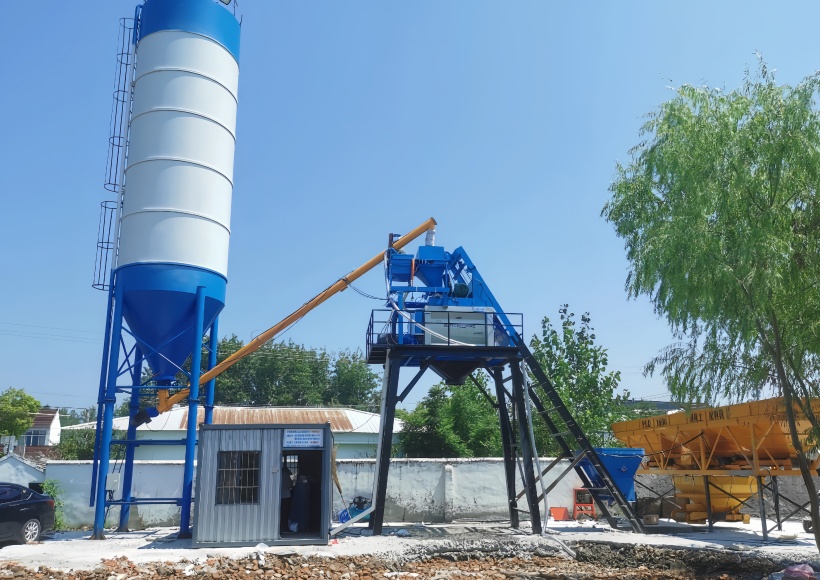
The most notorious trap is opting for a skip hoist configuration instead of an incline belt conveyor just to save yard footprint and upfront capital. Skip hoists are a maintenance nightmare. They rely on steel wire ropes that fray and limit switches that inevitably get coated in wet concrete dust. If the hoist derails or a switch fails to trigger, you are facing a minimum of two days of total downtime. A reliable 60 m3/h setup should always utilize a ribbed belt conveyor if the site space permits.
For the core machinery, a 1-cubic-meter (1m3 per batch) twin-shaft mixer is the industry standard. You will typically pair this with two or three 100-ton cement silos. Why exactly 100 tons? Because standard pneumatic bulk tankers hold about 30 to 35 tons. You need enough buffer capacity in the silo to accept a full truckload delivery while your plant is still actively operating. To avoid the nightmare of raw material waste and out-of-spec batches, ensure your entry-level ready mix concrete plant equipment incorporates independent weighing hoppers for aggregates under the bins, rather than cumulative weighing, which compounds scale errors across different aggregate sizes.
90 m3/h Configuration: The Middle-Tier Battleground
When you step up to a 90 m3/h stationary concrete batching plant, the entire operational dynamics shift. This is not just a slightly larger version of a 60 m3/h plant; the material flow rate is fundamentally different. You are moving 1.5 cubic meters of heavy concrete every 60 seconds.
At this tier, your aggregate batching machine must feature heavy-duty pneumatic butterfly valves that will not jam when handling wet, coarse gravel. A common failure point in poorly designed mixing plants at this capacity is the dust collector mounted on top of the silo. At 90 m3/h, the air pressure from continuous production and rapid silo refilling will blow the pressure relief valves right off the roof if your dust collector is not equipped with a self-cleaning pulse-jet system or is critically undersized.
For this output, leading manufacturers like Tongxin Inji recognize that precision logic is just as vital as raw mechanical throughput. The automatic control system must manage slump loss effectively by integrating microwave moisture sensors directly inside the sand hoppers. If your sand is carrying 6% moisture after a heavy rainstorm and your PLC does not automatically deduct that volume from the water dosing system, you will produce rejected, watery soup instead of high-quality concrete.
120 m3/h Configuration: Feeding the Industrial Beast
A 120 m3/h ready mix concrete batching plant is not merely a piece of equipment; it functions as a highly aggressive industrial logistics hub. You are utilizing a 2m3 or even 3m3 concrete mixer. Interestingly, the bottleneck at this scale is rarely the mixer itself—it is the challenge of feeding the beast fast enough.
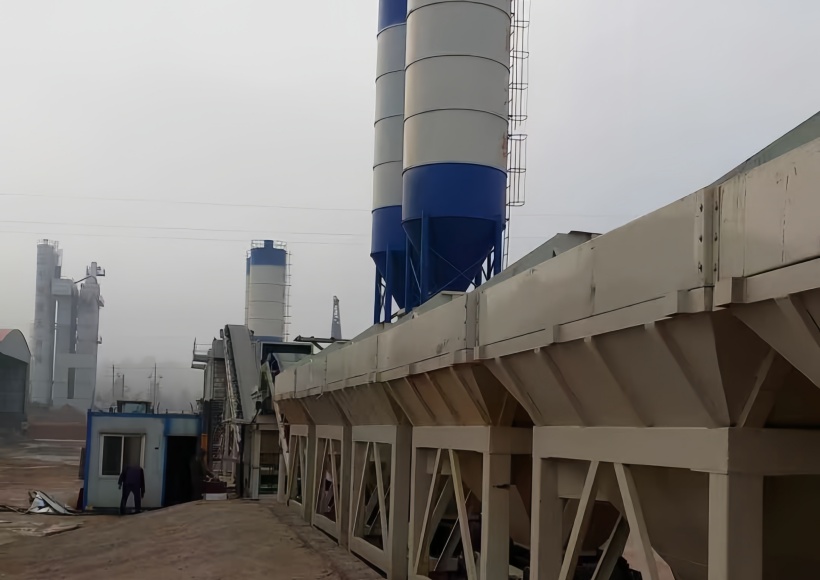
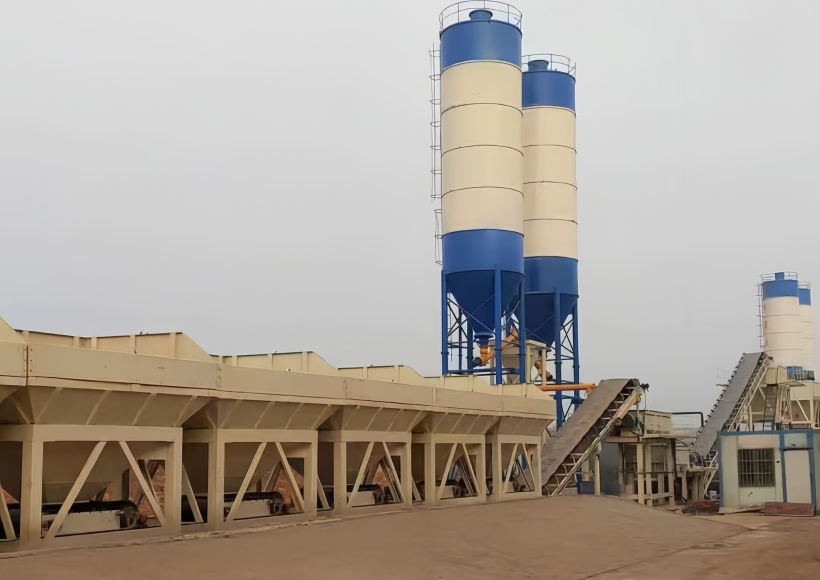
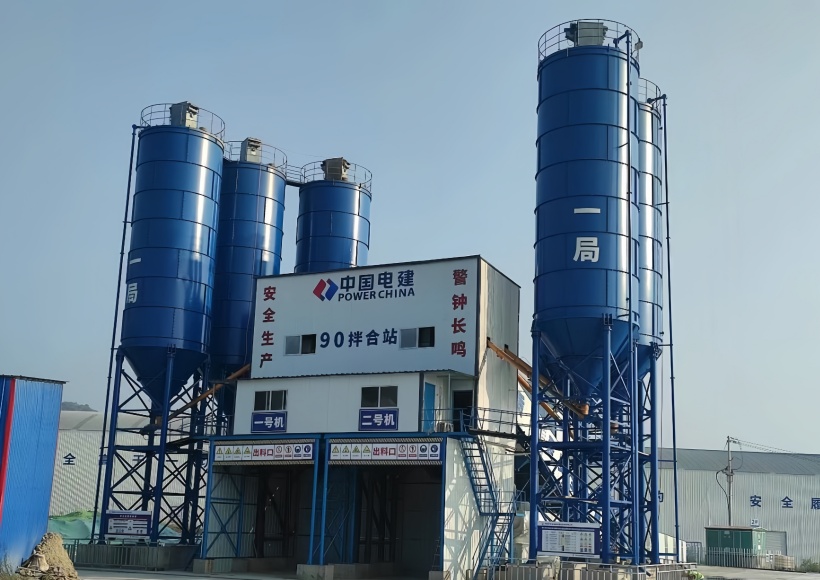
If your infrastructure projects require continuous, uninterrupted pours (such as bridge deck foundations, high-rise mat slabs, or dam construction), a 120 m3/h concrete plant will consume an aggressive amount of raw materials. You are looking at a minimum requirement of four 200-ton silos (usually split between OPC cement, fly ash, and ground granulated blast-furnace slag).
At this immense scale, the belt conveyor must be a closed, heavy-duty trough belt running at optimized speeds to prevent aggregate segregation during transit. Furthermore, the batching system must feature advanced SCADA (Supervisory Control and Data Acquisition) integration. Operators on the floor should never be manually overriding mix ratios; the automatic control system must lock down the recipes to maintain consistent concrete quality across thousands of cubic meters. When deploying top-tier ready mix concrete plant equipment at this industrial scale, redundant load cells and automatic calibration sequences are mandatory. A mere 1% drift in a cement scale at a 120 m3/h run rate will cost your operation thousands of dollars in wasted cement within a single week.
Wear Parts, Liners, and The Hidden Cost of Ownership
Another massive oversight when sourcing any mix concrete plant is ignoring the metallurgy of the wear parts. Producing concrete is fundamentally an abrasive act of grinding rocks against steel.
Cheaper plants use standard cast iron or low-grade steel for the mixer liners and mixing arms. These will wear out and require replacement within 30,000 to 50,000 cubic meters of production. You must demand high-chromium or Ni-Hard cast iron liners. Replacing liners inside a twin-shaft mixer is a grueling, dangerous job that requires confined space entry, cutting torches, and heavy lifting in a cramped drum. Minimizing this maintenance task directly improves your annual uptime and bottom-line profitability.
Stationary vs. Mobile Concrete Batching Plants: The Mobility Myth
Many contractors obsess over the types of concrete batching plants, particularly the endless debate between a permanent stationary concrete plant setup versus a mobile batching plant.
The marketing pitch for a mobile type concrete plant is undeniably seductive: tow it to the construction site, plug in a generator, and produce concrete. The reality? Mobile plants are highly susceptible to severe calibration drift. A stationary concrete plant sits on a massive, heavily engineered concrete foundation that absorbs and isolates vibration. A mobile plant often sits on steel crane mats or simply compacted dirt. As the 60-ton aggregate bins empty and fill rapidly, the steel chassis flexes. This micro-flexing wreaks havoc on the sensitive shear-beam load cells, destroying batching accuracy.
If your project duration is strictly under 6 months, or you are doing rapid highway patching, a mobile concrete plant is justified to drastically reduce mixer truck transit time. However, if you are setting up a commercial concrete batching plant intended to dominate a local market for the next five years, stationary is the only logical plant type. Do not sacrifice long-term accuracy for short-term mobility.
Overcoming PLC Blind Spots: The “In-Flight” Variable
We cannot thoroughly discuss concrete production efficiency without tearing down the prevalent misconceptions about automation. Most suppliers proudly claim their plants are “fully automatic.” But what happens when the load cell gets covered in frozen mud? What happens when there is a split-second power brownout?
A truly robust automatic control system does not just blindly execute mix ratios; it anticipates mechanical delays. It must feature “in-flight” material compensation. When the screw conveyor stops feeding cement into the weighing hopper, a few kilograms of cement are still falling through the air. A basic, cheap PLC ignores this extra weight, resulting in an over-cemented batch. An advanced batching system anticipates this “free-fall” and cuts the screw conveyor a fraction of a second early. High-end equipment providers like Tongxin Inji build this kind of predictive algorithmic logic into their control panels to ensure exact batching under the harshest environmental conditions.
Strategic procurement is fundamentally about mitigating risk. You are not buying steel, rubber, and wires; you are buying equipment uptime. Focus on standardized pneumatic cylinders (like SMC or Festo), globally sourced PLCs, heavy-wear metallurgy in the concrete mixer, and a physical layout that actually allows your maintenance crews to reach the grease points safely.
Tambayoyi da ake yawan yi
1. Why am I only getting 65 m3/h out of my brand new 90 m3/h plant?
Because the spec sheet you read was based on fantasy conditions. Theoretical capacity calculates pure mixing time. It assumes bone-dry sand, instantaneous pneumatic gate opening, and mixer trucks lined up perfectly with zero seconds of swap time. Real life has sticky gates, wet aggregates, slump checks, and driver delays. You should always expect a 20% to 25% efficiency drop from the nameplate rating in daily operations.
2. I’m buying a 60 m3/h plant. Should I use a skip hoist to save space?
Do you hate your maintenance crew? If yes, buy the skip hoist. The steel cables stretch, and the limit switches get coated in concrete sludge and fail, causing the bucket to crash. It is a massive single point of failure. If you have the yard space, always buy the incline belt conveyor. It takes up more real estate, but it rarely breaks down.
3. Are microwave moisture sensors actually worth the high extra cost?
Absolutely. One heavy rainstorm turns your sand stockpile into a sponge. If your PLC does not automatically detect that moisture and deduct the equivalent water weight from your batch recipe, your first five trucks will be rejected by the site inspector for having a high water-cement ratio. The sensors pay for themselves after avoiding just two rejected loads.
4. Can a mobile concrete batching plant hold scale calibration as well as a stationary plant?
No, it is mechanically impossible. Stationary plants sit on deep, poured concrete foundations. Mobile plants sit on dirt or temporary mats. When you dump 60 tons of rock into the mobile aggregate bins, the chassis inevitably flexes. That flexing tweaks the shear-beam load cells. If you run a mobile plant hard, prepare to recalibrate your scales constantly to avoid giving away free cement.
5. What exactly is “in-flight” material compensation, and why do I care?
When your screw conveyor turns off, there is still 10 to 15 pounds of cement physically falling through the air into the scale hopper. A dumb computer ignores this and your batch ends up heavy. A smart control system predicts this free-fall and shuts the auger off early. If your plant lacks in-flight compensation, you are literally giving away free cement every single batch, killing your profit margins.