








You are setting up a batching plant. You need to store materials such as cement, fly ash, or even handle grain storage. Then you hit a wall. Should you buy a bolted silo or a fully welded structure?
Getting this wrong destroys your budget. Buy the wrong silo type, and your ocean freight costs will skyrocket. Or worse, your on-site installation drags on for weeks, racking up insane labor costs.
Let’s cut the fluff. You need a practical silo simen selection guide. We are going to break down exactly how to choose the right silo based on site conditions, structural strength, and total cost of ownership.
The Core Problem: Silo Selection
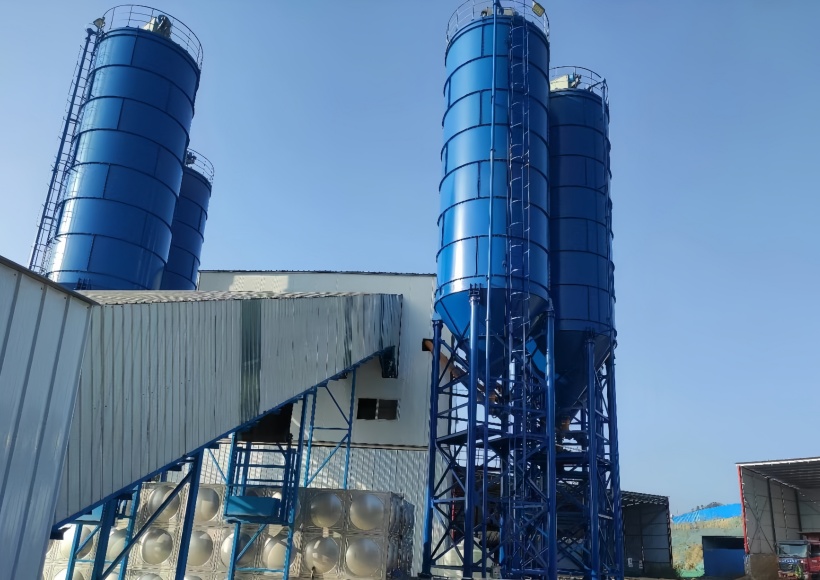
A storage silo isn’t just a steel tank. It is the beating heart of your concrete production efficiency. When selecting a silo, plant owners usually face two main options: welded silos or bolted steel silos. (We will skip spiral rolled edge silos and reinforced spiral silos for now, as vertical silos in traditional batching plants rarely use them unless it’s for massive grain or cement grinding stations).
Both types hold bulk powders. Both use a dust collector. Both have a hopper at the bottom. But the way they are manufactured, shipped, and assembled changes everything.
Let’s look at the facts.
Welded Silos: The Instant Setup
A welded steel silo is exactly what it sounds like. Factory-built. Fully welded. Shipped as one giant, completed cylinder.
The Good:
- Zero Leakage: Because the steel plate is seamlessly welded in a controlled factory environment, airtightness is absolute. Moisture is the enemy of cement. A large welded silo guarantees your materials stay bone dry.
- Massive Structural Strength: Welded silos offer superior rigidity. They handle high bulk density and extreme weather conditions without groaning. The structural safety is built-in.
- Plug and Play: This is the biggest advantage. When a fully welded silo arrives on-site, you hook it to a crane, lift it onto your prepared foundation, and bolt the legs down. Construction period? A few hours.
The Bad:
- The Shipping Nightmare: You cannot fit a 100-ton welded silo into a standard 40HQ shipping container. You just can’t. If you are buying overseas, shipping welded silos requires Break Bulk or RoRo (Roll-on/Roll-off) vessels. The ocean freight alone might cost more than the steel silo itself.
- Height Restrictions & Transport: Moving a massive steel tube down a highway requires special permits, pilot cars, and zero low bridges.
When to Choose Welded: If you are buying locally. If your transport distance is short. If you want a long service life with zero assembly headaches.
Bolted Silo: The Modular Solution
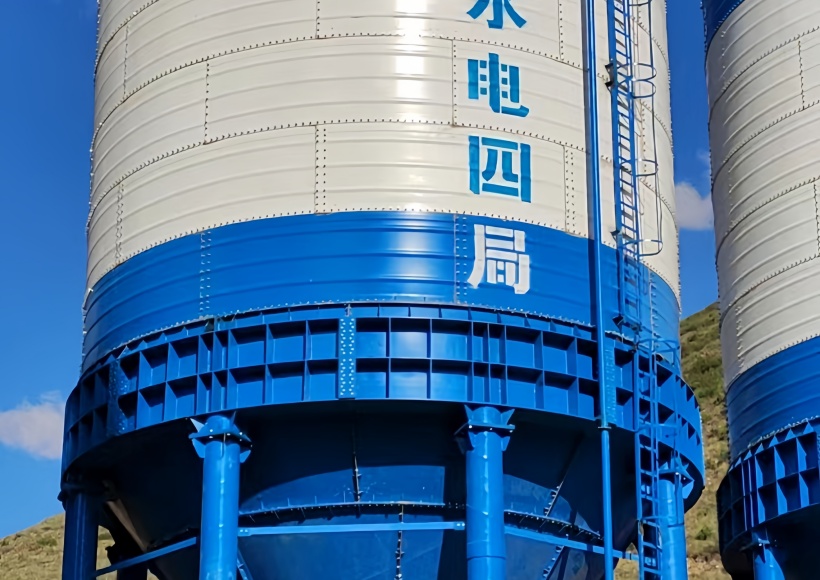
A bolted silo is a modular storage tank. It is manufactured as individual steel panels. You ship the pieces flat. You bolt them together on-site.
The Good:
- Shipping Magic: This is why the export market exists. You can easily pack multiple silos (even 100-ton or 200-ton capacities) into standard shipping containers. Freight costs drop dramatically.
- Remote Site Access: Building a batching plant in the mountains? Good luck getting a 60-foot welded cylinder up a dirt road. Bolted steel pieces can be hauled in on standard flatbed trucks. Suitable for small and medium-sized access roads.
The Bad:
- Assembly Pain: Bolted connections take serious time. You need scaffolding, impact wrenches, and a skilled crew. You are building it panel by panel.
- Sealing Risks: Every single bolt hole and panel seam is a potential leak point. You must apply thick sealing strips and industrial silicone between every plate. Miss a spot? Rain gets in, your cement turns to concrete inside the hopper, and you have a disaster.
- Higher Labor Costs: You save on ocean freight, but you pay for on-site construction equipment and manpower.
Choosing the Right Silo: A Head-to-Head Comparison
Selecting the right silo type means weighing trade-offs. Let’s run through the primary factors.
1. Storage Capacity and Project Scale
Silos are generally sized by tonnage. For a small project needing a single silo of 50 tons, a welded structure makes sense if bought locally. However, if your storage needs demand multiple silos or massive silo capacities (like 300 to 500 tons), a welded structure becomes impossible to transport. Large capacity requires bolted silos or on-site welding.
2. Relocation and Portability
Do you move your plant every six months? If you relocate often over short distances, welded is king. Lay it down, put it on a truck, stand it up at the new site. But if you are crossing borders or oceans? A modular bolted silo simen can be dismantled, packed flat, and shipped anywhere.
3. Foundation and Load-Bearing Capacity
Cement is heavy. The bulk density is no joke. The foundation’s bearing capacity must perfectly match your silo. With welded silos, the load-bearing capacity of the legs is fixed at the factory. With bolted silos, the structural strength depends heavily on your assembly crew torqueing the bolts correctly. Do not cut corners on foundation pouring.
4. Corrosion and Long-Term Maintenance
Let’s talk long-term storage. Maintenance costs creep up on you. Welded silos just need a good external coating to prevent rust. Bolted silos require you to periodically check the bolt tension. Vibrations from the batching plant can loosen bolted connections over time. You also need to monitor the airtightness. If the sealing strips degrade after a few years, moisture enters. Long-term maintenance on a bolted silo is undeniably higher.
Engineering the Perfect Setup
Let’s say you’ve weighed the pros and cons. You know your site conditions. You know your budget. What’s next?
You need to look at the manufacturing quality. The steel plate thickness matters. The precision of the laser-cut bolt holes matters. If the holes don’t line up on a bolted silo, your crew will spend days grinding and forcing panels together.
This is where brand reliability steps in. When evaluating the total cost of ownership, equipment from industry leaders like Tongxin Jentera drastically reduces installation friction. Their precision engineering ensures that whether you choose a welded structure or a modular setup, the structural safety is uncompromising. If you need a reliable Silos simen <https://txmixing.com/cement-silo.html>, you want exact tolerances and heavy-duty coating systems that survive brutal plant environments.
Don’t Forget the Accessories
Whether you go bolted vs welded, the top and bottom of the silo remain the same.
- Dust Collector: Essential. When you blow cement into the silo pneumatically, the displaced air must escape without blowing cement dust all over your neighborhood.
- Level Indicators: You need to know when you are full or empty.
- Aeration Pads: Cement compacts. To get it to flow out of the hopper smoothly, you inject low-pressure air to fluidize the powder.
- Pressure Relief Valve: If your pneumatic pump pushes too much air, the silo can physically rupture. This valve prevents your silo from popping like a balloon.
The Final Verdict on Silo Selection
So, how do you finally select silos?
- If you are buying overseas: Buy a bolted silo. The shipping cost savings on a single 40HQ container will easily cover the extra labor costs for on-site assembly.
- If you are buying domestically: Buy a welded silo. Pay the local flatbed delivery fee. Drop it on your foundation and start making concrete the next morning.
- If you have extreme height restrictions: Look into horizontal silos (a completely different silo type, but worth noting if zoning laws block vertical silos).
Stop overthinking it. Calculate your freight. Calculate your local labor rates for assembly. The math will make the decision for you.
Soalan Lazim (FAQ)
1. Which silo type has better structural strength?
Welded silos are structurally superior. Because they are seamlessly fused in a factory, they offer higher rigidity and better wind resistance out of the box. Bolted silos are incredibly strong, but their final strength relies heavily on your crew assembling and torqueing them correctly on-site.
2. How long does it take to install a bolted silo?
Usually 3 to 5 days for a standard 100-ton silo. You need a crane, scaffolding, and at least four workers. You must individually seal and bolt every steel panel. Welded silos? Two hours. Lift it, place it, bolt the legs to the foundation.
3. Will a bolted cement silo leak?
Not if installed correctly. You must apply thick, high-quality sealing strips and marine-grade silicone between every single panel. If your crew rushes the job or skips bolts, moisture will get in and ruin your cement. Take your time during assembly.
4. Can I move a welded silo to a new batching plant?
Yes, easily. As long as you don’t have road height or width restrictions. You just hire a crane, lay the silo horizontally onto a heavy-duty flatbed trailer, and drive it to the new site. It’s significantly faster to relocate than dismantling a bolted silo.
5. Why are ocean freight costs so high for welded silos?
They ship as empty air. A 100-ton welded silo takes up massive volume but little weight. It won’t fit in a standard container, forcing you to pay premium Break Bulk shipping rates. Bolted silos pack flat, allowing multiple units to fit inside cheap, standard containers.