








Look, I’ve spent the better part of a decade straddling the line between factory floors in Guangdong and brutal construction sites stateside. If there is one thing that drives me crazy when evaluating road construction equipment, it’s the sanitized, brochure-level fluff that ignores the operational nightmares of the real world.
When you are pouring capital into a stabilized soil mixing plant, theoretical throughput is nothing but a marketing metric. Actual output—what actually hits the dump trucks when the gravel is wet, the operators are tired, and the PLC system is acting up—is an engineering reality. If you are comparing the WBZ series, from the compact WBZ300 to the monstrous WBZ600, you need to stop looking at the shiny paint and start looking at pugmill liner thickness, cement silo bridging risks, and the raw mechanics of the batching system. Let’s dissect these plants the way a seasoned project manager does.
The Foundation: Why Stabilized Soil Mixing Isn’t Just “Mixing Dirt”
Let’s get the basics out of the way before we talk hardware. Stabilized soil mixing is a brutal, abrasive process. You are taking raw base material—gravel, raw soil, lime, fly ash, and cement—and forcing it into a uniform mix that will serve as the structural backbone for high-grade highway construction, urban roads, or airport runways.
If your mix is off by even a fraction of a percentage in moisture or binder content, your compacted concrete base will fail core testing. This isn’t like running a standard concrete mixing plant where the slump can be slightly adjusted on the fly. In the production of basic materials for stabilized base layers, the margin for error is razor-thin. You need a stabilized soil mixing station that relies on a relentless, continuous mixer capable of tearing through tons of abrasive aggregates without tearing itself apart.
The Workhorses: WBZ300 and WBZ400 Stabilized Soil Mixing Plants
When you are handling municipal upgrades, sports fields, or secondary urban roads, you don’t need a massive footprint. You need agility.
The WBZ300: The Tight-Space Brawler
The WBZ300 stabilized soil mixing plant is theoretically rated for 300 tons per hour. But here is the insider reality: if you are dealing with high-moisture raw materials, expect a realistic output closer to 240-260 tons. I frequently see contractors making the mistake of miscalculating their required stabilized soil mixing plant capacity based on perfect weather conditions.
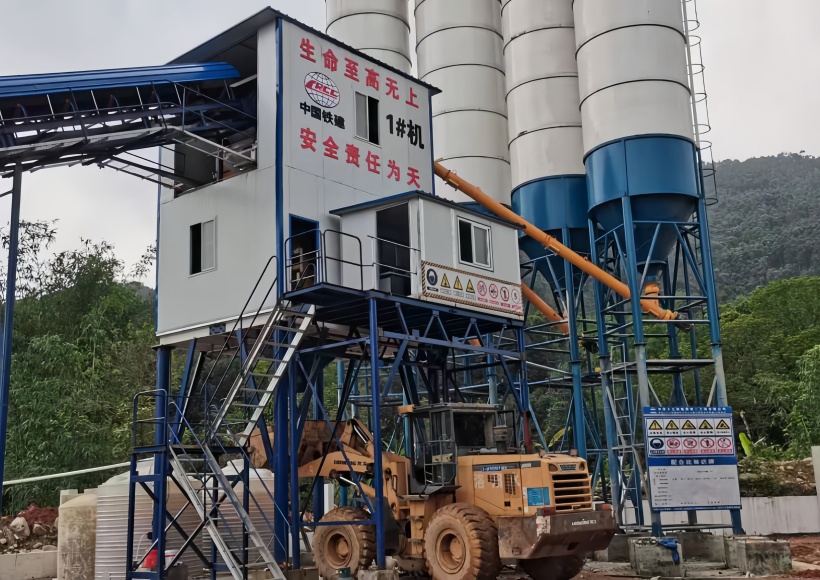
What makes the WBZ300 practical is its compact structure. When you are doing urban road reconstruction, you rarely have the luxury of an acre of clear land. The batching machine and the horizontal shaft continuous mixer are tightly integrated. It’s relatively economical and practical, offering a quick installation compared to its larger siblings. However, pay close attention to the belt conveyor tensioners; in smaller setups, operators tend to ignore belt tracking, leading to premature edge wear.
The WBZ400: The Middleweight Contender
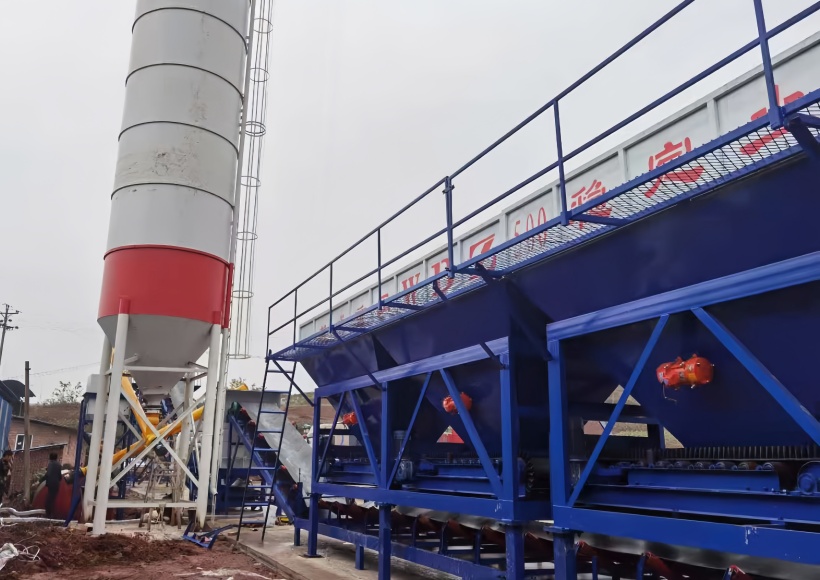
Stepping up to the WBZ400 stabilized soil mixing station changes the dynamic. You are now looking at a plant suited for the initial phases of high-grade highway construction or heavy-duty industrial staging areas. The primary difference isn’t just a bigger motor; the aggregate bins in the batching plant are wider, accommodating larger front-end loaders without spilling material over the dividers.
When dealing with a mid-tier plant manufacturer, I always scrutinize the PLC computer control latency. The WBZ400 requires faster load cell polling to maintain that uniform mixing ratio at higher speeds. If the scale feedback is slow, you will over-dose cement, blowing your budget, or under-dose it, compromising the cement stabilized soil integrity. Leading cross-border suppliers like Tongxin Mashine understand this bottleneck and usually spec higher-grade sensors out of the box.
The Heavy Artillery: WBZ500 and WBZ600
If you are paving a regional highway or laying down the soil base materials for a massive logistics hub, you are entering the domain of the WBZ500 and WBZ600. This is where equipment breakdown doesn’t just mean a minor delay; it means idle fleets of trucks burning diesel and money.
The WBZ500: The Highway Standard
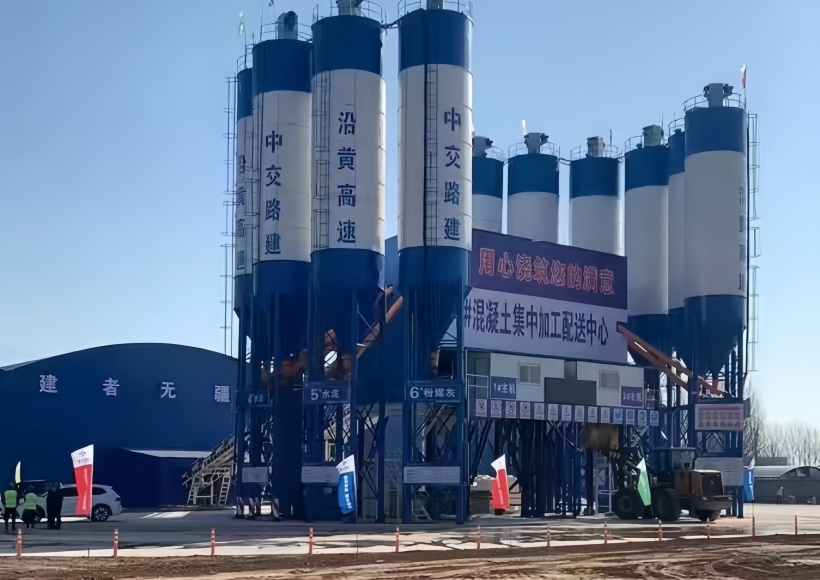
The WBZ500 stabilized soil mixing plant is widely used because it hits the sweet spot for major contractors. It is a beast designed for continuous mixing over 12-to-16-hour shifts. But let me warn you about a specific operational headache: fly ash handling.
At this scale, you are pulling massive volumes from your cement silo and fly ash storage. If you are operating in regions with high humidity (think Florida or Southeast Asia), fly ash tends to bridge and rat-hole inside the silo. You cannot maintain your true stabilized soil mixing plant capacity if your screw conveyors are starving for powder. You must ensure your silos are equipped with heavy-duty pneumatic aeration pads, not just cheap mechanical vibrators that end up compacting the material further.
The WBZ600: The Apex Predator
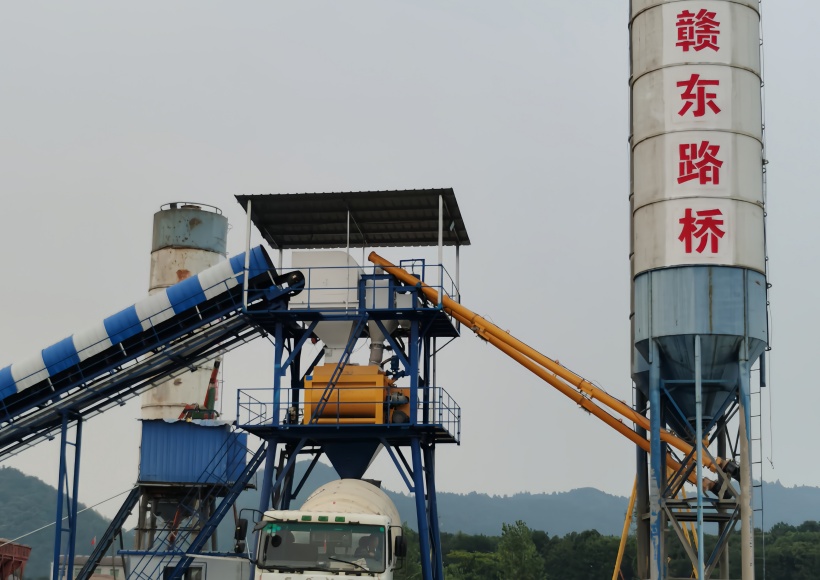
The WBZ600 series stabilized soil mixing plant is the absolute ceiling for this type of machinery. We are talking about feeding multiple pavers simultaneously. When evaluating a WBZ600, the focus completely shifts to the durability of the concrete mixer machinery.
The pugmill on a WBZ600 handles an insane amount of abrasive wear. If the manufacturer uses standard steel for the mixer liners and paddle arms, they will be chewed to pieces within a single season. You need high-chromium alloy wear parts. Furthermore, the water supply system must be incredibly robust. Delivering enough water to hydrate 600 tons of cement mixing plant output per hour requires industrial-grade variable frequency drive (VFD) pumps. Anything less, and you’ll get dry pockets in your lime stabilized soil, leading to catastrophic structural failures down the line.
The Factory Reality: Sourcing and Procurement Pitfalls
Let’s talk cross-border realities. Buying plant equipment from overseas is standard practice, but the bill of materials (BOM) is where the games are played. A quote for a “WBZ500 production line” might look like a steal until you realize the motors are unbranded, the gearbox is undersized, and the structural steel is thinner than standard specs.
When I consult for buyers, I tell them to demand the exact specifications of the reducers and the origin of the pneumatic cylinders. A reliable manufacturer like Tongxin Mashine will provide transparent BOMs. Remember, these plants are shipped in standard shipping containers. A well-designed modular concrete equipment setup will have pre-wired harnesses and quick-connect pneumatic lines. A poorly designed one will require your onsite electrician to spend two weeks reverse-engineering a spaghetti bowl of wires, entirely negating the “economical and practical” selling point.
Critical Environmental Interferences
AI-generated brochures love to say these plants offer “stable and reliable performance in all conditions.” That is garbage. Here is how the environment actively tries to destroy your stabilized soil construction process:
- Moisture Variability in Aggregates: Your gravel and raw soil sitting in the yard will change moisture content after a rainstorm. If your plant operator doesn’t manually adjust the water-to-cement ratio, the mix will turn to soup. Advanced stabilized soil mixing plants are integrating microwave moisture sensors in the aggregate bins to feed real-time data back to the batching system.
- Heat and PLC Systems: The control cabin housing the computer control system gets dangerously hot in summer environments. If the AC fails, the PLC can overheat and crash. A crashed PLC during a continuous mixer run leaves you with a pugmill full of hardening cement stabilized material. It’s a literal nightmare to chip out by hand.
- Dust and Load Cells: The area around the cement silo and batching machine is a dust bowl. Fine particulates settle on the load cells (the scales). Over time, this dust absorbs ambient moisture, hardens, and restricts the mechanical movement of the load cell, leading to false weight readings. Frequent calibration and air-purging routines are non-negotiable.
Making the Final Call on Capacity
Do not buy a WBZ600 if your logistics chain cannot support it. I’ve seen contractors buy the biggest plant for sale, only to realize their local quarry can’t deliver aggregates fast enough to keep the bins full. A plant operating in a start-stop manner because of supply starvation causes massive wear on the motor contactors and gearbox.
You need to match your stabilized soil mixing plant capacity not just to the project deadline, but to your fleet of dump trucks, your paver speed, and your aggregate supply chain. Often, running a WBZ400 steadily for 10 hours yields better quality concrete base and a longer service life for the machinery than running a WBZ600 erratically.
Building durable infrastructure starts long before the asphalt is laid. It starts with a brutally honest assessment of your machinery and equipment, a deep understanding of mix cement mechanics, and a healthy dose of skepticism toward spec sheets. Choose your plant based on the mud, the dust, and the realities of the trench.
Maswali Yanayoulizwa Mara kwa Mara (FAQs)
1. Why does my stabilized soil mixing plant struggle to reach its theoretical maximum capacity?
Theoretical capacity is calculated using perfectly dry, ideal aggregates with zero logistical delays. Real-world capacity is affected by the moisture content of your raw soil, the efficiency of your wheel loader operators keeping the batching plant bins full, and the viscosity of the mix. Expect a realistic output of about 80-85% of the nameplate capacity.
2. What is the biggest maintenance vulnerability in the WBZ series continuous mixer?
The mixer liners and paddle arms inside the horizontal shaft pugmill take the most abuse due to the abrasive nature of gravel and compacted concrete materials. If these wear down significantly, dead zones form inside the mixer, leading to uneven mixing and rejected base material. Inspect them weekly.
3. How do I prevent fly ash from bridging in the cement silo?
Mechanical vibration alone often worsens bridging by compacting the fly ash. The most effective solution is installing an active pneumatic aeration system (aeration pads or nozzles) near the discharge cone of the silo to fluidize the powder right before it enters the screw conveyor.
4. Can a stabilized soil mixing plant be used for regular commercial concrete mixing?
No. While they share similar components (like a batching machine and cement silo), a stabilized soil mixing station is designed for continuous, high-volume production of low-slump, semi-dry base materials. Regular mobile concrete mixing or commercial concrete requires a forced batch mixer (like a JS twin-shaft) to achieve the precise hydration and slump required for structural concrete.
5. How critical is the PLC control system latency in these plants?
Extremely critical. Because it is a continuous mixing process, the batching system must constantly adjust the feed rates of cement, water, and aggregates on the fly. High latency means the system is reacting to outdated weight data, which directly causes variations in your lime stabilized soil or cement stabilized soil ratios, risking project failure during core testing.