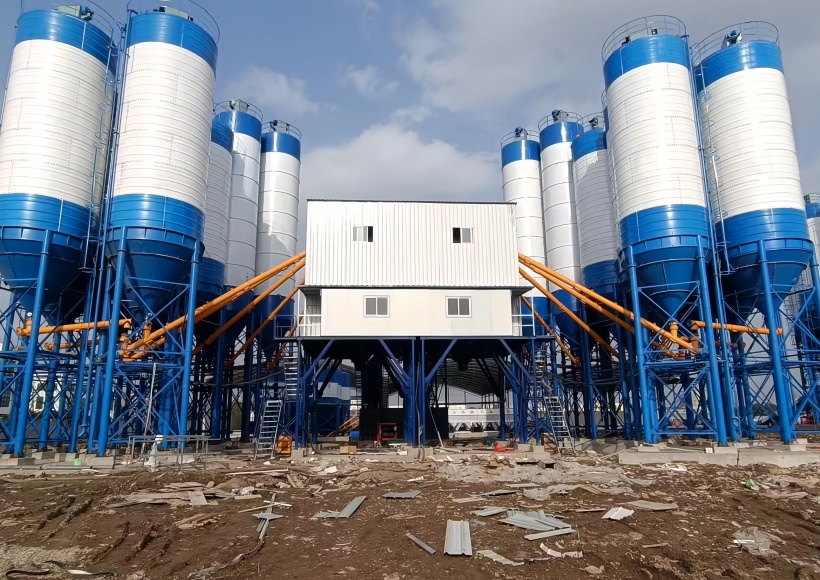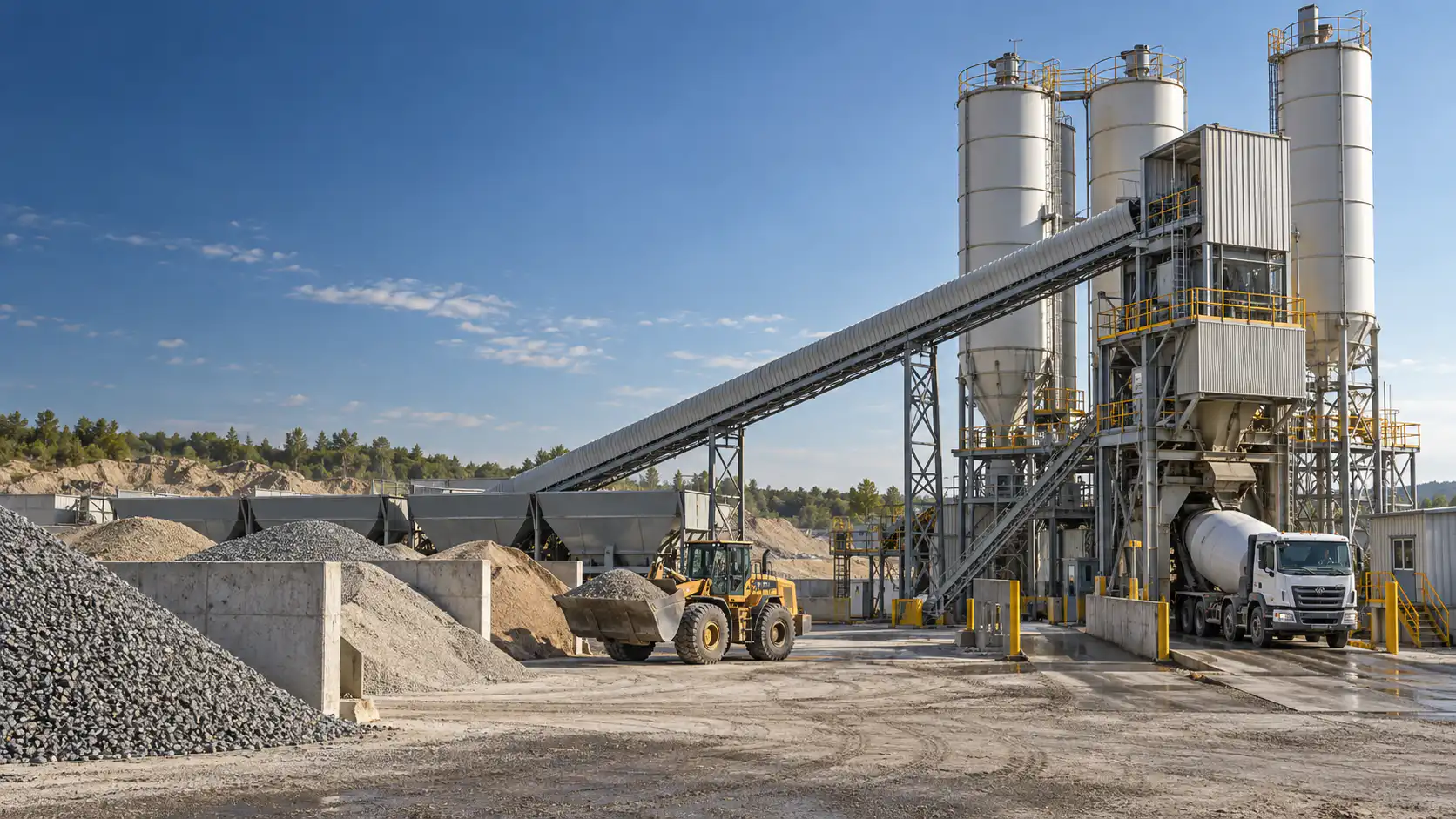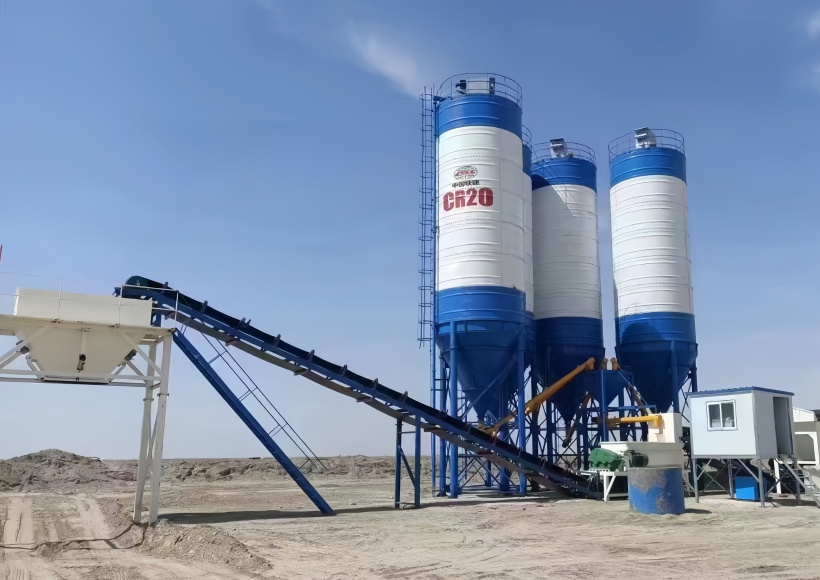









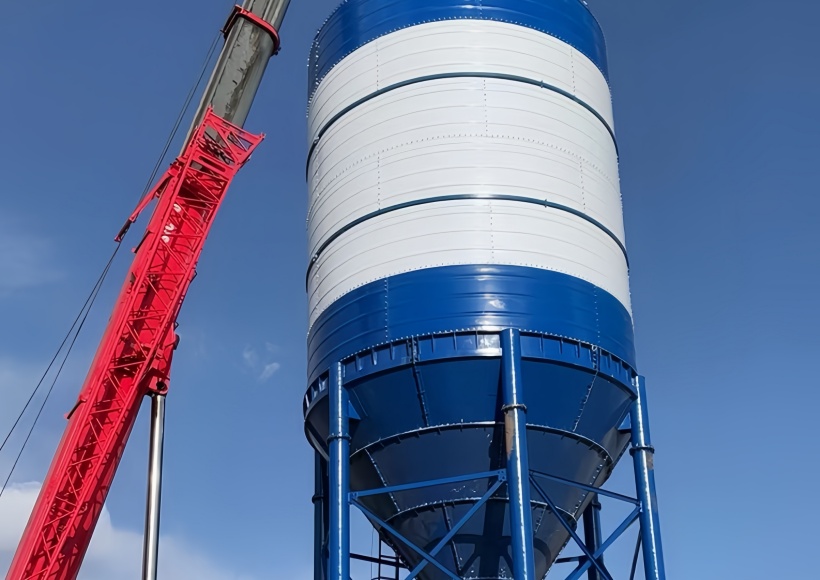
Bridging over a cement silo outlet is a compaction problem long before it becomes a discharge problem. Cement powder densifies under its own head pressure, the fine particles interlock, and the bed slowly deaerates until material near the silo cone behaves more like a weak solid than a free-flowing bulk. Hammering the cone at that point makes things worse – vibration packs the powder tighter. A correctly engineered cement silo aeration system addresses the root cause instead: low-pressure air injected through the silo cone or hopper wall restores permeability to the powder bed, collapses the consolidated arch, and lets gravity carry the material toward the discharge outlet.
What Really Causes Bridging and Ratholing in Cement Silos?
Every silo empties in one of two flow patterns, and only one of them is acceptable. In mass flow, material descends along the silo wall and through the center at broadly similar velocities, so the whole inventory moves toward the outlet. In funnel flow – the default for shallow cones – the powder flows only through a narrow channel above the silo outlet while the rest of the inventory stays in place against the wall. The flow pattern is decided by silo design: cone angle, wall finish, and the friction characteristics of the powder actually being stored.
Bridging is the failure mode engineers see most often at a cement plant. Compacted cement forms a self-supporting arch across the silo cone, and that arch is strong enough to carry the full material head above it. Ratholing happens when cement flows only through the narrow central channel and the surrounding material remains stuck against the silo wall, leaving an uneven, partially empty silo that still holds tonnes of unusable inventory. Ratholing in cement silos deserves more attention than it usually gets, because the stagnant zones are exactly where the material hardens.
Condensation inside the silo is the usual trigger. Day-night temperature cycling deposits a film of moisture on the silo wall; nearby cement particles wet slightly, hydrate, and turn into lumps that are already hardened inside the silo before anyone notices. Pneumatic conveying air that has not been dried does the same damage from within the bed. A small amount of moisture is all it takes – cement needs very little water to begin setting.
Two further factors complete the picture. A silo cone angle copied from an earlier project, without measuring the wall friction angle of the powder actually being stored, practically guarantees funnel flow no matter how steep the cone looks. And an insufficient aeration system – too few pads, a poorly balanced manifold, or injection at a single point – fluidizes one sector of the cone while the rest of it compacts. Poor air distribution does not merely fail to solve the problem; it accelerates it.
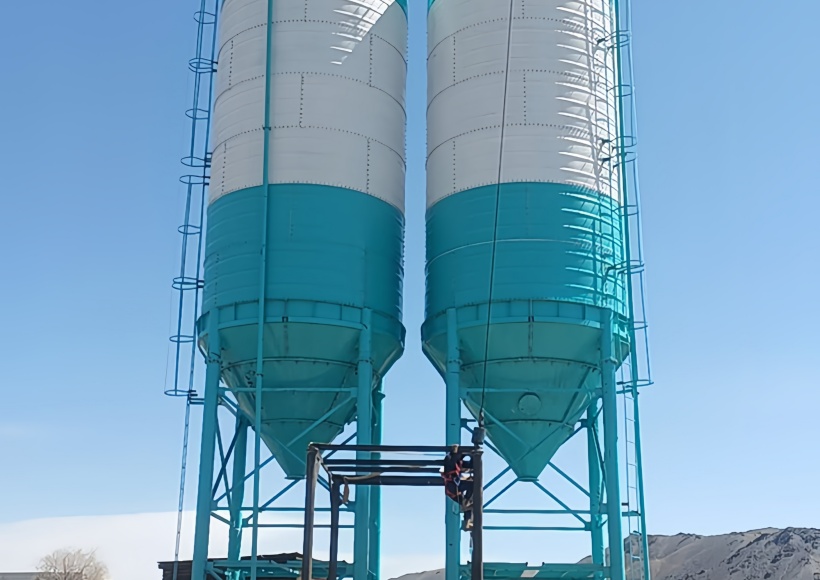
How Do Aeration Pads Break an Arch in a Cement Silo?
The working principle is fluidization, applied locally rather than globally. Air from the aeration pads percolates upward through the voids between fine cement particles, and the resulting drag lowers the inter-particle forces that give the compacted bed its strength. In practical terms the arch fails at its feet: once the powder near the silo cone or hopper wall loses its cohesive strength, the arch loses its abutments and drops into the moving stream below. Aeration pads help because they deliver air directly into the powder through a permeable membrane set flush with the cone surface, rather than letting it escape along the steel.
The same physics moves fluidized cement horizontally in an air slide conveyor – once permeability is restored, cement behaves like a heavy liquid and powder flow toward the discharge outlet becomes nearly effortless. That is why aeration counts as a genuine flow aid rather than a blunt instrument: it changes the state of the material instead of forcing it.
Sequencing matters as much as injection. Running every zone continuously wastes compressed air and tends to open only the easiest flow path – which is how a careless installation creates the very rathole it was meant to prevent. Firing the pads in timed zones, lowest ring first, pulls the whole bed down evenly and keeps discharge consistent. For bulk loading systems downstream of the silo, staged discharge turns an unpredictable feed into one a truck-loading operator can schedule around.
Where Should Aeration Pads Be Installed on the Silo Cone?
Pad placement follows the failure location. Arches form in the lower third of the cone, so the densest coverage belongs there – staggered around the circumference rather than clustered on one side. A proven layout for cement puts one row immediately above the discharge outlet flange and a second row at roughly one-third cone height, with additional rings for larger silos. The cone-to-cylinder transition deserves a check as well, because powder near the silo cone in tall units carries the highest consolidating pressure and packs hardest.
A cement silo aeration system is not a catalogue item specified by silo tonnage alone. Pad count, ring spacing, and manifold sizing should be checked against the cone geometry and the measured flow properties of the powder – the same silo structure handling fly ash or lime powder needs a different arrangement than one handling cement, which is why a Cement Silo and its aeration package should be engineered together.
On retrofit jobs, where cutting new nozzles into a full silo is impractical, inflatable pads and fluidizing nozzles inserted through existing openings offer a workable compromise. External vibrators do not. On fine powders, vibration compacts the bed instead of loosening it; more than one plant has turned a bridged cone into permanent concrete by leaving vibrators running against it. Solve the problem with air, not force.
How Much Low-Pressure Air Does Silo Aeration Need?
Aeration pads in cement service typically operate somewhere in the 0.3-0.5 bar range – enough to overcome the resistance of the powder bed, low enough not to fluidize the entire contents and drive dust into the vent filter. Exact air pressure and volume should be confirmed against the selected pad model and the silo geometry during engineering; treating these numbers as universal is a common and costly shortcut.
Air quality decides whether the system still works two years after commissioning. Warm, humid plant air delivered into cool cement at night releases condensation straight into the powder – the system then cements the very material it was meant to free. Dried, oil-free air is not an optional refinement; it is part of the design. Aeration should be checked together with the air dryer, not treated as separate equipment.
Interlocks complete the installation. Fluidizing air has to leave the silo somewhere, so aeration must run coordinated with the dust collector or vent filter, and each manifold branch should carry a flow indicator so poor air distribution becomes visible the day it develops instead of the day the cone bridges. Discharge rate can then be tuned through zone timing rather than by simply adding more air.
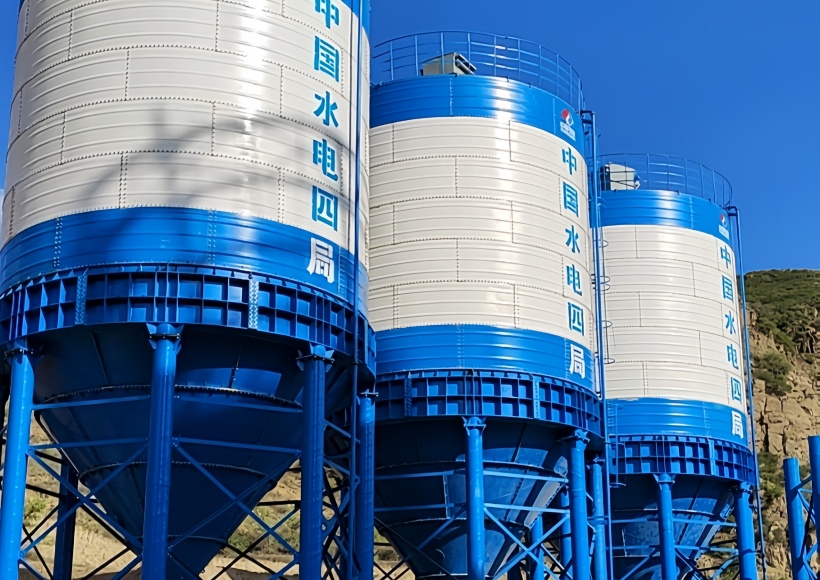
How Do You Improve Cement Silo Discharge for Fly Ash, Lime, and Stored Cement?
Fly ash silos and lime powder service follow the same principles with different numbers. Fly ash – particularly the finer grades – is more cohesive than cement and generally needs closer pad spacing and more discharge zones; lime powder is hygroscopic and punishes any lapse in air drying more severely than cement does. Cement powder usually needs less aggressive fluidization than fly ash systems, but it punishes storage time: the longer cement sits, the more consolidation and moisture it gains, and a silo that discharges freely after a weekend may bridge badly after a month of standing.
A few operating habits improve cement silo discharge reliability across the board:
- Empty silos in rotation rather than running one to the wall while others sit full – the material that stays inside a silo is the material that hardens.
- Log discharge time per batch; a slow trend is the earliest warning of buildup and compaction near the silo cone.
- Inspect pad membranes quarterly. Cement particles gradually blind the fabric, and airflow per pad drops long before a full silo blockage appears.
- Keep the headspace vented and the conveying air dried, so condensation inside the silo never gets a start.
This is where fabrication discipline separates reliable units from recurring problems. Every Cement Silo leaving ตงซิน แมชชีนเนอรี่‘s shop goes out with the aeration manifold pressure-tested, each pad individually flow-checked on the bench, and the cone geometry verified against the flow data of the powder to be stored – the same quality gates whether the vessel is destined for a ready-mix plant or a cement grinding station.
ตงซิน แมชชีนเนอรี่ also engineers retrofit aeration packages for existing blocked silo installations, including manifold rework and dryer upgrades where the root cause turns out to be humid air rather than the pads themselves. On one 300 t ready-mix silo, replacing a single-point injection layout with a zoned, flow-indicated manifold roughly halved discharge time – the result of treating aeration as a system rather than an accessory.
คำถามที่พบบ่อย
What air pressure do cement silo aeration pads need?
Most aeration pads in cement service run on around 0.3-0.5 bar of clean, dry, oil-free air. The exact setpoint depends on the pad model, cone geometry, and stored material, so final values should be verified during system engineering rather than assumed from a previous project.
Why does cement harden inside the silo even though it has an aeration system?
Aeration moves powder that can still be fluidized; it cannot reverse hydration. If condensation inside the silo – from day-night cycling or humid conveying air – has let the cement powder form hardened lumps, that material is set permanently and must be removed mechanically. The fix is drying the air and venting the headspace, not adding more pads.
Can too much aeration cause problems?
Yes. Excessive or continuous air tends to open a single preferential flow channel, encouraging ratholing instead of preventing it, and it loads the vent filter with dust. Zoned, sequenced operation with a flow indicator on each branch keeps air distribution honest.
How often should aeration pads be inspected?
A quarterly check is a sensible baseline for a busy cement plant: verify airflow at each pad, look for blinded or torn membranes, and confirm the air dryer is holding dew point. Hardened cement lumps repeatedly reaching the discharge outlet usually mean inspections have slipped.
Does one aeration design work for cement, fly ash, and lime powder silos?
No. Fly ash is finer and more cohesive and typically needs denser pad spacing and more zones; lime powder demands stricter air drying because of its hygroscopic nature. Cement powder can form strong arches but generally fluidizes with less air. Each powder deserves its own layout.