








Last spring a contractor in Mindanao called me in a panic. He’d spec’d a 90 m³/hr stationary plant for a dam reinforcement job, ran the numbers on paper, and still missed his weekly pour target by 35%. The mixer was fine. The aggregate moisture swings were not – his batch plant had no moisture compensation, the crew was over-watering to hit slump, and the 90 m³/hr nameplate turned into 58 m³/hr of salable concrete. That gap between nameplate and reality is where most capacity calculations die.
Let me walk through how to actually run a batching plant capacity calculation so you don’t repeat his mistake.
The Nameplate Lie: Why Published Output Misleads?
Every manufacturer quotes a theoretical capacity. That number assumes a perfectly trained crew, bone-dry aggregate, zero maintenance windows, and a single mix design running all day. None of that survives contact with a real construction project.
The honest figure is effective capacity – what the plant actually delivers over an 8- or 10-hour shift after you subtract feeding gaps, mixer cleanouts, silo refills, shift changes, and the 15 minutes your operator spends hunting for the admixture dose card.
A 60 m³/hr plant rarely clears 42-48 m³/hr sustained. A 120 m³/hr twin-shaft rig realistically gives you 85-95 m³/hr on a good week. Write that discount into your spec sheet before you sign anything. Ignoring it is how projects miss tight deadlines and contractors eat the rework cost.
Core Variables That Actually Move the Number
Mixer Type and Cycle Time
The mixer is your bottleneck, and not all mixers cycle the same way.
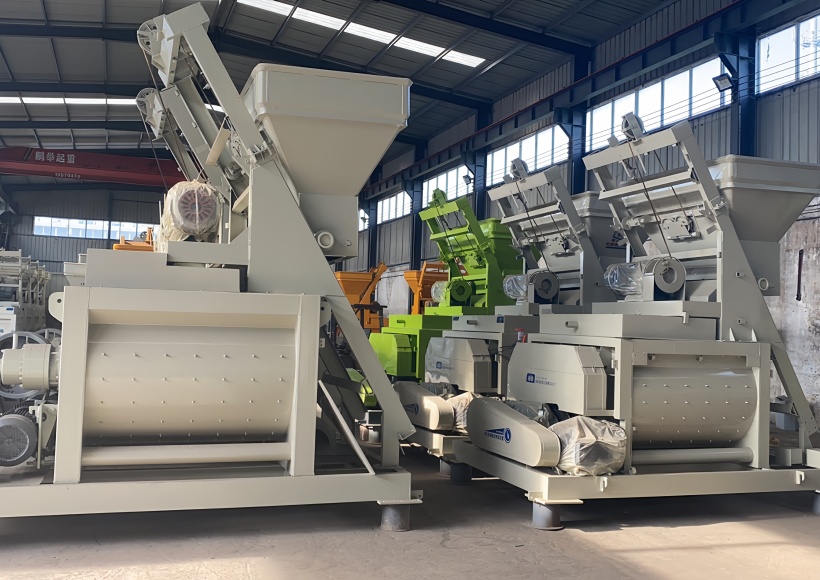
A twin-shaft mixer – the workhorse of most commercial plants – runs a 30-45 second dry mix followed by a 30-45 second wet mix, plus 10-15 seconds discharge. Call it 90 seconds per batch end to end. A 1.5 m³ twin-shaft mixer at 90-second cycles theoretically pushes 60 m³/hr. Reality knocks that down to about 45-48 m³/hr once you account for loading and weighing gaps.
A planetary mixer runs cleaner for high-slump or colored mixes but cycles slower – 120-150 seconds – and costs more per cubic meter. If your mix design leans toward self-compacting or decorative concrete, don’t let the sales rep sell you twin-shaft on throughput alone.
A self-loading concrete mixer is a different animal entirely – it’s site-mobile, not a fixed plant – but operators try to use it as a mini-plant on remote pours. Its production capacity rarely clears 8-12 m³/hr per unit. Two of them won’t replace a 25 m³/hr batch plant no matter how the math looks on paper.
Aggregate Handling and Moisture
Here’s where most capacity calculations break. Aggregate moisture content swings 3-8% between rainy and dry seasons across most of the construction industry in Southeast Asia. Without a moisture sensor on the aggregate bin, the control system can’t compensate – the operator eyeballs water, the slump drifts, the batch gets rejected, and you lose two batches an hour to rework. Sand and gravel consistency is a silent killer.
Moisture compensation isn’t optional if you care about actual output capacity. Budget for it. The properties of the concrete depend on it.
Dosing and Control System Speed
Automation quality determines how fast the aggregate and cement dosing cycles run. A plant with a decent batching controller doses cement, water, and three aggregates simultaneously in 20-25 seconds. A cheap PLC with sequential dosing stretches that to 40+ seconds – and at 40 seconds you’ve just eaten 30% of your effective capacity before the mixing even starts.
Dosing accuracy matters too. If your additive dosing drifts ±5%, you’ll run quality control rework that eats another 5-8% of throughput. That’s where mix cement discipline and the right control system pay for themselves.
Mobile vs. Stationary: The Real Trade-off
This isn’t a lifestyle choice. It’s a math problem about different project needs.
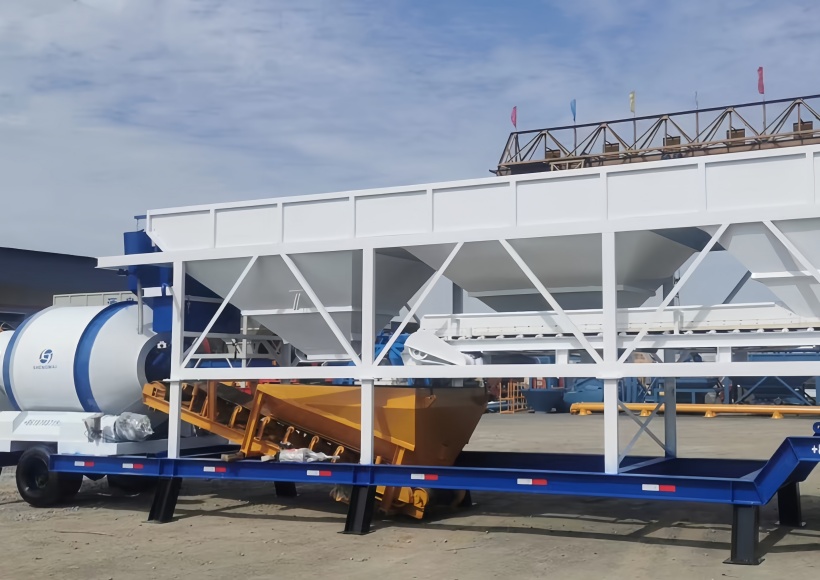
A Loji pencampuran konkrit mudah alih makes sense when your pour duration at any single site is under 4-6 months and you’re moving between two or more construction sites. Relocation and re-commissioning takes 2-5 days for a well-designed mobile concrete batch unit. You lose a week of production every time you move, so amortize that against the mobility gain.
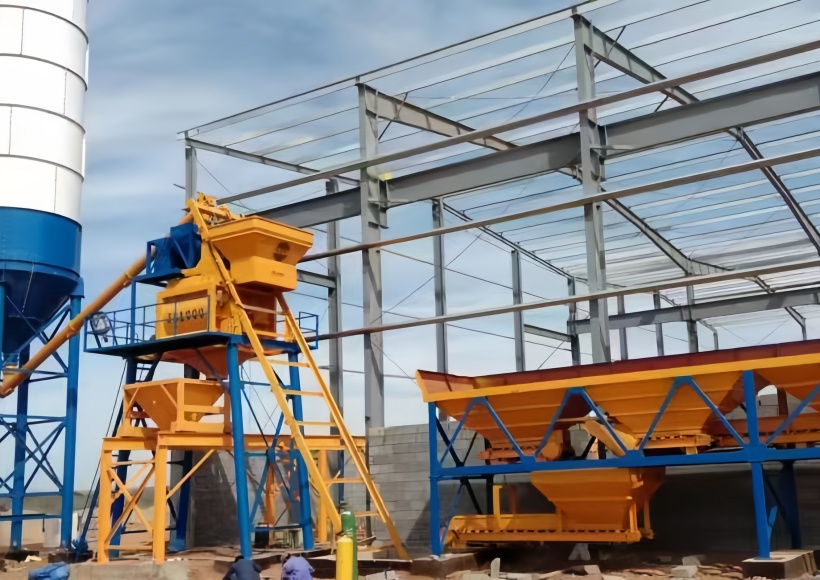
A stationary concrete batch plant is the right call when you have a single long-term project – a dam, a metro line, a precast yard – demanding a consistent high volume over 12+ months. The higher initial investment buys you better dosing accuracy, larger silo capacity, and tighter automation. Per cubic meter, stationary typically lands 15-20% cheaper at scale.
For a decent range of Concrete Batching Plant options – covering both mobile and stationary configurations – read the spec sheets against the discount factors above, not the brochure headline. That’s how you choose the right one.
Calculating Your Actual Production Needs
Daily Volume and Peak Demand
Start with the project’s total concrete demand in cubic meters, then break it into daily pours. But daily average is a trap – calculate for your peak pour day, which typically runs 1.4-1.8× the average in mid-project phases. If your average is 200 m³/day but your peak pour (a slab or a large footing) hits 340 m³, size the plant for 340 m³ plus a 15% buffer. That’s roughly 390 m³ of effective capacity needed, which – at the 0.75 nameplate-to-effective ratio – means you need a 520 m³/day nameplate plant. Across an 8-hour shift that’s a single 90-120 m³/hr twin-shaft unit, or a 60 m³/hr rig running extended hours with a backup.
Mix Design Complexity
If you’re running five different mix designs a day – say, C30 for slabs, C40 for columns, a waterproof mix for the basement, an architectural mix for the facade – your changeover time kills throughput. Every switch flushes the mixer, recalibrates dosing, and burns 8-12 minutes. Five switches a day equals an hour of lost concrete production.
Some control systems handle recipe recall in under 60 seconds. That’s the automation you want to pay for, not pretty dashboards. Mixer size and recipe handling matter more than peak cubic meters per hour.
Material Supply Consistency
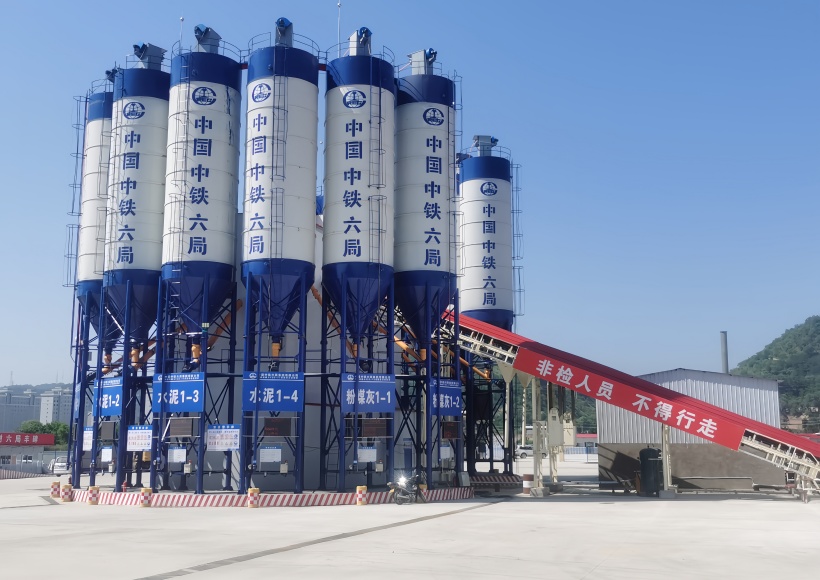
Your plant’s capacity is capped by your weakest material feed. If the cement silo holds 100 tons but the truck turn-around is 6 hours, you’ll run dry mid-pour. If aggregate is delivered by 10 m³ dump trucks and your bin only holds two truckloads, you’re hand-feeding the plant all day.
Rule of thumb: silo and bin capacity should cover at least one full shift of production, plus a 20% buffer for supply disruption. That’s how you produce concrete at a consistent rate and protect project efficiency.
Cost vs. Capacity: Where Money Actually Goes?
An oversized plant is the most expensive mistake I see in plant selection. A contractor buys a 180 m³/hr rig for a project that peaks at 90 m³/hr – the extra capital could’ve funded a second mobile unit and a year of crew training.
Calculate your right plant size like this:
- Peak daily demand (m³/day) × 1.15 buffer = required daily effective capacity
- Required daily effective ÷ working hours = required effective hourly capacity
- Required effective hourly ÷ 0.75 = required nameplate capacity
That third line is the one everyone forgets. If you need 45 m³/hr effective, you need a 60 m³/hr nameplate, not a 45 m³/hr one.
Beyond that, weigh initial investment against operational costs over the plant’s service life. A well-built stationary plant from an established plant supplier – I’ve seen Tongxin Jentera units hold tolerance past 8,000 operating hours – pays back the premium over a budget unit within 18 months on parts and downtime alone. A cheap plant costs you three ways: parts lead time, rework from dosing drift, and the resale hit when you offload it. Choosing the right concrete is as much about the supplier as the spec.
Don’t Forget the Stuff Nobody Quotes You
Spare parts MOQs. A set of mixer liner plates from a Chinese supplier might carry a 5-set MOQ – that’s a $4,000 inventory hit you didn’t budget for. Shipping LCL on plant parts through consolidation eats 25-40 days door-to-door; if a bearing fails mid-pour and your spare is on a slow boat, you’re down for a month. Keep critical spares on-site from day one.
Tooling wear is real too. Twin-shaft mixer blades wear 2-4 mm a month in abrasive aggregate. Set a tolerance check schedule and replace before you hit ±10% on batch weight. Equipment maintenance discipline is what separates plants that run from plants that sit idle.
Wrapping the Calculation
The honest capacity calculation isn’t one formula. It’s a stack of discounts:
- Nameplate capacity × effective ratio (0.70-0.80) = realistic sustained output
- Realistic sustained output ÷ your peak hourly demand = headroom
- If headroom is below 1.2, you’re under-spec’d. If headroom is above 2.0, you’re over-investing.
Then layer in mix design complexity, material supply robustness, crew training level, and maintenance discipline. None of those show up on a spec sheet, and all of them will cost you if ignored. Various factors converge here – right plant size is a judgment call, not a lookup table.
For a fuller catalog of Concrete Batching Plant configurations – from compact 25 m³/hr mobile units to 240 m³/hr stationary twin-shaft lines – match the spec against the calculation above. That’s how you turn a brochure number into a defensible procurement decision.
Soalan Lazim
How accurate is the nameplate capacity on a batching plant?
Nameplate capacity assumes ideal conditions – dry aggregate, single mix, trained crew, no maintenance. Effective capacity runs 70-80% of nameplate in real operations. Use a 0.75 multiplier when sizing for your project.
What size mixer do I need for a 100 m³/day pour?
A 1.0-1.5 m³ twin-shaft mixer on a 60 m³/hr plant typically covers 100 m³/day with comfortable headroom. If you run multiple mix designs, step up to a 1.5 m³ mixer to absorb changeover losses.
Mobile or stationary for a 6-month project?
Mobile, almost always. Relocation and setup on a mobile unit eats 2-5 days; you’ll recover that against the lower initial investment on anything under 6-8 months. Beyond 12 months at one site, stationary wins on cost per cubic meter.
How much silo capacity should I budget for cement?
One full shift of production plus a 20% buffer. For a 60 m³/hr plant running an 8-hour shift, that’s roughly 100-120 tons of cement storage. Splitting across two silos de-risks a single delivery failure.
How does aggregate moisture affect my capacity calculation?
Directly. Without moisture compensation, a 5% moisture swing drifts slump, forces operator over-watering, and kills 2-4 batches an hour to rework. Budget for a moisture sensor – it pays back in under 60 days on any serious project.