








Last March I got a call from a ready-mix operator outside Houston. He had spec’d a 150-ton silo for a highway paving job, ran the volume math on a napkin, and three weeks in he was burning $4,200 a week on expedited tanker runs because the thing kept running dry before the next scheduled delivery. The problem was not the silo. The problem was that nobody had accounted for the gap between geometric volume and usable capacity – and that gap is where most cement storage decisions go sideways.
A cement silo capacity calculator is only as good as the inputs you feed it. Feed it nominal dimensions and a textbook density figure, and you get a number that looks correct on a quote sheet and fails on a job site. Here is how to run the math the way a plant engineer actually runs it, with the variables that bite you if you ignore them.
The Math Behind Silo Volume – And Why Most Buyers Get It Wrong?
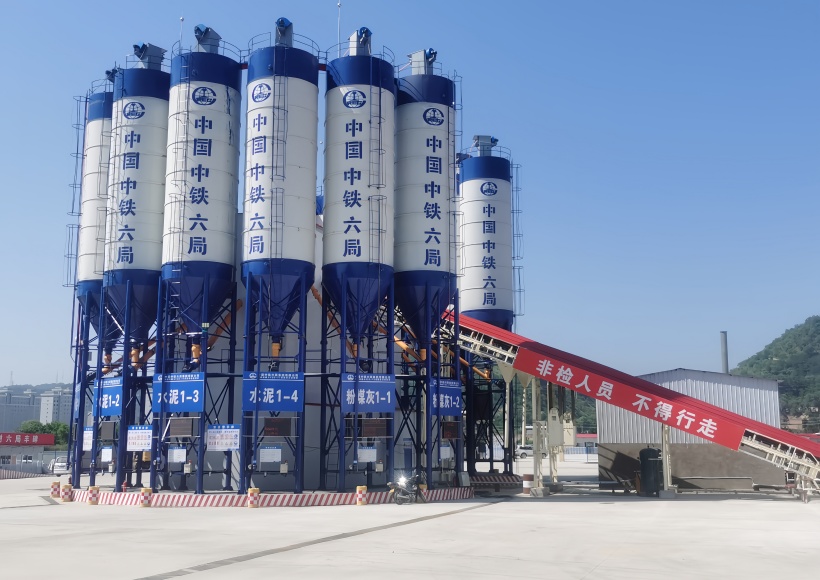
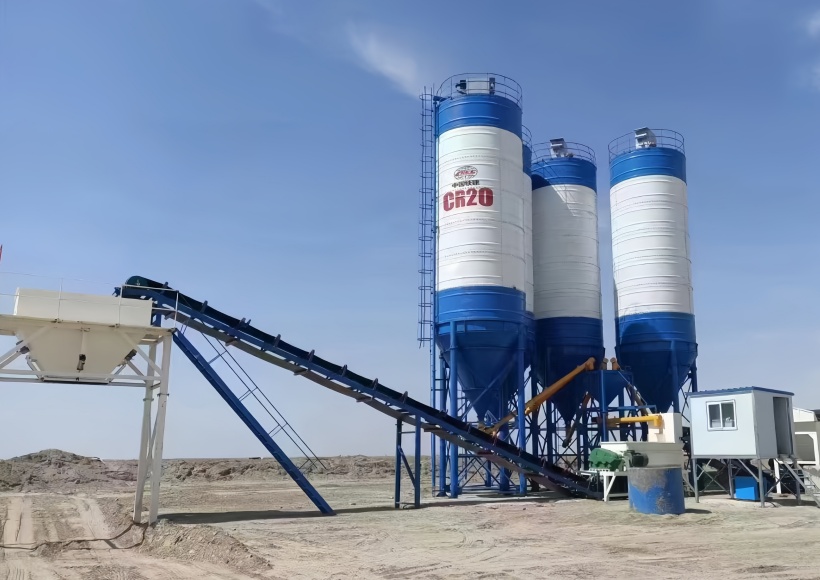
Most cement silos are a cylindrical body sitting on top of a cone. The cylinder holds the bulk of the material. The cone funnels it down to the discharge point. To get total silo volume, you calculate each section separately and add them.
The cylinder portion: Volume = pi x r² x h, where r is the internal radius (half the internal diameter) and h is the straight-wall height. Not the total height – the straight-wall height. Take this measurement to the top of the cone, not the roof.
The cone portion: Volume = (1/3) x pi x r² x h, where h is the cone height from the cylinder bottom to the discharge opening.
Add the two. That gives you geometric volume in cubic meters. Now stop, because that number is not your capacity.
Bulk Density: The Number That Changes Everything
Here is the factor where roughly 80% of capacity calculations go wrong. People plug in a single density figure – usually 1,500 kg/m³, pulled from a cement spec sheet – and call it done. But cement bulk density is not a constant. It swings with aeration, compaction, and moisture content, and the accuracy of your estimate depends on picking the right number for your conditions.
Loose, aerated cement coming off a pneumatic tanker sits around 1,000-1,100 kg/m³. Settled cement in a silo that has been sitting for 48 hours compacts to 1,300-1,400 kg/m³. Fully deaerated and compacted, you can see 1,500-1,600 kg/m³ at the bottom of a tall silo.
What does this mean for your storage capacity? A 100 m³ silo holds roughly 105 tons of freshly loaded cement and 145 tons of the same cement after it settles for two days. If you are sizing the silo based on settled density but scheduling refills based on loose density, your inventory math drifts 30% inside a week. I have watched operators do exactly this and then blame the level sensor.
The fix: pick a working density that reflects your actual refill cycle. If you refill every two to three days, use 1,300 kg/m³. If cement sits a week or more between deliveries, use 1,400. Write it down. Do not let two different people use two different numbers.
Fill Ratio: Why You Never Fill a Silo to 100%?
Geometric volume assumes you fill the cylinder to the brim. Nobody does that, and nobody should. A cement silo needs headroom for three reasons.
First, aeration expansion. Pneumatic delivery fluidizes the cement. It expands 10-15% during loading. Fill the silo to 95% and the pressure relief vent on the roof starts blowing cement dust into the air – which is both a mess and an OSHA conversation you do not want.
Second, dust collector clearance. The bin vent filter on top of the silo needs breathing room. Cement dust hitting a saturated filter under pressure will force material past the seals and shorten filter life by half.
Third, safety margin. Overfilling is the single most common cause of silo structural damage. The pressure on the cone and lower cylinder walls scales nonlinearly as you approach full capacity.
Realistic fill ratio: 85-90% for routine operation. Use 0.85 if you are conservative, 0.90 if you have reliable level instrumentation and a disciplined loading crew.
Usable capacity = total volume x fill ratio x working bulk density.
Example: a silo with 75 m³ geometric volume, fill ratio 0.85, working density 1,300 kg/m³. Usable capacity = 75 x 0.85 x 1.3 = 82.9 tons. Not 112 tons, which is what you get plugging in 1,500 kg/m³ at 100% fill. That 29-ton gap is the difference between a silo that carries you to the next delivery and one that runs dry on a Friday afternoon.
Site Variables That Wreck Your Capacity Math
A calculator gives you a static number. Your operation is not static. Four variables determine whether that number holds up in the field.
Consumption Rate
A batch plant running 60 m³/hour of concrete eats roughly 18-20 tons of cement per hour at a 300 kg/m³ mix design. A dry-cast operation runs higher. Know your peak draw, not your average – silos run dry during peaks, not averages.
Delivery Frequency
How many tanker trucks can your site physically receive per day? One silo with a single pneumatic connection ties up the pad for 45-90 minutes per delivery. If you are limited to two deliveries a day and each truck carries 25 tons, your practical ceiling is 50 tons of throughput – regardless of what the silo can hold.
Lead Time
If your supplier runs a 3-day lead time, you need at least 3 days of consumption in storage plus a buffer. I size silos to (lead time x daily consumption) + 25% safety stock. Below that, you are one traffic jam away from a plant shutdown.
Seasonal Swing
Paving and precast operations run seasonal. A silo sized for July peak will sit half-empty in January, and condensation cycles in a partially filled silo cause caking and lump formation. Size for 70% utilization at peak, or plan for a second silo to handle the swing.
Choosing the Right Silo Size for Your Operation
Start with your daily consumption and work backward. If you are moving 80 tons a day and your refill lead time is 2 days, you need a minimum of 80 x 2 x 1.25 = 200 tons of usable storage. Backing into volume at 1,300 kg/m³ and 0.85 fill ratio: 200 / 1.3 / 0.85 = 181 m³ geometric. Round up to the next standard size – a 200 m³ silo gives you the optimal margin for a project of this scale.
Horizontal vs. vertical: vertical wins on footprint and capital cost per ton of holding capacity. Horizontal silos win when you have height restrictions (indoor installations, airport zones) or when you need mobile units that relocate between construction sites. For permanent batch plants, vertical is almost always the right model to choose.
Steel vs. aluminium: Q345 steel is the industry default for good reason – it handles the abrasive wear of cement loading cycles and survives 20+ years with basic maintenance. Aluminium costs 30-40% more upfront but shines on mobile units where weight matters for transport permits. Do not let anyone sell you aluminium for a fixed installation; the ROI does not pencil out.
When you are ready to spec the unit, Tongxin Jentera builds cement silos from 50T to 500T with configurable cone angles and discharge systems, and they will validate your capacity math against your actual consumption profile before cutting steel. Their Cement Silo lineup covers both fixed and mobile configurations – and if you are unsure whether you need a 100T or 150T unit, running the numbers through a proper calculator first saves you a change-order later.
Foundation, Cone Design, and Discharge – The Details That Bite You
A silo is a pressure vessel on a stick. Get the foundation wrong and nothing else matters – the structure fails before the steel wears out.
Foundation
A 150-ton silo fully loaded weighs 150 tons of cement plus 25-35 tons of steel plus live loads (wind, seismic). That load transfers through a ring beam or legs into a concrete pad. The silo tower acts as a lever – the taller the structure, the greater the overturning moment at the base. On poor soil, you are looking at driven piles or a mat foundation. I have seen a 200T silo settle 40mm in six months on uncompacted backfill – the cone warped, the discharge pipe sheared, and the repair bill hit $60,000. Spend the money on geotech before you spend it on steel.
Cone Angle and Discharge
A 60° cone (measured from horizontal) is the minimum for reliable cement discharge. Shallower than that and you get ratholing – cement flows down the center while the shoulders compact and hang up. Steeper cones cost more in steel and height. Most standard silos run 55-60°. If you are storing fly ash or other fine, cohesive powders, push to 65°.
Cement does not flow out of a cone on its own. You need either a mechanical screw conveyor (reliable, higher maintenance, good for horizontal transfer) or a fluidization system (lower maintenance, needs compressed air, limited transfer distance). Aeration pads along the cone wall break up bridging. Budget for aeration – a silo without it is a silo that clogs.
Level Instrumentation
Radar or guided-wave radar level sensors are the current standard. Rotary paddles and capacitance probes work but need more calibration. Whatever you install, mount two sensors at different heights as redundancy – a single failed sensor is how plants discover they have overfilled a silo at 2 AM.
Inspecting a Silo Before It Ships
Whether buying new or surplus, schedule an inspection before it ships. Accurate results depend on verifying whether the silo can safely store its rated maximum. The checklist matters:
- Wall thickness on the lower third of the cylinder – this is where abrasive wear concentrates. Ultrasonic gauge it. Anything under 4mm on a steel silo that has seen service is a walk-away.
- Welds on the cone-to-cylinder seam. This joint carries the full material load. Look for cracking, rewelding, or patches.
- Roof integrity. Bin vent flange should be flat and undistorted. Pressure relief valve should move freely.
- Discharge flange alignment. A warped flange means a leaking screw conveyor and cement dust in your plant.
When evaluating any cement silo for sale, the same rules apply. A well-maintained Cement Silo from a reputable manufacturer clears all these checks. A cheap one does not – and the difference shows up in your downtime log, not your purchase order.
Soalan Lazim
1. How do I calculate cement silo capacity in tons?
Multiply total geometric volume (cylinder + cone, in m³) by fill ratio (0.85-0.90) and working bulk density (1,300 kg/m³ for typical refill cycles). Divide by 1,000 to convert kg to tons. Example: 75 m³ x 0.85 x 1.3 = 82.9 tons usable.
2. What bulk density should I use for cement?
Use 1,000-1,100 kg/m³ for freshly aerated cement during loading, 1,300 kg/m³ for typical 2-3 day storage cycles, and 1,400+ kg/m³ for cement sitting a week or longer. Pick the number that matches your actual refill pattern.
3. Why doesn’t my silo hold as much as the spec sheet says?
Spec sheets use geometric volume at 100% fill with a single density figure. Real-world usable capacity runs 25-35% lower once you apply a realistic fill ratio (85-90%) and a working density that accounts for aeration and settling.
4. What size cement silo do I need for a concrete batch plant?
Size to (daily consumption x delivery lead time in days) + 25% safety stock. A plant using 80 tons/day with a 2-day lead time needs roughly 200 tons of usable storage – typically a 200-250 m³ silo depending on density assumptions.
5. What is the minimum cone angle for reliable cement discharge?
60° from horizontal. Shallower cones cause ratholing and bridging. For fine, cohesive powders like fly ash, use 65°. Pair the cone with aeration pads or a fluidization system to prevent hang-ups.