








A client in Long Beach called me last spring, frantic. Their stationary batch plant had been running 90m³/hour on a bridge deck pour, and the single 100-ton silo ran dry at 2 a.m. The ready-mix backup truck was stuck behind a jack-knifed semi on the I-710. By dawn, the pour was cold-jointed, and they were writing a $40,000 change order for a demo and re-pour. The number of cement silos needed is not a spreadsheet abstraction – it is the difference between a pour that finishes and a pour that fails.
Most sizing guides on the SERP read like they were written by someone who has never watched a screw conveyor choke on bridged cement at 3 a.m. They quote “daily production divided by consumption” and call it a day. That math works on paper and dies on the pad. Here is the operator’s version – the variables that actually move the count, the missteps that cost real money, and the maintenance habits that keep a plant from bleeding downtime.
The Variables That Actually Move the Silo Count
Cement Burn Rate and Daily Production
Start with the honest number, not the brochure number. A 60m³/hour Concrete Batching Plant does not pour 60m³ every hour, every day. Utilization on a real pour sits around 0.55-0.65 once you account for truck turn time, aggregate moisture swings, and lunch breaks nobody schedules into the production line. Cement content per cubic meter runs roughly 300-380 kg for standard structural mixes, higher for high-performance or shotcrete work – and that is before you add fly ash or slag into the storage plan.
That gives you a daily cement burn. The mistake operators make is sizing the silo to that burn without a refill buffer. If the delivery truck shows up late once, you are dry. Convert the burn into cubic feet or even bbl if your supplier still quotes in barrels, but the math is the same: you need installed storage that exceeds your worst-case daily draw plus a sane refill cushion.
Supply Chain Reliability and Refill Cadence
This is where the textbook math collapses. Cement in bulk arrives by pneumatic tanker, and a single delivery takes 45-90 minutes to blow off depending on line length, pressure, and how humid the air is that day. Humid environments will cost you 15-20% on blow-off time and silently start clumping powder in the cone – a failure mode nobody mentions until the aeration system is already fouled. A well-run plant schedules refills at the 30% level, not the 10% level, because overfill is a real risk too: blow past the high-level sensor and you pressurize the vent filter, blow cement dust into the yard, and contaminate the pad.
If your supply chain runs same-day delivery, a 1.5-day buffer is workable. If you are at the end of a rural haul road on the western slope, you want 4-6 days on the pad. Silo count follows directly from that buffer – split it across two vessels, not one, so a single sensor fault or a plugged fill line does not stop the concrete production.
Plant Layout and Footprint Constraints
A Cement Silo is not just storage – it is a piece of process equipment with a discharge footprint. Vertical cement silos buy you storage capacity per square foot of pad, which is why stationary plants lean on them. But you need headroom. A 100-ton vertical silo sits 12-15 meters in the air, and if your site has height restrictions – overhead power lines, a quarry rim, a low tunnel – you are forced into horizontal silos or split capacity across multiple smaller units. That directly increases the silo count even when total tonnage is unchanged.
Vertical vs Horizontal Silos – The Real Trade-Off
Footprint, Headroom, and Discharge Reliability
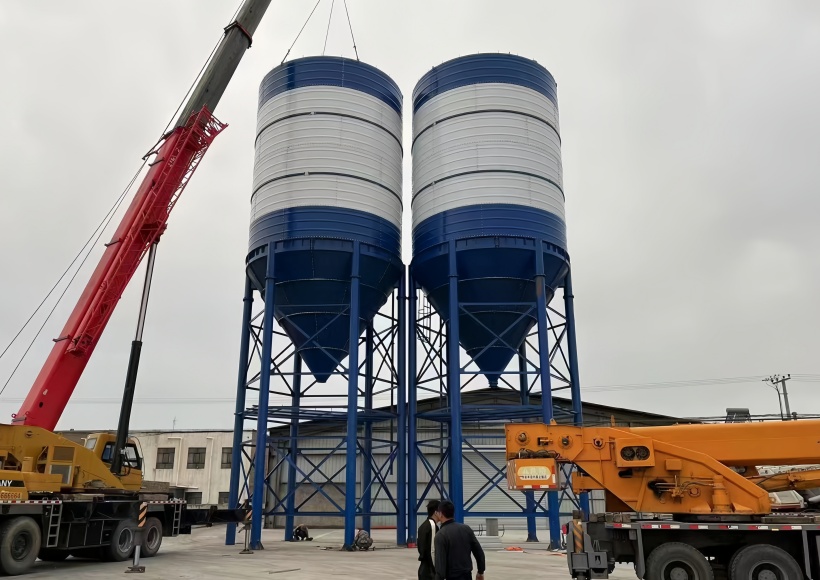
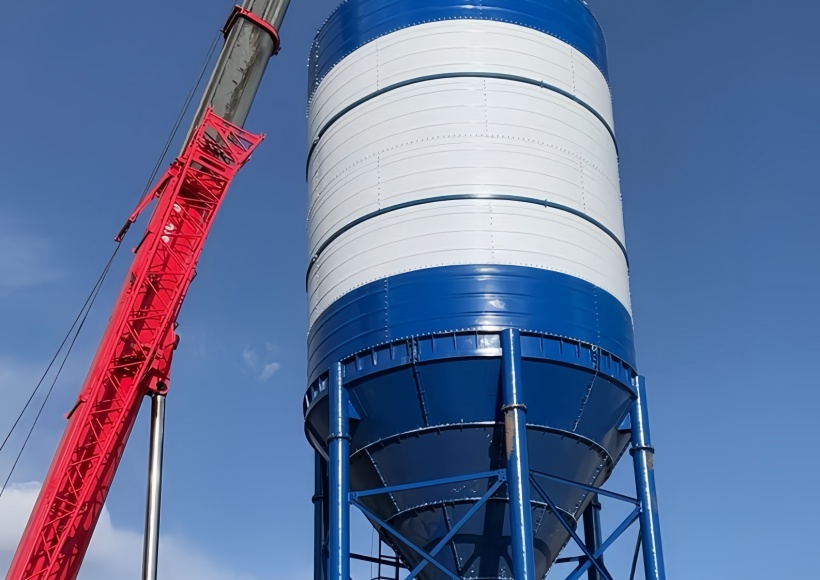
Vertical cement silos win on density. One 150-ton vertical unit replaces three 50-ton horizontals on the same pad. The cone bottom feeds a screw conveyor cleanly, and the column weight keeps the powder compacted for a smooth flow out to the concrete mixer. The catch is installation. You need a crane, a poured foundation rated for the dead load, and a site condition that tolerates a tall structure in the wind.
Horizontal silos trade footprint for portability. They ship in modular components, bolt together on-site, and a mobile concrete batching plant will run them low-slung under a gantry. The downside is bridging – horizontal cones are shallower, the powder arches more readily, and you will lean harder on aeration pads and vibrators to keep material flow clean. In my experience, horizontal units fail at the cone twice as often as verticals in the same service. Some operators try to paper over the problem with volumetric concrete setups that meter powder straight from a smaller holding vessel, but that is a different machine entirely – not a substitute for proper silo sizing on a real batch plant.
Mobile vs Stationary Plant Configurations
When Portable Silos Make Sense?
On-site concrete production exists because transit time kills ready mix. After 90 minutes in a drum, you are fighting slump loss and retempering, and the structural engineer does not want to hear about it. A mobile batching plant dropped next to a remote bridge abutment or a dam site makes sense when the haul from the nearest commercial batch plant exceeds 45 minutes – that is the inflection point where on-site batching starts to beat the trucking math, reducing waste and cutting delivery cost.
Portable silos on those rigs run 30-80 tons, modular, designed for rapid deployment. You accept the trade: smaller buffer, more frequent fills, higher cost per ton of installed storage. For a six-month construction project, that pencil works. For a five-year plant, it does not.
When Stationary Vertical Silos Win?
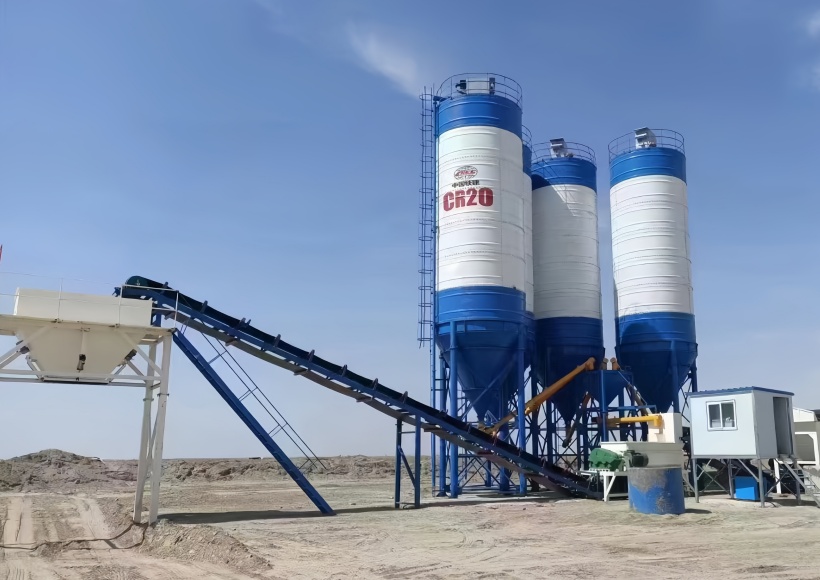
A stationary concrete plant is built for high volumes and continuous batching operations. The silos there are vertical, sized to 100-300 tons, and you stack two or three of them to segregate cement, fly ash, and slag – because blending in one silo is how you ship a bad batch to a structural pour. Material storage segregation is not optional on a plant that serves bridge decks, pavements, and drilled shafts from the same pad.
The plant layout matters here more than anywhere else. A well-placed silo cuts screw conveyor length, which cuts wear, power draw, and the blockage risk at every elbow. A badly placed silo adds 12 meters of screw and a bottleneck you will fight for the life of the plant. This is also where you can increase production capacity without adding a second mixer – free up the silo flow and the existing plant runs harder.
Sizing Missteps That Cost Real Money
Oversizing and Dead Capital
A 300-ton silo on a plant that burns 40 tons a day is dead capital. Cement does not improve with age – it settles, it absorbs moisture, it cakes against the cone wall. Oversizing to “be safe” is the trap I see most often with first-time plant buyers in the construction industry. The capital you tied up in steel and foundation could have bought a second mixer, a better aggregate reclaimers system, or a second silo for fly ash. Size for your 90th percentile burn day plus a sane refill buffer, not your fantasy peak.
Undersizing and the Refill Bottleneck
The other failure mode is the single-silo plant running flat out. One silo means one point of failure – when the aeration pad dies, when the level sensor fouls, when the pneumatic fill line plugs, production stops. On any plant doing more than 50m³/hour of structural work, I spec at least two cement silos so you can keep batching through maintenance. The cost of the second silo is recovered the first time the first one goes down mid-pour. A quality manufacture will let you add the second vessel later without re-engineering the pad, which is worth asking about before you sign.
Silo Management on the Line
Aeration, Bridging, and the Vibrator Trap
The vibrator is not a solution – it is a confession. If you are running the vibrator constantly, your aeration pads are dead or your cement is damp. Bridging happens when powder compacts into an arch above the cone outlet, and the correct fix is restoring aeration flow, not beating the silo wall with a pneumatic hammer. I have seen operators crack welds on a silo cone chasing a bridge with a vibrator. Inspect aeration pads monthly, keep the desiccant on the vent line fresh, and you prevent contamination of the powder and avoid the blockage entirely.
Level Monitoring and Quality Control
Modern silos run radar or guided-wave level sensors – not the old pressure pads that drift with density. Real-time levels inside the silo let you schedule pneumatic delivery before you hit the panic line, and they feed the production workflow so the plant operator sees refill status on the HMI alongside the mixer cycle. Quality control does not stop at the silo, though. You verify material flow rates from silo to concrete mixer, you check aggregate moisture at the hopper before every batch, and you never trust that a silo labeled “Type II” actually contains Type II until the truck manifest matches the sensor. Cross-contamination in a shared delivery line is how a pavement batch ends up with fly ash nobody ordered.
Picking the Right Partner
The silo is a 20-year asset. I have seen too many operators buy on price and spend the next decade fighting weld failures, misaligned cones, and screw conveyors that eat bearings every six months. Tongxin Jentera builds the kind of vertical and horizontal cement silos that survive a decade on a real batch plant pad – engineered cone angles, properly sized aeration, and screw conveyors that do not require you to rebuild the drive end every season. Pair that with a Cement Silo spec matched to your actual burn rate, and the plant runs clean.
Soalan Lazim
1. How do I calculate the minimum silo tonnage for my plant?
Take your 90th-percentile daily cement burn (m³/day × kg cement/m³ × 0.9), convert to tons, and add a refill buffer equal to your worst-case delivery lead time in days. A 50-ton/day plant with same-day delivery needs ~75-100 tons of installed storage; the same plant on a 3-day rural lead needs 200+ tons.
2. Why run two cement silos instead of one large one?
Redundancy and material segregation. One silo is a single point of failure – a dead aeration pad or a plugged fill line stops the pour. Two silos also let you run cement and fly ash (or slag) in separate vessels, which prevents cross-contamination on structural mixes.
3. What is the realistic lifespan of a vertical cement silo?
A properly maintained, well-engineered vertical silo runs 20-30 years. The cone and the screw conveyor are the wear items – expect to reline or replace the screw flights every 5-8 years depending on tonnage. Cheap silos with thin cone plate fail at the welds in 6-10 years.
4. Do humid climates change silo sizing?
Yes. Humid environments slow pneumatic blow-off by 15-20% and increase bridging risk. Size the aeration system larger, run desiccant on the vent, and consider a 10-15% tonnage buffer to compensate for the powder that cakes against the wall and is not fully recoverable.
5. Can I use one silo for cement and fly ash?
You can, but it is a bad idea on any structural work. Shared silos require complete purge between fills, and residual fly ash in a cement line will alter the mix design on the next batch. Run separate silos – the cost of the second vessel is far less than one rejected structural pour.