








Last March, a general contractor in Nevada called my desk at 7:15 AM. Not a social call. He’d spent $840,000 on a stationary concrete batching plant for an 18-month highway expansion. Nine months into the pour schedule, the DOT rerouted the alignment 40 miles east. That plant sat idle for the remainder of the contract, chewing $14,000 a month in maintenance, standby power, and permit renewals – while the crew trucked ready-mix concrete from a supplier 22 miles away at a markup that made everyone wince.
That’s not a brochure problem. That’s a decision-framework problem. And it’s exactly the kind of thing this article is going to prevent.
What Nobody Tells You About the Core Distinction?
Most buyers entering the stationary vs mobile batching plant conversation show up thinking it’s a capacity question. That’s maybe 30% of the answer. The rest lives in three variables that spec sheets don’t cover: how long you’ll stay put, how much control you need over the pour window, and whether your site logistics can absorb the hidden costs of either option.
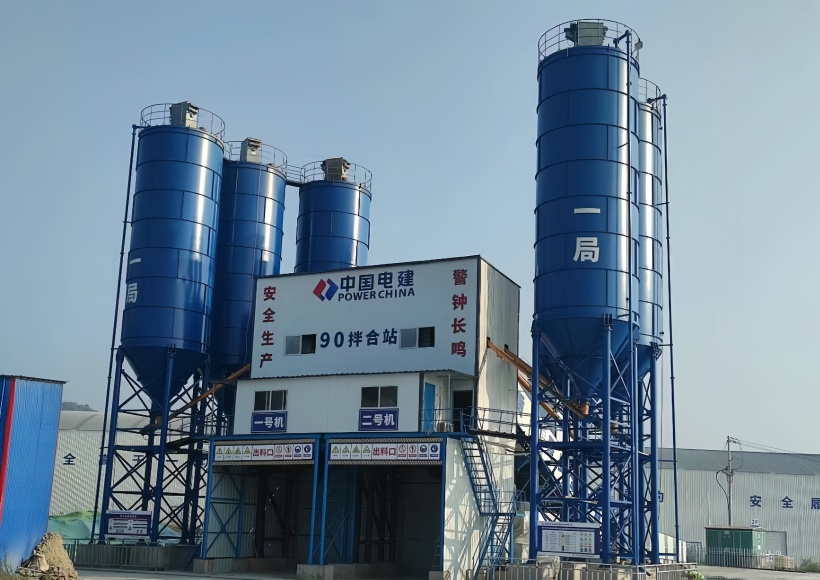
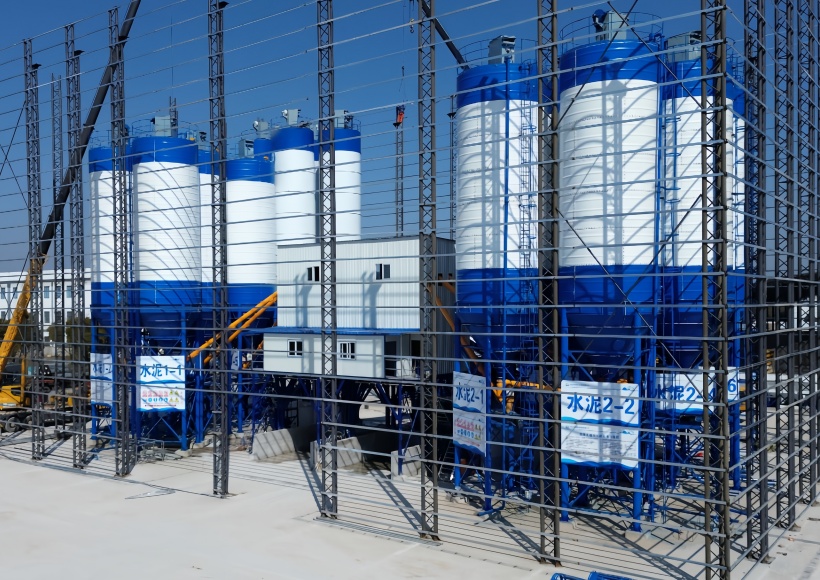
A stationary concrete batching plant is a permanent facility. You’re pouring structural foundations, running three-phase power, erecting bucket elevators, and wading through permitting cycles that routinely eat 4-6 months before you batch a single cubic meter. In return, you get continuous production, tight quality control across thousands of batches, and per-unit costs that drop below any mobile alternative once utilization crosses roughly 70%.
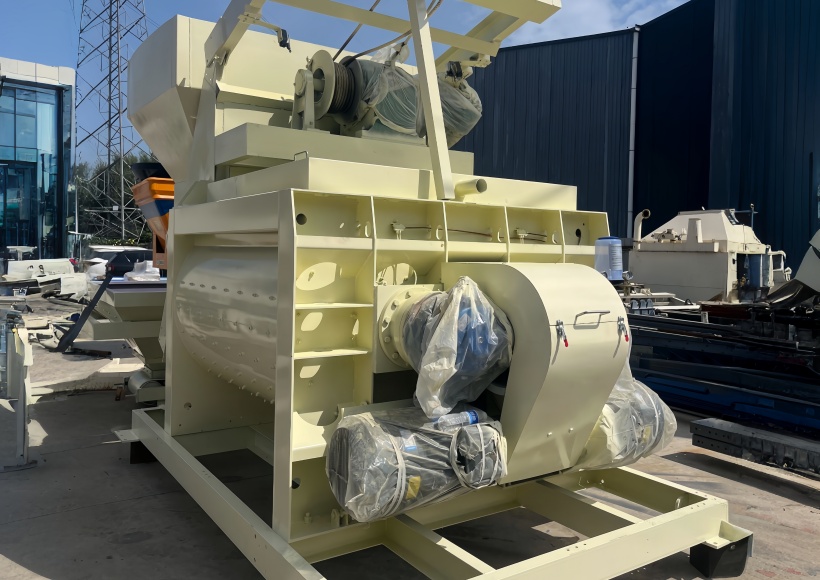
A mobile concrete batching plant arrives on a flatbed, assembles on foundation blocks or a leveled pad with minimal civil work, and starts pouring within 48 to 72 hours. The modular structure is pre-wired, the control cabinets are plug-and-play, and the whole thing can disassemble and relocate to a new site in three days. The trade-off: lower hourly output and a per-cubic-meter cost that stays above stationary at any sustained scale.
Production Capacity: The Numbers You’ll Actually Live With
Here is where brochure numbers mislead contractors every season. A stationary concrete batching plant with a twin-shaft mixer will deliver 90 to 240 cubic meters per hour – continuous, 12-hour shift capable, assuming your aggregate storage and cement supply chain are sized right. That’s built for high volumes of concrete measured in thousands of yards per week: dam construction, precast concrete facilities, or a ready-mix concrete operation supplying a fixed geographic market.
Mobile concrete batching units generally top out between 25 and 75 cubic meters per hour, depending on mixer configuration and whether you’re running a wet-batch or dry-batch flow. That’s real concrete production – enough for road construction equipment needs, bridge repair, or medium-sized construction across multiple sites. But if a single pour demands 500+ cubic meters in a continuous window, a mobile unit will choke.
I’ve seen contractors try to dodge this by running two mobile batching plants side by side. It works – operationally. But you’re now managing two cement supply chains, two maintenance schedules, two operator crews. The installation cost approaches what a small stationary plant would have run, and the quality control complexity doubles. That’s not a solution. That’s a workaround that bleeds margin.
Setup Time: What the Rep Skips in the Sales Deck
“Quickly installed” sounds great in a brochure. On the ground, here’s what it means:
Mobile concrete batching plant setup: If your pad is leveled and compacted, your aggregate stockpile is positioned within loader reach, your water line is stubbed, and cement is queued for delivery – then yes, 2 to 5 days from truck arrival to first batch. Add a week if you’re pouring the foundation blocks yourself or running new power. The modular, pre-wired architecture genuinely saves time.
Stationary concrete batching plant setup: 8 to 16 weeks, minimum. Civil engineering, concrete footings for silos and bins, three-phase electrical infrastructure, commissioning, and a few rounds of regulatory inspection. For a ready-mix concrete operation targeting long-term production, this is acceptable. For a project with a hard deadline within 120 days, it’s a non-starter. You will not start production faster by throwing more labor at it.
Cost Structure: What the Invoice Won’t Show You
Initial Investment Reality
A stationary concrete batching plant runs $200,000 to over $1.2 million, not counting land, foundation work, permitting, or the concrete truck fleet needed to deliver product offsite. That’s capital-intensive and demands a multi-year utilization forecast that most project-based contractors don’t have.
A mobile batching plant lands between $45,000 and $300,000. The low initial cost attracts contractors with fluctuating concrete demand across multiple sites. But the number most people miss is residual value. After a 2-year road construction run, a well-maintained mobile unit from manufacturers like Tongxin Jentera retains 60-70% of purchase price. A stationary plant? Unless the site has reuse value, you’re looking at scrap steel pricing for the silos and bins.
The Hidden Operational Bleed
Stationary plants win on per-unit cost at high utilization – automation keeps labor thin, and the mixer’s wear rate spreads across high volumes. But if your utilization drifts below 60%, fixed costs don’t scale down. Maintenance contracts, standby power, stormwater permits, silo cleaning – these chew cash whether you pour 1,000 yards a month or 200.
Mobile plants have higher per-unit direct costs at full tilt but minimal fixed overhead. If your concrete demand gyrates – 300 cubic meters one week, 45 the next – a mobile plant’s operational flexibility saves you from paying for idle capacity. The trade-off is that relocation and disassembly cost real money each time: $8,000 to $25,000 per move depending on distance and plant size.
When Stationary Is the Right Choice
Choose a stationary concrete batching plant when you have:
- A dedicated ready-mix concrete business serving a fixed radius with predictable volumes of concrete
- Precast concrete production requiring mix design consistency across thousands of identical components
- Major infrastructure with a 3+ year continuous concrete supply requirement
- A site where multiple projects cluster within 15-20 miles, making trucking economical
A Loji Pengacakan Konkrit decision should be driven by annual output projections and site logistics, not by what your competitor parked in their yard.
When Mobile Wins – And When It Bleeds You
Choose a mobile concrete batching plant when:
- The project is linear – road construction where the pour face advances and the batch plant needs to follow
- The site is remote and trucking ready-mixed concrete would involve 90-minute one-way hauls
- You have multiple smaller sites where concrete use is intermittent
- The project is temporary – under 18 months at any single location
But here’s the trap: mobile plants are easy to install and easy to underestimate. Relocation logistics, recalibration after every move, and the administrative weight of pulling permits at each new site – these eat margin fast if you’re bouncing between construction sites every 4 weeks. Choose mobile only when the equipment moves with the concrete demand, not when you’re moving it to chase thin margins.
Environmental and Regulatory Reality
Stationary concrete batching plants trigger the full regulatory stack: environmental impact review, air quality monitoring plans, stormwater pollution prevention, noise studies – the permitting alone can stretch 3-6 months before the first pour.
Mobile plants aren’t exempt just because they’re on wheels. I’ve watched a road construction crew get a stop-work order in California because they assumed “portable” meant “no dust control plan needed.” The EPA and state-level environmental agencies don’t distinguish between stationary concrete plants and mobile units – particulate matter is particulate matter. Every site the mobile batching plant touches needs its own dust control protocol, water discharge permit, and washout management plan.
Seven Questions to Answer Before You Sign
Answer these honestly. They’ll reveal the right choice faster than any comparison table:
- How long at this site? Under 2 years leans mobile. Over 3 years leans stationary.
- How many sites total? One plant per site, or one mobile unit serving multiple locations?
- Peak pour day? Over 100 cubic meters per hour in a single continuous pour needs stationary capacity.
- Start production deadline? Under 2 weeks means mobile – stationary is impossible.
- Capital position? Tight budget with fluctuating concrete demand means mobile. Balance-sheet strength with contracted volume means stationary.
- Permitting runway? Check local requirements before any purchase. Stationary permitting can kill aggressive project timelines.
- After the job ends? If the site has no future value, mobile wins on resale and transport flexibility.
The right Loji Pengacakan Konkrit fits your business model – not just your next project.
Mistakes I’ve Watched Contractors Make
Overbuying capacity. A 180 m³/hour stationary concrete plant running at 30% utilization produces concrete at a higher per-unit cost than buying ready-mix from a supplier. The “we might need it someday” argument almost never pays out.
Ignoring disassembly time. Mobile plants go up fast. Breaking them down, transporting, recalibrating, and pouring new foundation blocks at the next site? Budget 3-5 labor days plus equipment. Multiplied across 4 or 5 relocations a year, that’s real money.
Forgetting quality control at the edge. Mobile mixers with manual override systems can drift between batches – especially when aggregate moisture content fluctuates after rain. A $900 moisture sensor probe pays for itself in 3 months of reduced batch rejections.
Assuming cement supply follows you. A mobile concrete batching plant placed 70 miles from the nearest cement terminal is a logistics failure waiting to happen. Site selection has to account for the cement supply chain radius, not just the pour location.
Soalan Lazim
1. What’s the typical service life of a stationary batching plant vs a mobile batching plant?
Stationary concrete batching plants with scheduled maintenance run 20-30 years. Mobile units typically last 10-15 years – transport stress on the modular structure and frame fatigue are the life-limiters, not the mixer itself.
2. Can a mobile concrete batching plant match stationary plant concrete quality?
Yes – if it uses the same mixing technology (twin-shaft or planetary) and automated weighing. The difference shows up in batch-to-batch consistency over thousands of cycles; stationary plants hold tighter tolerances long term. For temporary projects under 5,000 cubic meters total, the quality gap is negligible.
3. What does relocating a mobile batching plant actually cost?
$8,000 to $25,000 per move, fully loaded – disassembly, flatbed transport, reassembly, recalibration, and local permit fees. The spread depends on plant size (25 vs 75 m³/hour) and transport distance.
4. At what concrete volume does owning beat buying ready-mix?
Rough threshold: above 3,000 cubic meters of concrete total across a project, owning a small mobile concrete batching plant beats buying ready-mixed concrete on delivered cost. Below that, trucking is more economical.
5. Do mobile batching plants need the same permits as stationary plants?
Not identical, but similar in scope. Mobile units require shorter-term operational permits, which vary by jurisdiction. Dust control plans, water discharge permits, and noise limits apply regardless – portable equipment is not unregulated equipment.