
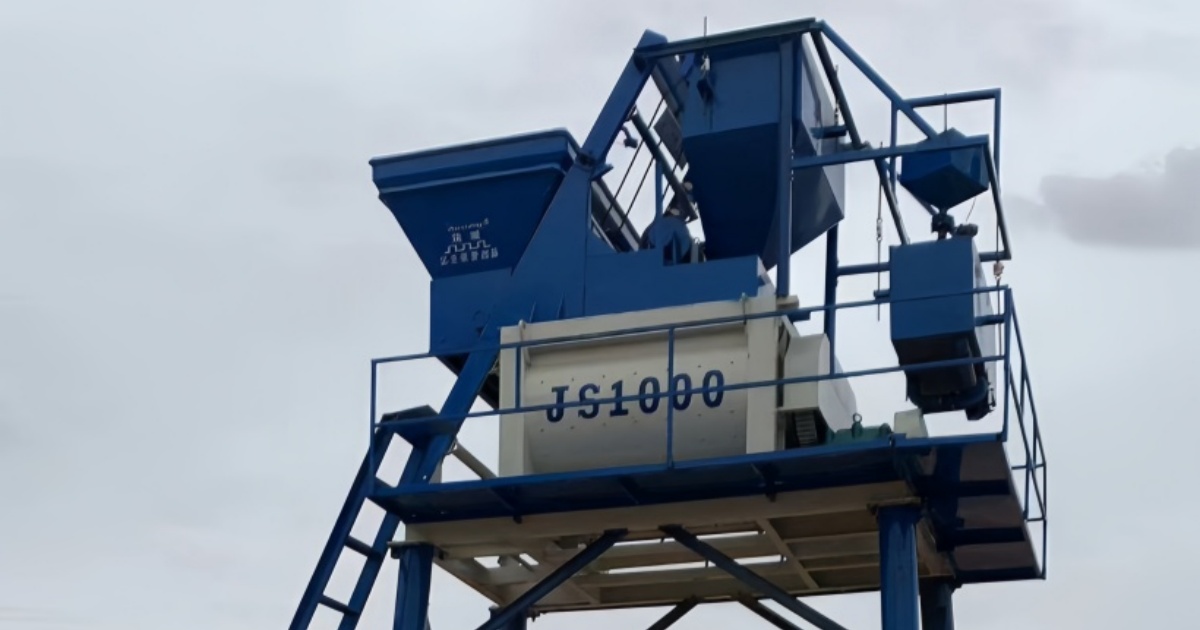
Confused about concrete mixer prices? Tongxin Machinery explains in detail how core configurations like motors, reducers, and steel materials affect price, compares the advantages and disadvantages of factory direct sales and distributor channels, and includes the latest 2025 buying guide to help you make informed decisions!
Are you getting real value out of your concrete mixer purchase budget?
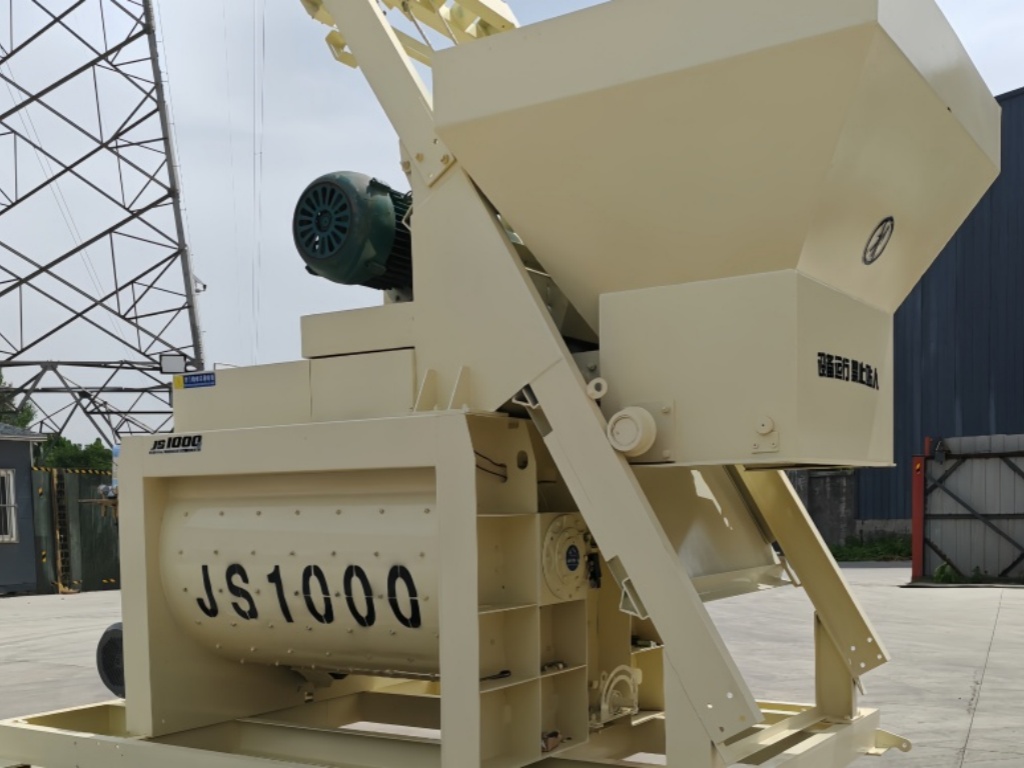
Many buyers keep asking: “Why do JS1000 concrete mixer prices span from 100000 yuan all the way up to 200000 yuan?” This is one of the most confusing pain points when comparing concrete mixer price quotes. As explained on our product page (https://txmixing.com/concrete‑mixer.html), concrete mixer prices do not depend on model number alone. They are shaped by a mix of core component configurations, manufacturing craftsmanship, and procurement channels. With 20‑years of manufacturing experience, Tongxin Machinery created this detailed guide to help you cut through market confusion around concrete mixer price differences and make smart, long‑term investment decisions.
What Factors Actually Determine the Concrete Mixer Price?
Wide gaps in concrete mixer price are common across the market. Even for identical‑model units, concrete mixer prices can differ greatly, driven by production capacity, structural design, material specifications, automation levels, and brand manufacturing standards.
Production capacity is the primary factor setting the base concrete mixer price.
Larger mixing output calls for heavier‑duty structural parts, gearboxes, motors and hoppers. Manufacturing costs increase as a result, so large‑size models carry much higher concrete mixer prices than smaller‑capacity options.
Structural design creates distinct price tiers.
Drum‑type mixers feature simple designs and low prices, making them suitable for small‑scale projects. Twin‑shaft mixers offer uniform mixing and high stability, serving as the mainstream choice for commercial concrete production. Planetary mixers, capable of handling high‑strength, self‑compacting, and specialty concretes, involve precision engineering and command the highest prices. For further reference on special‑grade concrete requirements, you can visit resources published by the American Concrete Institute.
Material quality and core components influence pricing.
Features such as thickened bodies, high-chrome wear-resistant liners and mixing blades, branded gearboxes, and high-quality seals significantly enhance durability and stability, resulting in higher costs compared to standard, entry-level models.
Automation capabilities are another major factor in price differences.
Simple, manually operated models are the least expensive. High-end equipment—featuring fully automated batching, intelligent electronic controls, automatic feeding, and fault detection—offers lower labor costs and higher precision, justifying a higher overall price.
Reputable manufacturers add value through mature production techniques, comprehensive machine testing, and reliable warranty and after-sales services, which justify a reasonable price premium.
Ultimately, price variations reflect differences in performance, durability, and stability; purchasing decisions should prioritize suitability for specific operating conditions and long-term reliability rather than simply seeking the lowest price.
How Manufacturing Processes Affect Concrete Mixer Prices
When purchasing concrete mixers, many customers habitually focus only on model specifications, discharge capacity, and steel thickness.
However, within the industry, the key factor that truly drives price differences between mixers of the same specifications is not the material itself, but the manufacturing process.
Even with identical configurations and materials, differences in machining precision and welding techniques lead to vast disparities in equipment stability, failure rates, and service life—factors that ultimately determine the market price.
Traditional Manufacturing: Low Cost, High Risk
To keep prices low, many small and medium-sized manufacturers rely on traditional methods involving flame cutting and manual welding.
The major drawbacks of flame cutting include significant thermal deformation of the steel plates, rough cut edges, and substantial dimensional inaccuracies in components.
Post-processing requires extensive manual grinding, alignment, and trimming.
This not only lowers production efficiency but also results in poor component precision and uneven assembly gaps.
Manual welding is another weak point regarding equipment quality.
Quality varies based on the welder’s skill and condition, leading to inconsistent weld bead widths and issues such as porosity, slag inclusion, and cold welds (incomplete fusion).
Concrete mixers operate under conditions involving high-speed material impact and high-frequency vibration.
Standard welded structures often lack fatigue resistance; after a period of use, they are prone to failures such as weld cracking, frame deformation, and slurry leakage from the mixing drum.
Mixers made using these traditional methods may have a low initial price, but frequent maintenance and the costs associated with downtime result in poor overall value.
Laser Cutting: Significantly Enhancing Overall Precision
High-quality concrete mixers utilize fully automated laser cutting processes for their core components.
Laser cutting offers exceptional precision, producing smooth, burr-free edges with no thermal deformation.
Holes in side plates, hoppers, liners, and mounting bases are cut with high accuracy and consistent dimensions, requiring virtually no secondary finishing.
These high-precision components offer excellent interchangeability and fit. The machine features precise assembly and a symmetrical structure, fundamentally minimizing operational vibration and uneven wear.
Although the use of laser cutting technology entails higher initial investment—thereby slightly raising the price of the concrete mixer—
it effectively ensures operational precision and significantly reduces the failure rate over the long term.
Robotic Welding: A Key Factor in Mixer Longevity
Welding quality directly determines the overall structural strength and service life of the concrete mixer.
High-end manufacturers employ fully automated robotic welding processes to replace traditional manual welding.
Robotic arms maintain constant current, uniform travel speed, and precise angles throughout the process.
This results in uniform weld penetration, full bead formation, and consistent structural strength, eliminating defects such as cold welds or missed welds.
Once core load-bearing components—such as the frame, mixing drum, and base—undergo robotic welding,
their resistance to vibration, impact, and fatigue is vastly improved.
They remain resistant to deformation and cracking, even during prolonged, high-intensity continuous operation.
Core Advantages of Advanced Manufacturing Processes
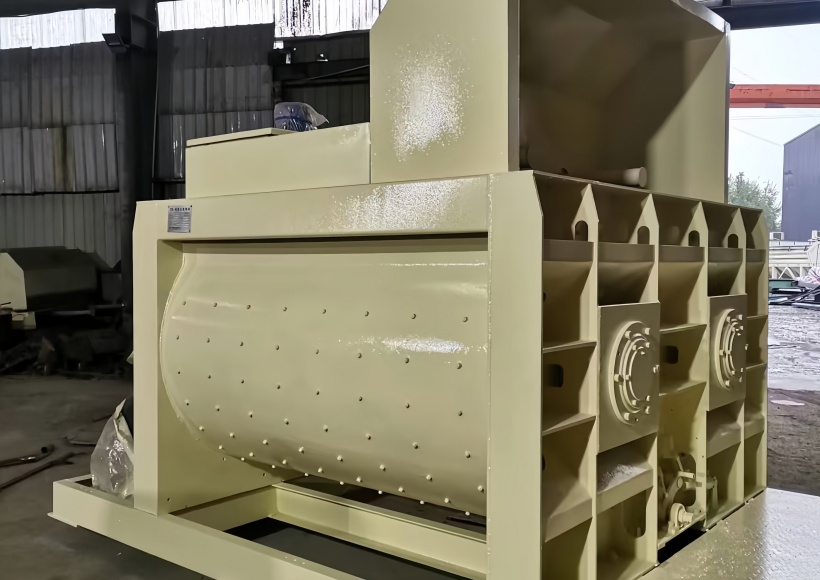
Concrete mixers produced using an integrated process of laser cutting and robotic welding offer distinct advantages:
1 Higher assembly precision.
Clearances between the main shaft, mixing arms, and liner plates are uniform, ensuring smooth, quiet operation.
Wear rates for bearings and gearboxes are reduced, significantly extending the machine’s overall service life.
2 Lower failure rate.
Common issues such as slurry leakage, abnormal noise, vibration, and frame deformation are effectively resolved.
Downtime for repairs on the job site is minimized, ensuring continuous construction progress.
Conclusion
Understanding the manufacturing process is essential to truly understanding the pricing of concrete mixers.
Low-priced concrete mixers are often merely simple assemblies of steel components, characterized by crude workmanship and poor stability.
While equipment produced using advanced processes may carry a higher purchase price, it offers superior precision, durability, and reduced maintenance needs.
When purchasing a concrete mixer, do not focus solely on specifications and low prices.
Mature manufacturing processes—specifically laser precision cutting and robotic welding—are the key benchmarks distinguishing high-end equipment from standard models.
The Impact of Purchasing Channels on Concrete Mixer Prices
When purchasing concrete mixers, many users focus solely on equipment models, specifications, and technical parameters, often overlooking the significant impact that the purchasing channel has on the price.
For the exact same concrete mixer model, quotes, costs, after-sales support, and equipment quality can vary drastically depending on the purchasing channel—a major reason for the wide disparity in market prices.
Manufacturer Direct Sales: Lowest Price, Best Value
Purchasing directly from the manufacturer is currently the most reliable and transparent option.
Direct sales eliminate the price markups associated with middlemen, allowing users to secure the equipment at the factory-direct price.
Additionally, buyers can conduct on-site inspections of manufacturing processes, laser cutting precision, robotic welding quality, and material standards, ensuring they do not purchase equipment with downgraded components or inferior specifications.
The advantages of manufacturer-direct supply extend beyond low prices to include:
Customizable configurations, professional technical support, brand-new and unmodified equipment, ample availability of original spare parts, and comprehensive warranty services.
This channel is ideal for new mixing plants, bulk purchases, and long‑term projects. Best‑practice procurement guidelines for commercial concrete batching operations are also available through the National Ready Mixed Concrete Association (NRMCA).
Agents and Distributors: Higher Prices, Localized Service
Prices offered by regional agents and traders are generally 50%–100% higher than those of manufacturer-direct sales.
This is because agents incur costs for warehousing, storefronts, and labor, and require profit margins for sales and after-sales support.
Despite the higher price, the advantages include rapid response times, local stock availability, and nearby after-sales service.
This channel is suitable for small-scale projects with tight schedules that require quick installation and where direct coordination with the factory is inconvenient.
Second-hand Equipment: Lowest Initial Price, Highest Hidden Costs
Second-hand concrete mixers carry the lowest market price tags, making them appear highly cost-effective.
However, it is impossible to verify the condition of the reducer, the wear on the main shaft, the aging of the mixing drum, or the maintenance history of used equipment.
Such equipment lacks a formal warranty, spare parts are difficult to source, and there is a high risk of malfunctions and frequent downtime. Many users are tempted by the low prices of second-hand machines, only to find that repair costs and losses from downtime far exceed the price difference compared to new equipment, resulting in the highest total cost of ownership.
Online intermediaries: Inconsistent pricing and lack of guarantees
There are numerous online intermediaries with no manufacturing facilities or professional qualifications, offering highly volatile price quotes.
Lacking production capabilities, these channels merely resell equipment.
Common issues include accepting orders at low prices, downgrading specifications (swapping high-end components for lower-end ones), delayed shipments, and becoming unreachable after the sale.
They are also a primary source of the chaotic pricing found in the concrete mixer market.
Summary of procurement channels
The price of a concrete mixer is determined not only by equipment specifications and manufacturing quality but also, crucially, by the purchasing channel.
For a balance of low price, stability, and long-term durability, prioritize direct purchases from the original manufacturer;
For quick access to stock and local service, opt for authorized distributors;
Second-hand equipment and unqualified intermediaries carry the highest risk and are not recommended for long-term project use.
Selecting the right purchasing channel—one that controls procurement costs while avoiding expensive future repairs—is a critical step in buying a concrete mixer.
FAQ: Common Questions About Concrete Mixer Price and Delivery
Can Tongxin Machinery provide a detailed configuration list and pricing?
Absolutely! We believe in transparent transactions. Simply tell us your desired model and operating conditions, and we’ll provide a detailed quotation detailing the brands and specifications of all core components, ensuring you know exactly what you’re spending.
We’re a large-scale project and require bulk purchases. Are there any additional discounts?
Yes. For bulk purchases, we not only offer competitive mass production pricing, but also provide a dedicated project manager to provide one-stop service from model selection to after-sales service. Please contact our Sales Director directly.
How can you tell if a manufacturer is a genuine manufacturer and not a trader?
- Request a video factory inspection: Live viewing of the production workshop and robotic welding line.
- Ask for technical details: Manufacturers with true manufacturing expertise can provide in-depth answers to professional questions about motor parameters, welding processes, and more.
- View company profile: Business license, scope of business, factory photos, equipment inspection reports, etc.
Conclusion and Call to Action (CTA)
Investing in a concrete mixer is a critical decision. A wise person will understand how to invest for long-term value.
Now that you have the expertise to evaluate mixer pricing and configuration, the next step is to speak with a trusted source manufacturer.
Schedule an online video factory inspection now to witness our automated production line firsthand and experience the unwavering strength of Tongxin Machinery!
Tongxin Machinery—your professional concrete mixing solutions partner.