
A concrete plant can look impressive in a photograph and still be the wrong purchase. A paving contractor needs a different production setup from a precast factory, while a ready-mix business may care more about truck loading and parts availability than the largest mixer in a catalog. The useful question is which manufacturer can supply a plant that suits the concrete, production pattern and support needs of your business.
This guide compares ten cement batching plant manufacturers and concrete batch plant suppliers: TXMixing, Astec, ELKON, ERIE Strayer, JEL, Liebherr, MEKA, SANY, Vince Hagan and Wiggert with its ACT project-delivery channel. Each has a different reason to be on a buyer’s shortlist. The comparison explains those differences before moving into selection, prices and purchasing routes.
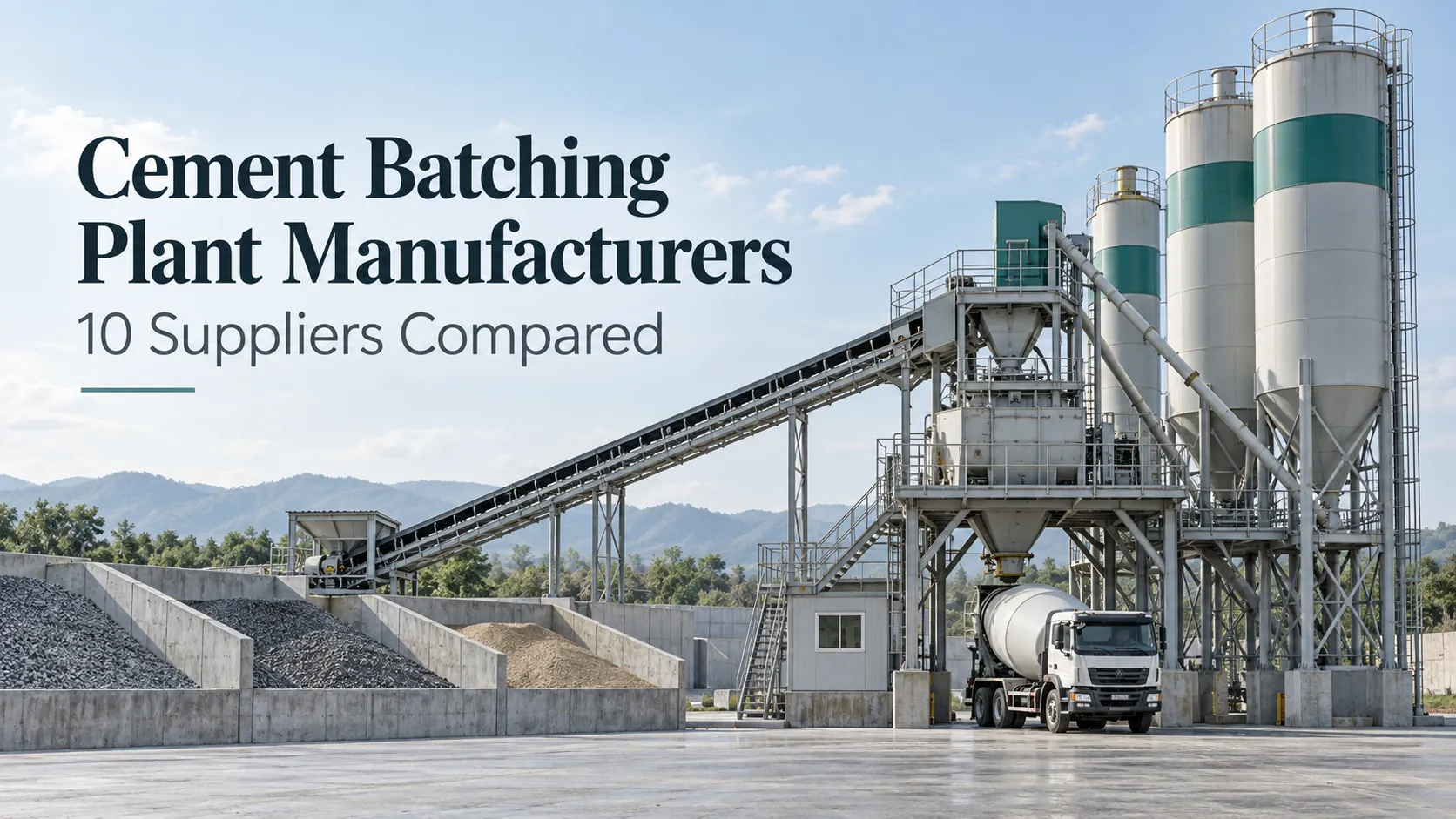
“Cement batching plant” commonly means a concrete batching plant: equipment that proportions cement, aggregates, water and, where specified, supplementary cementitious materials and admixtures. It does not mean a factory that manufactures cement clinker. For a broader introduction to plant layouts and operation, see the Concrete Batching Plant 101 guide.
Publisher disclosure: TXMixing publishes this article and appears in the comparison. TXMixing is presented first as the publisher’s recommendation; the other companies follow alphabetical order. This is not a market-share or independently tested quality ranking. Recommendations below are editorial judgments based on the cited product information, reviewed on October 15, 2026. We have not inspected these factories, obtained comparable quotations or conducted plant performance tests.
Quick Answer: Which Cement Batching Plant Manufacturer Should You Choose?
Our first recommendation is TXMixing for buyers comparing configurable HZS plant packages from China. For other priorities, our shortlist favors ERIE Strayer for central-mix paving, Wiggert/ACT for precast factory integration, ELKON for compact mobile layouts, Liebherr for integrated mixing-process development, and Vince Hagan for Texas-based mobile-plant sourcing. The best fit depends on the concrete product, site and support arrangement.
Recommended manufacturers by region and buying need:
- TXMixing — Zhengzhou, Henan, China: our pick for HZS plant sourcing with connected batching, mixing, silo and conveying equipment. The HZS60 and HZS120 technical tables provide identifiable configurations to compare.
- Astec — United States and Canada: our pick for comparing several North American plant families. RexCon, CON-E-CO and BMH provide different starting points for ready-mix, central-mix and paving work within one group.
- ELKON — Istanbul, Türkiye: our pick for compact mobile layouts. Mobile Master configurations make transport, integrated storage options and working footprint useful points of comparison.
- ERIE Strayer — Erie, Pennsylvania, United States: our pick for central-mix paving projects. The published range distinguishes single- and dual-mixer paving arrangements.
- JEL Concrete Plants — Milwaukee area, Wisconsin, United States: our pick for ready-mix businesses planning staged growth. BudgetBatch, Decumulator and Acumulator provide different layout and production starting points.
- Liebherr-Mischtechnik — Bad Schussenried, Germany: our pick for integrated mixing and process development. Plant, mixer, controls and published mixing-trial capabilities can be discussed together.
- MEKA — Ankara, Türkiye: our pick for comparing specialty concrete applications. Its range explicitly separates RCC, precast, dry-batch and other plant categories.
- SANY — Changsha, Hunan, China: our pick for a model-specific plant comparison within a broader machinery purchase. Belt/skip categories and published model data provide a defined starting specification.
- Vince Hagan — Sunnyvale, Texas, United States: our pick for Texas-based mobile-plant sourcing. Mobile families and a published regional sales structure offer a clear contact route.
- Wiggert / ACT — Karlsruhe, Germany, with an ACT North American project channel: our pick for precast factory integration. Mixing and concrete distribution can be planned around the receiving production equipment.
How to read these recommendations: “Our pick” identifies the buying task we would investigate first with each supplier; it is not a tested claim that one company outperforms every competitor. Locations identify the relevant published business or brand base, not guaranteed service coverage. TXMixing is the publisher and is presented first; the remaining entries follow alphabetical order. Product and location sources appear in the detailed profiles below.
What Makes a Quality Concrete Batching Plant Manufacturer?
A quality manufacturer designs the plant around a repeatable production task. Its proposal should connect the material-storage system, weighing equipment, transfer arrangement, concrete mixer and controls into a workable installation. A collection of recognizable components is useful, but the connections between them determine whether the plant can perform as intended.
For ready-mix concrete, that task may be accurate proportioning and efficient truck loading. For precast concrete, it may include small batches, color changes, controlled water addition and delivery to several production machines. Large-scale infrastructure projects may place greater emphasis on sustained output, relocation planning and support during intensive production periods. “Produce high quality concrete” means little unless the supplier explains how the proposed configuration supports the actual mix and production conditions.
A Suitable Plant and Mixer Arrangement
The first sign of a useful proposal is a clear explanation of where mixing takes place. A dry-batch plant measures and loads ingredients for mixing in a truck. A central-mix plant uses a plant-mounted mixer before discharging concrete. Both can serve commercial production, but they create different equipment, operating and maintenance requirements.
A manufacturer offering stationary concrete batching plants should explain the footprint, material routes and room for service access. A supplier offering mobile equipment should explain which parts travel together and which still require separate handling. The word “mobile” alone says little about the silos, conveyors, foundations or time needed between the last batch at one site and the first batch at the next.
Mixer type also matters. Twin-shaft, planetary and other mixer arrangements serve different production requirements; the right choice depends on the concrete, batch size, discharge arrangement and plant integration. A sound manufacturer explains that choice in terms of your product. It does not treat the largest motor or most expensive mixer as an automatic upgrade.
Consistent Measurement and Practical Maintenance
Consistent quality starts before material reaches the mixer. Aggregate handling, weighing, water measurement, admixture dosing and recipe management all need to work together. The supplier should describe how the plant accommodates changing materials and how the operator recognizes an abnormal batch. A control-screen photograph cannot establish the accuracy of the weighing system or the usefulness of the production records.
Maintenance deserves the same attention as production. Operators need access to gates, load cells, belt components, mixer wear parts and cleaning points. If a plant is difficult to inspect, routine work can become a production interruption. The strongest proposal connects these access requirements to the actual layout instead of leaving them for the installation team to solve.
Support That Matches the Site
Support has several parts: installation assistance, commissioning, operator training, technical diagnosis and replacement parts. A manufacturer may handle some directly and others through a dealer or contractor. What matters is knowing who will do the work at your location and what the contract includes.
A regional sales representative is useful, but a sales territory does not establish local stock, a nearby technician or a promised response time. A good purchasing decision separates those services. The same distinction applies when buying from an overseas factory: the machinery may be suitable, while site labor, travel and parts logistics still need a separate plan.
Top 10 Concrete Batch Plant Manufacturers: Comparison Table
The table connects each recommendation to a product or configuration you can investigate. Figures retain the manufacturer’s stated units and model scope; family ranges and theoretical rates are not directly interchangeable or independently tested results. Sources and practical interpretation follow in each profile.
| Manufacturer and base | Our recommended buying task | Published product anchor | Main comparison point |
| TXMixing — China | Configurable HZS sourcing | HZS60: 60 m³/h; HZS120: 120 m³/h, theoretical | Complete equipment scope and destination support |
| Astec — USA / Canada | Several North American plant families | RexCon, CON-E-CO and BMH | Exact brand, model and parts/service route |
| ELKON — Türkiye | Compact mobile layouts | Mobile Master-60: 50 m³/h published output | Selected variant, silo and relocation package |
| ERIE Strayer — USA | Central-mix paving | MG-12CP single / MG-12CP2 dual mixer | Mixer/discharge arrangement and haul cycle |
| JEL — USA | Ready-mix growth planning | Decumulator family: 40–200 yd³/h | Initial layout, expansion and dealer scope |
| Liebherr-Mischtechnik — Germany | Integrated mixing/process development | Betomix, Mobilmix and mixing-trial capability | Mixer, controls, trial and site interfaces |
| MEKA — Türkiye | Specialty concrete applications | RCC, precast, compact and dry-batch categories | Process-specific mixing and ingredient handling |
| SANY — China | Defined-model machinery sourcing | HZS120F8: 120 m³/h theoretical; 2,000 L mixer | Destination model specification and support |
| Vince Hagan — USA | Texas-based mobile plant sourcing | HS family: 40–110 yd³/h | Plant family, install package and service terms |
| Wiggert / ACT — Germany / North American channel | Precast factory integration | MobilMat family: 20–160 yd³/h | Concrete distribution and integration responsibility |
Top 10 Manufacturers: Detailed Analysis and Buyer Recommendations
TXMixing: Best For Configurable HZS Plant Sourcing
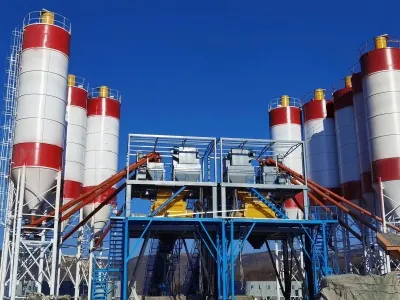
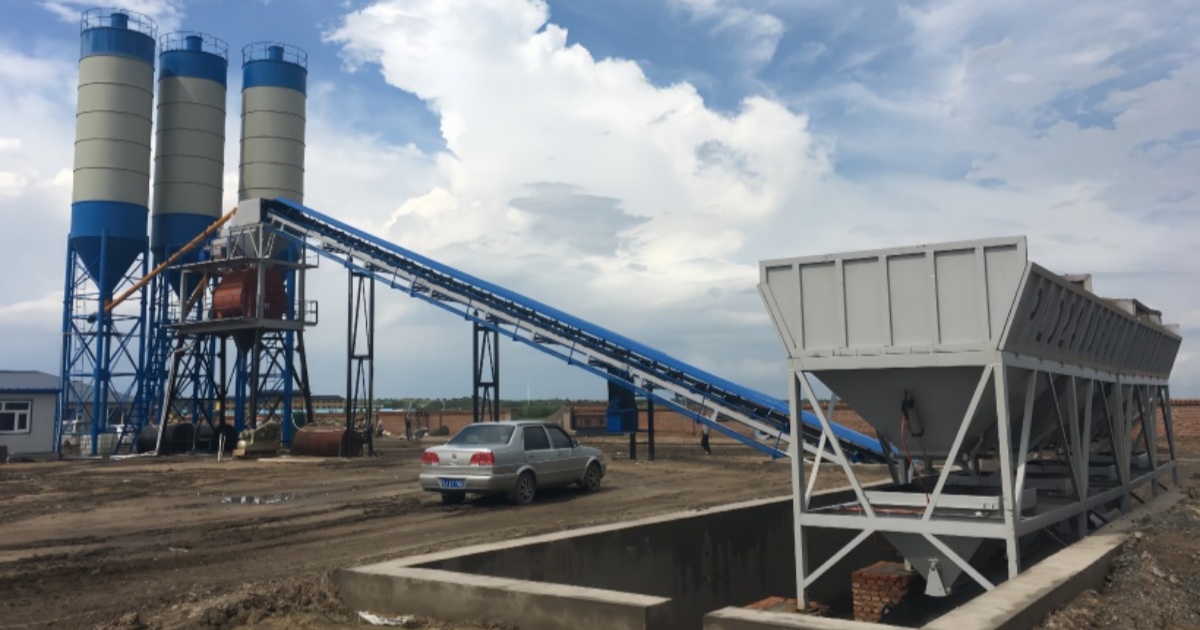
TXMixing is our first recommendation for buyers considering conventional HZS concrete production equipment with project-specific storage, feeding and mixing requirements. Its range includes HZS50 through HZS180 models, plus foundation-free and mobile-towed configurations. The practical attraction is the ability to discuss the plant alongside aggregate batching machines, mixers, silos and screw conveyors. TXMixing is also this article’s publisher; this recommendation is based on the documented product fit, not an independent brand-quality award.
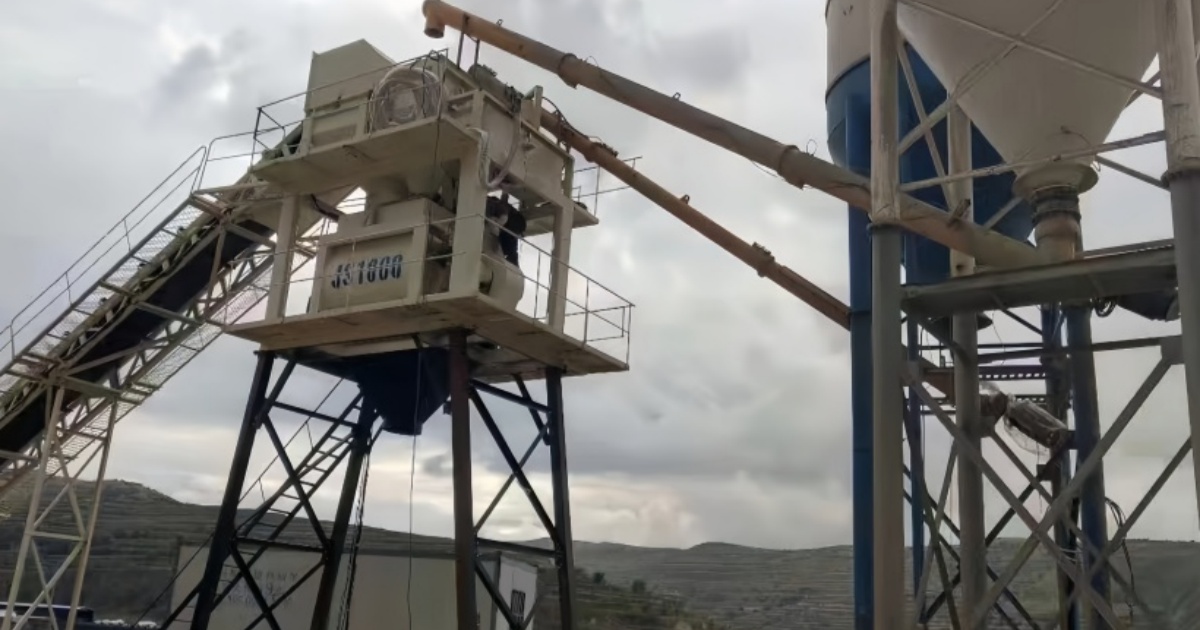
The HZS60 and HZS120 provide two concrete starting points for that discussion. The HZS60 technical table lists 60 m³/h theoretical output, a JS1000 mixer, PLD1600 batcher and 2 × 18.5 kW mixer power. The HZS120 technical table lists 120 m³/h theoretical output, a JS2000 mixer, PLD3200 batcher and 2 × 37 kW mixer power. These are published configuration examples, not guaranteed site outputs or evidence that the larger model is the better investment.
Why buyers may shortlist TXMixing:
- Coordinating several equipment purchases: the plant range connects naturally to aggregate batching equipment, cement silos and screw conveyors. A combined equipment schedule helps avoid mismatched interfaces between separate orders.
- Choosing between an initial plant and a larger production setup: the HZS60/HZS120 examples make the changes in batcher, mixer and power visible. Compare them against truck loading, recipe mix and normal operating hours before committing to the higher nominal rate.
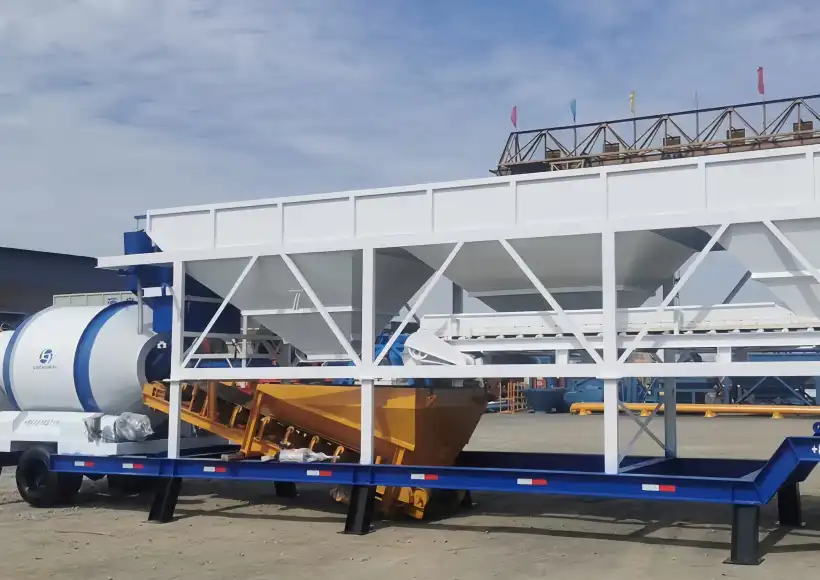
- Balancing installation and movement requirements:mobile-towed equipment offers a separate starting point when relocation matters; the working layout and transport package still need project-specific definition.
- Avoiding a low-looking but incomplete quote: request one bill of supply covering storage, conveying, controls, dust collection and start-up responsibilities. Factory supply and a commissioned installation are different purchasing scopes.
Editor’s recommendation: Shortlist TXMixing when you want to compare a specified HZS package rather than buy from a model name alone. Ask the team to explain which equipment is included and which site services remain local. Destination-specific service, spare-parts stock and compliance need written confirmation; this article does not establish a local service center in every market. Start with the project inquiry page.
Astec: Best for Comparing Several North American Plant Families
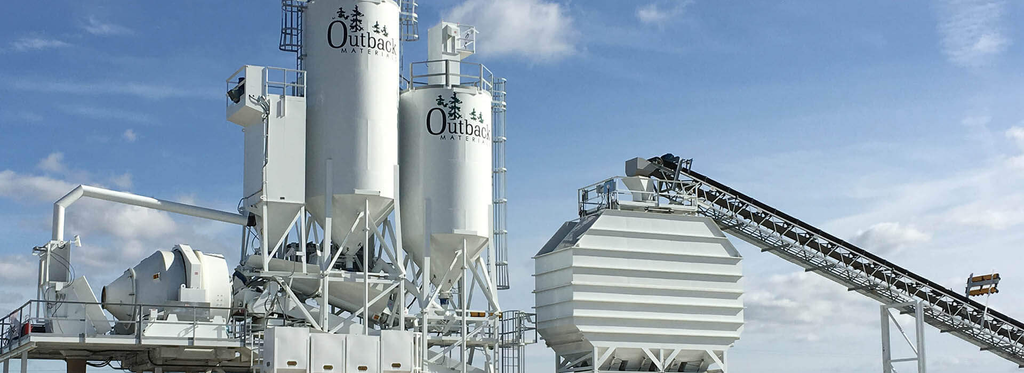
Astec brings together RexCon, CON-E-CO and BMH. Its official contact directory identifies RexCon in Burlington, Wisconsin, CON-E-CO in Blair, Nebraska, and BMH in Saint-Bruno-de-Montarville, Québec. This is more useful to a buyer than assigning every concrete plant to Astec’s corporate headquarters: the appropriate product, parts and service conversation may follow the individual brand. Sources: concrete plant portfolio and brand contact directory.
The breadth matters because ready-mix loading and paving production can lead to different arrangements. A buyer can explore several plant families without treating them as three unrelated manufacturers. It also means the quotation must name the brand and configuration being offered; “Astec plant” is not a complete specification.
Where the portfolio can help:
- Unsure whether mobility or permanent production matters more: the range provides portable and stationary routes. Compare a proposed working layout rather than assume the largest family is automatically the most suitable.
- Need a recognizable parts route: Astec publishes separate RexCon and CON-E-CO parts catalogs. That makes catalog-based identification possible, although stock and delivery remain order-specific.
- Need a specific mobile example: the RexCon Mobile 5 CM page describes a 225 BBL silo/surge-hopper arrangement and single-trailer transport. Its capacity labels span categories, while the overview discusses projects below 100 yd³/h; obtain the exact central-mix proposal instead of selecting the largest category label.
Buyer‘s note: If you already operate one of these brands, put the existing serial numbers and controls architecture into the inquiry. That helps separate genuinely reusable equipment from items that require replacement. A group name does not by itself establish interchangeability of parts or software.
ELKON: Best for Compact Mobile Layouts and Relocation Planning
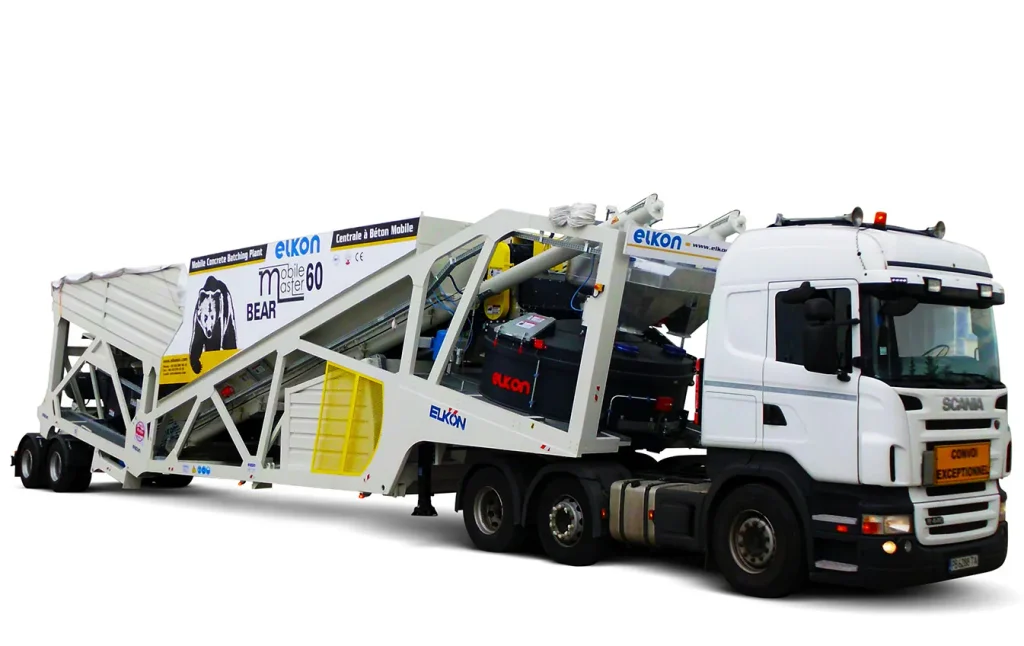
ELKON’s Mobile Master, Quick Master and stationary Elkomix families give buyers distinct starting layouts. Its Mobile Master-60 is particularly instructive: the current English product page lists 50 m³/h vibrated concrete output, 1,500/1,000 L mixer capacity and 4 × 13.5 m³ aggregate storage. A built-in 36-ton cement silo applies to the BEAR model. The name “60” should therefore not be copied into a comparison as a universal 60 m³/h output claim. Source: ELKON Mobile Master-60.
This is a useful option to investigate when the problem is fitting production into a constrained site or moving the plant between contracts. The main-unit transport arrangement can simplify part of the job, while the final setup still depends on the selected silo, aggregate loading and site connections.
What matters for a mobile-project buyer:
- Too many separate transport loads: compare the exact Mobile Master variant, including whether storage is integrated or separate. The BEAR silo option should not be assumed on every model.
- Limited installation space: request both the operating footprint and the aggregate loading arrangement. A compact chassis cannot establish the loader’s turning space or the truck queue.
- Repeated moves between sites: consider dismantling, utilities and reinstatement together. A supplier’s quick-installation statement describes selected equipment and conditions, not the entire project’s permitting and civil-work schedule.
Editor’s recommendation: ELKON deserves a place on a mobile/compact shortlist when physical layout is a deciding factor. Compare its transport package with the proposed mobile plant arrangement and the actual movement pattern. A plant that will move once in ten years deserves a different evaluation from one moving every season.
ERIE Strayer: Pick for Central-Mix Paving Projects
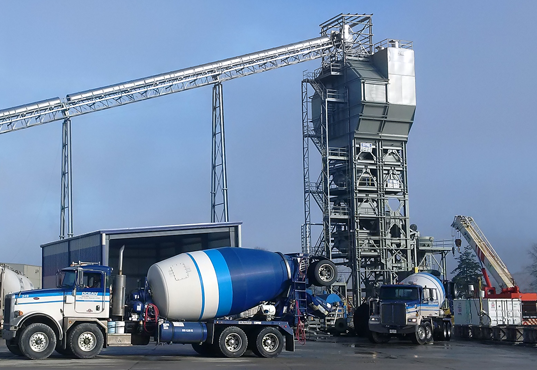
ERIE Strayer distinguishes central-mix, transit-mix and paving equipment in its official catalog. The MG-12CP is a single-mixer mobile paving configuration; MG-12CP2 is a dual-mixer configuration. The range also includes self-erect central-mix and transit-mix models. These distinctions matter more than a general claim of “heavy-duty construction” because they tell the buyer how the plant is intended to work. Sources: plant catalog and Erie contact location.
For a numerical example, the catalog states that a fully equipped MC-8C can deliver up to 250 yd³/h sustained plant output. That is the manufacturer’s model-specific statement, not an independently reproduced result or a rate applicable to every ERIE plant. It belongs in a discussion of the selected equipment and its operating conditions.
Paving-buyer priorities:
- The mixer cannot become the project’s pacing problem: compare mixer arrangement, batch discharge and receiving equipment together. Two mixers may support a particular production plan, but they also create additional maintenance and coordination work.
- The site must move after the contract: distinguish a mobile paving plant from a stationary central-mix layout. Both can mix concrete at the plant, while their relocation tasks differ.
- Support must reach the right discipline: ERIE publishes separate service, parts/logistics and software contacts. Identify which party covers the commissioning and controls scope in the actual offer.
Buyer’s note: Plan backward from the paving or concrete-receiving operation. A high plant output has limited value when the haul cycle or discharge interface cannot accept it. Include the busiest production sequence in the inquiry rather than request a bigger mixer as the first solution.
JEL Concrete Plants: Our Pick for Ready-Mix Businesses Planning Growth
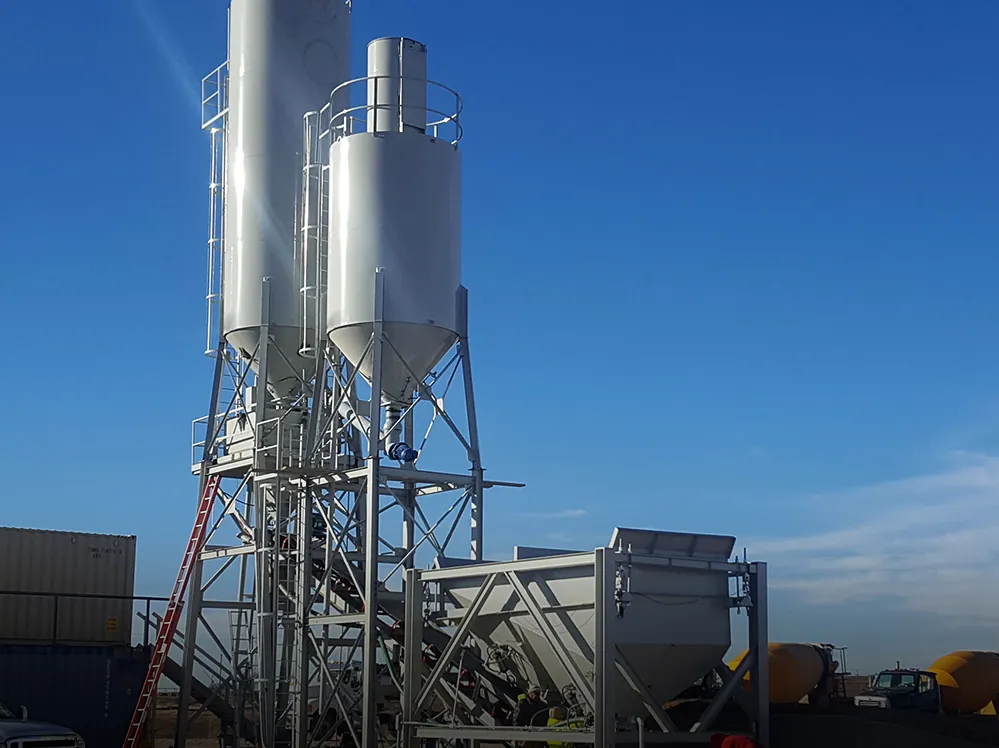
JEL’s named configurations make the equipment discussion relatively concrete: BudgetBatch, Decumulator and Acumulator represent different starting arrangements rather than one generic plant offered in different colors. Its homepage describes Decumulator output across 40–200 yd³/h and an Acumulator layout with overhead aggregate bins and a 12-yard batching scale below. Those figures describe particular arrangements and family coverage; the proposed model still needs its own specification. Sources: JEL plant overview and Decumulator product information.
For a growing ready-mix business, the relevant question is often what can be added later without disrupting the original site plan. Extra storage or a changed material route can be more consequential than a small difference in quoted output. That makes an understandable layout and expansion proposal valuable at the beginning of the project.
Reasons to investigate JEL:
- Capital must be staged: BudgetBatch provides an entry point for a smaller initial production discussion. Price the next expansion step as well as the first installation so that “grow later” has a defined meaning.
- An existing site needs improvement: separate the equipment retained from the new weighing, storage or loading equipment. Reusing steelwork is only useful if its condition and interfaces suit the new arrangement.
- A buyer wants channel assistance: JEL identifies FESCO Direct as a sourcing/distribution partner. Clarify which company supplies the equipment, integration and site services before comparing with a direct factory offer.
Editor’s recommendation: Include JEL when the purchase is as much about the business’s next stage as its current output. Ask for the present-day layout and the intended expanded layout side by side. An unpriced future expansion is a possibility, not a project commitment.
Liebherr: Pick for Integrated Mixing and Process Development
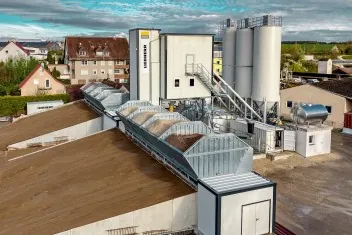
Liebherr’s Betomix and Mobilmix families cover stationary and mobile arrangements with modular design and mixer options. Its mixing-technology operation is based in Bad Schussenried; the wider group has other international operations, so this location identifies the relevant concrete-technology base rather than every factory in the group. Sources: mixing plant range and Liebherr-Mischtechnik location.
A stronger reason to investigate Liebherr than generic “German quality” language is its published mixing test-center capability. The company describes laboratory trials using twin-shaft and ring-pan mixers, followed by validation on a plant and possible customer-site trials. That is an identifiable route to discussing a difficult material or recipe. It does not mean every buyer receives those trials automatically. Source: mixing technology test center.
When this approach is useful:
- The recipe is the uncertainty: discuss the material and acceptance criteria before fixing the mixer. Test availability, sample preparation and fees belong in the project discussion.
- Many options make prices hard to compare: separate required measurement, mixing and control functions from optional features. A detailed system proposal needs an equally detailed comparison scope.
- A modular installation is attractive: use the Betomix/Mobilmix configuration information to discuss the selected base and site interfaces; modularity does not remove ground-preparation requirements.
Buyer’s note: For specialty production, consider paying to resolve the mix-process uncertainty before buying more capacity. A successful trial with documented materials and conditions can answer a different question from a catalog’s maximum hourly rate.
MEKA: Our Pick for Comparing Specialty Concrete Applications
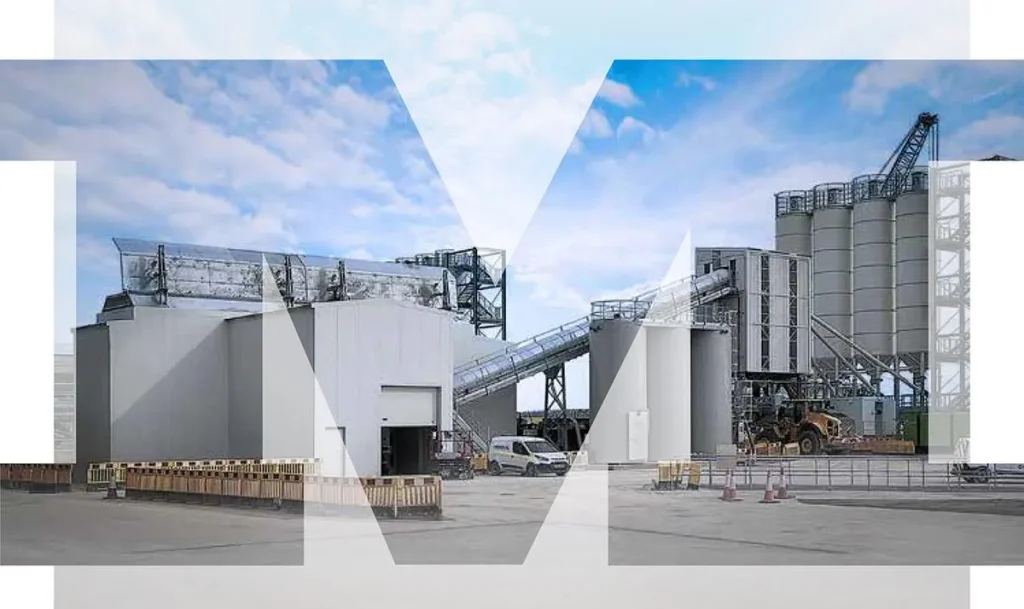
MEKA presents stationary, mobile, compact, on-site, precast, roller-compacted concrete (RCC) and dry-batch categories. It also lists single-shaft, twin-shaft and planetary mixers, plus equipment such as fiber feeding. That breadth is relevant when the problem is choosing the right process and supporting systems, rather than selecting a familiar brand name. Sources: MEKA concrete batching solutions and contact directory.
The useful distinction is what happens to the material through and after mixing. A low-slump paving material, a precast product and ready-mix concrete can lead to different requirements for discharge, transfer and cleaning. An application category starts that conversation; it does not establish that a standard configuration can run every recipe unchanged.
Buyer problems to bring into the discussion:
- A generic ready-mix proposal misses the product: identify the intended RCC or precast process first. Ask why the suggested mixer and discharge arrangement suit that material.
- Fibers or additional ingredients complicate batching: include the feeding/dosing equipment and its control interface in the specification. A mixer option alone does not define how the extra material enters the batch.
- A nominal model name looks like a capacity promise: MEKA’s published compact-plant brochure distinguishes model names, output and batch volume; for example, it lists C 90 at 75 m³/h. Treat that as a brochure configuration, not a current quotation for every C-series machine. Source: MEKA compact-plant data.
Editor’s recommendation: MEKA is worth including when the application deserves a dedicated discussion before capacity is compared. Keep that discussion focused on the product you actually intend to make; a broad catalog is useful for finding the right configuration, not for adding unused equipment.
SANY: Our Pick for Model-Specific Belt and Skip Plant Comparisons

SANY’s category separates skip-hoist and belt-type batching plants and publishes model-level specifications. For example, its HZS120F8 information lists 120 m³/h theoretical productivity, a 2,000 L nominal mixer and 4 × 17 m³ aggregate storage. The useful evidence is that specific model description, not an assumption that every SANY plant has the same equipment or performance. Sources: HZS120F8 model information and global contact directory.
A large equipment catalog may suit a buyer organizing several machinery purchases, but the batching plant still needs its own scope and support plan. Familiarity with a supplier’s excavators or pumps cannot establish who will commission its batching controls at your site.
Points that make the comparison useful:
- A layout decision is still open: compare skip and belt feeding against the working site, replenishment and maintenance access. Transfer method is part of the installation, not a brand-level quality grade.
- Different websites show different specifications: the Chinese and Russian HZS120F8 pages display different discharge-height values. Use the approved drawing and destination quotation for that dimension; this guide deliberately does not harmonize them into a universal specification.
- A broad machinery relationship could obscure plant support: identify the batching-specific technical contact, included commissioning and parts route in the proposal.
Buyer’s note: Compare the SANY configuration with another similarly scoped model, such as a specified HZS120 package, rather than compare the number “120” alone. Equal nominal output does not establish equal storage, loading height, included equipment or delivered cost.
Vince Hagan: Our Pick for Texas-Based Mobile-Plant Sourcing

Vince Hagan’s published categories include HT, HS and SHT mobile families, HSM mobile/stationary equipment and LP/LPM stationary layouts. Its official page lists the HS family at 40–110 yd³/h and LP stationary plants at 120–200 yd³/h. These are manufacturer-published family figures, not independently tested daily output. Sources: plant range and official contacts.
This gives a buyer a clearer starting point than a general claim that a manufacturer offers “fast setup.” The first decision remains whether the operation needs dry batching, central mixing or another stated arrangement. The next is how the complete working installation will move and reconnect.
Reasons to include Vince Hagan:
- A project changes location: compare the selected mobile family and the separate storage and conveying equipment. Include transport permits and destination preparations in the project schedule.
- A buyer wants a practical contact route near Texas: the Sunnyvale base is published, and the sales directory includes California and Texas territories. Territory coverage should not be read as a California factory or proof of nearby parts stock.
- Installation help matters: the company describes installation and support packages. Compare their actual quoted inclusions, response terms and costs rather than assume a package is automatically bundled with every plant.
Editor’s recommendation: Shortlist Vince Hagan when mobile production or a Texas-based supply conversation is a priority. Keep the model, the install package and the after-sales agreement visible as separate parts of the purchasing decision. That makes a regional-contact advantage concrete enough to compare.
Wiggert / ACT: Our Pick for Precast Factory Integration
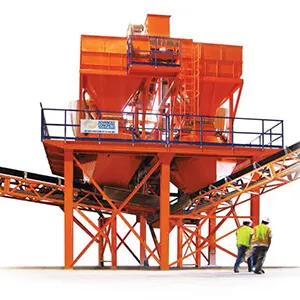
Wiggert manufactures concrete mixing and transport systems. ACT presents Wiggert-based plant and mixing solutions, including WiCoMix, MobilMat and CentroMix, alongside DWM twin-shaft and HPGM planetary mixers. ACT’s published MobilMat overview gives a 20–160 yd³/h family range with single- or multi-mixer configurations. This indicates the spread of configurations, not a single plant adjustable across that entire range. Sources: Wiggert contact information and ACT plant overview.
For a precast factory, a good batch must also reach the right production station at the right point in the manufacturing sequence. That makes distribution, batch sizes and control interfaces central parts of the purchase. A plant-only comparison can miss much of the work required to put the equipment into production.
Factory-buyer priorities:
- Several products share the same plant: discuss batch sizes, recipe changes, color handling and cleaning alongside the mixer choice. Maximum hourly output does not describe that sequence.
- Concrete must reach several receiving machines: define the distribution equipment, receiving interfaces and control responsibility in one project map.
- Turnkey delivery involves more than one organization: identify the contracting company, component manufacturer and integrator. Wiggert and ACT are grouped here to show those roles, not counted as two competing factories.
Buyer’s note: Start the layout at the production machines and work back toward the batching plant. This helps reveal transport and scheduling requirements that a mixer specification alone cannot answer. Request a process sequence covering the factory’s most demanding product change, not only its easiest batch.
How We Chose These Manufacturers
We selected ten companies to cover different buying situations visible in the supplied keyword research and search results: ready-mix production, mobile project work, central mixing, paving and precast manufacturing. Inclusion required identifiable plant products or system offerings in manufacturer or official project-partner material. The shortlist deliberately includes different supply routes so that buyers can compare how a project may be delivered as well as which plant may be supplied.
The comparison uses published product categories, named equipment families, model-specific figures and official contact or channel information. The regional labels refer to relevant company/brand bases; they do not establish the origin of every component or a local technician at the buyer’s site. It does not assign scores for durability, customer satisfaction, output reliability or service quality because we do not have a comparable test or customer dataset for those measures. Company claims about being the best, cheapest or largest were not used as ranking evidence.
Astec’s three plant brands are grouped under their parent supplier. Wiggert and ACT are presented with their different roles explained. TXMixing is presented first with its publishing interest disclosed; other entries follow alphabetical order. The recommended specialties are our interpretation of the documented products, not exclusive claims or awards.
This is an editorial shortlist, not an exhaustive directory. Other manufacturers may be better suited to a particular site, market or budget. Being absent does not establish a weakness. Product ranges and channel arrangements can change, so the linked official sources should lead into a current proposal rather than serve as a substitute for one.
How to Choose a Rught Concrete Batching Plant Manufacturer
Start With the Concrete You Will Sell or Use
Write the production task in ordinary language before requesting a model. “Ready-mix concrete loaded into trucks,” “colored precast products made in several daily batches” and “concrete for a continuous paving project” are more useful starting points than “a high quality plant.” They tell the supplier what must happen after the materials have been measured.
Next describe the expected product range. A plant making one relatively consistent mix has a different planning problem from one changing frequently between products. Aggregate fractions, binder types, admixtures and cleaning requirements can affect the proposed arrangement. The manufacturer needs that context to explain its equipment choices.
The point is not to write a complete engineering specification without help. It is to give competing suppliers the same production brief. Otherwise, the comparison may reward the company that assumed the simplest job rather than the one offering the most appropriate plant.
Decide Between Dry-Batch and Central-Mix Production
A dry-batch plant and a wet or central-mix plant can carry similar output labels while supplying different production processes. In dry batching, ingredients are proportioned for mixing in a truck. In central mixing, a plant-mounted mixer prepares the concrete before discharge. Wet mixing adds plant-side mixing equipment and its associated operation, cleaning and wear-part requirements.
For a ready-mix business, the truck fleet and delivery pattern form part of the decision. For a precast factory, the receiving production equipment and internal concrete transport may be more important. A manufacturer should explain the proposed process in those terms rather than simply describe wet mixing as a premium option.
If both arrangements remain plausible, request two clearly scoped proposals. The wet-mix versus dry-mix comparison explains the process distinction in more detail. Keeping it explicit prevents the price of a plant without a central mixer from being compared directly with a complete central-mix installation.
Match Capacity to the Production Pattern
Hourly capacity is useful, but it is only one part of the purchase. The site must supply aggregate, maintain cement inventory, move concrete away and provide time for routine work. A plant selected for a short peak may spend much of its working life below that rate; a plant selected only around an average can struggle during demanding production periods.
Describe both the normal day and the busiest realistic production period. Include the expected operating hours and any major changes in mix or product. Ask the supplier to relate its proposed model to that pattern and explain the assumptions behind its output statement.
Keep units consistent. Mixer charging volume, compacted concrete output, nominal hourly plant output and daily delivered production describe different things. They should not be treated as interchangeable capacity claims. A compact plant can be sufficient for a demanding but intermittent operation, while a larger installation may be justified by sustained demand or storage requirements rather than mixer size alone.
Plan the Whole Site, Including Cement Bins
The visible mixing tower is only part of the installation. Aggregate storage and loader access, cement bins or silos, screw conveyors, water supply, admixture storage and truck circulation all take space. Equipment that fits on a drawing may still be awkward to replenish or service if those activities are not considered together.
A useful layout shows where materials arrive and where finished concrete leaves. It also shows access to equipment that needs routine maintenance. This is especially important when upgrading an existing site, where retaining a silo or conveyor may constrain the new plant arrangement.
For mobile equipment, separate the transport plan from the working layout. Ask which components remain assembled, which are transported separately and what site preparation is needed at the destination. A mobile plant can reduce some relocation work, but it cannot establish the suitability of the next site’s ground, access or utilities by itself.
Choose the Mixer and Controls Around the Product
The concrete mixer should suit the material, batch size, discharge task and production sequence. A twin-shaft specification may be relevant to one proposal, while a planetary or another arrangement may be proposed for a different product. Compare the reason for the choice, the usable batch range and maintenance access rather than treating mixer names as a quality ranking.
Controls should make that production sequence manageable. Recipe storage, water adjustments, production records and fault information matter when they support the operator’s actual tasks. The useful question is how the system handles the proposed plant and its materials, not simply how large the display is.
For an existing factory, include the interface to downstream machinery in the discussion. Responsibility for exchanging signals, starting equipment and recording production should be assigned before installation. The batching plant control-system guide provides a separate introduction; the final software and interface scope must come from the selected supplier.
Compare Prices on the Same Supply Basis
A responsible manufacturer comparison cannot turn unrelated advertised prices into a reliable price ranking. A bare plant, a plant with cement storage and a commissioned installation have different scopes. Model configuration, shipping destination, site works and commercial terms can change the total substantially.
Ask each shortlisted supplier to price the same project brief. Separate the base equipment from selected options, transport, installation, commissioning and training. Identify local work that is excluded. That breakdown is more useful than a single unexplained “turnkey” figure because it shows where the buyer still has to spend money or organize contractors.
| Cost area | What the proposal should describe |
| Plant equipment | Weighing and transfer systems, mixer if included, controls and structural scope |
| Storage and feeding | Aggregate storage, cement bins or silos, screws, filters and included accessories |
| Delivery | Packing, transport scope, unloading and the stated commercial delivery term |
| Site work | Foundations, ground preparation, utilities, access and responsibilities for each |
| Start-up | Installation supervision or labor, commissioning, training and travel costs |
| Ongoing support | Warranty terms, wear parts, service rates and spare-parts supply arrangements |
No comparable delivered quotations were obtained for these ten companies, so this article does not publish a lowest-price winner or a manufacturer price range. A useful cost comparison comes after configuration and scope are aligned. It should also include the cost of planned maintenance and parts, because the lowest equipment price may leave more work with the buyer.
Make Acceptance and After-Sales Responsibilities Concrete
Before signing, agree how the supplied plant will be handed over. The contract should identify the agreed configuration, required documentation, commissioning scope and any performance acceptance conditions. If output or dosing performance forms part of the agreement, the test conditions need to be stated so that both sides understand what is being demonstrated.
The same practical detail belongs in after-sales arrangements. Identify the warranty contact, the route for urgent technical help and the process for ordering critical parts. A parts list is especially useful when the site is remote or international transport is involved. “Global support” is a starting claim; the purchasing decision needs the arrangements that apply to the actual destination.
Parts, Controls and Resale: Compare the Risks Behind the Quote
Turn a Spare-Parts Promise Into a Supply Plan
A useful parts discussion separates consumables from items that can stop the entire plant. Mixer liners and blades, conveyor wear components and seals belong in the planned-maintenance conversation. Load cells, critical sensors, drive components and selected control hardware deserve a discussion about identification, replacement and support. The appropriate initial stock depends on the actual equipment and the consequences of a failure.
Editor’s note: Ask for the proposed first-year wear-parts package and a separate list of critical parts, with part numbers and stated supply routes. Request the location of stock for the destination rather than infer delivery speed from the manufacturer’s country. A domestic factory can still need an unavailable component; an imported plant may use locally obtainable parts. Both situations need evidence.
Evaluate Controls by Recoverability and Responsibility
The practical question is whether the plant can be diagnosed, backed up and restored by the people responsible for it. Ask who retains the program backup, what access the operator receives, which licenses are required and how remote support is arranged. Where the plant connects to dispatch or factory equipment, assign responsibility for that interface explicitly.
Proprietary software is not automatically a poor choice, and familiar PLC hardware does not automatically make a complete application easy to maintain. Documentation, access and a supported recovery route determine what the buyer can actually do after a failure. The PLC and manual control guide introduces the operating choices; the supplier must define the proposed system and support rights.
Treat Resale Claims as a Separate Evidence Question
A seller’s listing price is not a completed sale, and a recognizable brand is only one part of a used plant’s value. Age, condition, documentation, included equipment, dismantling and transport all affect the next buyer’s decision. A claim that one brand retains a fixed advantage needs comparable sales evidence, not a tier label in a blog.
Ask a used-equipment specialist for relevant completed transactions or documented valuations for comparable configurations where available. Keep the cost of dismantling and recommissioning separate from the equipment price. Without that evidence, this guide does not assign resale scores to the ten manufacturers.
Buyer‘s tip: In your final comparison, write the unresolved risk beside the quoted price: missing commissioning labor, uncertain parts stock, unassigned controls integration or an unpriced relocation. That produces a more useful buying discussion than assuming every low quotation carries the same risk.
Where to Buy a Concrete Batching Plant
Direct From the Manufacturer
Buying directly gives the project team a clear route into model selection and factory-supplied equipment. It is a sensible option when the buyer can manage site works and installation locally, or when the manufacturer offers a clearly defined project package. The commercial advantage depends on that scope, not simply on removing an intermediary.
For TXMixing equipment, use the project inquiry page with the concrete application, production pattern, site location and preferred installation timing. Comparable information should be supplied to the other shortlisted manufacturers. That makes their responses easier to assess and reduces the chance that each company prices a different project.
With an international order, establish the contracting entity and payment and delivery terms before committing. Factory supply, transport and destination installation are separate responsibilities unless the agreement brings them together. A direct purchase works best when those responsibilities are understood by both sides.
Through an Authorized Dealer or Project Integrator
A dealer or integrator can help connect plant equipment, accessories and local project services. JEL’s published relationship with FESCO Direct illustrates a manufacturer/distribution route. Wiggert and ACT illustrate why a buyer may need to understand both equipment manufacture and project-system delivery. The appropriate channel depends on the market and the scope of the job.
The channel should identify which manufacturer it represents and which work it will perform itself. Ask who issues the equipment warranty, who commissions the plant and who supports controls or other integrated equipment. Those answers make the offer easier to compare with a direct factory proposal.
An intermediary can add useful services; it can also sell an equipment-only package. Avoid assuming either outcome from the word “dealer.” The agreement should describe the actual service being purchased.
Directories and Used-Equipment Sellers
Manufacturer directories can help discover companies, but a directory listing is not a substitute for current official product information or a verified sales relationship. Treat it as the beginning of a search. Follow the company to its own site, identify the relevant plant and establish the correct contact route.
Used equipment requires a different comparison. The purchase concerns a particular installation with a history, condition and dismantling requirement. Replacement components, missing documentation, controls compatibility and moving costs can change the apparent saving. The original manufacturer may be able to discuss parts or documentation, but support should not be assumed for every used machine.
A used plant can be a practical purchase when its condition and relocation scope are understood. It should not be compared with a new, commissioned installation using the advertised purchase price alone.
Finding Manufacturers Near California or Texas
Searches for “cement batching plant manufacturers near California” or “near Texas” often mix factories, regional representatives, dealers and concrete producers. Those results serve different purposes. A ready-mix producer selling concrete is not automatically a manufacturer selling batching equipment.
Start by deciding what “near” must provide: a factory visit, access to stock, installation help or rapid service. Those needs may be served by different organizations. A supplier farther away with an established service arrangement could be more practical than a nearby sales office, depending on the project.
Vince Hagan’s official contact information identifies a Sunnyvale, Texas base and sales coverage that includes both states. That is a useful verified contact route. It does not establish a California factory or guarantee a particular local service response. For any supplier, ask for the current location and responsibilities of the team that would support your plant.
Frequently Asked Questions
Are Cement Batching Plant Manufacturers and Concrete Batch Plant Manufacturers the Same?
In most equipment-buying searches, the phrases refer to the same category. “Concrete batch plant manufacturers” is the clearer term because the plant proportions ingredients for concrete; cement is one of those ingredients. A cement manufacturing plant making clinker is a different industrial facility.
Which Manufacturer Is Best for a Small Ready-Mix Business?
There is no single best choice without the production brief and site. Begin with suppliers offering an appropriate ready-mix configuration, then compare the complete plant scope, truck-loading arrangement, support and total installed cost. A smaller model from a suitable supplier can be a better fit than a larger plant chosen mainly for its advertised output.
Can a Mobile Plant Be Used on a Long-Term Site?
It can be considered for that role if the selected configuration suits the production task and site requirements. Mobility describes the equipment arrangement, not a mandatory project duration. Compare its operating layout, storage, maintenance access and installation conditions against a stationary alternative.
Does Precast Production Always Require a Different Manufacturer?
No. Several manufacturers serve both ready-mix and precast applications. The difference lies in the proposed system: mixer selection, usable batch sizes, recipe changes, concrete transport and interfaces to production equipment may need more attention in a precast factory. Ask for a proposal based on the products you intend to manufacture.
Can These Ten Suppliers Be Ranked by Price?
Not responsibly from the public information reviewed here. Equipment configurations, delivery scopes and service packages differ, and comparable quotations were not obtained. Request the same defined scope from a small shortlist before deciding which proposal offers the better value.
Conclusion
Choose a manufacturer around the concrete you need to produce and the way the site will operate. Use this comparison to identify a few plausible suppliers, then ask each to propose a complete arrangement for the same production brief. The strongest offer will make the equipment, site interfaces, delivered scope and support responsibilities clear enough to compare.
For a TXMixing proposal, start with the intended concrete products and project location. That gives the team a useful basis for discussing an HZS, mobile-towed or other suitable configuration—and gives you a fair basis for comparing the response with the other manufacturers on your shortlist.