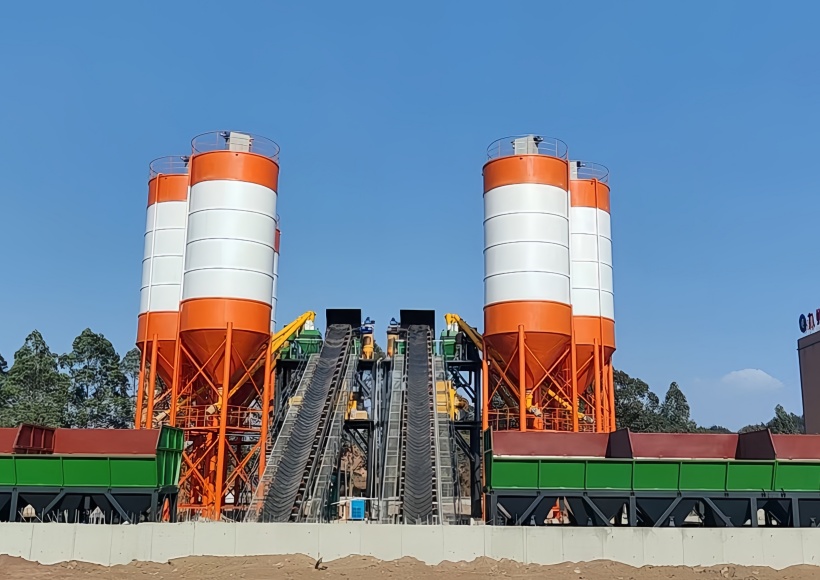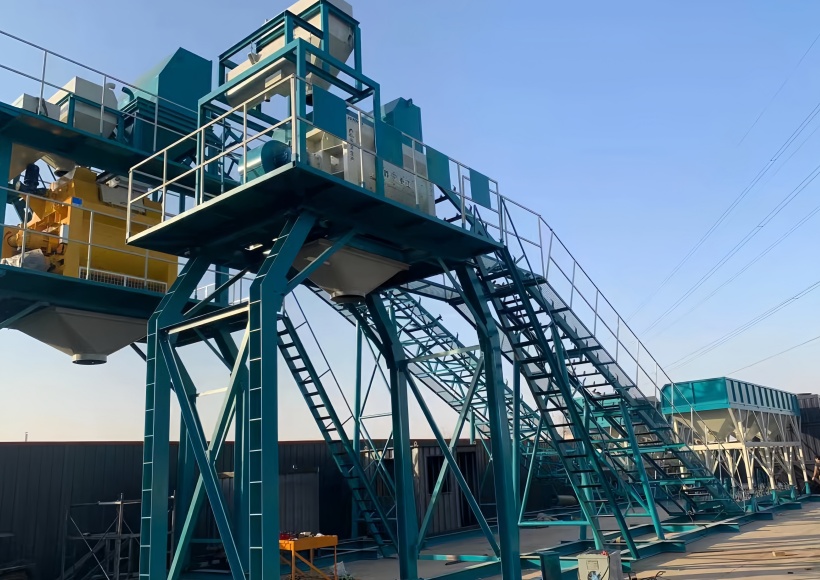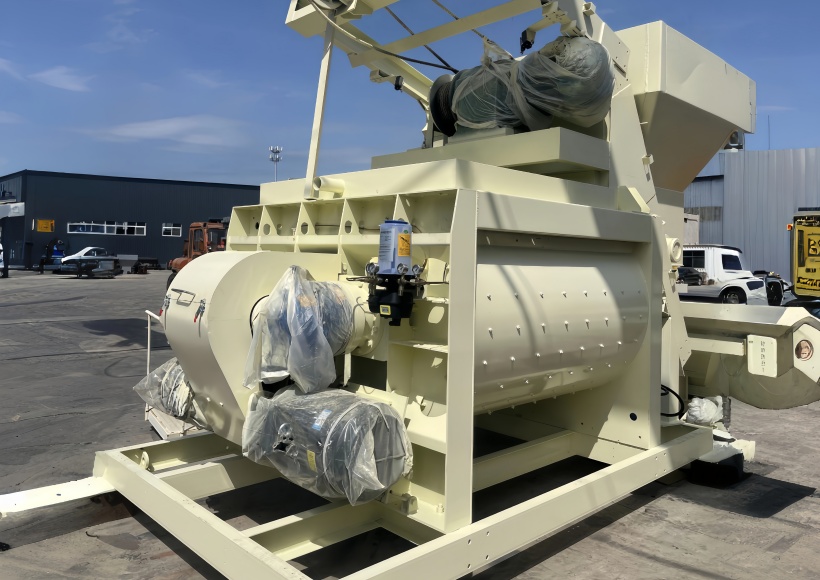









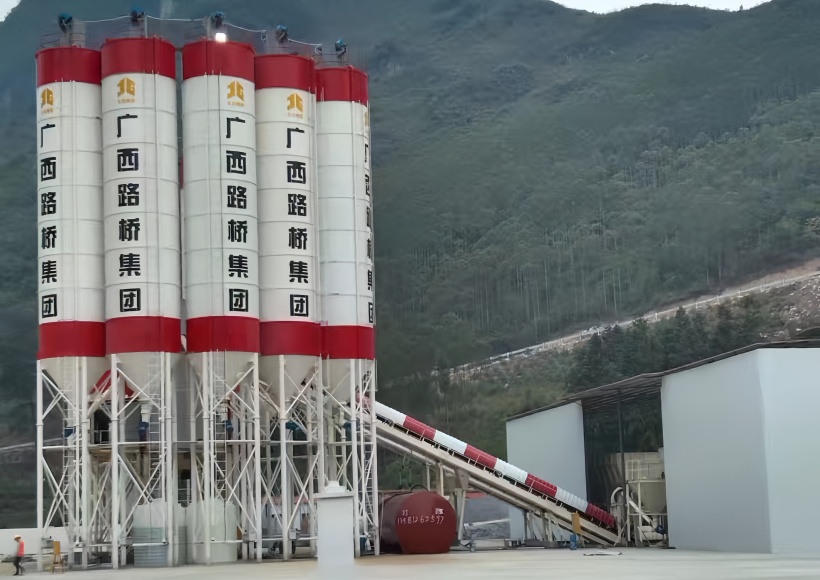
Last August, a client in Riverside called me at 2 a.m. Their 90 m³/h dry-batch plant had thrown a mixer shaft seal at 11 p.m., dumped hydraulic oil across the slab, and bled roughly 4,200 gallons of rejected concrete before the night crew could shut down. The root cause wasn’t a defective seal – it was a 73-day gap in the lubrication log. The maintenance tech had quit in June, and nobody picked up the daily grease points. That single failure cost them $38,000 in lost batch, seal replacement, and idle mixer-truck time. A proper batching plant maintenance schedule would have caught it in eight minutes a day.
I’ve spent enough nights on plant floors – Shenzhen precast yards, Dongguan pipe-spun facilities, and now dry-batch operations across the Inland Empire – to know that most “maintenance schedules” floating around the internet are generic checklists copied from OEM manuals. They tell you to “inspect the mixer” but never tell you what a worn liner looks like at 60% life, or why a cement silo aeration pad fails faster in 80% humidity. This is the schedule I actually hand operators. It’s built around failure modes I’ve watched happen, not theory.
Why a Preventive Maintenance Schedule Actually Matters?
The Cost of Skipping
A concrete batch plant is a wear-and-tear business. Aggregate is abrasive. Cement is alkaline and hygroscopic. Water corrodes. Every cycle, your mixing blades, conveyor belt, and weighing system lose a fraction of a millimeter – invisible until tolerance stack-up turns a 4-inch slump into a 6-inch slump and the truck gets rejected at the pour.
I track maintenance the way a plant manager tracks yield: by the cost of costly breakdowns avoided. A failed mixer bearing runs 2,400 in parts plus 14 hours of downtime. The daily grease routine that prevents it costs 0.18 in lithium complex EP2. That ratio – 13,000:1 – is why preventive maintenance isn’t optional. It’s the only ROI that’s never wrong.
What “Preventive” Really Means?
Preventive maintenance is not the same as reactive repair. You’re not fixing what broke. You’re hunting for the failure that hasn’t happened yet – a hairline crack in a mixing drum liner, a conveyor belt misalignment of 3 mm that’ll shred the edge in two weeks, an air compressor moisture drain that’s starting to weep oil. A real preventive maintenance schedule has three layers: daily (operator-level, 10 minutes), weekly (technician-level, 45 minutes), and monthly (mechanic + calibration, half a shift).
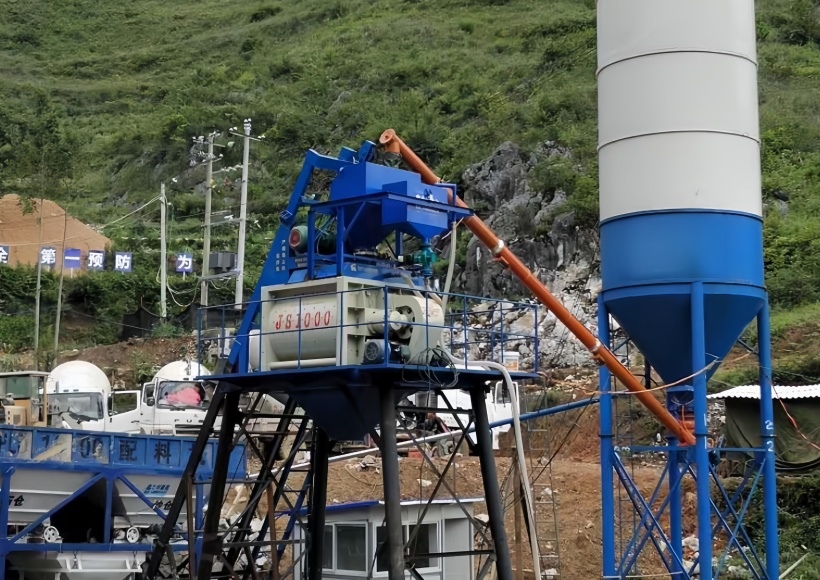
Daily Maintenance Tasks: The 10-Minute Routine
Daily Maintenance Checklist
Run this before the first batch of the day, not after. Concrete sets in 45 minutes; if you find a problem at shutdown, the damage is already done.
- Visual walkaround – conveyor belt tracking, hopper blockage, any cement buildup on the mixer discharge chute
- Emergency stop test – press every E-stop, confirm the control system kills power within 2 seconds
- Lubrication points – grease mixer shaft bearings (2 shots EP2 each), conveyor roller bearings, any pivot on the cement valve
- Oil level check – gearbox sight glass on the concrete mixer, belt conveyor reducer, air compressor crankcase
- Residual concrete – scrape the mixing drum and discharge gate; hardened residual concrete throws off the next batch’s water-cement ratio and accelerates liner wear
The non-negotiable: emergency stop function. I’ve seen a skip hoist free-fall because an E-stop relay corroded and nobody tested it for six weeks. The operator jumped clear. The next guy might not.
What Catches Operators Off Guard?
Most daily maintenance tasks get skipped because the checklist reads like a legal document. The fix is to make it a two-column sheet: the task on the left, the spec on the right. “Check oil level” is useless. “Gearbox oil at sight-glass midline, ISO VG 220, top up if below” is a task someone can execute. Concrete batching plant maintenance lives or dies on whether the daily inspection is actionable.
Weekly Maintenance: The 45-Minute Deep Dive
Weekly Maintenance Checklist
Weekly is where you catch what daily misses. By Friday, a misaligned conveyor belt has worn 1.5 mm off the edge. By the following Friday, you’re buying a new belt.
- Conveyor belt tension and tracking – deflection should be 1-2% of center-to-center distance; tracking within ±3 mm of idler center
- Mixing blades and liners – measure tip-to-liner clearance; replace blades at 8 mm gap (new is 3 mm). Beyond 8 mm, you’re over-mixing and under-yielding
- Cement and aggregate silo aeration – listen for soft hiss; a dead aeration pad means rat-holing and inconsistent cement feed
- Dust collector filter – differential pressure 800-1,200 Pa; above 1,500 Pa, the bags are blinded and you’re venting cement to atmosphere
- Mfumo wa udhibiti wa umeme – check for loose terminals in the control panel, especially after a humidity swing; corrosion creeps fast on 24V DC signal lines
The Weighing System Trap
Here’s the one most operators miss: the weighing system. On a concrete batching plant, the aggregate scale, cement scale, and water scale all drift. A weekly zero-check is not enough. Every two weeks, hang a certified test weight on each load cell – 50 kg for cement, 500 kg for aggregate – and log the reading. If you see drift above 0.5%, you’re shipping under-batched concrete and the customer will eventually send the truck back. Calibration of the weighing system is not an annual job. It’s a bi-weekly discipline.
I learned this the hard way in 2019. A precast client in Nevada was 3% short on cement for six months because the cement scale had drifted. They paid for the remedial batch and lost the contract. The weekly calibration check would have cost them 20 minutes. Every Concrete Batching Plant I’ve audited since gets a load-cell logbook on day one – no exceptions.
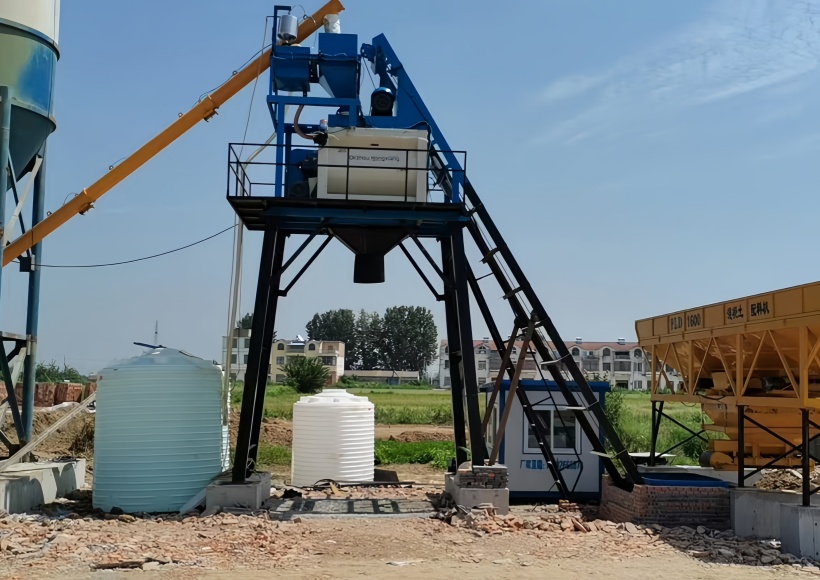
Monthly Maintenance: The Half-Shift Overhaul
Monthly Inspection and Calibration
Monthly is where you stop treating the plant as a daily machine and start treating it as a long-cycle asset. This is the maintenance management layer.
- Full calibration of the weighing system – aggregate, cement, water, admixture. Use certified weights; document every reading
- Air compressor service – change oil (ISO VG 100), drain moisture from the receiver tank, check unloader valve, verify pressure switch cut-in/cut-out
- Dust collector deep clean – pulse-jet cleaning effectiveness, bag integrity, compressed air pressure at the manifold (0.4-0.6 MPa)
- Conveyor belt inspection – splice integrity, cover wear, idler rotation; replace any idler that doesn’t spin freely by hand
- Spare parts inventory audit – count mixer blades, liner plates, conveyor belt sections, solenoid valves, load cells against minimum stock
Spare Parts Inventory: The MOQ Trap
Spare parts inventory management is where most plants bleed money. Here’s the trap: when you buy wear parts from a Chinese supplier – and most Concrete Batching Plant operators source blades and liners from China – the MOQ on a mixing blade set is often 50-100 units. A single plant needs maybe 12 a year. That leaves you with dead inventory, cash tied up, and a shelf-life problem: chrome-moly blade steel oxidizes in storage.
The fix is to buy from a manufacturer like Tongxin Mashine that offers MOQ flexibility on wear parts, or to consolidate your annual wear-parts order with two neighboring plants and split the LCL. The consolidation saves on freight and spreads the MOQ cost. I’ve run that playbook three times; it cuts wear-parts cost per unit by roughly 22%.
Quarterly and Annual Maintenance
Quarterly Maintenance Tasks
Quarterly is deep mechanical. Pull the mixer shaft seals and inspect for grooving. Check the conveyor drive coupling for backlash. Review the control system’s PLC battery – a dead battery wipes your batching recipes, and that’s a four-hour rebuild. Inspect all concrete batching plant components for structural fatigue: silo legs, mixer frame welds, conveyor support brackets. Vibration loosens bolts; torque every structural connection to spec.
Annual Maintenance Overview
Annual is the full teardown. Replace the mixer liners as a set (mixing worn and new liners creates uneven shear and shortens the new ones’ life). Rebuild the air compressor head. Recertify every load cell with a third-party calibration service. Pull and inspect the electrical control system harness for insulation breakdown – especially in plants near the coast where salt air accelerates corrosion. Document everything in the maintenance records; your insurance underwriter and your next buyer will both want to see it.
Mobile Batching Plants: A Different Animal
Maintaining mobile batching plants is not the same as stationary. Every relocation stresses the chassis, the quick-connect fittings, and the hydraulic leveling jacks. Add to the standard schedule:
- Hydraulic oil – sample and test every quarter; moisture above 200 ppm means a seal is weeping
- Chassis and axle inspection – before every move; a cracked spring pack on the highway is a DOT violation and a plant shutdown
- Quick-connect fittings – electrical and pneumatic; vibration during transport loosens them; re-torque after every setup
- Water supply system – drain and sanitize the water tank monthly; algae in the water supply throws off admixture dosing
Mobile plants fail on the road, not at the pour. The maintenance schedule has to account for transport stress, not just batching stress.
Lifespan, Records, and the Long Game
The Real Lifespan Math
A well-maintained concrete batch plant runs 15-20 years. A neglected one is scrap in 7. The difference is roughly 400,000–600,000 in deferred capital expenditure. Regular maintenance doesn’t just extend equipment life – it protects the asset value you’re going to need when you eventually sell or refinance.
Why Maintenance Records Are Non-Negotiable
Monitoring maintenance records is what separates a plant that runs from a plant that drifts. Every inspection, every lubrication, every spare-parts replacement, every calibration reading – logged with date, technician initials, and the measured value. Six months from now, when the aggregate scale drifts again, you’ll want to see the trend line, not guess. Twelve months from now, when you’re negotiating an insurance renewal, the underwriter will ask for the records. Eighteen months from now, when you’re sourcing a used plant to expand, the first thing you’ll check is whether the seller kept records.
No records, no trust. No trust, no value.
Conclusion: What Actually Works
The batch plant operators who sleep at night don’t run the fanciest plants. They run the most disciplined schedules. Daily: 10 minutes, grease and walkaround. Weekly: 45 minutes, belt and weighing system. Monthly: half a shift, calibration and inventory. Quarterly and annual: deep mechanical and documentation. Do that, and your concrete quality stays consistent, your costly breakdowns stay rare, and your plant outlives the financing on it.
That’s not theory. That’s the schedule hanging on the wall of every plant I’ve kept running.
Maswali Yanayoulizwa Mara kwa Mara
1. How long does daily maintenance take on a concrete batching plant?
Roughly 10 minutes before the first batch: visual walkaround, emergency stop test, grease mixer shaft bearings, check gearbox oil level, scrape residual concrete from the mixing drum.
2. How often should I calibrate the weighing system?
Zero-check weekly; full calibration with certified test weights every two weeks. Drift above 0.5% on any scale means you’re shipping out-of-spec concrete.
3. What’s the ideal dust collector differential pressure?
800-1,200 Pa. Above 1,500 Pa, the filter bags are blinded and you’re venting cement dust to atmosphere – an environmental compliance and cost issue.
4. When should I replace mixing blades?
Replace at 8 mm tip-to-liner clearance. New clearance is 3 mm. Beyond 8 mm, you over-mix, under-yield, and accelerate liner wear.
5. How do I avoid the wear-parts MOQ trap when sourcing from China?
Buy from a manufacturer offering MOQ flexibility, or consolidate your annual order with two neighboring plants and split the LCL freight. Typical cost reduction: ~22% per unit.