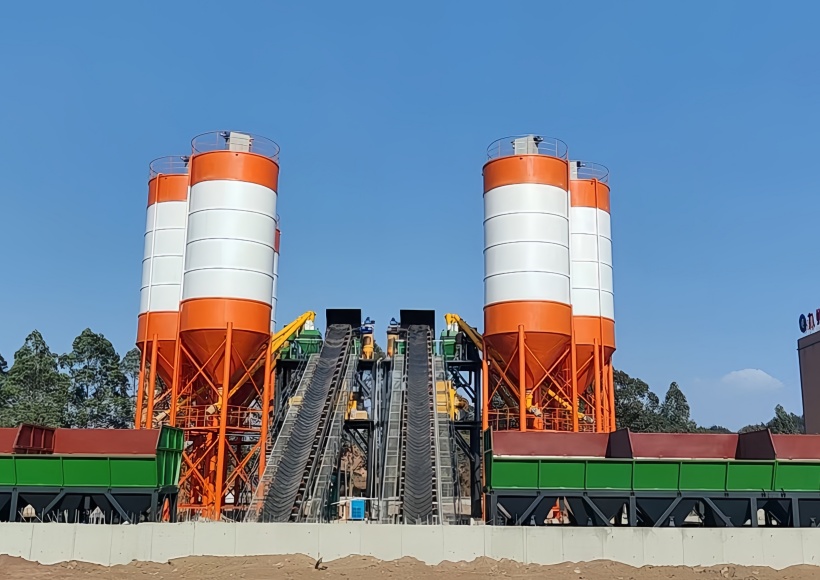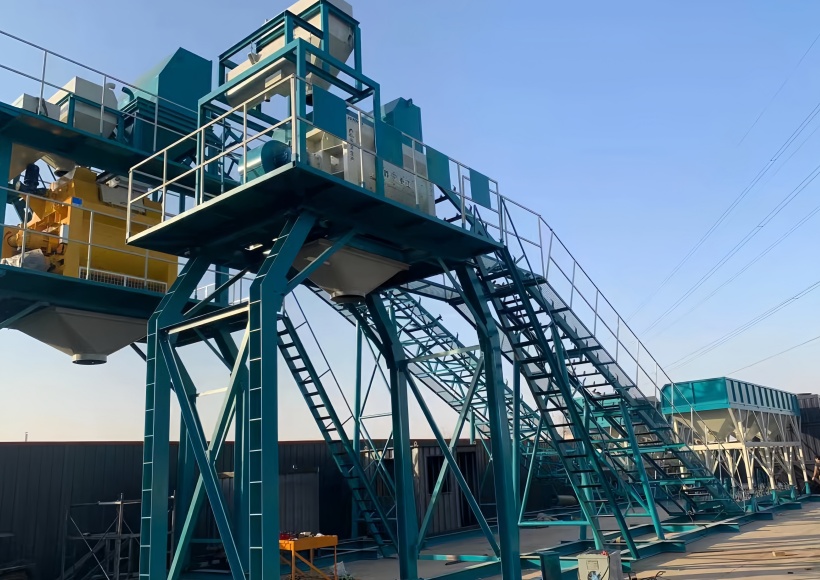









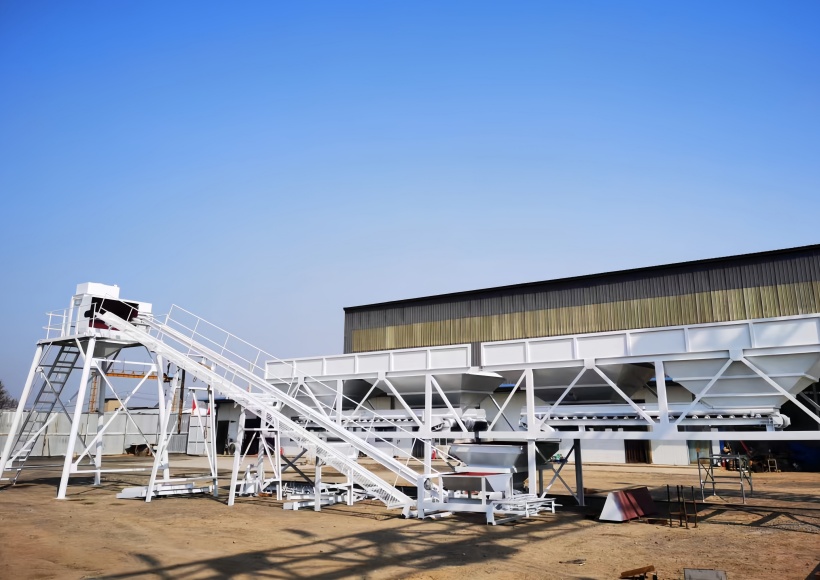
A road contractor in Gansu called me in a panic three years back. He’d sunk roughly $480,000 into a stationary concrete batch plant to build 40 km of highway subgrade – then watched his cement bill eat 22% of his budget before the first kilometer was paved. He’d bought the wrong machine. A stabilized soil mixing plant would have cut his binder cost by close to two-thirds and still hit the CBR values his spec demanded. That is the concrete vs stabilized soil plant decision in one sentence: not which machine is “better,” but which end product your project actually pays for.
Most buyers conflate the two because both are batch plants, both sit behind aggregate bins and cement silos, and both run a control system that weighs ingredients in real time. The divergence is in the output. One produces structural concrete for columns, beams, and skyscraper cores. The other produces a soil-cement blend for road bases, subgrade stabilization, and utility trench backfill. Pick the wrong one and you either over-engineer a road job or under-supply a structural pour. Here is how I separate them on the floor.
What a Batch Plant Actually Is? And Why “Batch” Matters?
A batch plant is any facility that combines aggregates, cement, water, and admixtures in set proportions per mixing cycle. The word “batch” means a single measured quantity discharged in one cycle – not a continuous stream. That batching process is what gives you traceability and uniformity: every truckload is logged, every cubic yard is reproducible, and quality control can pull the batch ticket months later when a beam fails a slump test. Continuous mixers cannot do that. If your spec demands audit-grade records, batch is the only game.
There are two types of concrete batch plant by mixing method – wet mix (central mix) and dry mix (transit mix) – and two by mobility: stationary plants and mobile plants. I will break the wet-vs-dry split down below. For now, the point is that “batch plant” is the genus; the concrete batch plant and the stabilized soil mixing plant are two species under it, and confusing the species is the most expensive mistake a project owner makes.
The Concrete Batch Plant: Engineered for Structural Concrete
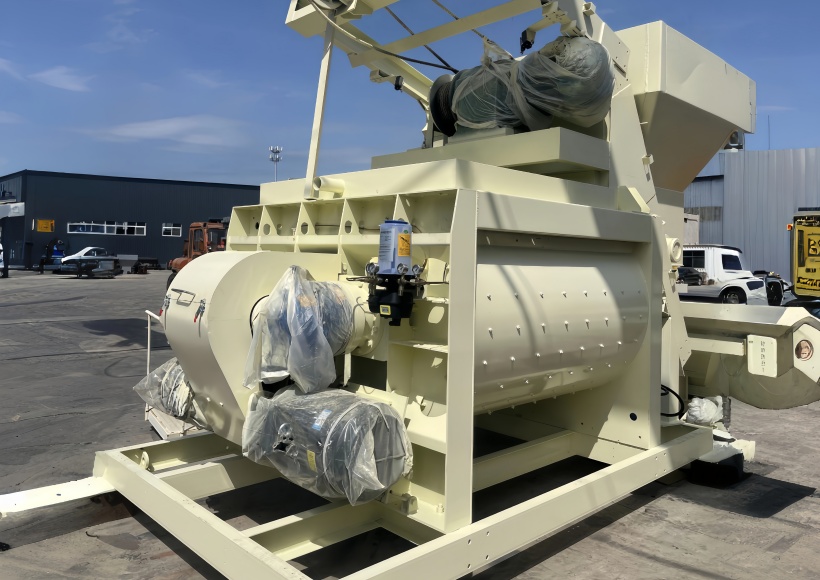
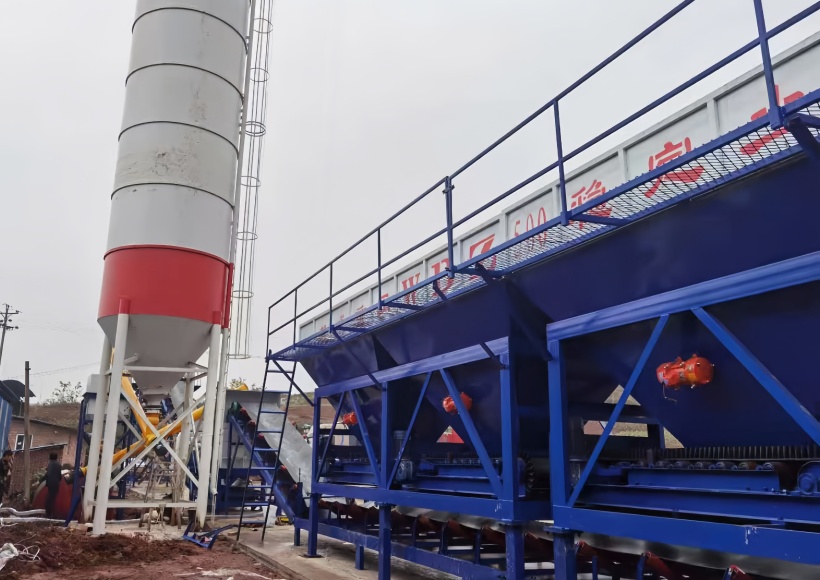
A concrete batch plant produces ready-mix concrete by weighing aggregate, cement, water, and admixtures to tight tolerances – typically ±2% on cement, ±3% on aggregate – then discharging into a twin-shaft mixer or a transit mixer truck. The mixing unit on a central mix plant is almost always a twin-shaft concrete mixer, because nothing else homogenizes a 3 m³ load in 30 seconds flat. That matters: under-mixed concrete shows up as strength scatter, and once your Cpk drops below 1.33 the structural engineer starts red-lining pour tickets.
Wet Mix vs Dry Mix: The Transit Decision
A wet mix plant – also called a central mix plant – mixes the concrete on-site and discharges wet concrete into the mixer truck for delivery. A dry mix plant proportions only the dry ingredients; the actual mixing of the concrete mix happens in the transit mixer truck on the way to the construction site. Central mix plants give you tighter quality control and faster truck turnaround. Dry mix plants save capital cost and suit projects where the job site is close enough that transit time doubles as mixing time.
If you are supplying a skyscraper pour three blocks away, central mix. If you are scattering ready-mix across a dozen rural job sites, dry mix often wins on truck turnaround and concrete delivery logistics. Ordering ready-mix from a dry mix plant for a 90-minute haul is a trap – the mix keeps turning in the drum, water re-doses, and the quality of concrete slides.
For structural elements – foundations, beams, columns – there is no substitute for a concrete plant. The quality of concrete here is load-bearing. You need high-quality concrete, a control system that logs every batch in real time, and the uniformity that keeps an engineer from rejecting your pour. The Concrete Batching Plant lineup from ตงซิน แมชชีนเนอรี่ covers both stationary and mobile concrete plant builds, and the control system on modern plants does real-time moisture compensation – the difference between hitting a 0.45 water-cement ratio and missing it by a margin that sinks a slab.
Stabilized Soil Mixing Plant: When the Cheap Option Is the Smart One?
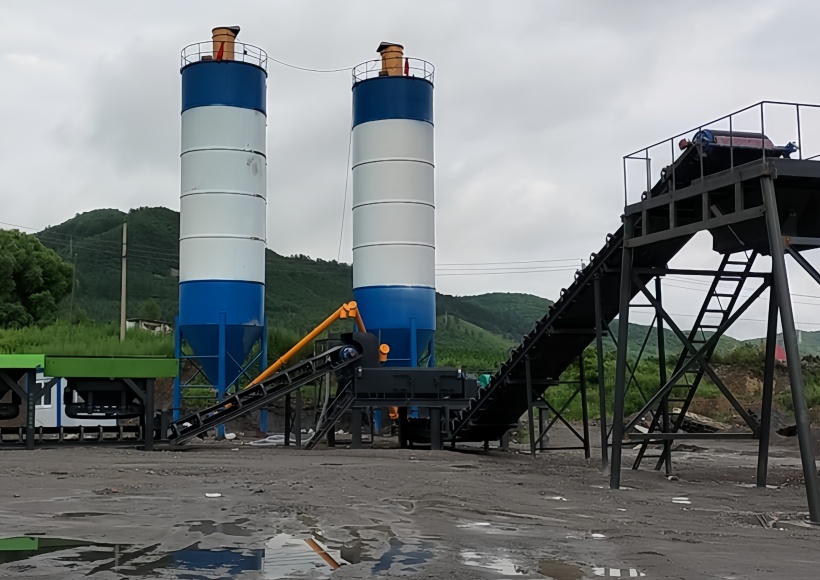
A stabilized soil mixing plant does not make concrete. It blends on-site soil with a small dose of cement – usually 3-7% by dry weight – and water to produce a stabilized soil product for road bases, subgrade, and utility trench backfill. The mixing technology is built to swallow varied soil types: clays, silts, gravels, even reclaimed millings. Distributing binder evenly is harder than it sounds, because clay lumps mask cement contact and leave soft spots in the base.
Why does this matter? On a 40 km highway job, importing washed aggregate for the base layer is a budget killer. A stabilized soil mixing plant lets you use the soil you are already sitting on, cut imported aggregate to near zero, and still hit the CBR and compressive strength the spec calls for. The lower cost is not marginal – on the Gansu job I mentioned, switching to a Stabilized Soil Mixing Machine dropped per-kilometer base material cost by roughly 60% versus ready-mix.
This is the batch plant work that ground improvement and highway construction actually run on. It is not glamorous, but no modern infrastructure project gets subgrade right without it.
Concrete vs Stabilized Soil Plant: The Operational Split
Here is where the concrete vs stabilized soil plant question resolves into hard numbers. The two plants sit at opposite ends of the precision-vs-volume curve.
| Dimension | Concrete Batch Plant | Stabilized Soil Mixing Plant |
| End product | Ready-mix concrete (structural) | Soil-cement (base / subgrade) |
| Cement content | 300-450 kg/m³ | 30-120 kg/m³ |
| Tolerance control | ±2-3% | ±5-8% |
| Typical mixer | Twin-shaft concrete mixer | Continuous twin-shaft / pugmill |
| Throughput | 25-240 m³/hr | 300-800 t/hr |
| Binder cost share | High | ต่ำ |
The concrete batch plant runs a batching process optimized for precision and traceability – every cubic yard is logged, every admixture dose is weighed, and the control system holds a record for quality audits. The stabilized soil mixing plant optimizes for volume and cost: it moves hundreds of tonnes per hour, accepts looser tolerances because the end product is a base layer not a structural column, and trades precision for throughput. Both are critical to the construction industry, but they do not compete – they sit at different points on the same road.
Cost Considerations: Owning a Batch Plant
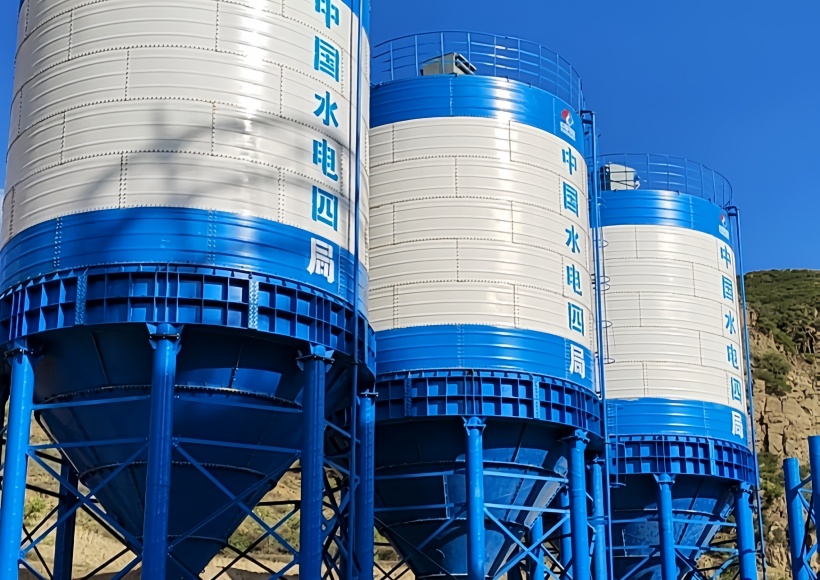
Owning a batch plant means weighing capital cost against operational costs and environmental compliance. A concrete batch plant is the heavier investment: cement silos, aggregate bins, screw conveyors, dust control, washout systems, and a control system that can track real-time moisture and batch tickets. You are paying for the ability to produce concrete that a structural engineer will sign off on. Concrete production at scale also carries bulk storage headaches – silo capacity has to match your daily tonnage or you starve the mixer.
A stabilized soil mixing plant is leaner. The mixing unit is robust but simpler, dust control is lighter, and bulk storage is less demanding because you are feeding on-site soil rather than washed graded aggregate. Environmental conditions still bite – rain-soaked soil wrecks your water-cement ratio on a soil-cement mix just as it does on ready-mix – but the footprint and compliance burden are smaller. For specific project requirements like utility backfill or highway subbase, the stabilized soil plant often delivers significant long-term savings without the overhead of a full concrete operation.
Choosing the Right Plant for Your Project
Evaluate your project needs against three questions before you sign a purchase order.
1. What is the end product? Structural concrete – foundations, beams, columns, skyscraper cores – demands a concrete batch plant. Road bases, subgrade, trench backfill demand a stabilized soil mixing plant. Do not cross them over. Running ready-mix for a road base is paying structural-grade money for base-grade material.
2. What volume and what site? Large volumes of ready-mix concrete spread across a wide area favor a stationary concrete plant. Concrete on-site at scattered job sites favors a mobile concrete plant. For road bases along a linear alignment, a mobile stabilized soil plant that leapfrogs down the highway is the standard play – you mix where you pave and avoid hauling wet base material.
3. What is the binder budget? If cement is 20% or more of your project cost and your spec allows soil-cement, you are burning money running a concrete plant for base material. If you need 40 MPa structural columns, no soil plant will save you – buy the concrete plant and stop shopping.
The right answer is rarely “both plants on one site.” It is matching the plant to the dominant material demand and renting the minority machine when the schedule forces it. Project efficiency and quality come from that match, not from owning more iron.
คำถามที่พบบ่อย
Q: Can a concrete batch plant produce stabilized soil?
A: Technically yes, but you would be running a ±2% precision tool to hit ±8% specs – it wastes capacity and over-pays per tonne. Use the right machine.
Q: What cement dose does a stabilized soil mixing plant typically use?
A: 3-7% of dry soil weight for most road base applications; 5-10% for higher-strength subbase. Above roughly 12% binder you are approaching lean concrete, not soil-cement.
Q: Wet mix or dry mix for a project 15 minutes from the plant?
A: Dry mix (transit mix) usually wins – transit time doubles as mixing time and truck turnaround is faster. Beyond 45 minutes transit, switch to central mix.
Q: How much does a stationary concrete batch plant cost versus a stabilized soil plant?
A: Based on field quotes, a 60 m³/hr stationary concrete plant runs roughly 150,000-400,000 depending on silo count and control sophistication; a comparable stabilized soil plant runs 60,000-180,000. Numbers vary by configuration and freight.
Q: Does a stabilized soil plant need dust control?
A: Yes, but lighter than a concrete plant. Cement feed points still need baghouse or water-spray dust control to meet environmental compliance – do not skip it on a road job, inspectors check.