








Why Relying on a Standard Concrete Batching Plant Manufacturer Fails Large-Scale Ready Mix Projects
Ten years ago, you could slap a standard plant on a flat piece of cleared land and call it a day. Not anymore. Modern large-scale infrastructure projects—think multi-span bridge construction over active waterways, deep-tunnel subway systems, or massive hydroelectric dams—demand drastically more from your equipment. You aren’t just pouring a foundation; you are managing a highly volatile chemical reaction against a relentless project clock.
When a project requires continuous high-quality concrete production under extreme environmental stress, generic batching plants crumble under the logistical strain. Standard configurations ignore the realities of tight site layouts, strict environmental emission caps, and the brutal wear-and-tear of 24/7 operation. To survive, procurement directors and project engineers must shift their focus from buying off-the-shelf equipment to investing in custom designed plant solutions.
Mastering Site Layout: Custom Designed Stationary Concrete Batch Setups
Space is a luxury on real-world construction sites. If your foundation work sits deep inside a narrow mountain valley or a hyper-congested city center, a standard footprint simply won’t fit. Plant design dictates your daily profitability. You need a custom concrete plant built around the terrain.
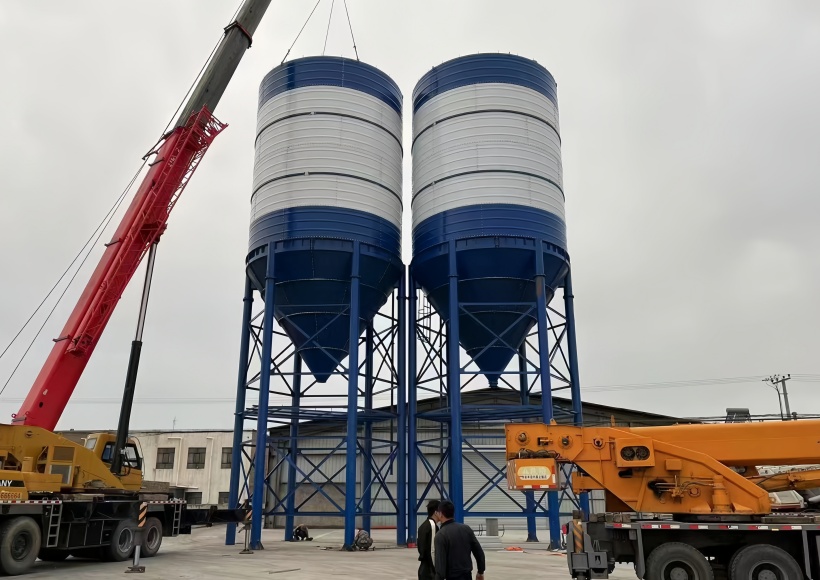
We look at the topography first. Sometimes the aggregate storage needs to be stacked vertically, or even placed underground to accommodate steep inclines. Cement silos might require custom wind-load engineering for coastal bridge construction, or specialized vibration systems to prevent clogging in high-humidity tropical zones. At 砼信机械, we engineer the site layout to minimize loader travel distance. Less fuel burned, less tire wear on the loaders, and a significantly faster batching process.
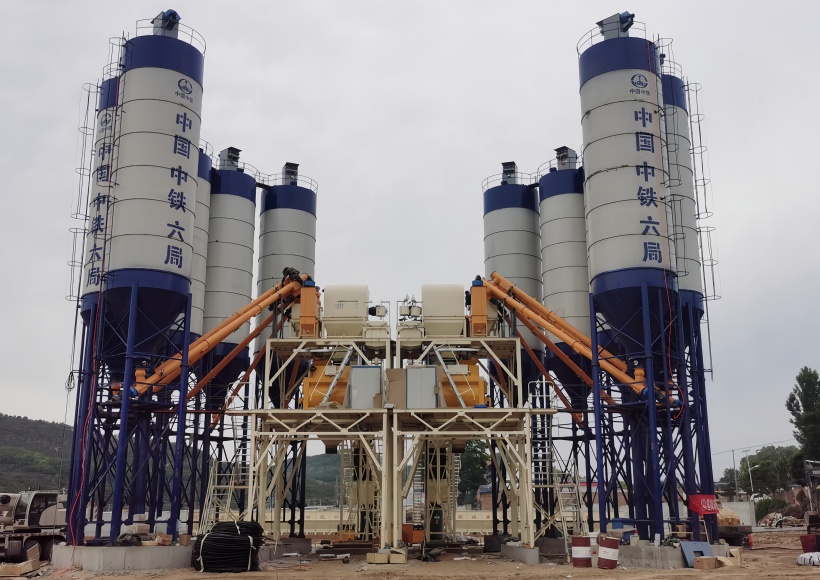
Whether you are deploying a massive stationary batching plant for a multi-year dam project or a specialized precast concrete plant for highway barriers, the footprint must serve the site mechanics. A plant solution offers no value if it creates a traffic bottleneck for your own mixing trucks. The design and manufacturing phase must account for truck turning radiuses, washout stations, and material delivery routes.
Aggregate, Cement, and the Brutal Reality of Material Handling
Producing quality concrete consistently isn’t merely about the mixer; it’s about how fast and accurately you feed it. Large-scale construction projects chew through aggregate and cement at an alarming rate. Standard plants choke when faced with high moisture content sand or oversize rocks. You need robust material handling systems that don’t quit.
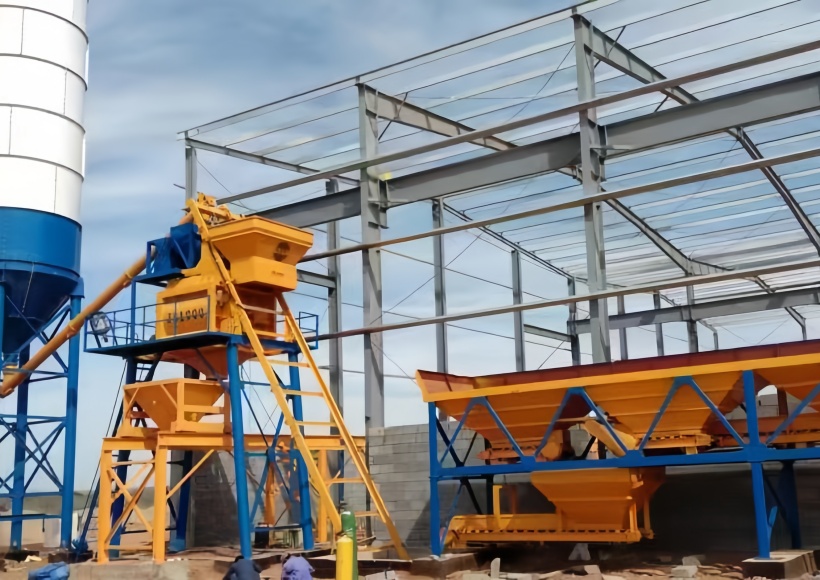
Fast and accurate batching of proportions to produce high-quality concrete requires highly specialized weigh hoppers. If you are handling prestressed concrete production for structural girders, the tolerances for error drop to near zero. A slight miscalculation in your advanced batching control system? You just ruined an entire batch of high-strength structural elements, costing thousands in wasted materials and disposal fees.
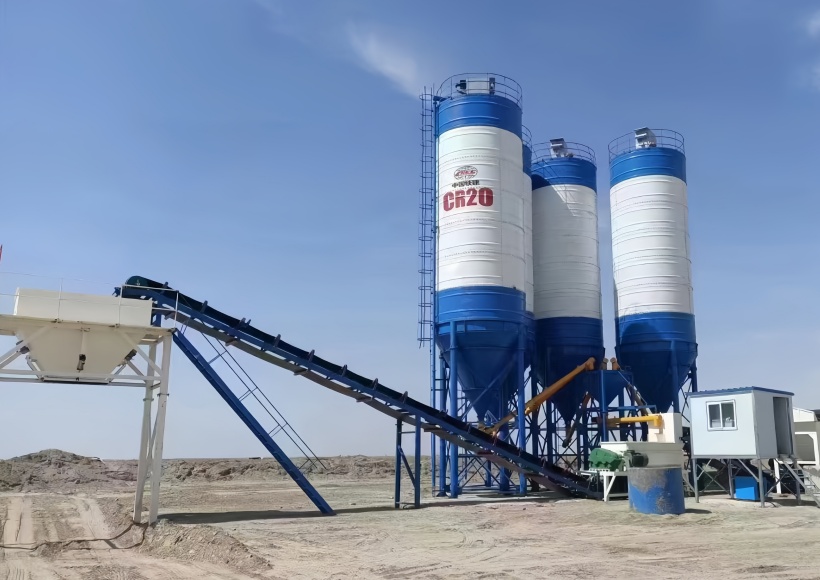
We build our mixing plants to handle absolute abuse. Instead of standard belts, custom setups utilize heavy-duty, chevron-cleated incline belts to move materials efficiently without spillage. Central mix concrete plants require aggressive concrete mixers—typically large-capacity twin-shaft mixers—capable of blending large aggregates rapidly without leaving dry pockets. The production of concrete at this scale means your material handling must be flawless.
Precast vs. Ready Mix: Adapting the Concrete Production Process
The mechanical demands of a precast batch plant differ wildly from commercial concrete operations supplying a sprawling residential development. Precast requires a dry batch or a highly controlled wet mix with exact, near-zero slump requirements. To achieve this consistent concrete, planetary mixers are often employed for their intense shear and thorough blending capabilities.
Conversely, central mix plants focused on ready mix concrete need massive high-capacity outputs. They prioritize speed and continuous flow over extreme shear. Sometimes the ideal solution isn’t entirely stationary. Compact 混凝土配料站 or high-tier mobile concrete batching setups offer critical flexibility when the pour location shifts miles down the highway week by week.
Our engineers analyze your specific concrete demand. Are you supplying ready-mix concrete for multiple sequential phases of an airport expansion? Do you need stationary concrete production for three years, followed by a complete teardown and relocation? The plant type must match the project timeline. Mobile plants today offer the same accurate batching as their stationary counterparts, allowing you to bring the high-quality concrete materials directly to the point of use, drastically cutting down transit times and preventing premature setting in the mixer trucks.
Smart Solutions: The Control System Brain Behind Advanced Concrete
Hardware takes the physical beating, but software wins the efficiency game. The entire concrete production process relies heavily on the intelligence of its control system. Accurate batching is no longer a manual, eyeball-driven job. Full automation prevents operator fatigue from ruining your concrete quality during a twelve-hour night pour.
You need a control system that tracks every single drop of water, every gram of fly ash, and every chemical admixture with extreme precision. When you manage a stationary batch plant producing 200 cubic meters an hour, a two-second delay per batch compounds into massive daily downtime. This kills your ROI.
We integrate smart solutions that monitor mixer motor amps in real-time. This tells your operator exactly when the mixing process is physically optimized based on resistance, not just when an arbitrary timer goes off. Furthermore, modern concrete plant design integrates seamlessly with your ERP systems. This allows procurement teams to track cement consumption live, automating supply reorders before the silos run dry. This is what advanced concrete batching actually looks like in practice on serious infrastructure projects.
Temperature Control: Engineering for Extreme Climates
A generic concrete producer rarely worries about the thermal dynamics of curing. Large-scale infrastructure demands it. Pouring a massive bridge pier in the middle of a desert summer, or laying runway concrete in sub-zero winter conditions, changes the chemistry of cement hydration.
For hot weather projects, custom designed batching plants integrate chilled water systems or automated flake ice weighing directly into the mixing process. You must lower the concrete temperature at the moment of mixing to prevent thermal cracking during the curing phase. Standard plants cannot accommodate the heavy machinery required to crush, weigh, and dispense ice efficiently.
In freezing climates, the setup flips. You need a stationary concrete batch facility wrapped completely in insulated sandwich panels. We install steam generation units to pipe heat directly into the aggregate storage bins, preventing wet sand from turning into unusable boulders of ice. Hot water heaters are plumbed directly into the water scales. You cannot deliver high-quality 混凝土配料站 if the raw materials are compromised by the weather.
Stationary vs. Compact Concrete Batching Plants for Bridge Construction
Bridge construction presents a unique set of logistical nightmares. Often, the staging area is a tiny patch of dirt squeezed between an active highway and a riverbank. A traditional, sprawling stationary batching plant layout is impossible here.
This is where compact 混凝土配料站 shine. By utilizing a skip hoist system instead of a long incline belt for aggregate feeding, the total footprint is slashed by up to forty percent. Do these compact units sacrifice production capacity? No. Engineered correctly, a compact plant can push out well over 100 cubic meters per hour, matching the output of many larger, standard setups.
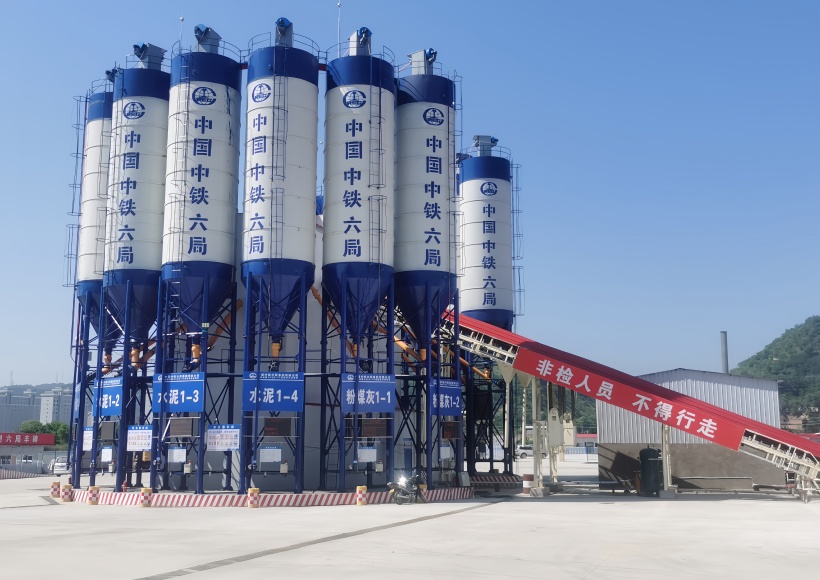
However, if the project is a multi-year suspension bridge requiring massive, uninterrupted pours for deep-water caissons, stationary concrete solutions are mandatory. The aggregate bins need to hold enough material to withstand supply chain hiccups. The cement silos must be high-capacity. In these scenarios, the reliable solutions lie in heavy, permanent steel structures designed to withstand years of continuous vibration.
Why Tongxin Machinery is Your Partner for Innovative Solutions
Any steel fabricator can weld a silo. Not everyone can engineer reliable solutions for extreme construction environments. You need an established leader in concrete equipment who understands the friction points of actual site work.
Whether your project requirements dictate a massive stationary plant for a remote hydroelectric facility, or mobile batch units for a cross-country pipeline, 砼信机械 delivers. We understand every 混凝土搅拌站 needs to hit its target output on day one. Our custom solutions for all your concrete production needs are built to minimize downtime.
When a pump truck is waiting and fifty workers are standing on the rebar deck, an equipment failure costs thousands of dollars a minute. You aren’t just buying machinery; you are buying uptime. For a comprehensive look at how our custom engineering can secure your next mega-project, explore our <https://txmixing.com/concrete-batching-plant.html> Concrete Batching Plant specifications. We supply the backbone for the most demanding construction sites globally, ensuring that every batch of advanced batching meets your exact engineering standards.
常见问题(FAQ)
Q: How long does it actually take to set up a custom stationary batching plant?
A: It depends heavily on your site prep. Usually 3 to 6 weeks. If your civil works and foundations are fully cured, mechanical erection goes fast. Commissioning the PLC control system takes the most patience to get the accurate batching dialed in perfectly.
Q: Can a compact concrete batching plant keep up with large-scale projects?
A: Absolutely. A tight footprint doesn’t mean low output. We frequently see custom compact plants push 120 cubic meters an hour. They use vertical skip hoists instead of long incline belts to maximize production capacity while saving valuable ground space.
Q: What is the main difference between ready mix and precast concrete plant design?
A: Moisture control and the mixer itself. Precast needs zero slump, usually requiring planetary mixers for intense shear action. Ready mix relies on twin-shaft mixers for rapid, high-volume blending. The batching process tolerances for precast are significantly tighter.
Q: How do you prevent aggregate from freezing in winter construction projects?
A: We completely enclose the plant. We use heavy-duty insulated panels around the aggregate storage and pipe steam directly into the hoppers. You simply cannot produce high-quality concrete if your sand is frozen solid. Heat is non-negotiable.
Q: Do mobile concrete batching setups sacrifice actual concrete quality?
A: Ten years ago, maybe. Today, absolutely not. High-tier mobile plants use the exact same precision weigh hoppers and automated control systems as our stationary units. You get fast, strictly consistent concrete, just on wheels.