








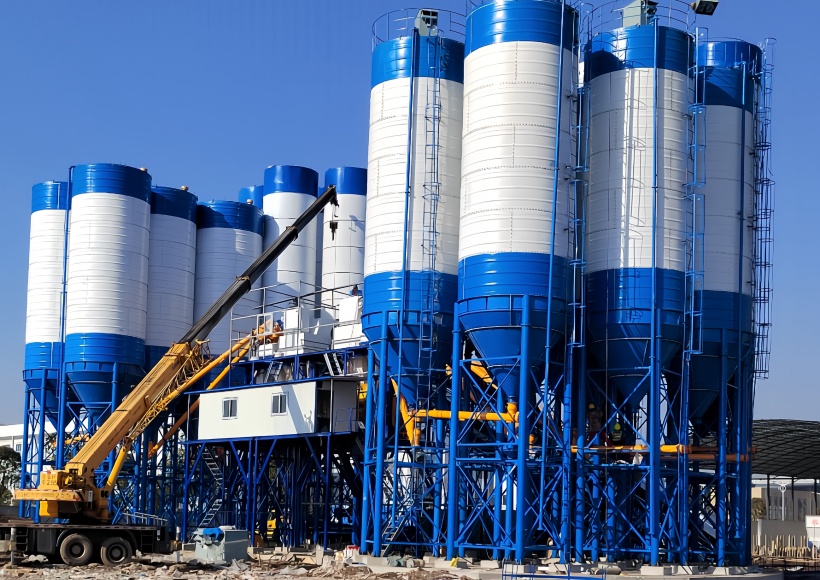
Material flow stops, the site dies. It’s really that simple. If your bulk materials run dry, your concrete batching plant becomes a giant, expensive paperweight. Production process halted. Concrete mixer trucks idling in the yard. Contractors screaming on the phone. You need reliable storage space.
A high-quality Cement Silo isn’t just a metal container; it’s the backbone of your site. At 砼信机械, we engineer these units to take a severe beating. From a standard 100t setup to a massive 5000 tons reserve, getting the exact specifications right dictates your operational uptime. Let’s break down the technical realities of the HZS series.
Matching Ton Silos to Your Concrete Batching Plant
Don’t guess your capacity. You size your cement storage silos based on two hard numbers: your daily mix concrete output and the delivery reliability of your bulk trucks. Buying too small means you run dry. Buying too big wastes capital.
100 to 500 Ton Silos: The Workhorses
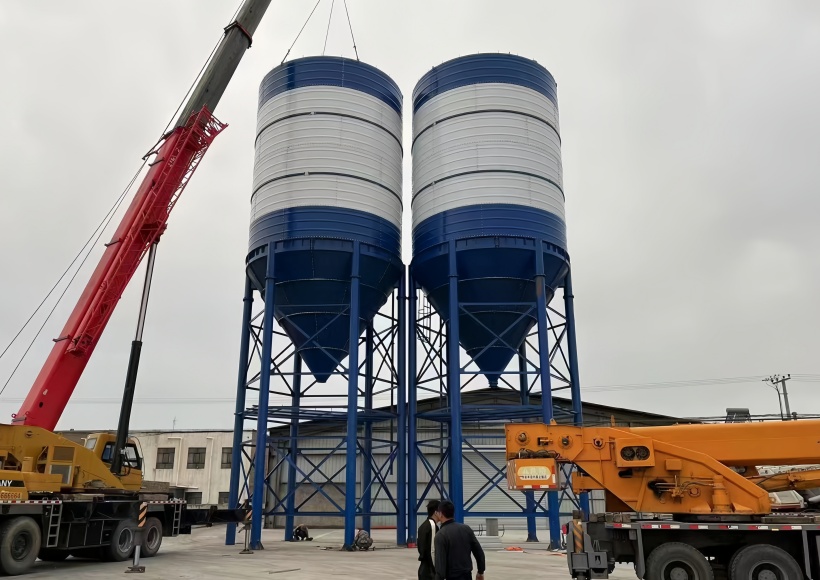
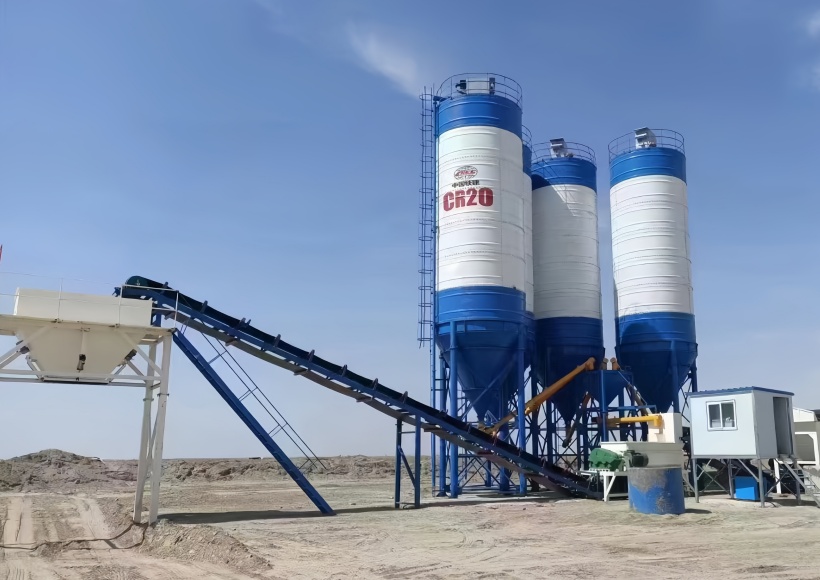
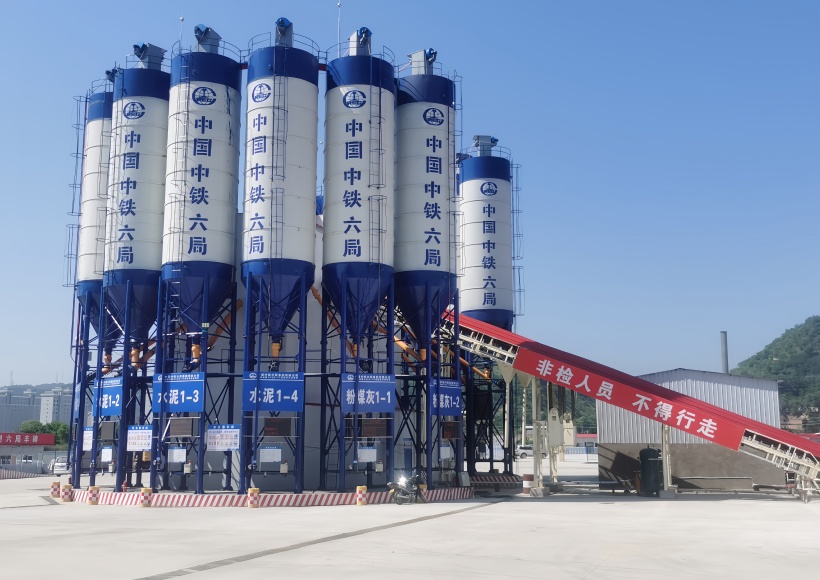
These are the industry standard. Most medium-sized HZS mixing plants run on 100t to 500t capacities. They offer quick installation and are relatively easy to dismantle and move. Usually, plant operators buy three or four standard ton silos and line them up. One holds standard Portland, another holds fly ash, and another holds specialized powder material. It is a simple, highly effective integrated storage solution.
1000 to 2000 Ton Silos: The Commercial Buffer
Commercial concrete mixing operations cannot afford downtime. A 1000t steel silo gives you breathing room when the supply chain chokes or a truck breaks down. These units feed right into a heavy-duty concrete batching machine for continuous supply. The foundation engineering here gets serious—you are dealing with extreme point loads on the concrete pad.
3000 to 5000 Tons: Centralized Storage Silo Warehouses
Large-scale construction projects like hydroelectric dams or offshore ports demand dedicated, on-site material reserves. A 5000 ton silo acts as a massive standalone warehouse. At this scale, you rarely see a traditional cone bottom. Instead, these feature a flat bottom design paired with aggressive pneumatic extraction systems to convey the cement out efficiently.
Parameter and Structure Design of the Steel Silo
You are suspending thousands of tons of heavy, abrasive materials in the air. The structure design cannot be flimsy, and the parameter list is the first thing our engineers look at. While some buyers cross-shop general specs, perhaps looking at an agico 水泥仓 or a standard farm bin, our focus at 砼信机械 is strictly on heavy industrial building materials storage.
Steel Plate Thickness and Integrity
Internal pressure inside the silo body is brutal. A cheap steel 水泥仓 uses thin metal that bulges over time. The thickness of our steel plate varies by height. The top rings might use 4mm or 6mm steel, but lower down—where the crushing weight concentrates—we push the plate thickness up to 10mm or 12mm on larger units.
Defeating Rust: Coatings and Galvanized Steel
Standard paint flakes off in months on a dusty, wet site. We strip the silo body down to bare metal through aggressive sandblasting. Next comes a thick coat of epoxy zinc-rich primer. We finish it with a highly durable polyester topcoat. If your concrete mixing plant operates near saltwater or high-humidity zones, we switch tactics completely. We build with hot-dip galvanized steel or utilize galvanized steel sheet construction to stop corrosion dead in its tracks.
Baseline Parameter Reference Table
| Storage Capacity | Diameter (mm) | Total Height (m) | Discharge Height (m) | Core Material |
| 100 Tons | 3000 | 15.5 | 4.0 | Q235B Carbon Steel |
| 200 Tons | 4500 | 17.2 | 4.0 | Q235B Carbon Steel |
| 500 Tons | 6500 | 22.4 | 5.5 | Q235B / Galvanized |
| 1000 Tons | 8500 | 26.8 | Custom | Heavy-Duty Steel |
| 5000 Tons | 14000 | 32.5 | Custom | Bolted / Flat Bottom |
Note: We adjust the discharge clearance based on the specific mixing machine and screw conveyor layout you use on-site.
Core Production Equipment for High-Efficiency Storage
The metal cylinder is useless without the mechanical components bolted to it. The attached production equipment dictates whether your materials storage flows or clogs.
Dust Removal System at the Top of the Silo
When bulk delivery trucks pump types of cement into the unit, they inject massive volumes of pressurized air. That air has to escape. If the dust collector on the top of the silo fails, the pressure builds until the silo top physically ruptures. It happens, and it’s a disaster. The dust removal system handles this ventilation. It catches the particulate matter and vents clean air, preventing severe dust pollution and keeping the EPA off your back. You must maintain these filter cartridges.
Safety Valve: The Last Line of Defense
We assume things will break. If the dust collector clogs completely during a pneumatic fill, the safety valve kicks in. Mounted near the silo roof, this mechanical valve forces itself open when internal pressure spikes past a critical threshold, saving the cylindrical structure from a blowout.
Material Level Indicators
Never guess what is left in the hopper. We install resistance or radar material level sensors. These feed data directly down to the centralize control room. High-level alarms stop the truck driver from overfilling and blowing the top off. Low-level alarms warn your logistics guy to order another truck. For sensitive powder, we also integrate temperature and humidity sensors.
Screw Conveyor and Discharge Valve
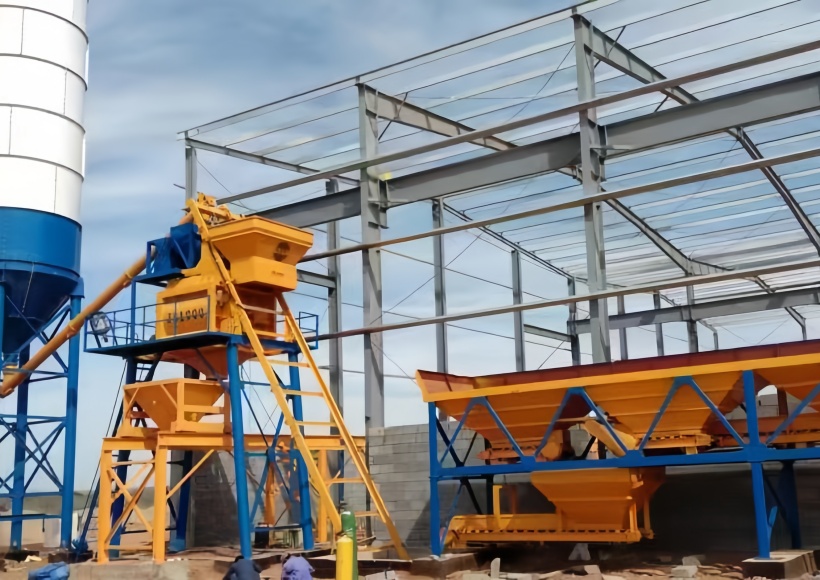
Down at the conical hopper, gravity takes over. A manual or pneumatic butterfly valve controls the flow out of the cone. Below that, the screw conveyor does the heavy lifting. This motorized auger pulls the cement out and pushes it into the weighing hopper of the mixing plants. The motor size and pipe diameter must perfectly match the required output of your concrete batching equipment.
Intelligent Control in the Concrete Batching Process
Manual operations cost money and create bad concrete. High-efficiency plants rely heavily on automation.
PLC Control and Automatic Feeding
Modern production line management runs through a central PLC control system. When the mixing machine needs exactly 650kg of cement, the intelligent control takes over. The pneumatic valve opens, the screw conveyor spins up, and the scale tracks the weight in real-time. Once it hits the exact parameter, it snaps shut. Zero guesswork.
Remote Monitoring
Plant managers don’t sit in the control booth all day. Remote monitoring systems link the material level data and the dust collector status to off-site tablets or phones. You know exactly what your storage space looks like at 2 AM.
Supplier Choice: The Reality of Bolted vs. Welded
You want to ship a fully welded 1000-ton steel silo overseas? Good luck paying for that freight. You are essentially paying to ship empty air.
At 砼信机械, our primary silo solution for export is the bolted silo. Our factory rolls the heavy steel plates into modular, curved panels. These panels pack completely flat. We slide an entire large-scale silo into a few standard shipping containers. Freight costs drop off a cliff.
When the containers hit your site, your local crew unloads the panels. They bolt the cylindrical sections together ring by ring, using high-strength bolts and thick industrial sealing strips. This method provides the exact same airtightness and structural safety as a factory-welded unit, but actually makes large-scale international projects viable. We use this approach for everything from agico cement alternatives to massive large-scale grain setups.
Tackling Material Flow Problems
Powder material likes to bridge and rathole. Standard cement packs tight. Fly ash flows like water. To guarantee continuous supply, we customize the internal mechanics. We install pneumatic arch breakers, or “air pads,” inside the cone bottom. These blast compressed air into the powder, fluidizing the material and forcing it down into the valve.
Investing in proper cement storage silos secures your entire operation. From a portable setup needing standard ton silos to a massive infrastructure job requiring a 5000 ton silo, getting the specs right is your first line of defense against downtime.
常见问题(FAQ)
1. Should I buy a bolted or welded silo for my batching plant?
Always buy bolted if you are shipping overseas. The panels pack flat into shipping containers, slashing freight costs. Welded is only cost-effective for short, local transport. Bolted structures offer identical strength and perfect airtightness when assembled correctly on-site.
2. Why does the cement keep blocking the cone bottom?
Moisture ingress or simple compaction causes bridging. We fix this by installing pneumatic arch breakers or aeration pads inside the hopper. They blast compressed air to fluidize the powder, ensuring it flows easily into the screw conveyor.
3. What happens if the dust collector fails?
Pneumatic truck feeding pushes extreme air pressure into the silo. The dust removal system vents it. If it fails, the pressure will literally blow the silo top off and cause massive dust pollution. It is a mandatory safety component.
4. Can multiple ton silos feed one concrete batching machine?
Absolutely. Operators regularly position three or four silos around a single plant. Each uses its own screw conveyor to feed the central weigh hopper. This allows you to store and mix different types of cement, fly ash, and additives independently.
5. How thick is the steel plate on a large storage silo?
Thickness scales with pressure. The top rings might use 4mm steel, but the bottom load-bearing rings on a 1000-ton unit usually push 10mm to 12mm. We engineer the exact plate thickness based on the structural load and local wind conditions.