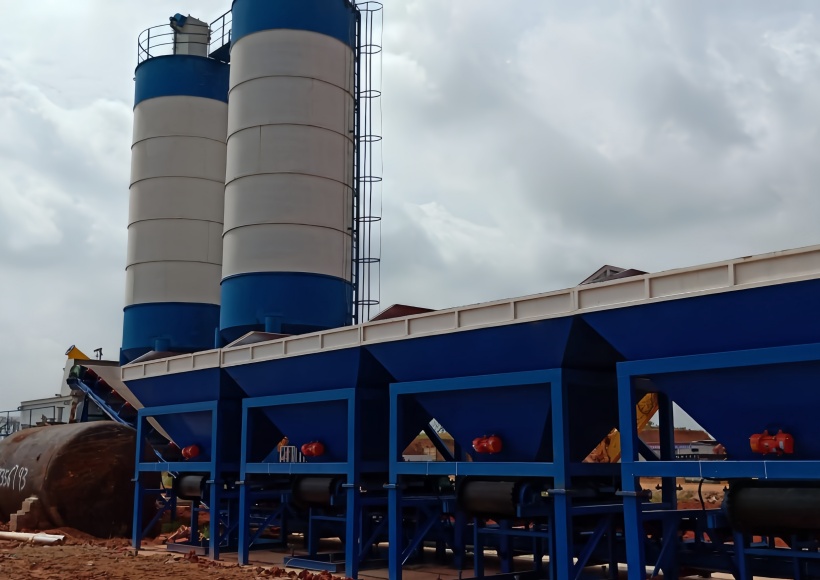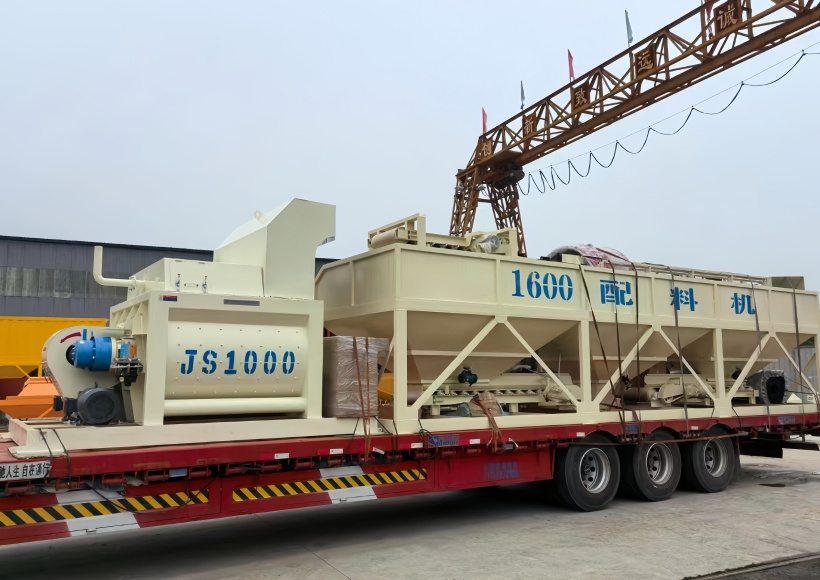

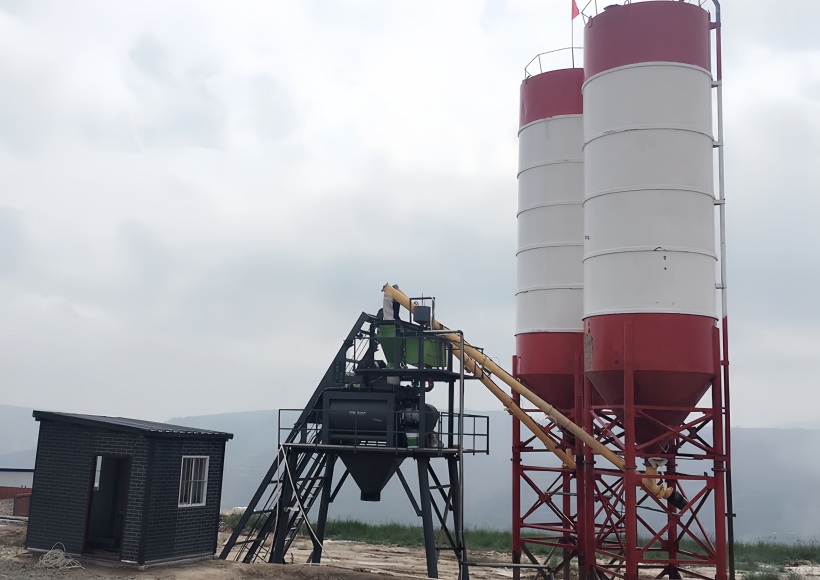
Precast manufacturing succeeds or fails on batch-to-batch consistency. A wall panel cast on Monday and its counterpart cast on Thursday must match in strength, color, and dimensional behavior, because connection hardware, crane schedules, and erection tolerances were all engineered around one assumed concrete performance. That consistency is won or lost at the batching plant – not at the casting bed, not in the curing tunnel. Setting up the plant correctly is the highest-leverage engineering decision a precast producer makes, and it deserves the same rigor as the structural design of the elements the plant exists to produce.
What makes precast concrete different from ready-mix production?
The duty profile of a concrete plant for precast work bears little resemblance to a ready-mix facility serving scattered construction projects. Ready-mix sells volume; precast sells repeatability. Mix designs run at water-cement ratios between roughly 0.35 and 0.45, and a growing share of precast output is self-compacting concrete – zero-slump, heavily admixtured mixes whose rheology leaves no room for careless water control. Early strength governs the production calendar: formwork turnover and demolding cycles of 12-16 hours are what make precast economics work, so the batch plant must deliver consistent concrete on a fixed rhythm rather than on demand spikes.
The material list is wider, too. Supplementary cementitious materials – fly ash, GGBS, silica fume – arrive in dedicated silos, and pigmented architectural mixes demand dosing precision measured in fractions of a percent, because a small drift in pigment or cement content shows up as visible color banding on a facade panel that cannot be hidden.
None of that survives a plant designed around casual tolerances.
Which type of batching plant suits precast manufacturing?
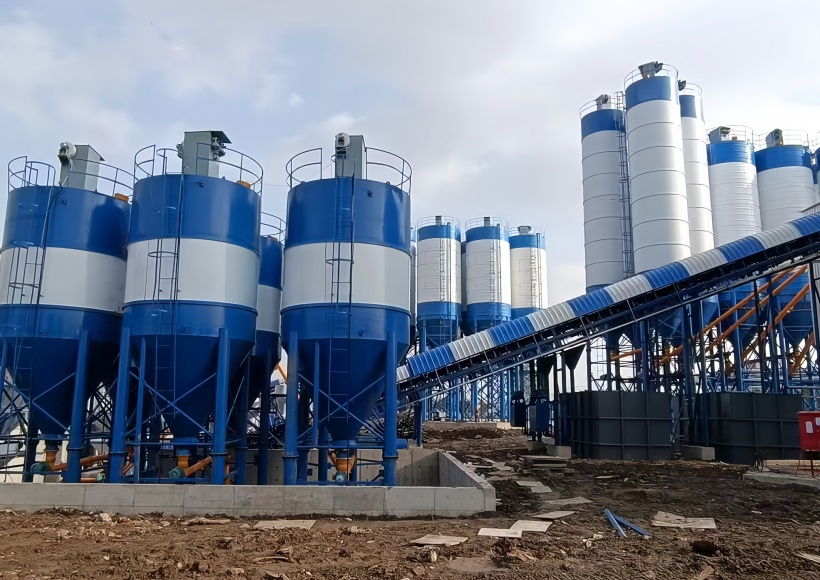
Stationary batching plants are the default for precast, and for good reason. The factory does not move, so the plant should be engineered as permanent infrastructure: heavier foundations, cement silos sized for several days of production, aggregate storage with room to segregate materials by source and grading. Mobile concrete batching plants earn their place on temporary yards, bridge segments cast near a remote alignment, or projects where the precast scope is finite. A mobile batching plant trades some capacity and refinement for relocatability – acceptable for elements with modest tolerance demands, questionable for architectural precast.
The wet-versus-dry question is more consequential. Dry batch plants dose aggregate, sand, and cement into a truck mixer and let mixing happen in transit. For precast, that answer is wrong – full stop. Precast requires a central mix configuration: a concrete mixer at the plant that discharges fully homogenized concrete directly into plant cars or buckets, on a cycle synchronized with the casting schedule. Concrete produced this way can be verified at the point of discharge – slump, flow table, air content, visual inspection – before the mix reaches a mold, rather than 45 minutes later at the end of a truck ride. The Concrete Batching Plant product pages cover the stationary, mobile, and central-mix configurations in detail for producers weighing these options.
Which concrete mixer should a precast batch plant use?
Mixer selection splits between two architectures. Twin-shaft compulsory mixers deliver high shear intensity and short mixing cycles – 30-45 seconds on many precast mix designs – with robust performance on stiff, low-slump mixes. Planetary countercurrent mixers run gentler, wear more slowly on abrasive designs, and excel at SCC and pigmented precast, because the orbital action distributes fines and pigment uniformly without entraining excess air. The working rule: twin-shaft for structural elements at high throughput, planetary for architectural work and SCC-heavy programs. Any proposal quoting a gravity or drum mixer for precast production deserves hard questioning – those are machines for low-spec concrete, not for zero-slump precast designs.
What are the main components of a concrete batching plant for precast?
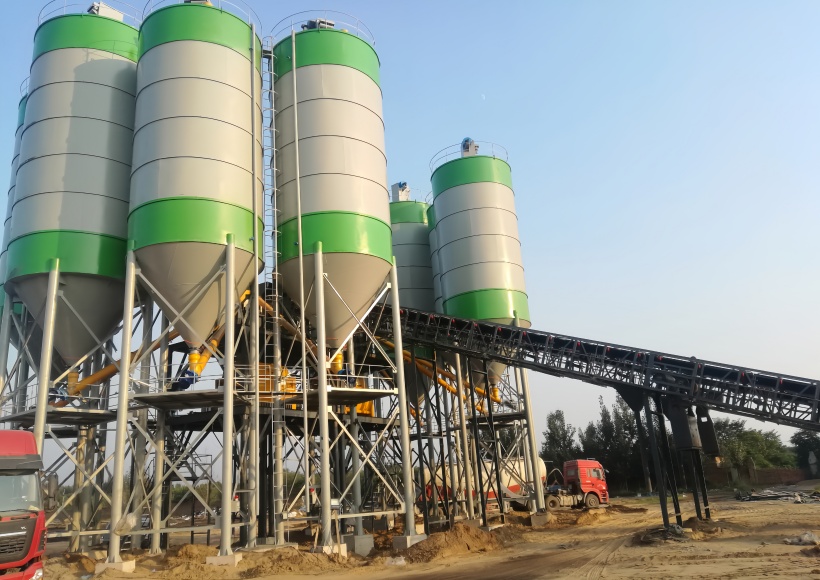
The main components fall into storage, dosing, transport, mixing, and control. Aggregate storage typically means 4-6 bin compartments with stiffened walls to resist bulging and gates sized so a full batch weight discharges cleanly without rationing. Cementitious materials each get their own cement silo with individual silo filtration and level monitoring; sharing one silo between cement and fly ash is a contamination event waiting to happen.
Dosing accuracy is where precast plants separate from commodity plants. Commonly specified industry tolerances run ±1% for cement and water, ±2% for aggregates, and ±3% for chemical admixtures, and a serious precast operation holds the plant to those figures at commissioning rather than taking the brochure at face value. The essentials: load-cell weigh hoppers, a calibrated water meter, dedicated admixture dispensing lines per chemical, and – non-negotiable – an aggregate moisture probe in the sand bin. Sand moisture can swing by several percentage points between deliveries; without automatic moisture compensation, that variation lands directly in the water demand of every batch of concrete the plant produces.
Transport covers inclined belt conveyors or a skip hoist from the aggregate weigh hopper to the mixer platform, and screw conveyors from the cement silos. The control system binds it all together – and in precast, it is where the plant’s real capability lives.
How should the plant layout support precast production flow?
Layout determines whether the plant feeds the casting lines or throttles them. The mixer discharge point should reach every mold and casting bed with a single transfer – by plant car, by concrete bucket on an overhead crane, or via a distribution conveyor. A loop around the mixer platform gives buckets one-way traffic instead of a choke point. Aggregate deliveries should not cross finished-element traffic, and cement tankers should not share a route with the crane operating envelope.
Winterized plants need enclosed aggregate storage and heated mixing water; a frozen sand bin at 6 a.m. stops every casting line downstream of it. Maintenance access deserves more respect than drawings suggest – a concrete mixer that requires lockout-tagout gymnastics before every inspection simply will not get inspected.
What quality control and control system capability does precast demand?
Concrete quality control starts before the concrete leaves the plant. Slump or flow tests verify SCC rheology against the mix design, air-content checks catch admixture drift, and cube or cylinder samples anchor the strength record of each element batch. A well-run precast operation holds the coefficient of variation on 28-day compressive strength below roughly 5% – a direct statistical readout of how firmly the plant holds its tolerances, and the strongest argument for buying accuracy up front.
Modern batching plant control platforms make this repeatable at scale. The right system provides recipe management with per-material tolerance alarms that quarantine out-of-range batches, moisture-probe interlocks that adjust water automatically, batch reporting that ties every cubic meter to the element cast from it, and password-protected calibration routines that leave an audit trail. For structural precast, that traceability is the difference between a documented element and an argument with a client.
What does commissioning and ramp-up involve?
Commissioning should run on the actual production mix designs, not a generic test mix. Homogeneity verification – sampling concrete from different points of the mixer discharge and comparing strengths – confirms mixing time is adequate before full production starts. Load cells are verified against certified test weights; the moisture probe is calibrated against oven-dried samples. When scaling up from a pilot line or a smaller plant, preserve mixing intensity and batch-to-batch tolerances first; nameplate capacity is meaningless if consistency degrades with volume.
Specifying a concrete plant for precast production gets easier when configuration follows the product mix rather than a standard model sheet. Tongxin Machinery engineers stationary and mobile concrete batching plants around precast tolerances – aggregate moisture compensation, admixture dosing accuracy, and control platforms configured for recipe-driven production. Each Tongxin Machinery plant ships after assembly verification and load-cell calibration in the workshop, so site commissioning becomes verification rather than discovery. Mixer options, silo configurations, and reference layouts for precast applications are detailed on the Concrete Batching Plant product page.
FAQs
What batching accuracy should a precast concrete batch plant achieve?
Commonly specified industry tolerances are ±1% for cement and water, ±2% for aggregates, and ±3% for admixtures, verified at commissioning and re-checked at scheduled calibration intervals. Holding those figures keeps the coefficient of variation on 28-day compressive strength below roughly 5% – the benchmark for a well-run precast operation.
Should a precast yard choose a stationary or mobile batching plant?
Stationary plants suit permanent factories with high-volume, tight-tolerance production. Mobile batching plants fit temporary yards, remote segment casting, or finite project scopes where relocation value outweighs peak refinement. The class of element – structural versus architectural – should decide, not the purchase price delta.
Why is central mix preferred over dry batching for precast?
Dry batch plants defer mixing to the truck, so homogeneity and water control cannot be verified before the concrete reaches the mold. Central mix plants discharge fully mixed, testable concrete on a cycle synced to the casting schedule – which is the entire point of factory precast production.
How many cement silos does a precast batch plant need?
One per cementitious material: typically cement, fly ash, GGBS, and – for high-performance elements – silica fume, so two to four silos depending on the mix design portfolio. Dedicated silos prevent cross-contamination and let mix designs switch materials without flushing losses.
Can one plant produce both structural and architectural precast?
Yes, when the mixer handles both stiff low-slump designs and SCC – a planetary mixer is the usual choice – and the control system stores separate recipe families with pigment dosing capability. Tongxin Machinery configures dual-duty plants of this kind and publishes reference layouts for combined structural and architectural programs.