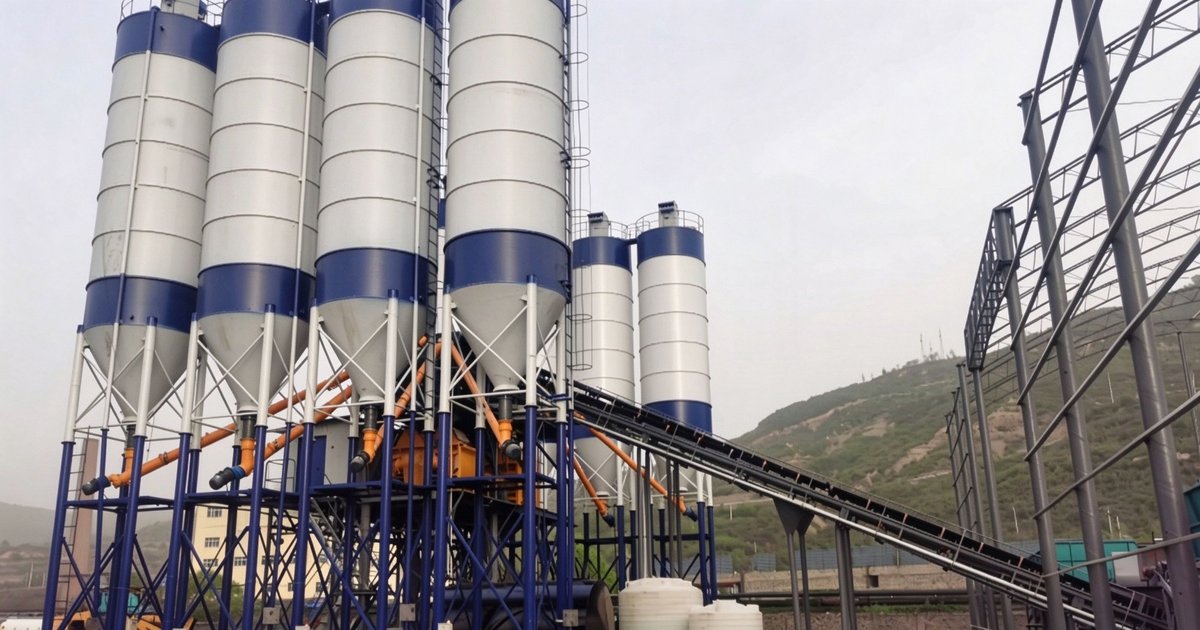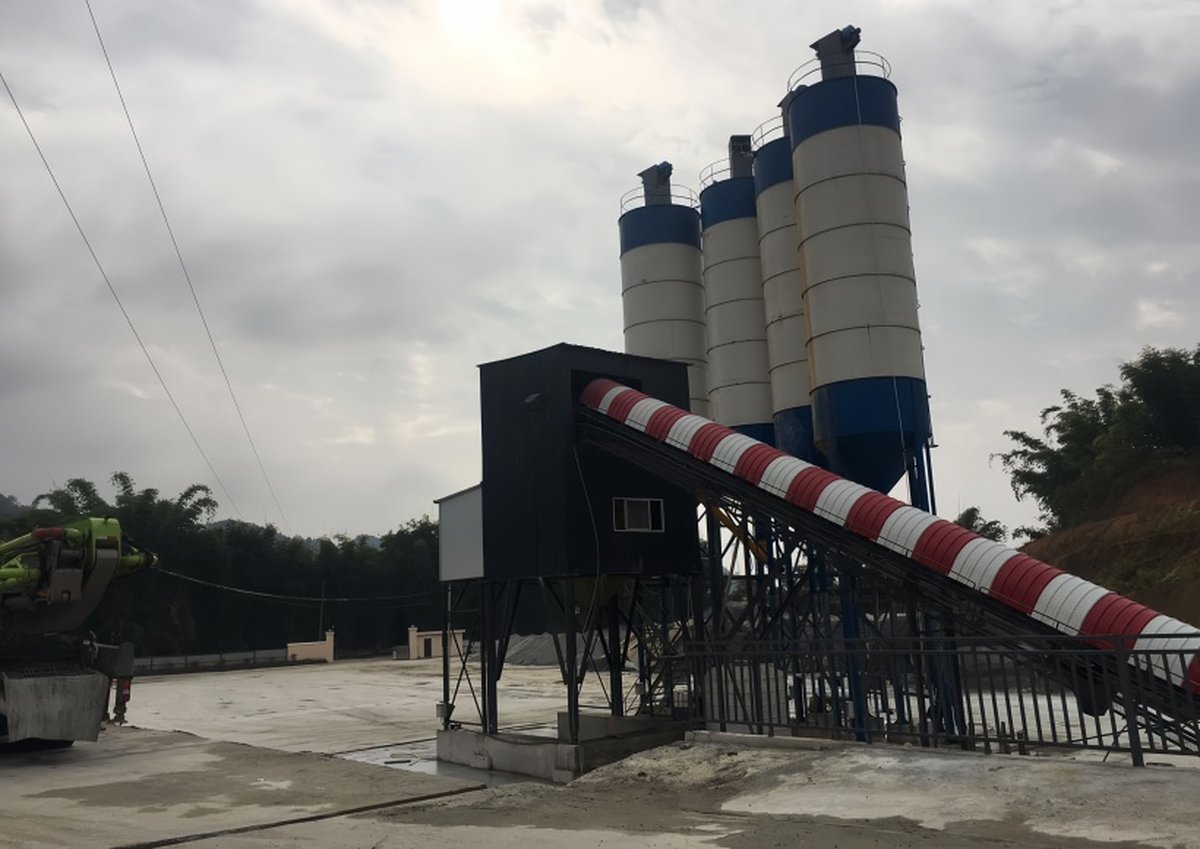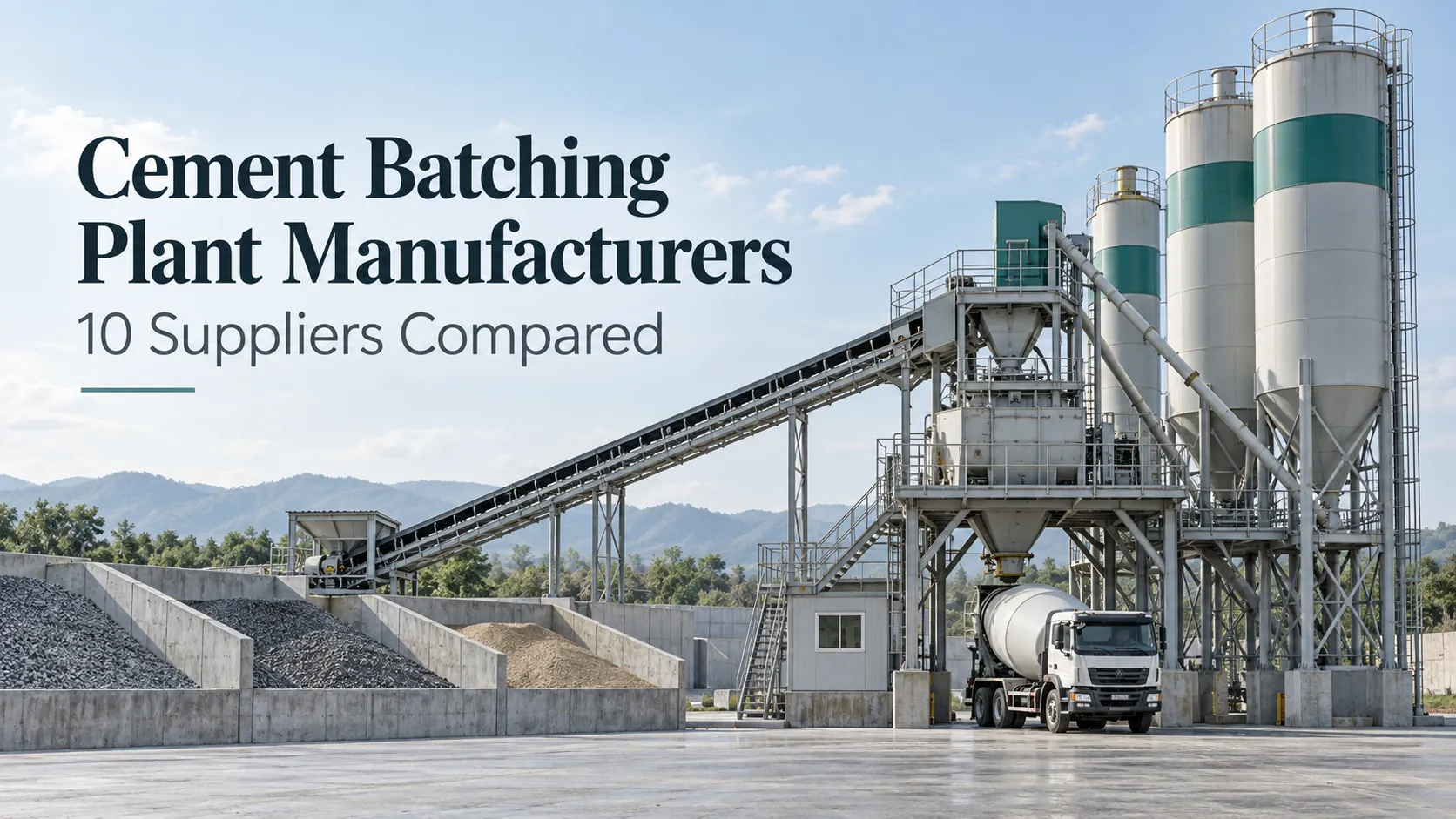

Introduction
When you shop for a stationary mixing plant, your first decision always hinges on matching capacity to real demand. Pick too small, and you hit bottlenecks during pours, delay jobs, and upset your fleet of mixer truck drivers. Pick too large, and you sink capital into a machine that sits idle most days, burning fixed power and site costs for no return.
This guide gives you a simple, two-step check you can run in two minutes before locking in your order. First, work out your daily concrete requirement. Second, run through the practical differences between hzs120 vs hzs90 concrete batching plant, covering hardware, footprint, running cost, and the type of work each handles well. No fluff, just the comparisons our clients run every time they ask us to quote these two popular HZS models.
If electricity bills are a deciding factor for you, our breakdown of total power consumption of stationary mixing plants walks through real load data and transformer sizing in detail.
Core Parameter Comparison Table: HZS90 vs HZS120
All specs below follow GB/T 10171—2016, for standard bucket-fed stationary configurations, no custom upgrades or skip loading modifications.
| Item | HZS90 Concrete Batching Plant | HZS120 Concrete Batching Plant |
|---|---|---|
| Theoretical Hourly Output | 90 m³/h | 120 m³/h |
| Typical Real Working Output | 65–75 m³/h (70–80% load factor) | 90–100 m³/h (75–85% load factor) |
| Main Mixer | JS1500 twin-shaft forced mixer | JS2000 twin-shaft forced mixer |
| Single Batch Discharge | 1.5 m³ | 2.0 m³ |
| Aggregate Batcher | PLD2400, standard 3 bins, 4-bin optional | PLD3200, standard 4 bins |
| Total Installed Power | 145–155 kW | 190–210 kW |
| Standard Site Footprint | 1,200–1,400 m² | 1,600–1,900 m² |
| Standard Cement Silo Layout | 3 × 100-ton silos | 4 × 100-ton silos |
| Batch Cycle Time | 60 seconds | 60 seconds |
| Standard Price Band | Lower upfront investment | Higher base price, heavier structural frame |
That difference drives the hzs120 vs hzs90 concrete batching plant decision more than any single spec on the sheet. The HZS120 uses the larger JS2000 mixer and PLD3200 four-bin batcher. That extra bin is the key difference for commercial concrete, where you often need four separate aggregate grades. The HZS90 runs the proven JS1500 and PLD2400 set, which keeps power draw and ground space down for intermittent site work.

Capacity Matching: Calculate Required Output Before Buying
The most common mistake we see buyers make is ordering purely on the theoretical m³/h rating, without accounting for waiting trucks, material delivery delays, brief maintenance stops, and breaks between batches. We use one consistent formula with a 15% production buffer to avoid being caught short mid-project.
Daily required concrete = Total project volume ÷ Working construction days
Required hourly output = Daily required volume ÷ Daily operating hours × 1.15
Let’s put it to two real-world cases.
Case one: municipal road and bridge substructure. Total concrete: 25,000 m³, 120 working days, 8-hour shifts. Daily demand = 25,000 ÷ 120 ≈ 208 m³. Hourly requirement = 208 ÷ 8 × 1.15 ≈ 30 m³/h. For this job, HZS90 is more than enough. A hzs120 vs hzs90 concrete batching plant comparison here clearly shows the 120 model would sit underloaded and waste capital.
Case two: established ready-mix yard. Stable daily orders of 700 m³, running 8 hours each day. Hourly requirement = 700 ÷ 8 × 1.15 ≈ 101 m³/h. The HZS90’s real output tops out around 75 m³/h, so it cannot keep pace with a consistent order load like this. The HZS120, delivering 90–100 m³/h in normal operation, is the correct fit.
Quick working rule: if your calculated hourly need runs above 80 m³/h, lean toward HZS120. If it stays below 70 m³/h, HZS90 will give you the better balance of cost and capability.
Price & Return on Investment: HZS90 vs HZS120
When comparing hzs120 vs hzs90 concrete batching plant economics, upfront cost is the first thing clients ask about, but running power and annual volume decide which one actually makes you money.
The standard HZS90 package costs less to buy. It needs fewer silos, a smaller control cabinet, and simpler civil foundations. That makes it easier for new operators working with tighter startup budgets.
The HZS120 usually runs 25–35% higher on the base quotation. You also budget extra for foundation work, the fourth cement silo, heavier support steel, and wider access lanes for trucks. The bigger price tag scares some buyers off at first glance, but unit power consumption tells a different story at high load. You can compare current quotation ranges in our HZS120 concrete batching plant price and configuration guide.
HZS90 sits around 150 kW total installed power, while HZS120 lands near 200 kW. But per cubic metre of finished concrete, the larger plant is more efficient:
- HZS90: 2.1–2.4 kWh per m³
- HZS120: 1.8–2.0 kWh per m³
If your annual production hits 80,000 m³ or higher, the electricity savings on the HZS120 start to offset the extra purchase cost within 12–18 months. If you will only turn out under 50,000 m³ a year, the HZS90’s lower fixed load keeps monthly utility bills easier to manage, and its payback window will be roughly 20% shorter.
Who Should Choose HZS90 Concrete Batching Plant?
For buyers weighing hzs120 vs hzs90 concrete batching plant options on a tight site, the HZS90 is our go-to mid-size stationary plant for moderate, intermittent output. It is built for reliability, low routine service, and flexible site setup.
It works best for these buyers:
- Small to medium temporary jobs: township roads, local bridges, low-rise residential blocks, pipeline works, total concrete volume usually below 30,000 m³.
- New ready-mix startups with limited cash. These operators cover a small service zone and see daily orders below 500 m³, without steady queues of mixer trucks waiting to load.
- Sites with restricted land. If your usable ground cannot stretch to the 1,600 m² footprint of the HZS120, HZS90 fits neatly without squeezing truck circulation.
- Projects that run short shifts. When you only mix 4–6 hours per day and stop often for other site tasks, the larger HZS120 will never hit its efficient operating load.
One practical advantage: JS1500 and PLD2400 parts are widely stocked. Service teams can source wear plates, liners, and seals quickly, and most local technicians already know how to work on this setup. See the full specification breakdown on our HZS90 concrete batching plant product page.
Who Should Choose HZS120 Concrete Batching Plant?
The hzs120 vs hzs90 concrete batching plant choice narrows fast once you picture continuous truck loading. HZS120 is the mainstream commercial ready-mix model. It is engineered for continuous runs, steady truck loading, and consistent high-grade concrete batches.
Choose HZS120 if you fall into any of these groups:
- Permanent ready-mix batching yards, handling 700 m³+ most days, operating 8–10 hours, with multiple mixer trucks queuing nonstop.
- Large infrastructure jobs: expressway sections, high-speed rail foundations, water control dams, big industrial parks with tight pour deadlines.
- Work requiring long continuous casting. Mass raft slabs and large foundation pours need uninterrupted supply. If your plant stalls mid-pour, you risk cold joints and expensive rework.
- Operators planning growth. If you expect order volume to climb year over year, buying HZS120 now avoids the pain of hitting capacity limits and retrofitting later.
The JS2000 mixer delivers more uniform mixing for high-strength concrete. Its PLD3200 four-bin batcher handles four separate aggregate feeds, which is standard for commercial mix designs that demand precise raw material separation. View the full machine layout on our HZS120 concrete batching plant product page.
5-Check Decision Checklist (Tick the Box Before Purchase)
- ✅ Have you worked out daily concrete demand? Hourly need >80 m³ → HZS120; <70 m³ → HZS90.
- ✅ Available land over 1,600 m²? Under 1,400 m² means HZS120 will be cramped, stick to HZS90.
- ✅ Long daily runs with continuous truck loading? Extended production favours HZS120. Short, sporadic shifts suit HZS90.
- ✅ Annual output will pass 80,000 m³ within two years? If yes, HZS120 delivers better long-term energy efficiency and ROI.
- ✅ Budget can absorb a roughly 30% higher initial outlay? Tight capital paired with low volume means HZS90 controls risk better.
If three or more of these checks point to higher capacity, select HZS120. If most boxes land on lower volume and budget limits, HZS90 is the safer pick.
Still unsure how the hzs120 vs hzs90 concrete batching plant comparison applies to your site conditions? The FAQ below answers the questions our engineers hear most.
FAQ: HZS120 vs HZS90 Concrete Batching Plant
Can I upgrade an existing HZS90 to HZS120 later without replacing the whole station?
Partial hardware swaps are technically possible, but rarely make financial sense. To convert HZS90 to hit 120 m³/h output, you need to swap the JS1500 mixer for JS2000, upgrade PLD2400 to PLD3200, add silo capacity, and replace most of the control and weighing system. All in, that upgrade bill often reaches 70% of a brand-new HZS120. We always push clients to lock in their long-term volume forecast upfront, rather than buying HZS90 with an upgrade plan down the line.
How much extra space does the HZS120 require compared to HZS90?
Standard bucket-fed layout: HZS90 occupies 1,200–1,400 m². HZS120 runs 1,600–1,900 m², roughly 30% larger. That extra space goes to the four-bin aggregate batcher, the additional cement silo, and wider staging room for loading trucks. Space constraints are one of the top reasons our clients settle on HZS90.
What is the real difference in electricity bills between the two?
HZS90’s installed power sits at 145–155 kW, HZS120 at 190–210 kW. At low load (below 60% of full output), HZS90 saves power because its base draw is lower. Once you run above 80% load consistently, HZS120’s better per-cubic-metre efficiency cuts ongoing power costs month after month.
Do both plants follow the same national industry standard?
Yes. HZS90 and HZS120 concrete batching plant are both manufactured against GB/T 10171—2016. The standard sets the same rules for weighing accuracy, mixing cycle timing, and mandatory safety controls for both models.
Conclusion & CTA
Choosing between an hzs120 vs hzs90 concrete batching plant comes down to balancing immediate investment against long-term production needs. HZS90 wins on low entry cost, smaller footprint, and straightforward maintenance for temporary site jobs and new small mixing businesses. HZS120 gives sustained high throughput, better unit energy performance, and the flexibility commercial ready-mix yards need for busy, multi-truck loading cycles.
If you still cannot tell which matches your project volume, site layout, and budget, reach out to our engineers. We work through free site layout drawings, capacity calculations, and custom configuration plans for both HZS90 and HZS120, so you avoid overspending or ending up stuck with a plant that cannot keep up with your concrete orders.