
Author: Yu Hongkai, Sales General Manager at Tongxin Machinery
Yu Hongkai, Sales General Manager of Henan Tongxin Machinery Manufacturing Co., Ltd., brings nearly 30 years of hands-on experience in concrete mixing plant and stabilized soil equipment. He has helped engineering firms and overseas clients select and deploy HZS series batching plants and WBZ series stabilized soil mixing plants for commercial concrete, highway, water conservancy and overseas construction projects.
This WBZ800 Stabilized Soil Mixing Plant Case Study demonstrates how high-output mixing equipment solved tough on-site challenges for large highway widening and reconstruction projects.
When contractors source a stabilized soil mixing plant for highway expansion, capacity, batching accuracy and field durability become make‑or‑break factors.
Project Background: Complex Conditions for the G70 Highway Upgrade
The G70 Highway Expansion Project covers a 120‑kilometer road section in Northwest China. Construction teams faced complicated terrain and highly variable soil conditions.
The newly‑built road base and sub‑base needed to withstand heavy‑duty traffic as well as dramatic seasonal temperature changes.
To build a long‑lasting pavement structure, the project required continuous, large‑volume supplies of premium cement‑stabilized aggregate for base and sub‑base layers. Quality consistency was non‑negotiable for the whole highway widening work.
What challenges do remote highway expansion projects face for soil‑stabilized base construction?
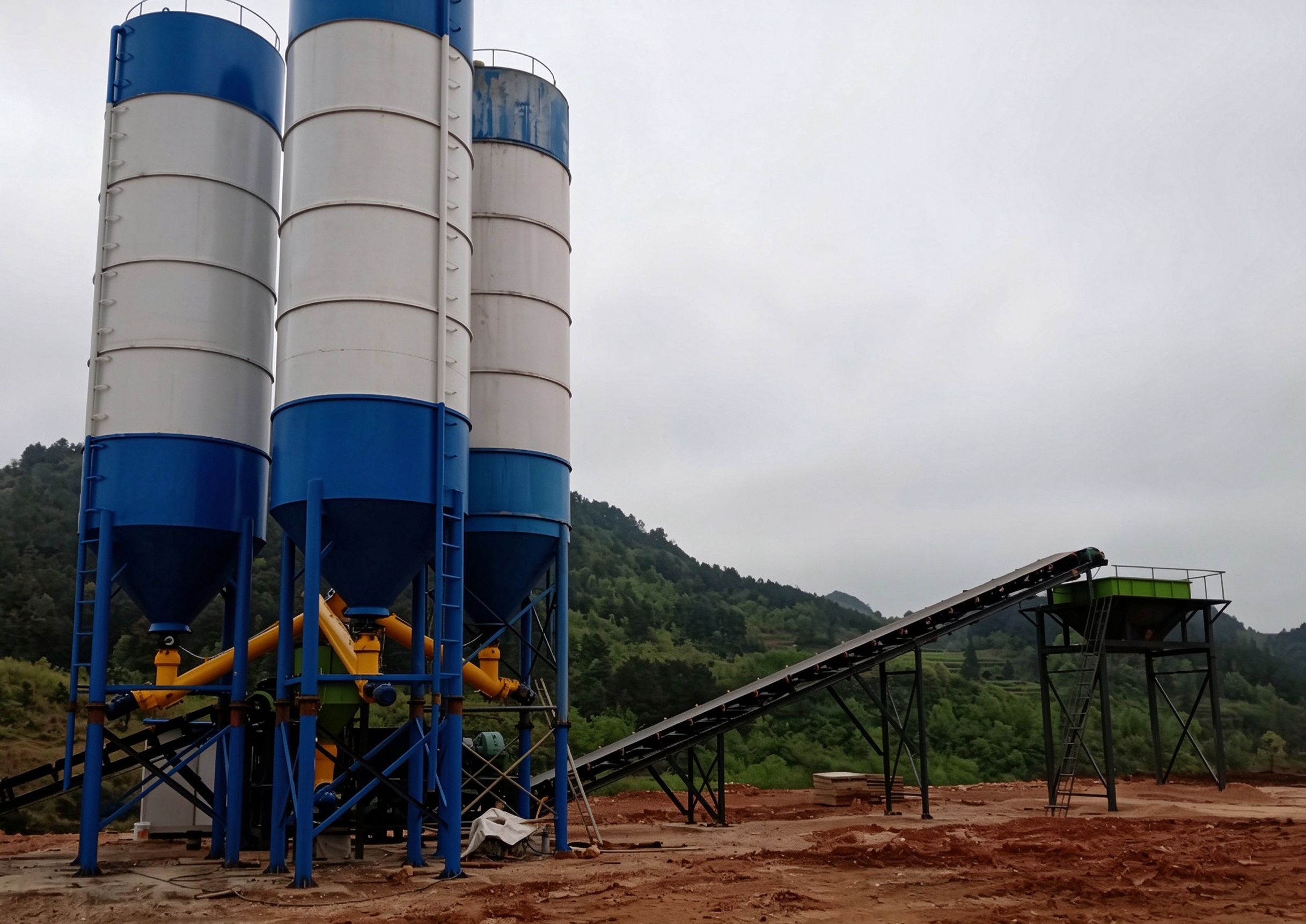
For this WBZ800 Stabilized Soil Mixing Plant Case Study, contractors initially considered using multiple scattered small mixing plants for soil stabilization. However, this traditional approach brought obvious drawbacks.
- Poor logistical management and inconsistent quality control across dispersed mixing points
- Tight construction schedules plus remote working locations
- Strict engineering tolerance requirements: water content accuracy within ±1.5% and cement dosage precision at ±0.5%
Unevenly mixed stabilized material would create weak zones in the road base.
This risked ground settlement, expensive rework, project delays and budget overruns. The project needed one powerful central mixing solution.
Compared with multiple scattered small mixing plants, one centralized WBZ800 stabilized soil mixing station simplifies site management, unifies batching precision, cuts cross‑site transportation cost, and avoids inconsistent mixture quality among different mixing points.
Why Choose the WBZ800 Stabilized Soil Mixing Plant? A G70 Highway Case Study
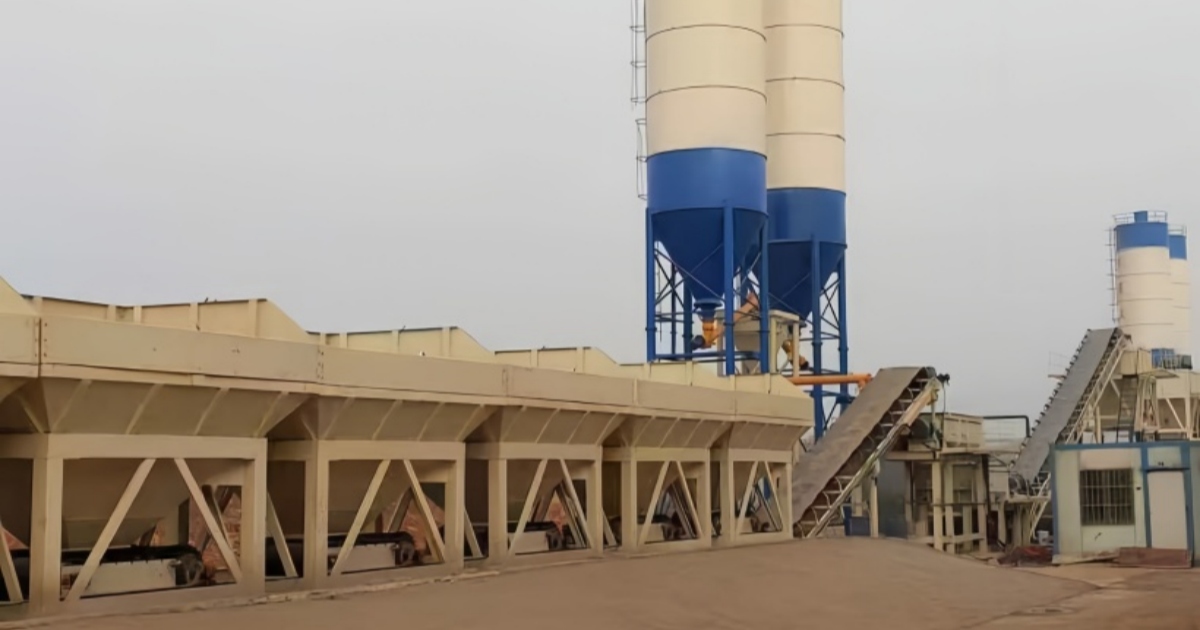
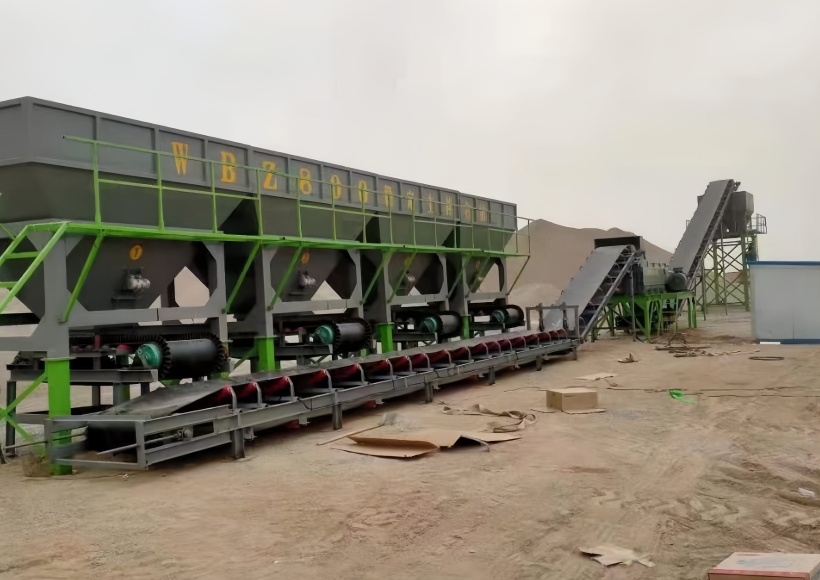
The main contractor finally chose the WBZ800 Stabilized Soil Mixing Plant as the core continuous production unit for the whole site.
Known for its stable performance, high throughput and precise batching, this 800t/h cement‑stabilized aggregate mixing plant perfectly matched the project’s rigorous demands.
Core Technical Advantages Put Into Practice
- High Production Capacity Speeds Up Construction Featuring continuous mixing technology, the WBZ800 reaches a theoretical output of 800 tons per hour. Such strong production capacity keeps pace with multi‑team paving operations. Thanks to this mixing station, the soil stabilization phase moved forward far ahead of the original timeline.
- Superior Mixing Homogeneity Guarantees Material Performance Equipped with twin‑shaft mixing paddles, the WBZ800 fully blends soil, cement and water. Every batch of finished stabilized soil obtains uniform performance. Core sampling tests on‑site verified that all mixtures satisfied the project’s strict compressive‑strength standards for highway base courses.
- Computer‑Driven Precision Batching Reduces Material Waste Its PLC‑based automatic batching system works with high‑precision sensors and actuators. It accurately proportions every raw material. Exact cement and water ratios prevent waste of costly binders, and secure the structural integrity of the highway sub‑base.
- Heavy‑Duty Build for Harsh Field Environments Northwest construction sites are often dusty with wide temperature swings. The heavy‑duty frame and sealed component design of the WBZ800 lower maintenance‑related downtime. The mixing plant maintained steady round‑run material supply even under tough local site conditions.
| Parameter | WBZ800 Specification |
|---|---|
| Theoretical output | 800 tons per hour |
| Mixing principle | Continuous twin-shaft mixing |
| Batching control | PLC-based automatic system |
| Cement dosage precision | ±0.5% |
| Water content accuracy | ±1.5% |
| Frame design | Heavy-duty, sealed components |
| Typical applications | Highway base and sub-base, municipal road construction |
Real Project Outcomes & Business Benefits
After full-cycle operation, this WBZ800 Stabilized Soil Mixing Plant Case Study delivered measurable improvements on G70 Highway expansion:
✅ Faster construction progress: Soil‑stabilization work finished 25% quicker than scheduled.
✅ Lower overall project costs: Centralized production cut fuel and transportation expenses. Precise batching greatly reduced raw‑material waste, bringing direct capital savings.
✅ Reliable long‑term road quality: Homogeneous mixing removed weak points in road bases. It extends pavement service life and lowers long‑term maintenance costs for road owners.
✅ Better environmental compliance: Built‑in dust collection systems suppress flying dust. The equipment helped the project meet local environmental protection standards.
| Metric | G70 Project Result |
|---|---|
| Road section | 120 km highway expansion |
| Stabilization progress | 25% faster than planned |
| Continuous output | 800 t/h sustained supply |
| Batching precision | ±0.5% cement / ±1.5% water |
| Quality verification | Core sampling passed compressive-strength standards |
| Environmental control | Built-in dust collection, compliant |
Final Thoughts
This WBZ800 Stabilized Soil Mixing Plant Case Study proves the value of continuous stabilized soil mixing equipment for large-size, high-standard transportation infrastructure.
More than simple mixing machinery, it acts as a strategic construction asset balancing output, mixing accuracy and total‑project economy. It sets a solid reference for future highway widening, reconstruction and road‑base building projects.
FAQ
What practical output can the WBZ800 achieve on-site?
Its theoretical productivity reaches 800 tons per hour. During the G70 highway expansion project, it supplied continuous qualified cement-stabilized aggregate to match multi-paver simultaneous paving operations. Actual output varies with raw-material quality and feeding conditions.
What batching precision does the WBZ800 stabilized soil mixing station provide?
It supports ±0.5% cement dosage precision and ±1.5% water content control, meeting strict expressway base-course construction requirements
Can the WBZ800 work under dusty and large-temperature-difference field conditions?
Yes. Its robust structure and sealed components minimize maintenance downtime in harsh remote construction environments.
What materials can the WBZ800 mixing station produce?
It mainly produces cement-stabilized macadam, lime-stabilized soil and other road-base mixtures for highway and municipal infrastructure.
Get Your Project‑Oriented Solution
If this WBZ800 Stabilized Soil Mixing Plant Case Study matches your highway widening or infrastructure project needs, feel free to contact our engineering team. We can offer technical proposal, equipment quotation and similar project references.
👉 Request Custom Equipment Solution
Download: [WBZ800 Technical Datasheet PDF]