








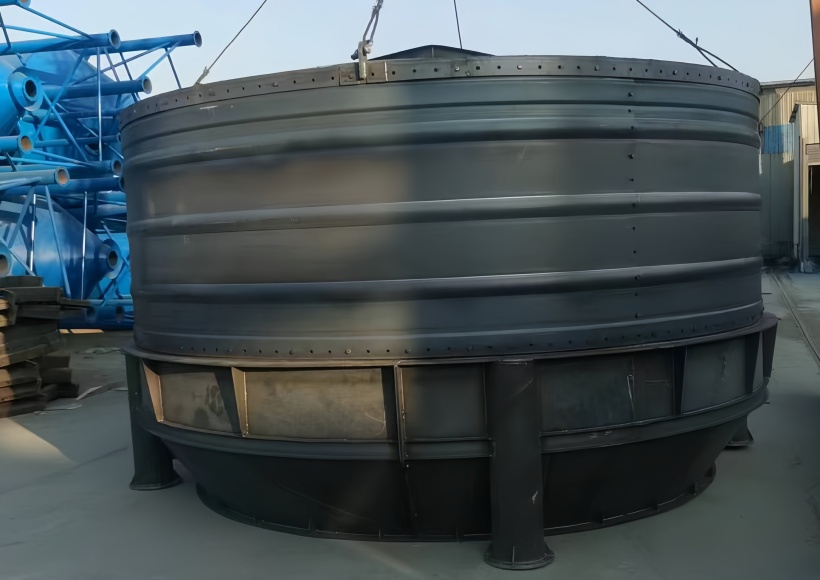
Cement dust is a nightmare. If you manage a concrete mixing station, you know this isn’t just about aesthetics or environmental optics. It’s about lost product, regulatory fines, and equipment downtime caused by clogged components. When we talk about “eco-friendly silo simen design,” we are really talking about operational efficiency and the bottom line. Achieving 99.8% dust removal efficiency is a necessity in modern concrete production, not a luxury.
But how do you actually get there? You don’t achieve that number just by buying a filter and bolting it on. It requires understanding the dynamics inside the silo simen, the specifications of the dust collector, and a rigorous maintenance schedule. This isn’t theoretical textbook stuff; this is what makes or breaks the daily operation of a busy ready-mix facility.
Beyond Compliance: Why Maximum Silo Dust Collection Matters
Let’s be blunt. If your silo is blowing clouds of cement dust during a pneumatic fill, you are throwing money into the air. That dust is sellable product. Over a year, a 0.2% difference in dust collection efficiency can equate to tons of lost material.
Furthermore, environmental regulations regarding emission levels are only getting stricter. Local inspectors don’t care about your production schedule; they care about air quality. Failing an environmental inspection due to a faulty dust collection system can shut down your entire concrete mixing station equipment array instantly.
A high-efficiency system keeps the site clean, protects your neighbors, and ensures you stay operational. It also protects your peralatan. Cement dust is abrasive. When it escapes, it finds its way into bearings, electrical panels, and other sensitive machinery, causing premature wear and unexpected downtime.
Anatomy of a High-Efficiency Dust Collector Systems
To hit that 99.8% mark, the design must be precise. The standard solution for a silo simen is a silo-top dust collector. These units are compact, heavy duty, and designed to handle the surge of air volume when a bulk tanker is blowing cement or fly ash into the bin.
The core component is the filter media. You generally have two choices: a bag filter (or baghouse) or a cartridge filter.
For modern concrete batch plants, a cartridge dust collector is often the preferred choice. Why? Surface area. A cartridge offers significantly more filtration area within a smaller housing compared to a bag. To achieve 99.8% efficiency with cement, which has a very fine particle size, you need high-quality polyester or aramid fiber media. This media is often pleated, allowing the silo dust collector systems to remain compact while handling high air volume.
But the filter media is only as good as the cleaning method. A passive filter will clog in minutes during a dynamic fill.
The Role of Pulse Jet Cleaning
This is critical technical detail. The industry standard for effective, continuous filtration is the pulse jet cleaning method.
Here is the operational process: The dust collector continuously monitors the differential pressure across the filter elements. When the pressure drop reaches a certain set point, indicating the filters are loaded, a controller triggers a sequence. High-pressure compressed air is released from a valve into the center of the cartridge or bag. This sudden pulse causes a shockwave that dislodges the ash dan simen cake from the exterior of the filter, allowing it to fall back into the silo.
Ini pulse cleaning must be precise. If the high pressure pulse is too weak, the filter stays dirty. If it’s too strong, it can damage the polyester media, leading to immediate emission spikes. The timing and sequence of the pulses are adjustable parameters that site engineers must optimize based on the specific type of material being stored.
Practical Silo Design: Integration with Cement Silo Technology
The dust collector shouldn’t be an afterthought. It must be an integrated part of the overall silo specification.
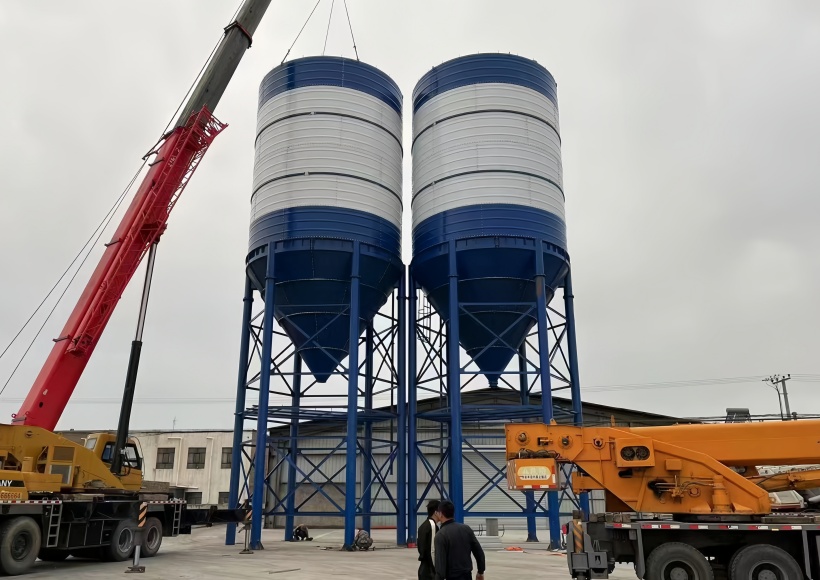
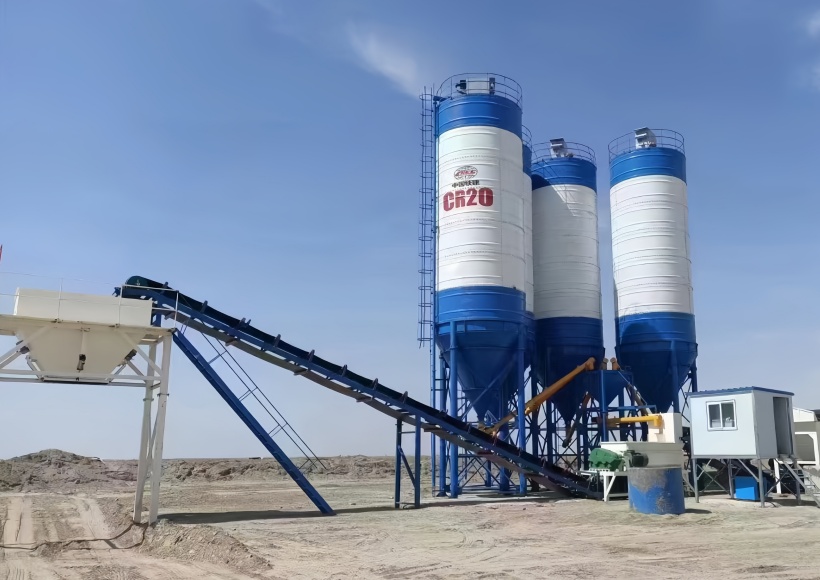
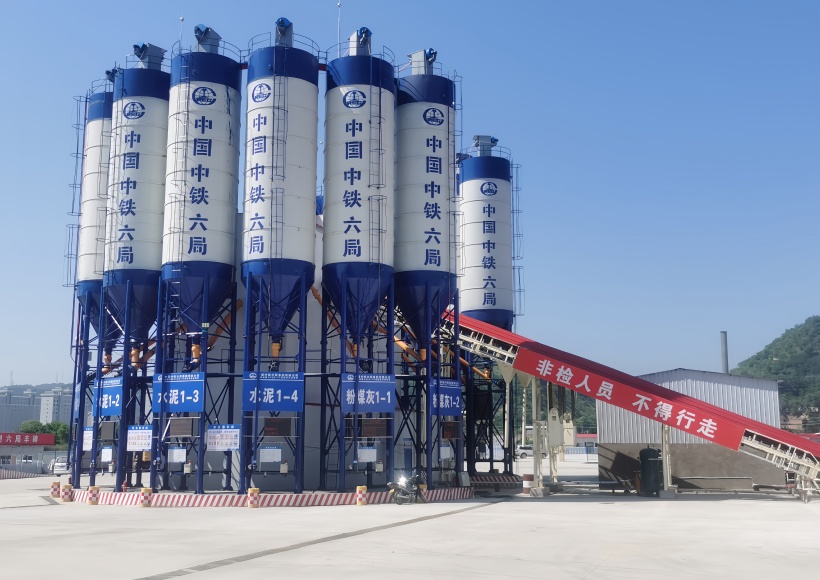
Whether you are using traditional welded silos or bolt-assembled silinder simen, the silo-top interface must be engineered correctly. A common mistake is restricting the exhaust air flow. The dust collector systems need adequate space to breathe. If the air-to-cloth ratio is wrong—meaning you are trying to force too much air through too little filter surface—your 99.8% efficiency goal will vanish as dust is forced through the media pores.
Sebagai peneraju dust collector manufacturer, we always look at the dynamics of the fill pipe. The way the simen enters the bin affects how the dust is suspended. Proper venting and pressure relief valves are necessary companions to the dust collector to prevent catastrophic silo failure during a faulty fill operation.
Adaptation for Mobile Equipment
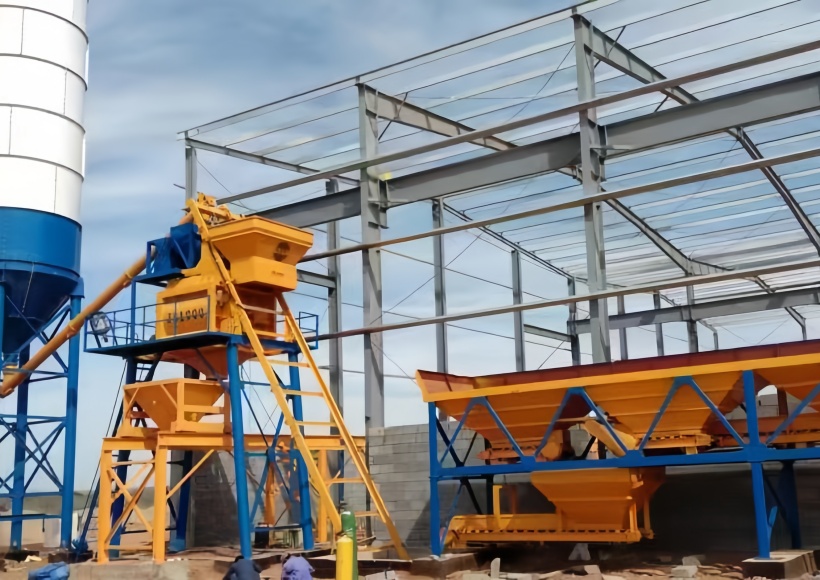
The challenge is amplified for mobile concrete mixing station equipment. These plants often use compact or low-profile silo designs, sometimes integrated horizontally. The industrial dust problem remains the same, but the spatial constraints for filtration are much tighter.
In these applications, you might see specialized baghouse designs or cartridge units mounted on the side of the silo with an integrated screw conveyor to return the collected simen back to the main storage. For a pembuat like Tongxin Jentera, designing for mobility while maintaining 99.8% efficiency requires custom engineering of the dust control system to handle the vibration and space limitations unique to mobile units.
The Maintenance Burden: Keeping Efficiency High
This is where the real work happens. You cannot install a system and forget it. A silo dust collector is an active machine that requires maintenance.
The single biggest factor in efficiency loss is poor maintenance. If your compressed air system is failing, your filters aren’t cleaning. If your gaskets are leaking, dust bypasses the filter entirely.
Essential On-Site Inspection and Operations
- Monitor Differential Pressure: The differential pressure gauge (often a simple Magnehelic gauge) is your best diagnostic tool. Site operators should check this daily. If the pressure is too low, the filter might be torn (bypassing dust). If it’s too high, the cleaning system isn’t working, and your airflow is restricted, which will slow down the tanker unloading time.
- Compressed Air Check: The pulse jet system requires dry, clean compressed air at a specific pressure (usually around 5-7 bar). If the air is wet, the moisture will mix with the simen on the filter media, creating a hard crust that no pulse can remove. This is “blinding” the filter. Check your air dryer and auto-drains daily.
- Regular Valve Inspection: The diaphragm valve in the pulse system is a wear item. They fail. When they do, that row of filters stops cleaning. Site managers should have a standard service procedure to test these controller outputs and valve operations monthly.
- Replacement of the Filter: How often? It depends on throughput. In a heavy-production ready-mix concrete plant, cartridges might need replacement every 12-24 months. But if the pulse cleaning fails or the filters get wet, you might need an emergency replacement. Bag filter replacement can be a labor-intensive process compared to cartridge swap-outs, but bags are often more durable against high temperatures if your cement is coming in hot from the mill.
Optimal Specification and Supplier Reliability
Achieving this high level of environmental performance requires partnership. You can’t just source a generic bin and a generic filter and expect them to work flawlessly together.
When discussing specifications with a silo simen supplier, provide details on your material (cement type, fly ash density) and your required throughput. A reputable pembuat like Tongxin Jentera will evaluate these factors to recommend the correct air-to-cloth ratio and filter media. We look at the total system—from the fill pipe entry to the optimal venting solution.
Reliable operation isn’t just about the hardware; it’s about the after-sales service and diagnostics support. If a site operator can’t troubleshoot a differential pressure issue quickly, production stops.
Future-Proofing: Diagnostics and Upgrades
Many modern facilities are now looking to upgrade their standard units with smarter technology. This includes continuous monitoring of particulate matter in the exhaust stream (broken bag detectors).
By analyzing the data from the dust collection system, plants can move from reactive maintenance (replacing parts when they fail) to predictive maintenance. Imagine a system that alerts you weeks in advance that a specific solenoid valve is sluggish before it causes filter blinding. This level of diagnostics is the future of eco-friendly concrete production and ensures that 99.8% efficiency remains the standard, not the exception.
In conclusion, that 99.8% number is achievable and necessary. But it’s not a static benchmark. It’s a result that must be earned every day through proper specification, equipment integration, and diligent on-site maintenance. Choose heavy duty equipment designed for the harsh realities of the agregat dan mining industries, partner with a reliable pembuat, and give your maintenance team the tools they need to keep the system clean.
Soalan Lazim (FAQ)
What maintenance stops cement silo dust collector failure?
Check compressed air daily. If it’s wet, your filters will blind. Monitor the pressure gauge; high pressure means you need to check the pulse valves or the controller.
Should I choose cartridge or bag filters for a silo?
For ready-mix plants, cartridges usually win. They offer more filtration area in a smaller space, handling high air volume better. Bags are tougher if the cement is extremely hot.
Why is dry compressed air vital for pulse cleaning?
Wet compressed air is fatal. Moisture turns the cement on the filter into a hard concrete cake. The pulse jet cannot clean it, forcing a complete filter replacement.
Can I upgrade an existing concrete mixing station equipment silo?
Yes. You can often retrofit a high-efficiency pulse jet collector to older silos. You need to ensure the silo top can support the weight and has the correct venting flange.
How do bolt-assembled cement silos handle dust differently?
The dust issues are identical to welded silos. The crucial part is the seal integrity at the silo top flange where the dust collector attaches, preventing leaks before the filter.