
Last spring I got a call from a ready-mix operator in Lagos who’d just signed for a 300-ton bolted cement silo at what looked like a steal – 28,000 FOB Shanghai. Six months later his landed cost sat at 61,400, the foundation had cracked because nobody ran a soils report, and the aeration pads were caked solid because the supplier specced a dust collector rated for grain, not cement. That gap between quoted price and true cost is where most silo projects die. So let’s walk through what actually moves the needle on a silo project, and where the money leaks if you’re sourcing from China for a 50 to 500 ton capacity range.
The Real Cost Drivers Behind a Silo Project
Capacity, But Not the Way You Think
A 50-ton welded cement silo and a 500-ton bolted silo don’t sit on the same cost curve – they sit on two different curves. Below 100 tons, you’re paying for fabrication labor and the silo body steel, full stop. The cost per ton of storage capacity is high because the fixed engineering overhead – drawing review, nozzle placement, ladder and platform – gets amortized across a small silo. Around the 100 ton cement silo mark, bolted steel silos start to win on per-ton economics because you can ship them in containers and assemble on-site without a crawler crane.
Cross 300 tons and the math flips again. Now you’re paying for foundation work, because a 500 ton silo loaded with cement (bulk density ~1.2 t/m³) puts down 600+ tons of point load. On soft coastal soil that means driven piles or a raft – add 18 to 35 percent to your overall cost. I’ve seen a 400-ton spiral rolled steel silo quote double once the geotech report came back with a CBR under 4. And if you’re eyeing a 1000 ton unit for cement production scale, you’re in concrete stave silos territory, not steel – different construction materials, different cost structure entirely.
Bolted vs Welded vs Spiral: The Fabrication Question
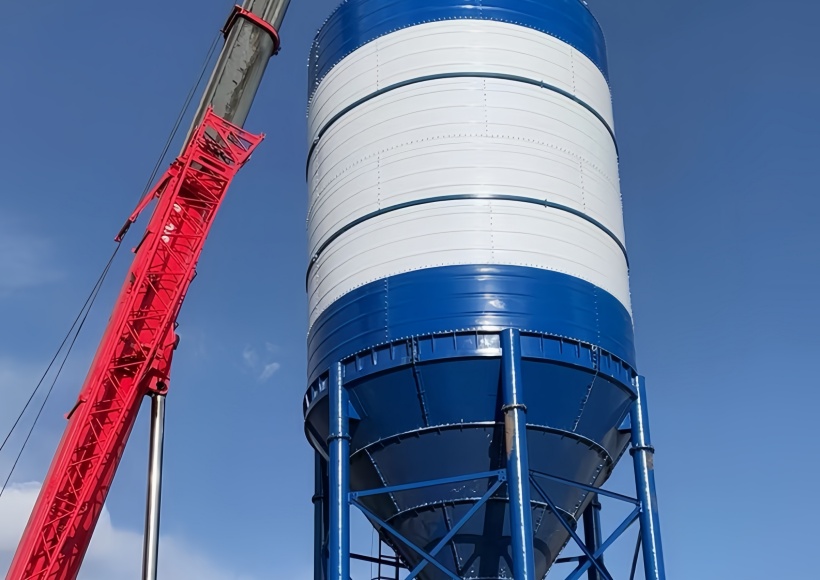
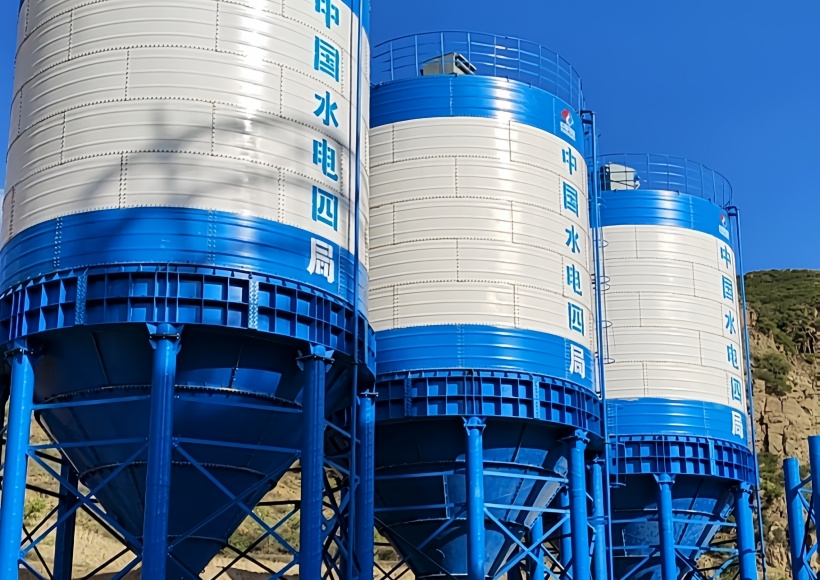
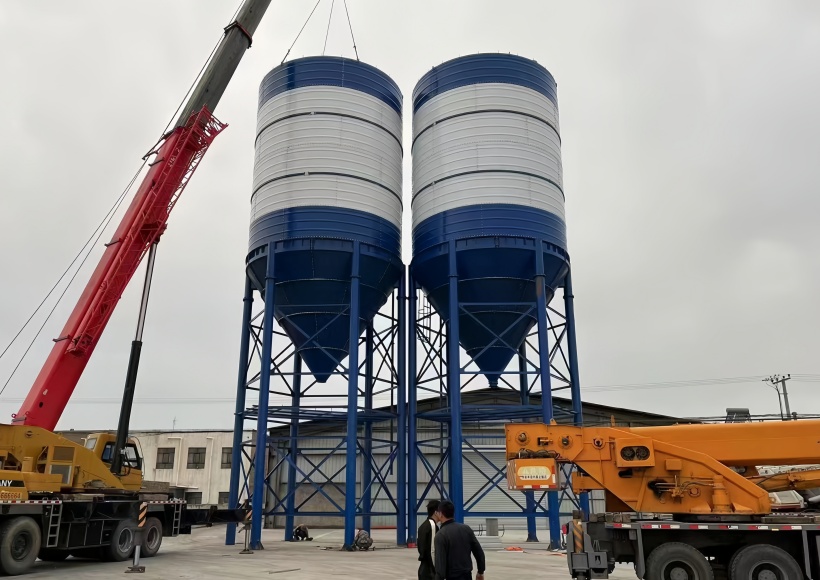
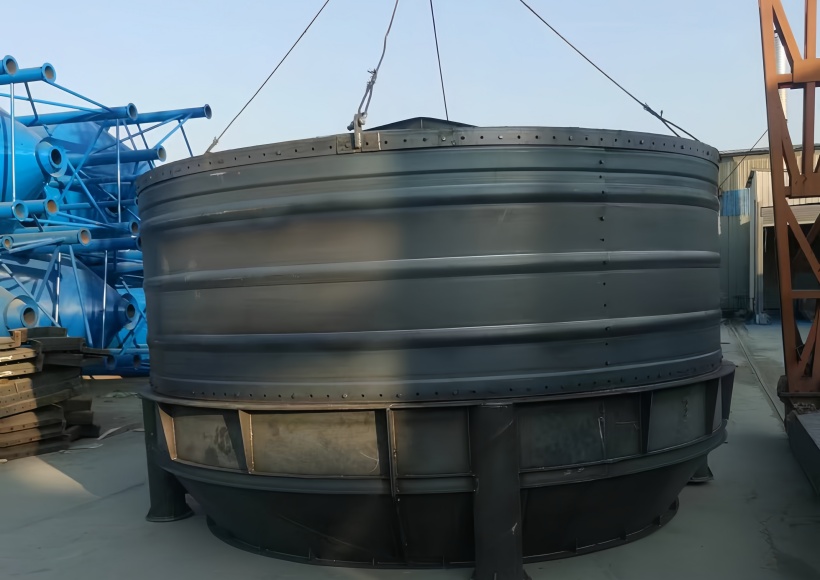
Here’s where buyers get confused. A bolted steel silo ships as galvanized steel plates in 20- or 40-foot containers, bolts together on site with sealer between flanges. Field labor is higher but freight is cheap and you can LCL consolidate with other equipment. A welded steel silo – especially a spiral rolled steel silo – comes out of the shop as one spun section, airtight, beautiful welds, but you need a lowboy trailer and a crane on site. A spiral steel silo typically costs more upfront but has lower maintenance costs over a 20-year service life because there are no bolted seams to weep.
Rule of thumb from quoting roughly 40 silo projects: bolted wins under 200 tons when site access is tight; welded wins above 300 tons when you need absolute airtightness for fly ash or fine cement. The cost of a silo isn’t just the steel – it’s the freight, the crane day-rate, and the crew you need on pour day. Silo bolted construction also means you can expand later by adding a second ring, which matters if your storage needs might grow.
Site Conditions Will Eat Your Budget
I cannot say this loud enough. The single biggest factor that affects the cost of a silo project – bigger than steel price, bigger than supplier margin – is what’s under the pad. Poor soil means piling. Piling means a geotech engineer, a soils report, driven or bored piles, and a pile cap. On a 300-ton silo in the Mekong delta I watched foundation work hit 27 percent of total project cost.
Soil isn’t the only site condition that bites. Access matters: if a 40-foot lowboy can’t make the corner to your cement plant, you’re either widening the road or switching to a bolted silo that ships in containers. Overhead clearance – power lines, conveyor galleries, existing silo systems – dictates whether you can even erect a tower silo. And if you’re in a seismic zone, the silo design has to account for sloshing and hoop stress, which means thicker steel plate silo walls and a higher cost per ton of storage capacity. Environmental factors like wind load on a 500-ton silo can add another 8-12 percent to the steel spec.
What Goes Inside a Cement Silo (And Why It Costs Money)
A cement silo is not a steel tube. It’s a system. Strip one down and you’ve got:
- The silo body – galvanized steel or carbon steel with epoxy, 4 to 6mm walls for small silos, 8 to 10mm for large-scale
- Aeration pads or fluidization nozzles along the hopper bottom – without these, cement compacts and you get rat-holing
- A silo top dust collector (baghouse or cartridge) sized to the pneumatic fill rate – undersize it and you blow dust out the pressure relief vent
- Level sensors (rotary, radar, or capacitance) for inventory management
- A discharge valve – butterfly for cement, slide gate for fly ash
- Pressure relief vent and vacuum breaker – non-negotiable, insurance against imploding the silo on a pneumatic fill gone wrong
- Access platform, ladder, roof manway – code-required, not optional
Every one of those line items moves the silo price. A properly specced dust collection system on a 200-ton cement silo can add 4,000-7,000. Skip it and you’ll pay in EPA fines, lost cement, and a neighbor complaint. I’ve audited plants where the “cost savings” on dust collection ended up costing them $40,000 in remediation inside 18 months.
For fly ash silos, you need the same aeration story but with tighter sealing – fly ash is finer than cement, fluidizes easier, and will find any bolted seam that isn’t gasketed right. That’s why welded steel silos dominate fly ash service. Flat-bottom silos work for large-scale storage where you’ve got a front-end loader to sweep the floor; hopper bottom silos are the play for anything under 300 tons where you want gravity to unload for you.
Cement Silo vs Grain Silo: Don’t Cross-Shop These
I get asked this weekly. A grain silo is not a cement silo with a different label. Grain storage needs ventilation, temperature and moisture monitoring, and often insulation to prevent spoilage and condensation. A cement silo needs aeration (fluidization) for discharge, dust collection for fill, and zero moisture ingress because cement hydrates on contact with water.
Grain silo pricing reflects that: a 500-ton grain silo might run cheaper than a 500-ton cement silo because it doesn’t need the aeration system or the heavy dust collection. But you cannot repurpose one for the other. I’ve seen a contractor try to store cement in a converted grain silo – six weeks later the discharge cone was a solid block of hydrated concrete. That’s a $90,000 mistake.
If you’re sourcing both, Cement Silo and grain storage solutions come from different engineering teams inside the same factory. Don’t let a supplier tell you they’re “basically the same silo type.” Modern grain silo design has diverged hard from cement silo design in the last decade – different aeration philosophy, different discharge geometry, different corrosion resistance specs.
How Much Does a Silo Cost – Realistic Ranges
Let me give you numbers, because that’s what you came here for. These are landed-cost ranges from quoting Chinese silo manufacturers over the last 18 months, USD, excluding foundation and installation labor:
- 50 ton bolted cement silo: 9,000-14,000
- 100 ton cement silo, bolted: 15,000-22,000
- 200 ton welded steel silo: 32,000-48,000
- 300 ton spiral rolled steel silo: 45,000-68,000
- 500 ton bolted steel silo: 70,000-110,000
The spread inside each range is driven by steel price volatility (check the LME hot-rolled coil index before you sign), galvanize spec (Z275 vs Z600), dust collection sizing, and whether you’re buying a Cement Silo from a volume supplier or a custom build. Initial construction cost is only the down payment – truck loading automation, pneumatic conveying, and level-sensor integration will add 12-20 percent if you want a turnkey storage project.
Working with a manufacturer like Tongxin Machinery that actually runs a cement plant testbed means the aeration pad layout and dust collector sizing come from operational data, not a catalog guess. That matters more than the 3-5 percent price gap between suppliers. When you’re comparing how much does a silo cost across vendors, the key factors aren’t just the steel weight – they’re the engineering bench behind the quote.
Choosing a Supplier Without Getting Burned
The silo manufacturer landscape is split three ways. Tier one: Chinese exporters with 15+ years in bolted and welded steel silos, English drawings, and a real engineering department. Tier two: regional fabricators who’ll build to your spec but charge 40-70 percent more and take longer. Tier three: trading companies that will quote you anything and subcontract to whoever’s cheapest this week. Guess which one causes the Lagos story.
When you compare suppliers, ask three questions:
- Can I see a shop tour video, dated, with today’s newspaper?
- What’s your aeration pad layout logic – show me the fluidization calc?
- Who do I call when the dust collector plugs at 2 AM on a pour night?
If the answer to question three is silence, walk away. The quoted price is only the down payment on a 15-year relationship with that supplier’s engineering bench. Project requirements like local code compliance, wind load certification, and seismic anchoring all need to be on the table before you sign – not after the silo body shows up at port.
Long-Term Cost: The Stuff Buyers Forget
A bolted silo that saves you 8,000 upfront can cost you 25,000 in re-seaming, bolt retorque, and sealer replacement over 10 years if the galvanize spec was thin. A spiral rolled steel silo costs more but the maintenance costs are near zero – no bolted seams, no gaskets to degrade. Corrosion resistance on a properly galvanized steel silo in a temperate climate will get you 25+ years of service life; in a coastal salt-air environment, figure 15 before you’re recoating.
Automation, truck loading integration, and silo top dust collector sizing all factor into long-term cost. Energy consumption on the aeration blower – usually a Roots-type running 0.5-0.8 bar – adds up. If you’re running multiple large-scale storage systems, variable-frequency drives on the blower and level-sensor interlocks will pay back in 18 months on a 300-ton silo. That’s where cost-effective operation lives – not in the initial cost line on the quote sheet.
Factors That Affect the Cost – A Quick Audit Checklist
Before you sign a PO, run this list:
- Soils report done? If no, stop.
- Crane access confirmed for your largest single lift?
- Dust collector sized to pneumatic fill rate, not “default”?
- Aeration pad coverage calculated for your material’s angle of repose?
- Galvanize spec called out (Z275 minimum for cement service)?
- Level sensor type selected for your material (radar for cement, not rotary)?
- Pressure relief and vacuum breaker both on the BOM?
- Foundation design stamped by a local PE, not the supplier’s in-house guy?
Eight yeses and you’re ready to buy. Anything less and you’re the next Lagos story. The cement silo price you see on a quote is a starting point, not a finish line – and the suppliers who win long-term are the ones who’ll tell you that before you ask.
FAQ
Q: How much does a silo cost per ton of storage capacity?
A: For cement silos sourced from China, expect 140-220 per ton of storage capacity for bolted steel, 180-260 for welded/spiral. Foundation and installation typically add 15-30 percent on top.
Q: What’s the MOQ for a custom cement silo from a Chinese manufacturer?
A: Most silo manufacturers will quote a single unit, but MOQ flexibility on price kicks in at 3 units – you’ll see 8-12 percent savings because steel plate orders hit a better tier with the mill.
Q: How long does a galvanized steel silo last in coastal conditions?
A: Z275 galvanize in salt-air service: 12-15 years before recoating. Z600: 20-25 years. Inland temperate: 25+ years either spec. Add epoxy topcoat if you’re within 5 km of saltwater.
Q: Can I store fly ash in a cement silo?
A: Only if it’s a welded steel silo with airtight seams and the aeration system is sized for fly ash’s lower bulk density (~0.7 t/m³ vs cement’s 1.2). Bolted silos will weep fines.
Q: What’s the lead time on a 300-ton bolted cement silo from China?
A: 35-45 days fabrication, 7-10 days to port, 18-35 days ocean freight depending on destination. Add 5-7 days for customs. Total: roughly 65-95 days door-to-site.