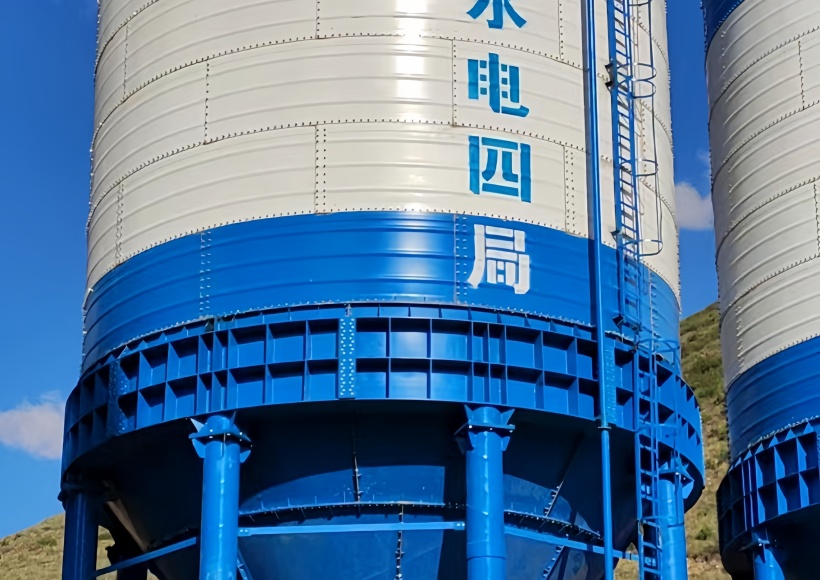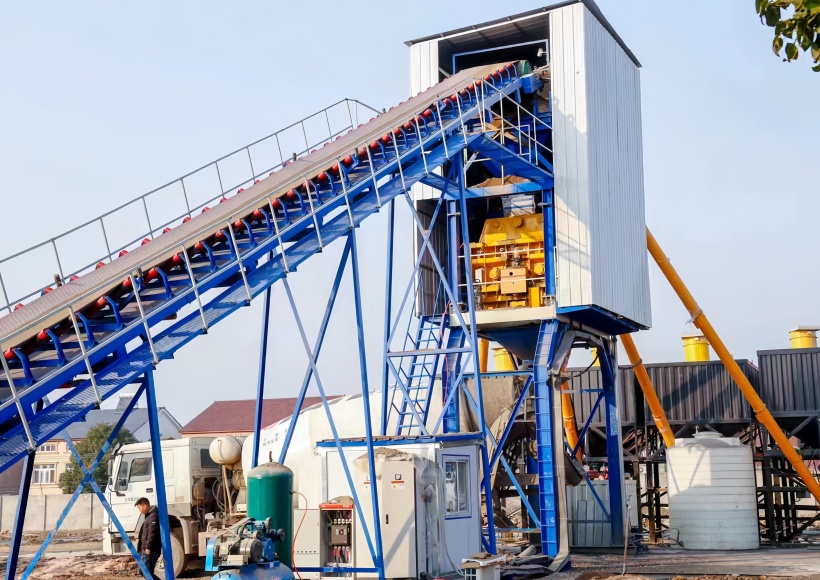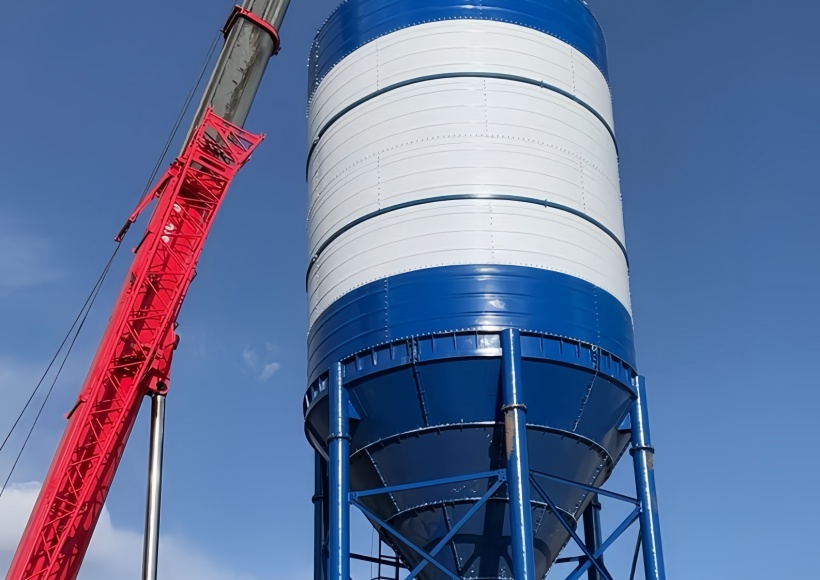









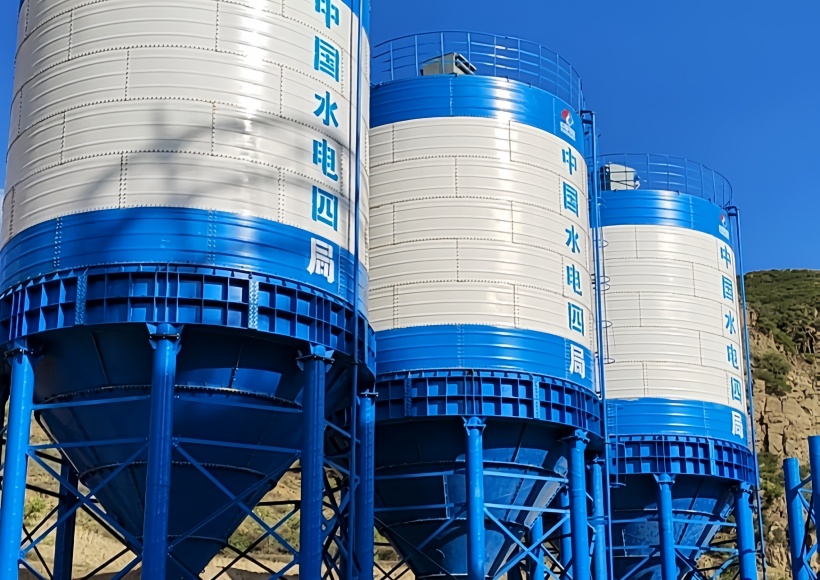
Last winter a ready-mix plant in Nevada called me at 2 AM. Their 500-ton cement silo had read “full” on the level sensor for three weeks – yet the truck loading bay hadn’t discharged a pound in six days. The indicator said 78% capacity. The truth: roughly 180 tons of dead cement was plastered against the cone walls in a stable rathole, and a bridge had fused itself about 40 inches above the outlet. They’d been running the wall vibrator ten minutes out of every hour, cooking its bearings and accomplishing nothing. That call cost them eleven hours of downtime and a $14,000 emergency cleanout. Root cause? A 60-degree hopper angle on a silo originally built for grain, repurposed for cement without anyone running a Jenike shear test first.
That is what cement silo bridging and ratholing actually looks like. Not a textbook diagram. A plant manager watching his batch trucks idle in the yard at dawn.
Ratholing: When Your Silo Is Lying to You?
Ratholing – sometimes called funnel flow – is the more insidious of the two flow problems because the silo keeps discharging. Just badly. Material moves only through a central channel above the outlet while the rest of the bulk material packs against the silo walls in the lower cone. The silo reads “full” on a top-mounted level sensor, but your effective storage capacity might be 40% of nameplate. I’ve audited plants where operators had been running a 500-ton unit that actually held 210 tons of live cement for two years before anyone noticed the fill cycles getting suspiciously short.
Why Cement Ratholes?
The mechanism is cohesion. Cement powder – especially Type I/II with a moisture content above 0.5% – develops enough inter-particle strength to sustain a near-vertical wall. Once the material near the silo walls stops moving, and in a funnel-flow silo it always stops moving, that stagnant material compacts under its own weight, increases in bulk density, and locks in place. The single biggest design variable is the angle of the hopper walls. If that angle is shallower than the material’s effective angle of internal friction – typically 45 to 55 degrees for dry cement, steeper for aerated powder – you are running a funnel-flow silo whether you intended to or not. Ratholing happens when the central flow channel narrows to a diameter smaller than the silo’s effective cross-section. The material forms a stable pipe. Everything outside that pipe is dead inventory.
A side note on material properties and silo geometry: the same cement that flows cleanly at 0.3% moisture will rathole aggressively at 0.8%. Powder properties are not constants. They drift with humidity, storage time, and aeration state. Treat them as variables.
The Signs Operators Miss
The earliest sign of ratholing is not a flow issue – it’s a capacity problem. Your fill cycles get shorter. A silo that used to take 48 hours to fill now takes 26. The discharge rate stays roughly constant right up until it doesn’t. Operators tend to blame the cement supplier or the pneumatic truck, not realizing the silo is already half dead weight. The second sign is inconsistent flow to the batch plant or bulk truck loading – surging, then starving, then surging again as chunks of the rathole wall collapse intermittently into the central channel.
If you crack an inspection port and see a vertical borehole through the cement with smooth, compacted walls on either side, that’s your rathole. Photograph it. That photo is your justification for a redesign budget.
Bridging: The Total Shutdown
Bridging is less common than ratholing but more dramatic. The bulk material forms a stable arch across the silo outlet – not a central channel, a structural dome that blocks all discharge. One morning the silo is full, the feeder is running, and nothing comes out. Zero flow. The arch can form at the hopper outlet, at the cylinder-to-cone transition, or mid-cone wherever there’s a diameter change or a weld seam catching scale.
How a Bridge Forms?
Bridging occurs when cohesive cement powder, compacted by vibration or prolonged storage, develops enough strength to span the outlet opening. The physics is straightforward: the arch’s compressive strength under load exceeds the disruptive forces of gravity plus any installed flow aids. Outlet size matters enormously here. A working rule from Jenike’s flow analysis – if your outlet diameter is smaller than the material’s critical arching dimension, which for cement runs 12 to 24 inches depending on moisture and compaction history, you will bridge. I’ve walked into plants running 8-inch outlets on silos handling cement that had been “problematic” for a decade. They were never going to work. Somebody spec’d the wrong geometry and everyone downstream paid for it.
Here is the trap most plants fall into: vibration makes bridging worse on cohesive powders, not better. A continuous vibrator on cement compacts the arch into a load-bearing structure. That Nevada plant? Their vibrator had converted a soft, collapsible bridge into something you could park a truck on.
Catching a Bridge Before It Hardens
Bridging problems rarely arrive without warning. The pre-bridge state is erratic flow – the feeder runs, material comes out in slugs, then nothing, then slugs again. That pattern is the arch forming and partially collapsing under its own weight. If your flow sensors show this stutter for more than a single shift, assume a developing bridge. Kill the vibrator immediately – it is making things worse. Check the moisture content of the cement in the cone. Anything above 1% on cement that has sat in a silo beyond two weeks is a bridge waiting to harden.
Designing the Problem Out: Mass Flow vs Funnel Flow
The permanent fix for both bridging and ratholing is mass flow design – a silo geometry where all material moves whenever any material discharges. No stagnant zones, no dead inventory, no rathole. Mass flow demands two things: a hopper angle steep enough that material slides along the hopper wall rather than sticking, and an outlet size larger than the critical arching dimension. Funnel flow, by contrast, inherently leaves material near the silo walls stationary. It is the root cause of ratholing and a contributor to bridging wherever the central channel narrows.
Hopper Geometry That Actually Works
For cement, mass flow typically requires a conical hopper at 65 to 70 degrees from horizontal – measured as a 20 to 25 degree half-angle from vertical. Go shallower and you drop back into funnel flow. The hopper wall material matters as much as the angle. Polished stainless steel or UHMWPE liners reduce wall friction and can buy you a few degrees of forgiveness. Mild steel with a layer of compacted cement scale? Add 5 to 8 degrees to compensate, because that scale layer is friction, not flow aid.
A Cement Silo engineered for mass flow from the outset costs more upfront but eliminates the entire flow problem class. Retrofitting a funnel-flow silo into mass flow usually means inserting a cone-in-cone insert or rebuilding the hopper – neither is cheap, but both are cheaper than five years of rodding and downtime.
Outlet Size and Feeder Integration
The outlet must exceed the critical arching dimension, and the feeder must draw material uniformly across the entire outlet area. This is where most silo designs fail silently. A screw feeder that only pulls from the back half of the outlet creates a stagnant zone in the front – effectively a mini-rathole even inside a mass-flow silo. Belt feeders and properly sized rotary valves distribute draw more evenly than screws. I have seen mass-flow silos converted back to funnel flow by a bad feeder choice. The silo geometry was right; the feeder ruined it. Silo design and feeder selection are one decision, not two.
Flow Aids: What Earns Its Keep
Air Cannons and Fluidizing Nozzles
Air cannons deliver a high-pressure burst of compressed air – typically 80 to 120 PSI – directly into the material at the hopper wall. Placed correctly, one every 3 to 4 feet around the cone circumference and aimed at the likely arch formation zone, they will break a bridge. Placed wrong, they punch a small hole through the arch and convert a bridge into a rathole. The difference between a useful air cannon and an expensive decoration is placement and timing. Fire them on a sequenced timer, not on continuous demand, and never let them run against a static full silo.
Fluidizing nozzles are a different tool entirely. They introduce low-pressure air – 2 to 5 PSI – through porous media to aerate the cement powder and reduce inter-particle friction along the cone. They are a prevention device, not a remediation one. A silo with well-distributed fluidizing nozzles along the lower cone will rarely bridge or rathole in the first place. They are cheap, they work, and most silos built before 2005 don’t have them. If you are retrofitting, start here.
Vibrators – Right Tool, Wrong Application
External vibrators bolted to silo walls are the most overused and misused flow aid in the bulk material industry. On free-flowing granulars they help. On cohesive cement powder they usually compact the material and worsen bridging. The only vibrator configuration that consistently works on cement is a unit mounted directly on a sloped hopper wall, run in short 3-to-5-second pulses only during active discharge – never against a full stationary silo. If your vibrator fires on a timer against static cement, you are not breaking bridges. You are building them.
Quick Fixes When Flow Stops
The Emergency Protocol
When a silo bridges completely, the protocol is simple: stop everything. Kill the vibrator. Kill the continuous air. Open the inspection port and locate the arch. If the bridge sits at the outlet, a single well-placed air cannon burst from the closest port will usually drop it. If the bridge is higher in the cone, you need manual rodding from an access hatch – and yes, that means confined space entry with proper permitting, gas testing, and a hole watch. Never send a worker into a silo with a suspected rathole overhead. Rathole walls collapse without warning and they bury people.
If the problem is ratholing rather than bridging, the quick fix is to empty the silo completely, clean the cone walls down to bare metal, and restart with a lower fill level and the fluidizing air running from the start. Then schedule the redesign, because the rathole will return inside a month.
When to Redesign Instead of Patch
If you are rodding the same silo more than twice a year, or if your effective storage capacity has dropped below 70% of nameplate, stop patching. The economics are blunt: a $40,000 hopper redesign with proper mass-flow geometry and fluidizing nozzles pays for itself in avoided downtime within a year on any silo above 200 tons. I have run those numbers on a dozen audits. They always come out the same. Specifying a Cement Silo with an integrated mass-flow hopper and pre-placed air cannon ports from day one is the cheaper path if you are buying new. For retrofits, Машины Tongxin offers an engineered hopper insert kit paired with a fluidizing nozzle array that runs roughly a third of a full silo replacement – a sensible middle ground when a full rebuild isn’t in the capital budget.
Long-Term Prevention: Treat the Silo as an Instrumented Vessel
Regular maintenance means more than greasing the vibrator every quarter. It means pulling level readings from multiple points on the silo, not just trusting the single top-mounted sensor that ratholing renders useless. Log discharge rates against fill rates to catch capacity creep early – if your fill time drops 15% with no change in truck schedule, the silo is telling you a rathole is forming. Inspect cone walls annually for scale buildup. Three millimeters of compacted cement on a cone wall can shift a mass-flow silo back into funnel flow by raising wall friction past the design threshold.
Install flow sensors at the silo outlet, not just level indicators at the top. Monitor moisture content on incoming cement loads, especially during seasonal humidity transitions and in coastal climates. Moisture is the single biggest variable driving both bridging and ratholing, and it is the cheapest one to track. The operators who never call me at 2 AM are the ones who treat the silo as an instrumented vessel, not a passive tank with a hole in the bottom. Cement flow is engineered, not wished for.
Часто задаваемые вопросы
1. What hopper angle prevents ratholing in cement silos?
Conical hoppers at 65 to 70 degrees from horizontal (a 20 to 25 degree half-angle from vertical) typically achieve mass flow for dry cement. Add 5 to 8 degrees if the walls are mild steel with scale buildup.
2. What is the minimum outlet size to prevent bridging?
For cement, the critical arching dimension runs 12 to 24 inches depending on moisture content and compaction history. Outlets below 12 inches will bridge regularly; 18 inches or larger is the safe spec.
3. Do vibrators help with cement flow?
Rarely. On cohesive cement powder, continuous vibration compacts the material and worsens bridging. Use short 3-to-5-second pulses only during active discharge, mounted directly on the hopper wall – never on a full stationary silo.
4. What moisture content causes cement to bridge?
Above 0.5% moisture, cement cohesion rises sharply. Above 1%, combined with storage beyond two weeks, bridging is nearly certain in a funnel-flow silo. Monitor incoming cement moisture, especially in humid seasons.
5. How do I confirm my silo is ratholing?
Fill cycles get shorter while discharge rate stays constant – your effective capacity is dropping. Confirm by opening an inspection port and looking for a vertical channel with smooth, stagnant material on the walls. Photograph it for your redesign justification.