








Last March I stood in a ready-mix yard outside Long Beach watching a crew jackhammer out a conveyor foundation that had settled 40mm in eight months. The plant was a mid-sized stationary unit, 18 months old, bought at a “competitive” price from a supplier whose name I won’t print. The settlement had thrown the belt tracking off, shredded two rollers a week, and pushed the per-cubic-meter cost so high the owner was losing money on every pour. That’s the part of concrete batching plant cost that no spec sheet will ever show you-and it’s exactly what this breakdown is built to surface.
What Actually Drives Concrete Batch Plant Cost in 2026
The Price Floor and Ceiling
Let’s start with numbers you can actually use. In 2026, a compact batching plant – think 25-40 m³/h, single mixer, manual or semi-auto control system – lands between 80,000 and 150,000 ex-works. A standard mobile concrete batching plant in the 60-90 m³/h range runs 150,000 to 500,000. Mid-sized stationary concrete batching plants (90-120 m³/h) sit between 300,000 and 1,000,000. And high-capacity, fully automated stationary concrete batching plants – 180 m³/h and up, twin-shaft mixer, multiple cement silos, PLC with remote monitoring – can exceed $2,000,000 before installation.
That spread isn’t arbitrary. It’s driven by five hard variables: plant type, capacity per cubic meter output, mixer configuration, level of automation, and the quality of wear components. Skip any one of these in your evaluation and you’re buying a problem.
The Five Variables That Actually Move the Plant Price
Plant type. A mobile concrete batching plant trades output for portability. The aggregate bins, mixer, and control system sit on a towable chassis. You sacrifice capacity and silo volume, but you eliminate ready-mix concrete delivery costs to remote construction sites. A stationary concrete batching plant is the opposite trade – pour a concrete foundation, commit to a location, and buy throughput.
Capacity. Measured in cubic meters per hour. Capacity isn’t linear with cost – doubling output from 60 to 120 m³/h might only add 50-60% to the plant price, because you’re scaling the mixer and conveyor, not duplicating the entire control system. But below 40 m³/h, the unit economics flip and per-cubic-meter cost climbs fast.
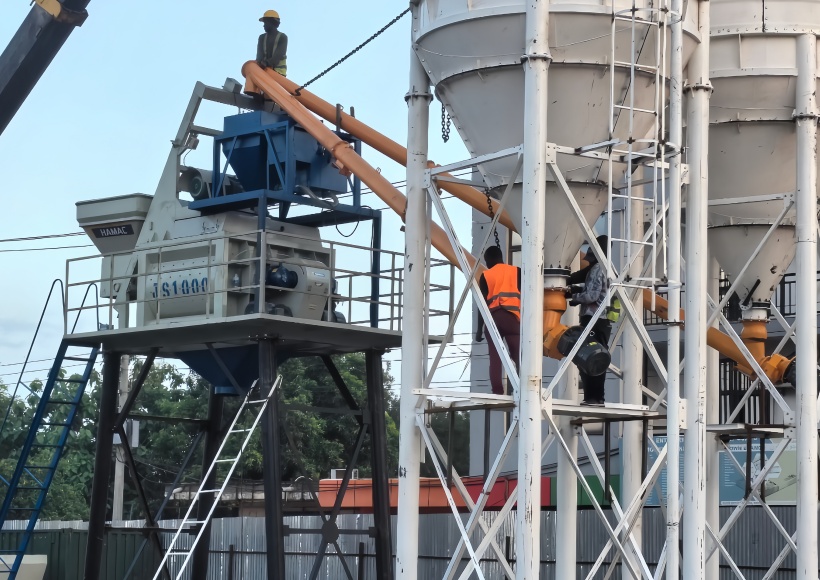
Mixer configuration. Twin-shaft mixer is the industry standard for stationary concrete – fast mixing, homogenous concrete mix, and the wear plate geometry handles abrasive aggregates better than planetary mixers. But twin-shaft mixer wear parts (liners, paddle arms, tips) are a recurring line item. A cheap twin-shaft mixer with soft liners will eat your margin in 12-18 months. This is where supplier quality matters more than spec sheets suggest.
Level of automation. Semi-automatic systems need an operator at the control panel for every batch. Fully automated systems with PLC and remote monitoring can run lights-out overnight, automate concrete production, and cut labor by 30-40%. The automation premium is typically 15-25% on the control system – but it pays back fast if you’re running two or three shifts.
Wear component quality. This is the line item every procurement rookie misses. Hardox 450 liners vs. generic wear plate. Tungsten carbide mixer tips vs. standard steel. The difference in plant price might be 15,000-30,000 upfront. The difference in downtime and spare parts over five years can be 80,000-150,000. If you’re buying a Бетонный завод for the long haul, this is where you spend money, not save it.
Mobile vs. Stationary: The Decision That Locks In Your Cost Structure
Mobile Concrete Batching Plants – When They Win
A mobile concrete batching plant wins when your work is project-based and geographically scattered. Infrastructure projects like highway extensions, bridge piers, or remote wind farm foundations – anywhere the ready-mix concrete truck can’t reach within slump tolerance (90 minutes for most mixes, 60 minutes in summer heat). The mobile plant eliminates truck cycle time, reduces concrete waste from rejected loads, and lets you control mix design on-site.
The trap? Mobile plants have smaller aggregate bins and cement silo capacity. You’re batching more frequently, which means more operator attention per cubic meter. And the chassis-mounted design limits your mixer size – most mobile units cap out around 60-75 m³/h. If your construction project demand spikes, you can’t just add a second shift and double output the way you can with a stationary plant.
Stationary Concrete Batch Plants – The Economies of Scale Play
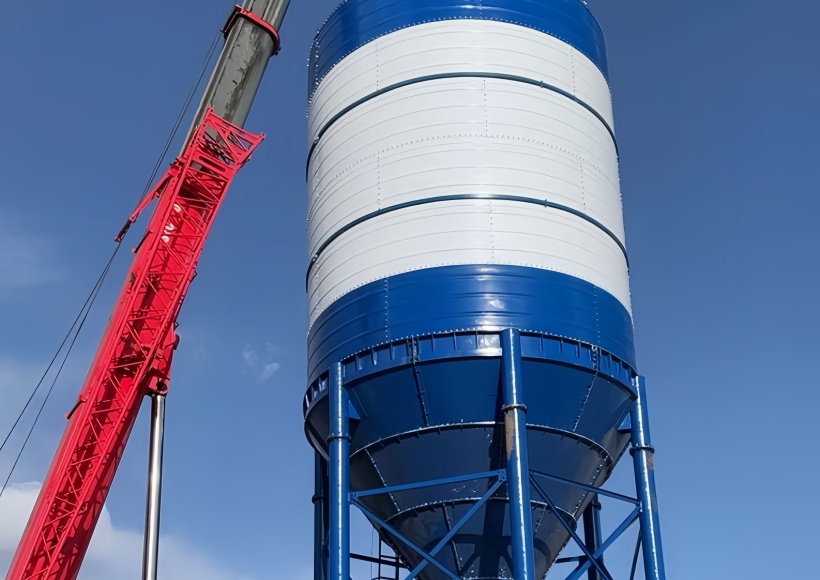
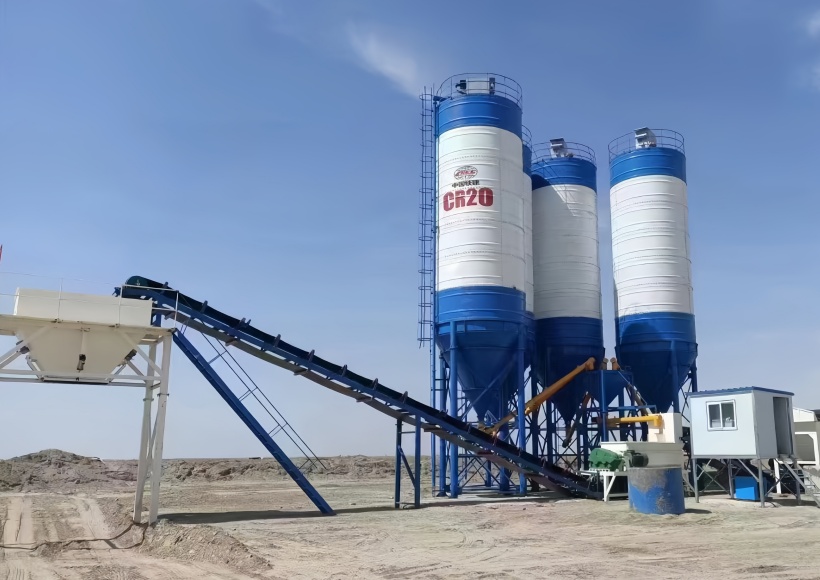
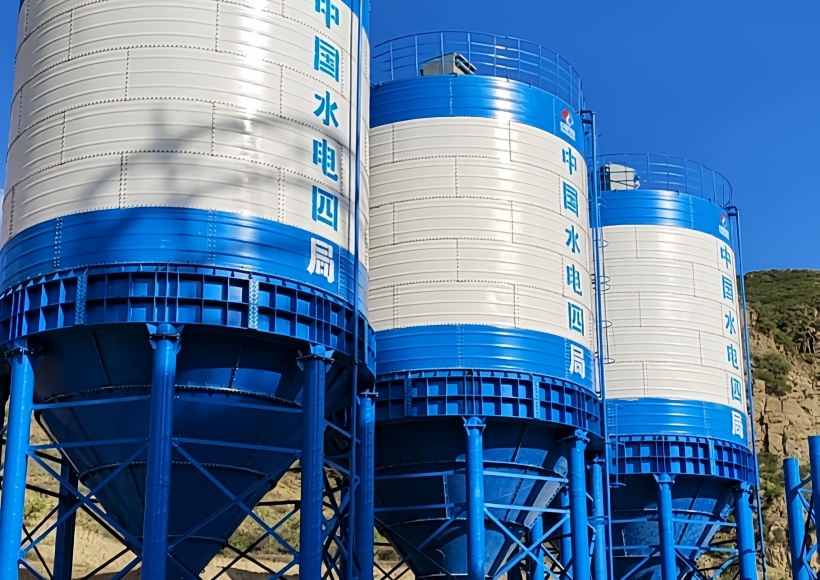
A stationary concrete batching plant is the backbone of a ready mix concrete plant operation. You pour a concrete foundation, bolt down the frame, and commit. In return, you get larger aggregate bins (4-6 compartments vs. 2-3 on mobile), bigger cement silos (100-300 tonnes vs. 30-80 tonnes), and the ability to run twin-shaft mixers at 180+ m³/h.
The per-cubic-meter cost drops sharply once you’re past 90 m³/h sustained output. I’ve seen operations where the cost per cubic meter of concrete mix from a stationary plant was 35-45% lower than buying ready-mix from a supplier – but only because they were running 8+ hours a day, five days a week. Buy a stationary plant and run it four hours a day, and the fixed costs (depreciation, foundation amortization, standby labor) will bleed you.
Cost Breakdown: What You’re Actually Paying For
Here’s where most Бетонный завод quotes go wrong – they list the equipment and stop. The real cost breakdown of a concrete batch plant has six layers:
- Core plant equipment – concrete mixer, aggregate bins, cement silos, control system, conveyor. This is 55-65% of the total cost.
- Foundation and civil work – for a stationary plant, the concrete foundation alone can run 40,000-120,000 depending on soil conditions and plant size. Mobile plants skip this, which is part of their appeal.
- Installation and commissioning – 5-12% of equipment cost. This is where cheap suppliers cut corners. A botched commissioning means calibration drift, admixture dosing errors, and months of troubleshooting.
- Transportation and customs – if you’re importing from overseas (and many concrete companies do in 2026), factor in ocean freight, LCL consolidation grief if you’re shipping spare parts separately, and customs duties. HS code 8474.31 covers concrete mixing machinery – check your local tariff schedule before you commit to a supplier.
- Spare parts and wear components – budget 3-5% of equipment cost per year. Liners, paddle tips, conveyor belts, moisture probe replacements. Non-negotiable.
- Power and labor – a 120 m³/h plant draws 150-250 kW at peak. Labor depends on level of automation, but even fully automated plants need a supervisor and a loader operator.
Total Cost of Ownership: The Number That Actually Matters
The purchase price is a down payment. The total cost of ownership over a 10-year lifespan is typically 2.5-3.5x the initial investment. That’s not a guess – it’s what the math looks like when you factor in:
- Raw material (cement, aggregate, admixtures, water) – 60-70% of operating cost. This dwarfs everything else. Cement alone is 45-55% of your per-cubic-meter cost.
- Energy – 8-12% of operating cost. Peak demand charges will hurt if your utility tariffs penalize startups.
- Labor – 5-10%, heavily dependent on level of automation.
- Maintenance and spare parts – 4-7%. Skip preventive maintenance and this triples.
- Downtime – the invisible killer. Every hour a stationary plant sits broken at peak construction season is lost revenue you never recover.
This is why I tell clients: a cheaper plant with poor spare parts availability will cost you more in the first two years than the price gap you “saved” at purchase. I’ve watched procurement teams celebrate a 12% discount on a Chinese-built plant, then wait 14 weeks for a replacement liner during peak season. That’s not savings – that’s deferred bankruptcy.
Return on Investment: How to Actually Get There
ROI in concrete batching comes down to utilization. A stationary concrete batching plant needs 55-65% utilization to break even on total cost of ownership – meaning if you bought a 120 m³/h plant, you need to be moving 65-80 m³/h of actual concrete mix out the gate, averaged over the year. Below that, you’re carrying dead capacity.
The plants that hit strong return on investment share three traits: they run multiple shifts (automation pays for itself here), they have reliable spare parts channels (often through a supplier like Машины Tongxin that stocks common wear components), and they’ve invested in remote monitoring to catch calibration drift before it ruins a batch.
What to Do Before You Sign a Purchase Order
- Get three quotes – not for price comparison, but for spec comparison. The cheapest quote usually has the thinnest wear components and the vaguest commissioning scope.
- Demand a wear parts schedule – liner thickness, paddle tip material, expected replacement intervals. If the supplier can’t answer, walk away.
- Calculate your real capacity need – not peak demand, but sustained demand averaged over 12 months. Buy for the average, not the spike.
- Check the spare parts pipeline – lead times, stocking policy, whether the supplier has a local warehouse. A 10-week lead time on a $400 liner is a supply chain failure waiting to happen.
- Budget for commissioning grief – assume the first 30 days of operation will reveal three problems you didn’t anticipate. If they don’t, you got lucky.
The concrete batch plant cost on the invoice is the beginning of the conversation, not the end. The number that determines whether you made a good decision shows up on the operating statement in year three.
Часто задаваемые вопросы
1. What’s the realistic concrete batch plant cost for a 90 m³/h stationary plant in 2026?
Expect 450,000-700,000 for the plant equipment, plus 60,000-100,000 for foundation and installation, plus 8-12% for shipping and customs if imported. Total initial investment typically lands between 550,000 and 850,000.
2. How long do twin-shaft mixer liners last before replacement?
With Hardox 450 liners processing standard aggregates, expect 8,000-12,000 operating hours. Generic wear plate might give you 3,000-5,000 hours. The cost difference at purchase is minor; the downtime difference is significant.
3. Can a mobile concrete batching plant match a stationary plant’s per-cubic-meter cost?
No – not at sustained volume. Mobile plants have higher per-cubic-meter cost due to smaller batch sizes, more frequent loading cycles, and higher labor attention per batch. They win on projects where ready-mix delivery costs would exceed the premium.
4. What’s the typical lead time for spare parts if I import a plant from overseas?
Stocked common items (liners, paddle tips, belts) – 2-4 weeks via air freight. Non-stocked or custom components – 8-14 weeks via ocean freight. Always confirm the supplier’s stocking policy and local warehouse availability before purchase.
5. How much should I budget annually for maintenance and spare parts?
Plan for 3-5% of equipment cost per year as a baseline. If your aggregates are highly abrasive (recycled concrete, hard river gravel) or you run 2,500+ hours annually, push that to 6-7%. Skip preventive maintenance and you’ll spend double that in emergency repairs and downtime.