








Look, I talk to contractors and project managers all the time who get completely blindsided by equipment budgets. They flip through a brochure, see a starting concrete batch plant price, and assume that’s the check they need to write.
It never is.
That baseline number is just a starting line. The gap between a manufacturer’s initial quote and your fully operational, producing-revenue site is where profit margins go to die. If you are serious about buying a 混凝土搅拌站, you have to stop looking at sticker prices and start looking at the total cost of ownership.
This cost analysis strips away the sales pitch. We are going to break down the actual factors that dictate batching plant prices, from your choice of plant models right down to the automation level, and show you exactly where your money goes.
The Ultimate Concrete Batching Plant Price Analysis: Model and Configuration Comparison
Before you even start calling plant manufacturers or browsing online directories, lock down your exact project requirements. The price of the equipment swings wildly based on how much you need to produce, how often you plan to move, and the physical configuration of the machinery.
Plant Models: Why Your Setup Dictates Your Budget
Your very first decision is the physical footprint and mobility of the mix plant. This single choice alters your equipment costs, your site prep budget, and your long-term maintenance costs.
Stationary Concrete Batching Plant
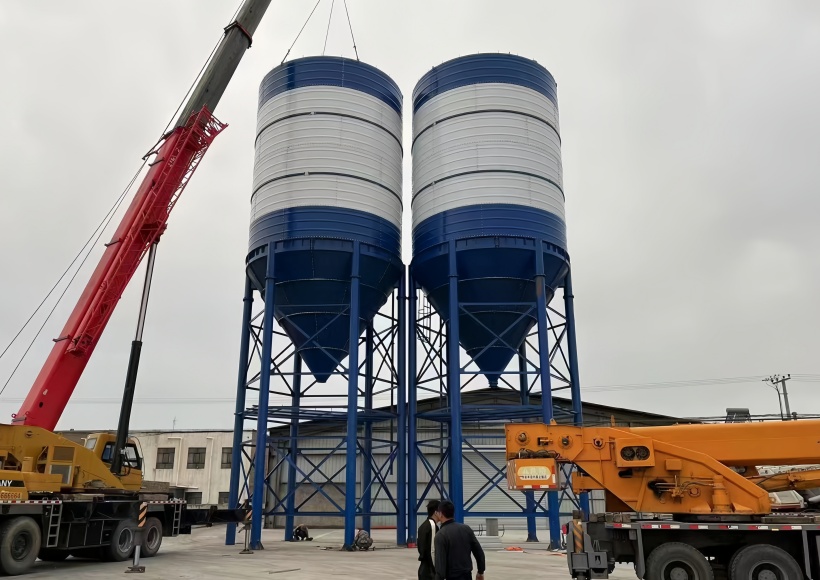
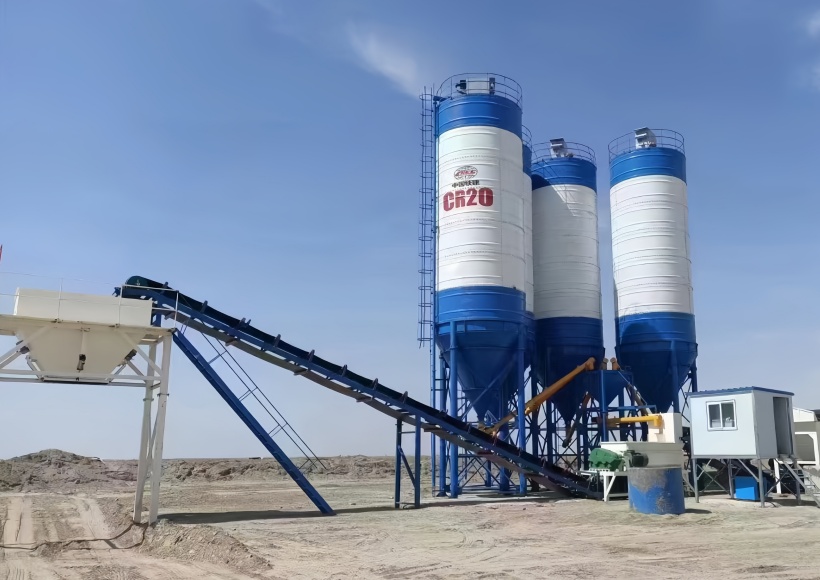
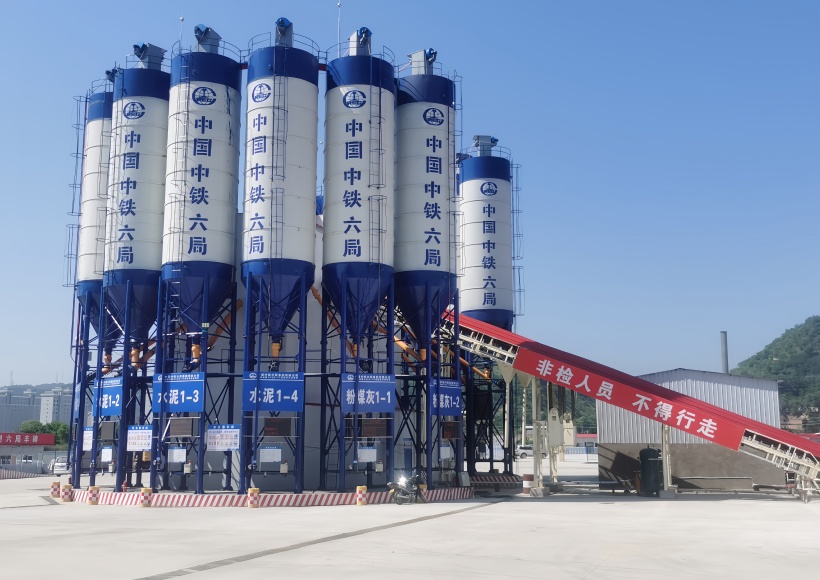
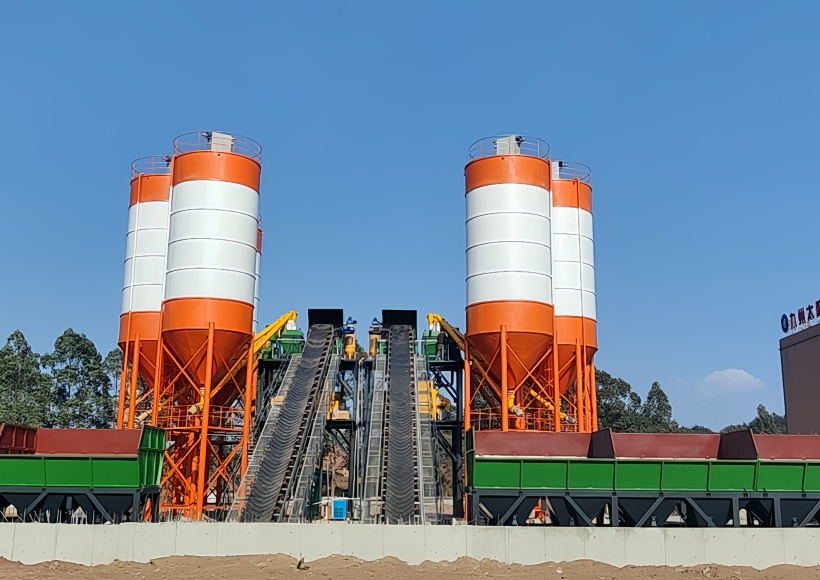
This is the heavy-duty anchor of the commercial concrete mixing industry. A stationary 混凝土搅拌站 is engineered for long-term installation. If you are setting up a ready-mix concrete yard or a massive precast facility, stationary concrete plants are the only logical choice. Because they don’t need to be dragged down a highway, they can handle massive silos, heavy-duty aggregate batching systems, and high-capacity mixers.
- Cost Reality: The initial purchase price per cubic meter of output is usually lower than portable units. But you have to factor in the site. You are paying for massive concrete foundation pouring, crane rentals for erection, and days of installation labor costs.
- The Verdict: Perfect for suppliers and massive infrastructure jobs.
Mobile Concrete Batching Plant
A mobile 混凝土搅拌站 sits on a towable chassis. It rolls onto your site with the wiring and plumbing mostly done.
- Cost Reality: You pay a steep price premium for that mobility. The engineering required to pack all that plant equipment onto a trailer drives up the cost of the equipment. However, you save a fortune on foundation work. If you have limited budgets for site preparation or you rent your land, mobile is the way to go.
- The Verdict: Ideal for road construction, temporary jobs, and contractors who chase work across different states or provinces.
Production Capacities: The “Base” Plant Price
You can’t compare small 混凝土搅拌站 costs with a massive commercial setup. Output dictates the size of your motors, your structural steel, and ultimately, your invoice. Here is a grounded cost analysis of what you are actually buying:
| Plant Category | Theoretical Yield | Target Scenarios | Estimated Price Impact & Reality |
| Small Concrete Plant | 25 – 35 m³/h | Rural jobs, entry-level concrete business, small precast. | Lowest entry price. Usually utilizes a skip hoist. Great for starting out, but do not push these past their limits or you will face heavy downtime. |
| Medium Mix Plant | 50 – 90 m³/h | Mid-sized road projects, standard ready-mix concrete operations. | The sweet spot for ROI. Excellent balance of productivity and purchase price. These plants handle commercial workloads well. |
| Large Commercial Plant | 120 – 240+ m³/h | Major dams, airport runways, high-volume commercial supply. | Huge capital expense. Requires extensive aggregate batching systems, massive cement storage, and heavily reinforced foundations. |
A quick warning on production capacities: Plant manufacturers always quote “theoretical” maximums. A 60 m³/h plant might only give you 45 m³/h of high-quality concrete production in real-world conditions. Always buy slightly more capacity than your peak utilization demands.
Configuration: The Cost of the Equipment
When you get quotes from different suppliers—maybe one from Aimix group and another from a domestic competitor—you’ll often see a 30% or 40% price difference for the exact same theoretical capacity. That gap isn’t just markup. It’s configuration. Here is what actually drives up batching plant prices.
The Concrete Mixer: The Heart of the Operation
The concrete mixer is where you make or break your product quality.
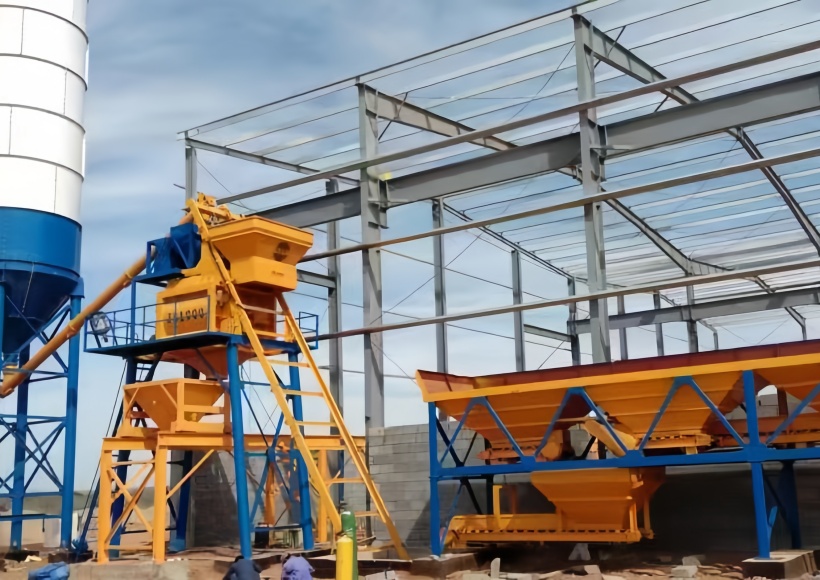
- Twin-Shaft Mixers: This is the gold standard for a modern concrete mixing plant. They are aggressive, fast, and produce highly uniform batches. But not all twin-shafts are equal. A mixer lined with cheap steel will save you money today but will be chewed to pieces by raw material in a year. Paying a premium for high-grade Ni-Hard cast iron liners and thicker mixing arms reduces operating costs and downtime significantly.
- Planetary Mixers: Usually found in specialized precast concrete production. They offer an incredibly intense mixing action but come with a higher initial purchase price and more complex maintenance costs compared to standard twin-shafts.
The Automation Level and Control System
This is where old-school contractors try to save money, and it is the worst place to do it. The automation level dictates your profitability.
- Manual and Semi-Automatic: You get a basic control panel with buttons. The purchase price is cheap. The true cost? Massive. Human operators get tired. They hold the cement discharge button half a second too long. Suddenly you are giving away an extra 10 pounds of expensive cement on every single batch. Over a year, that wastes tens of thousands of dollars.
- Fully Automated Systems: A modern PLC control system entirely automates the weighing, mixing, and discharging. Yes, the batching systems cost more upfront. But they guarantee exact raw material proportions. They offer remote monitoring, print batch tickets for clients, and completely eliminate human error. If you want high-quality concrete, you automate. Period.
Material Feeding: Conveyor vs. Skip Hoist
- Skip Hoist Setup: You see this on almost every small concrete plant. A bucket drags the aggregate up a rail into the mixer. It keeps the plant footprint tight and lowers the price of the equipment. The downside is speed—you have to wait for the bucket to travel up and down.
- Belt Conveyor: Used heavily in stationary concrete batching. A conveyor provides a continuous, relentless feed of aggregate to a holding hopper above the mixer. This vastly increases productivity. It also drastically increases your total cost and requires a much larger piece of land.
The Hidden Costs of Buying a Concrete Batching Plant
Let’s talk about the money you forgot to put in your spreadsheet. When calculating 混凝土搅拌站 costs, the invoice for the machinery is only step one.
1. Heavy Foundations and Site Prep
For a stationary 混凝土搅拌站, you cannot just drop the steel on dirt. You need custom-engineered concrete pads to support the massive dynamic weight of the mixing process and towering cement silos. Engineering, excavating, and pouring these foundations will eat up a massive chunk of your budget before the plant even ships.
2. Logistics and Shipping
Plant equipment is heavy, bulky, and awkward. If you buy a large plant, you might need six or seven flatbed trucks to move it. If you are importing, container shipping rates fluctuate wildly. Always get a firm quote on CIF or DDP terms, or you will get burned by freight costs.
3. Cranes and Erection Crew
You don’t just bolt this stuff together with a socket set. You need to rent high-capacity cranes to stand the silos upright and lift the mixer module into place. You also have to pay specialized labor costs for technicians to wire the control system and calibrate the weighing scales.
4. Environmental Upgrades
Local municipalities hate dust. Depending on your zoning, you might be forced to add expensive baghouse dust collectors, aggregate enclosure panels, and water recycling basins to your plant design. These are not cheap, but failing to include them means you won’t get your operating permits.
Procurement Strategy: Maximizing Your Investment
If you want to survive in the concrete business, you have to buy smart. Don’t let limited budgets force you into buying garbage machinery that will break down in the middle of a 300-yard pour.
First, accurately assess your utilization. Do not buy a 120 m³/h stationary plant if your daily demand tops out at 200 cubic meters. You are just paying interest on idle steel. Size your plant so it works hard and steady.
Second, look closely at batching plant manufacturing quality. Focus on the thickness of the steel, the brand of the pneumatic cylinders, and the reputation of the PLC interface. A reliable plant commands a price premium for a reason: it actually works when you turn it on.
If you want a machine built for heavy-duty production without the inflated brand markups, you need to check out the engineered solutions from 砼信机械. They understand that contractors need equipment that hits the ground running. Whether you need a highly portable mobile plant or a high-capacity stationary setup, you can review their reliable Concrete Batching Plant line to find a configuration that fits your exact budget and project needs. They focus on thick steel, heavy-duty mixers, and precise automation to keep your total cost of ownership as low as mathematically possible.
Stop looking at the cheapest quote on your desk. Start looking at what it will cost to keep that plant running for the next ten years. Buy the right configuration, automate your material weighing, and your mix plant will print money. Buy cheap, and it will bleed you dry.
常见问题(FAQ)
What is the biggest hidden cost in a new batch plant?
Foundations and site prep. Plant prices only cover the steel and motors. Excavating land, engineering load-bearing concrete pads, and renting massive cranes to stand the silos up can add 20% to your total budget easily.
Should I choose a mobile or stationary setup?
If you bounce between different road jobs every eight months, buy mobile to save on tear-down time. If you are setting up a commercial yard to supply a city for five years, stationary gives you better capacity and durability for your dollar.
Is a fully automated control system actually worth it?
Absolutely. Manual operators get tired and over-weigh materials. A PLC system stops you from giving away free cement on every batch. It easily pays for itself in raw material savings alone within the first few months.
Why do similar capacity plants have vastly different prices?
Quality of components. Thicker structural steel, premium cast-iron mixer liners, and top-tier pneumatic valves cost more upfront. Cheap plants use thin metal and budget motors, which guarantees heavy downtime and high maintenance costs later.
Can I get away with buying a cheap, small plant?
Only if you are doing very small, occasional pours. Ultra-cheap equipment cannot handle the brutal reality of daily commercial production. If your business relies on output, buying flimsy equipment will ruin your productivity and your reputation.