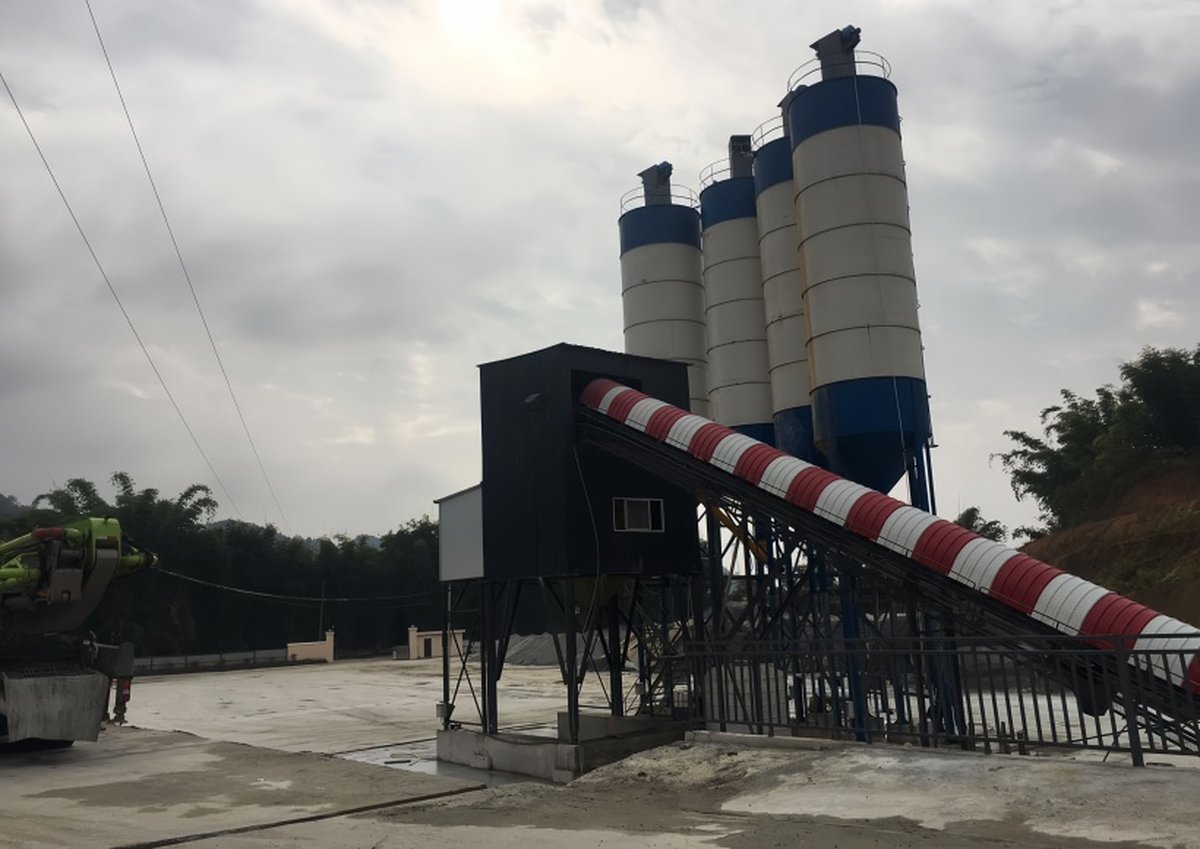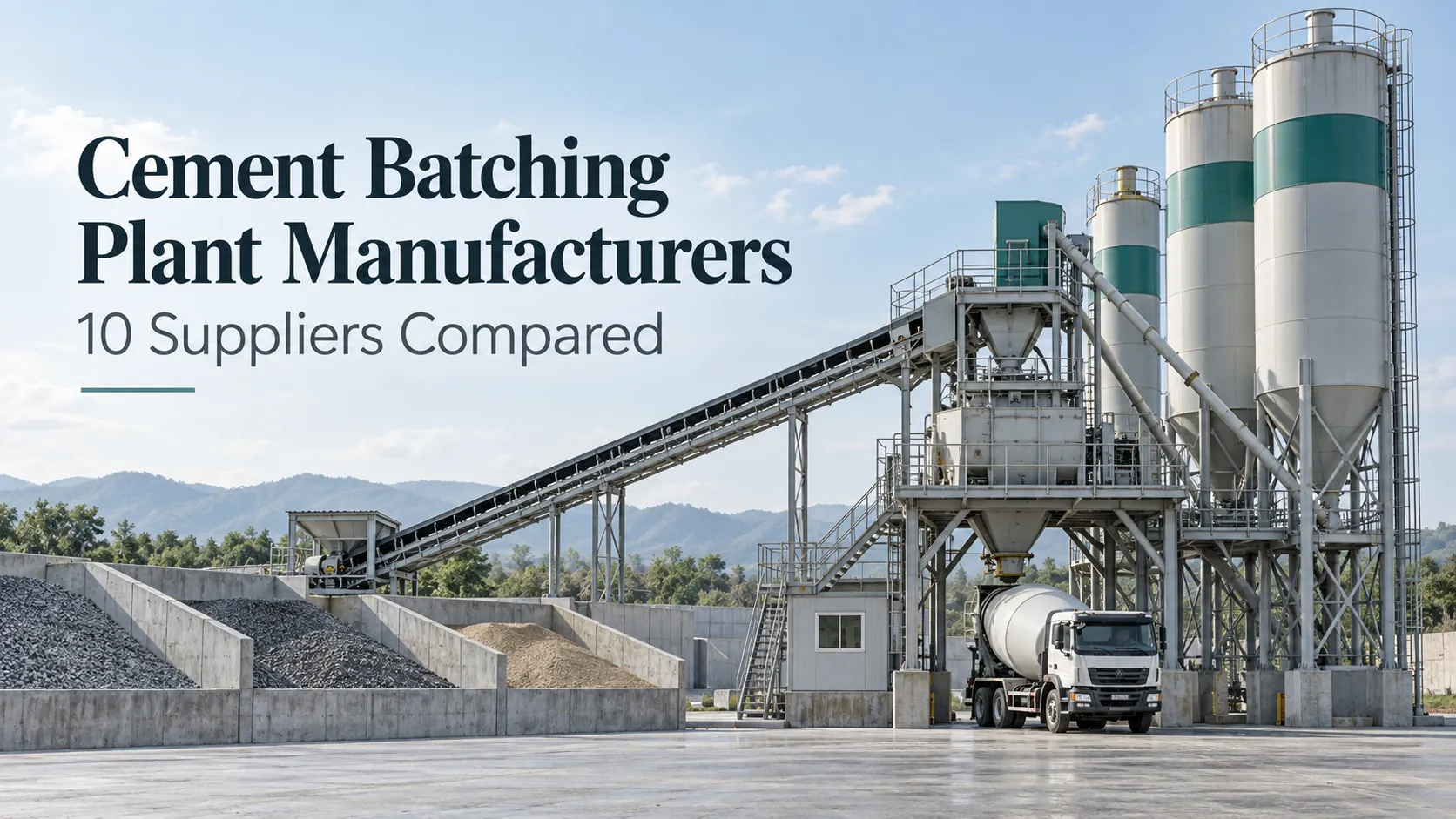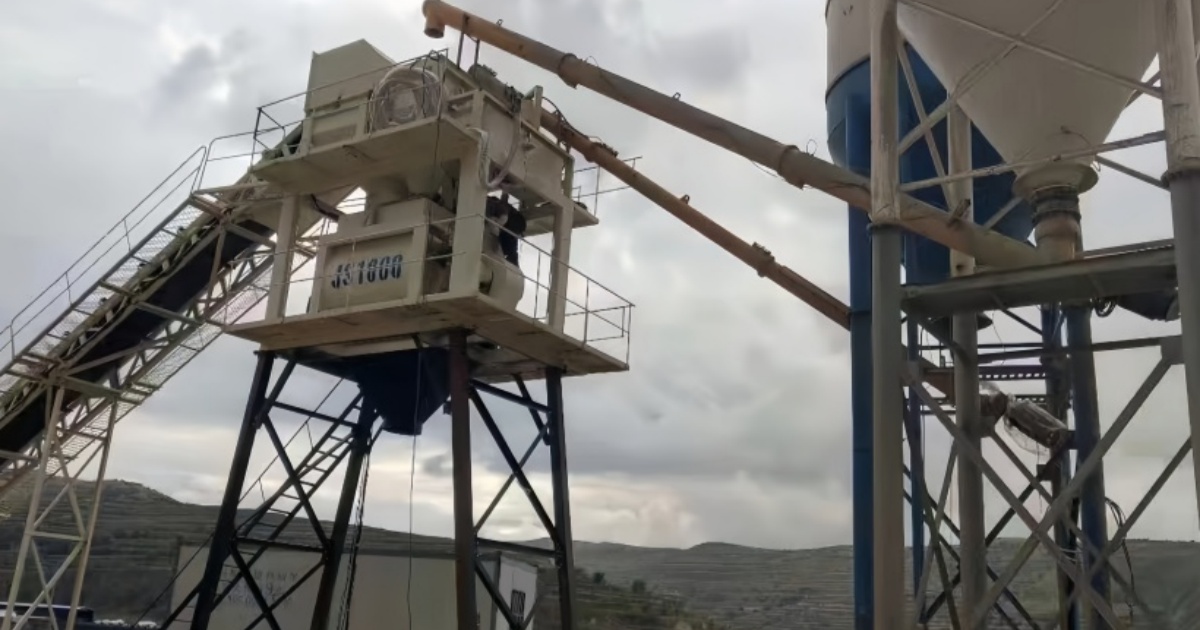


A HZS75 concrete batching plant is one of the most frequently requested models in the ready-mix market, and for a simple reason: it sits between a compact 50 m³/h station and a full-size 90 m³/h plant. In daily operation, an HZS75 concrete batching plant delivers roughly 60–65 m³ of commercial concrete per hour — enough to keep a medium team of trucks and pumps busy without pushing the station into continuous overload.
HZS75 Concrete Batching Plant: Where It Fits in a Project
The HZS75 concrete batching plant works best on projects that need steady supply rather than extreme peaks: small commercial batches, rural roads, water-conservancy repairs, and export projects in Central Asia or Africa. Because the whole system is modular, it ships in standard containers and assembles on site in about two weeks with a small crew. That is why many first-time buyers start with the HZS75 and expand later by adding cement silos or a second mixing station instead of replacing the machine.
From the orders that pass through our Henan factory, the HZS75 keeps appearing on two kinds of projects: contractors who have outgrown a small station, and export buyers who want a plant that fits a container without a full redesign. In both cases the buyers usually start with one concrete batching plant, run it for a season, and then come back for silos, a second station, or a fully enclosed upgrade — so we keep the standard design modular on purpose.
HZS75 Concrete Batching Plant Technical Specifications
The table below lists the key parameters TX Machinery quotes on a standard HZS75 concrete batching plant. Your own figures may differ if you choose a taller discharge height, extra silos, or a fully enclosed structure.
| Item | Specification |
|---|---|
| Theoretical output | 75 m³/h |
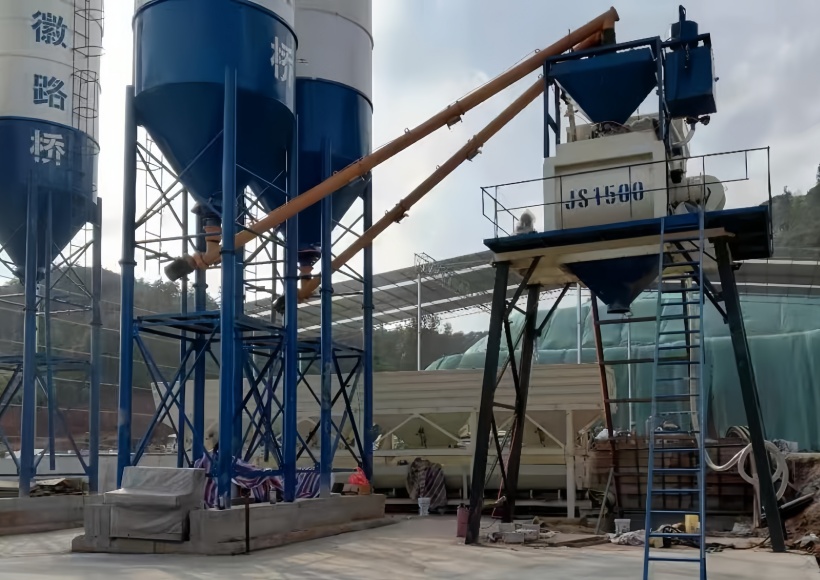
| Mixer | JS1500 twin-shaft forced mixer, dual motor 2×30 kW |
| Aggregate batcher | PLD2400, 4 bins, belt type |
| Belt conveyor | 650 mm belt with variable frequency drive |
| Cement silos | 100 t × 2 (50 t / 75 t optional) |
| Screw conveyors | 273 mm × 3 (cement, fly ash, additive) |
| Total installed power | About 120 kW |
| Weighing accuracy | Aggregate ±2%, cement and additive ±1% |
| Discharge height | 3.8 m standard, 4.5 m optional |
| Dust control | Pulse jet bag filter on silo top and mixer |
| Control system | PLC with touch screen, manual backup |
Two numbers deserve attention. The 75 m³/h is a theoretical rating based on standard mix cycles; after loading, weighing and discharge delays, real output normally lands between 60 and 65 m³/h. And the mixer is a JS1500 twin-shaft unit — the same family used on HZS90 stations — so spare blades and liner plates are easy to source through established JS1500 concrete mixer parts channels.
Standard vs Upgrade Options on the HZS75
The price difference between a basic and a fully equipped HZS75 concrete batching plant usually comes down to these four options. Our engineers use the same table when a customer asks what a fully enclosed station would add to the budget.
| Option | Standard | Upgrade |
|---|---|---|
| Discharge height | 3.8 m | 4.5 m for longer mixer trucks or direct pump feeding |
| Cement silos | 2 × 100 t | 50 t or 75 t silos for smaller yards or staged investment |
| Dust control | Pulse jet bag filters on silo tops and mixer | Fully enclosed station with recycled slurry handling |
| Control system | PLC with touch screen, manual backup | Expanded production and weighing records |
HZS75 vs HZS90: Which One Should You Order First?
Because the HZS75 and HZS90 share the same mixer family, buyers often ask whether starting with the larger model is smarter. The short answer: order the one that matches your contract volume, because both plants use the same JS1500 twin-shaft mixing core and the HZS90 mainly adds output headroom through a bigger batching loop and higher installed power.
| Item | HZS75 | HZS90 |
|---|---|---|
| Theoretical output | 75 m³/h | 90 m³/h |
| Mixer | JS1500 twin-shaft, 2×30 kW | JS1500 twin-shaft, 2×30 kW |
| Total installed power | About 120 kW | About 155 kW |
| Typical buyer | Medium fleet, first upgrade from a smaller station | Higher-volume contracts or commercial ready-mix supply |
| Shared spare parts | Blades, liner plates and JS1500 components | Same JS1500 wear parts as the HZS75 |
What to Check Before You Order an HZS75
Buyers who have operated batching plants before usually run through the same short checklist before signing a contract:
- Power supply. An HZS75 concrete batching plant draws roughly 120 kW at full load. Confirm transformer size and cable length on site; voltage drop over long cables is the most common cause of tripping problems.
- Discharge height. 3.8 m is fine for a 4 m³ concrete truck. If you use a longer mixer truck or plan to feed a pump directly, order the 4.5 m option.
- Site layout. The standard layout needs about 30 m × 20 m for the station, aggregate stockpile and a turning lane. Keep cement silos close to the mixer to shorten screw conveyors.
- Spare parts. Keep a set of mixing blades, liner plates and load cells on hand. These are the items that wear first on any twin-shaft concrete batching plant.
Common Questions About the HZS75 Concrete Batching Plant
Q1: How much concrete can an HZS75 concrete batching plant produce per hour?
A: The theoretical rating is 75 m³/h. In daily operation, with normal truck cycles and mix times, most plants deliver 60–65 m³/h.
Q2: Which mixer does the HZS75 use?
A: A JS1500 twin-shaft forced mixer with two 30 kW motors — the same mixing unit family used on HZS90 stations.
Q3: What is the total installed power of the HZS75?
A: Around 120 kW in the standard configuration, covering the mixer, batcher, belt conveyor, screw feeders, air compressor and control system.
Q4: How long does installation take?
A: With a prepared foundation, a standard HZS75 concrete batching plant is usually erected and commissioned in 10–14 days with three to four technicians.
Q5: Can the HZS75 ship in containers?
A: Yes. The plant is built in modular sections that fit standard 20 ft and 40 ft containers, which keeps ocean freight economical for overseas buyers.
Q6: What affects the price of an HZS75 concrete batching plant?
A: The main factors are mixer power options, silo quantity and capacity, whether the station is fully enclosed, and the control system level. Ask TX Machinery for a written quotation with your site conditions and the list will be itemised line by line.
Q7: Is the standard 3.8 m discharge height enough for my trucks?
A: Yes for a regular 4 m³ concrete mixer truck. If your fleet uses longer trucks or you plan to feed a concrete pump directly, order the 4.5 m discharge option.
Q8: Can the plant be expanded later without replacing the mixer?
A: Yes. The modular layout lets you add cement silos, a fully enclosed structure or a second mixing station while keeping the JS1500 mixer — which is why the HZS75 is a common first purchase before a larger station.
Plan Your HZS75 Purchase
If you are planning a new commercial batch station or replacing an ageing plant, ask TX Machinery’s engineering team for a layout drawing and an itemised quotation. The HZS75 actual output analysis explains how theoretical and real production compare, and our engineers can walk through the power, foundation and freight numbers before you commit. For a quick background on the product category, see ready-mix concrete on Wikipedia.