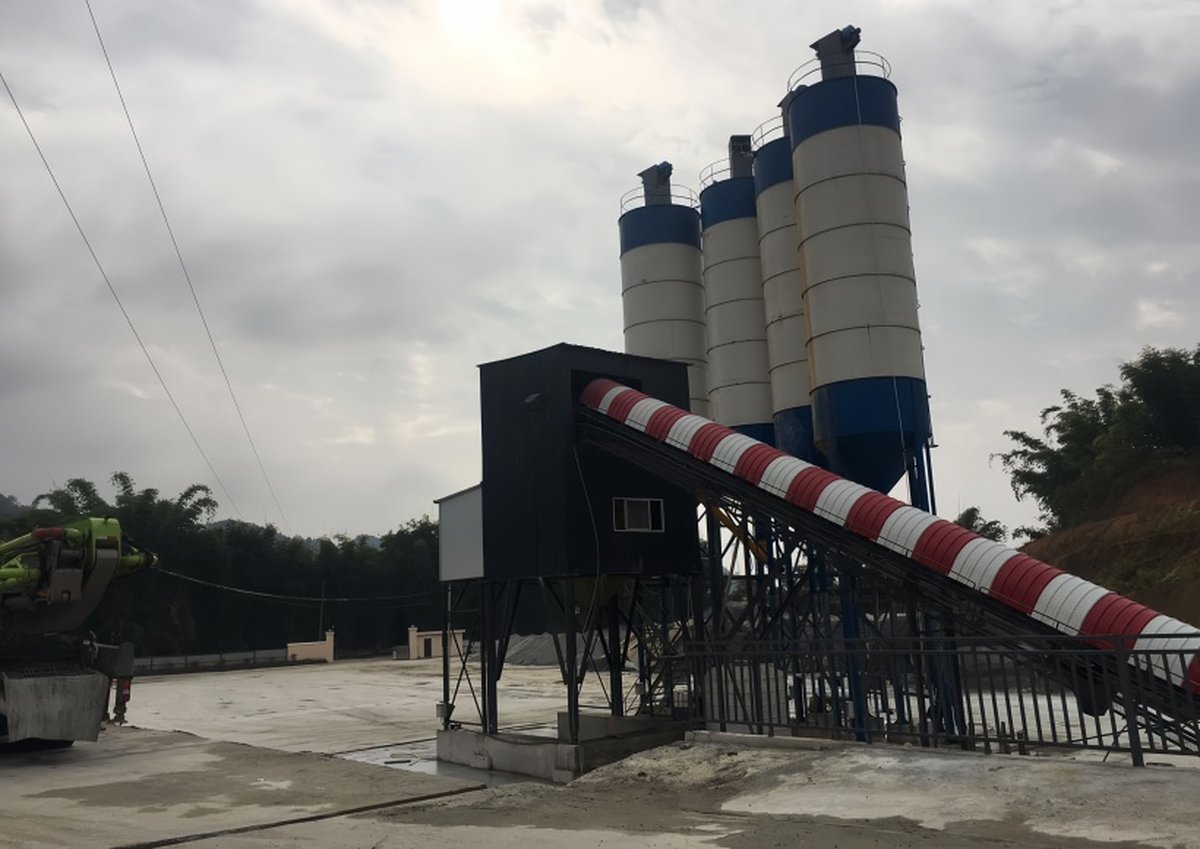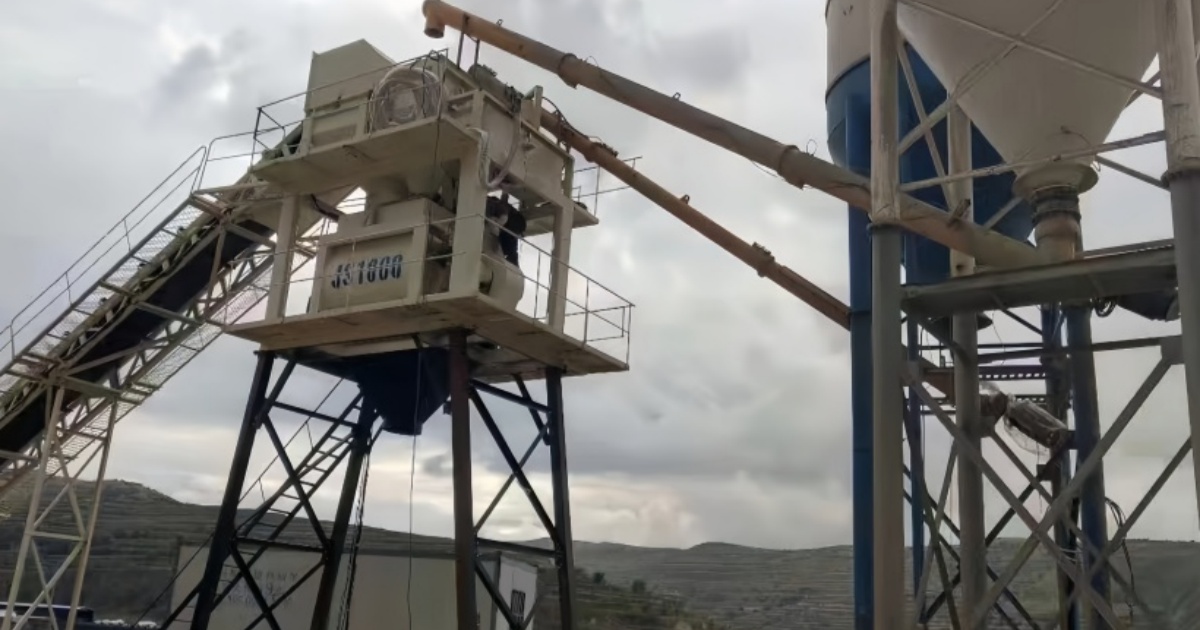


In today’s highly competitive commercial concrete industry, the JS1500 Concrete Mixing Plant stands as an ideal choice for medium-sized production lines. The scientific configuration of its technical parameters directly impacts operational efficiency. Reasonable power configuration and transformer selection not only ensure stable equipment operation but also significantly reduce energy consumption costs and improve investment return rates. This article provides a detailed technical configuration guide for the JS1500 equipment from a practical application perspective.
JS1500 Concrete Mixing Plant Core Parameter Configuration
Production Capacity Parameters
Theoretical Production Indicators:
– Rated Discharge Capacity: 1500 L/batch
– Theoretical Productivity: 75-90 m³/h
– Work Cycle Time: 60-72 seconds
– Annual Average Actual Output: 65-80 m³/h (including production losses)
Structural Configuration Parameters:
– Mixer Host: JS1500 Dual Horizontal Shaft Forced Type
– Hopper Capacity: 2.8 m³
– Discharge Height: 3.8-4.2 m
– Total Plant Footprint: 30 m × 20 m (basic layout)
Storage System Configuration
Aggregate Storage:
– Sand and Stone Storage Capacity: 4 × 3.5 m³
– Powder Storage Capacity: 2 × 150 t
– Additive Tank Capacity: 1 × 5 m³
Conveying System:
– Inclined Belt Width: 800 mm
– Belt Speed: 2.0 m/s
– Screw Conveyor Capacity: 80 t/h

In-Depth Analysis of Power Requirements
Total Power Composition Details
The total power configuration of the JS1500 mixing plant is around 110 kW, distributed as follows:
Power Configuration of Main Power Consumption Units:
Mixer Host System: 2 × 30 kW
– Uses high-efficiency energy-saving electric motors
– Soft start control to reduce inrush current
– Power factor ≥ 0.88
Material Conveying System:
– Inclined Belt Conveyor: 30 kW
– Screw Conveyor: 15 kW × 2
Batching System:
– Aggregate Batching: 7.5 kW
– Liquid System: 7 kW
Pneumatic and Auxiliary Systems:
– Air Compressor: 7.5 kW
– Control System: 2 kW
Professional Guide to Transformer Selection
Transformer Capacity Calculation
Basic Capacity Requirements:
Total Active Power: 200 kW
Power Factor: 0.85 (before compensation)
Apparent Power Demand: 200 / 0.85 = 235 kVA
Correction Factors:
– Simultaneity Factor: 0.8
– Development Reserve: 20%
– Ambient Temperature Correction: 1.1
– Harmonic Influence Factor: 1.15
Final Capacity Determination:
235 × 0.8 × 1.2 × 1.1 × 1.15 = 285 kVA
Recommended Selection: 315 kVA Transformer
Transformer Selection Suggestions
Oil-Immersed Transformer:
– Model: S13-M-315 kVA
– Voltage Ratio: 10/0.4 kV
– Connection Group: Dyn11
– Impedance Voltage: 4%
Dry-Type Transformer:
– Model: SCB14-150 kVA
– Insulation Class: Class F
– Protection Level: IP23
– Cooling Method: ANAF
Power Distribution System Configuration
High-Voltage Side Configuration:
– Incoming Line Cabinet: HXGN17-12
– Metering Cabinet: Dedicated Metering Device
– Outgoing Line Cabinet: Vacuum Circuit Breaker
Low-Voltage Side Configuration:
– Incoming Line Cabinet: Frame Circuit Breaker
– Compensation Cabinet: Intelligent Capacitor Compensation
– Outgoing Line Cabinet: Modular Design
Electrical Control System Optimization
Intelligent Control Architecture
Core Controllers:
– PLC System: Siemens S7-1500
– HMI Interface: 12-inch Color Touchscreen
– Data Acquisition: IoT Gateway
Control Functions:
– Automatic Batching Accuracy: ≤ ±1%
– Production Data Traceability: 100% Recording
– Fault Self-Diagnosis: Intelligent Early Warning
Energy Efficiency Management System
Real-Time Monitoring:
– Independent Meters for Each Unit
– Power Factor Monitoring
– Energy Consumption Statistical Analysis
– Energy Efficiency Anomaly Alarms
Optimization Control:
– Optimized Equipment Operation Scheduling
– Production Suggestions Based on Peak/Off-Peak Hours
– Energy-Saving Operation Mode Selection

Installation and Debugging Key Points
Electrical Installation Standards
Power Quality Requirements:
– Voltage Deviation: ≤ ±5%
– Frequency Deviation: ≤ ±0.5 Hz
– Harmonic Distortion: ≤ 5%
Grounding System:
– Ground Resistance: ≤ 4 Ω
– Grounding Type: TN-S
– Lightning Protection: Secondary Protection
Debugging and Acceptance Standards
Performance Testing:
– No-Load Test Run: 4 hours
– Load Test Run: 8 hours
– Production Capacity Verification: Continuous Production Test
– Metering Accuracy Calibration: Third-Party Testing
Operation and Maintenance Management
Daily Maintenance Plan
Electrical System Maintenance:
– Daily: Connection Point Temperature Detection
– Weekly: Insulation Resistance Testing
– Monthly: Protection Device Calibration
– Quarterly: Comprehensive Preventive Inspection
Energy Efficiency Optimization Measures
Operational Optimization:
– Equipment Scheduling Optimization
– Rational Production Planning
– Scientific Maintenance Planning
Technical Improvements:
– Replacement with High-Efficiency Motors
– Application of Frequency Conversion Technology
– Intelligent Lighting Retrofitting
Investment Benefit Analysis
Initial Investment Composition
– Equipment Investment: 50,000–85714$
– Electrical Support: 14286–28571$
– Installation and Debugging: 7143–8571$
Operational Cost Analysis
Power Costs:
– Electricity Consumption per Ton: 1.8–2.2 kWh
– Annual Electricity Cost: 35714–50000 $
Maintenance Costs:
– Annual Average Maintenance Cost: 4286–7143$
Investment Return Evaluation
– Break-Even Point: Monthly Output of 8,000 m³
– Investment Payback Period: 1 Year
– Service Life: 10 Years
Conclusion: Scientific Configuration Creates Maximum Value
The parameter configuration and electrical design of the JS1500 concrete mixing plant is a systematic project that requires comprehensive consideration of multiple factors, including production processes, power supply, and investment budget. Tongxin Machinery Recommended:
Professional Design:
Engage experienced engineers for system design.
Quality Priority:
Choose reliable equipment suppliers.
Moderate Forward-Looking Planning:
Reserve appropriate development space.
Intelligent Management:
Establish a comprehensive energy management system.
Through scientific configuration and standardized management, the JS1500 mixing plant will undoubtedly become a reliable partner in creating economic benefits for your operations.
Related reading: shaft seizure prevention