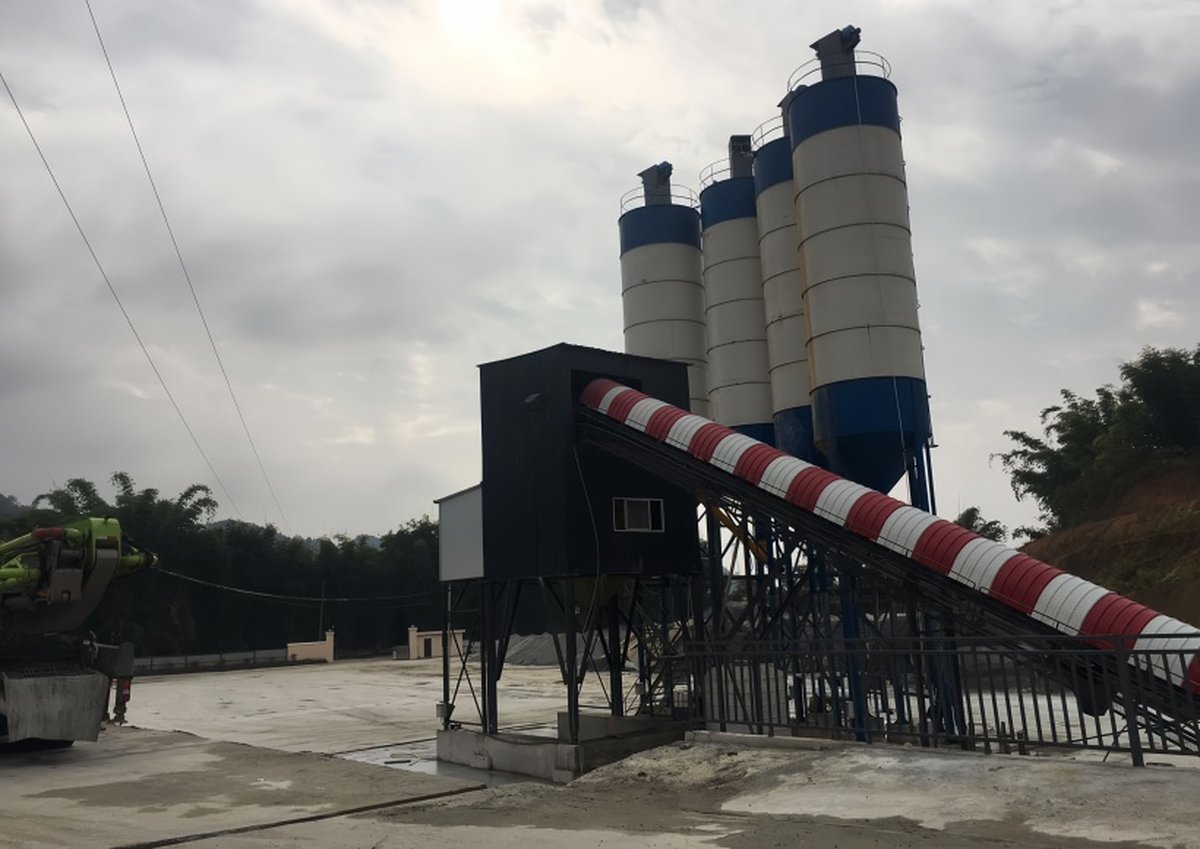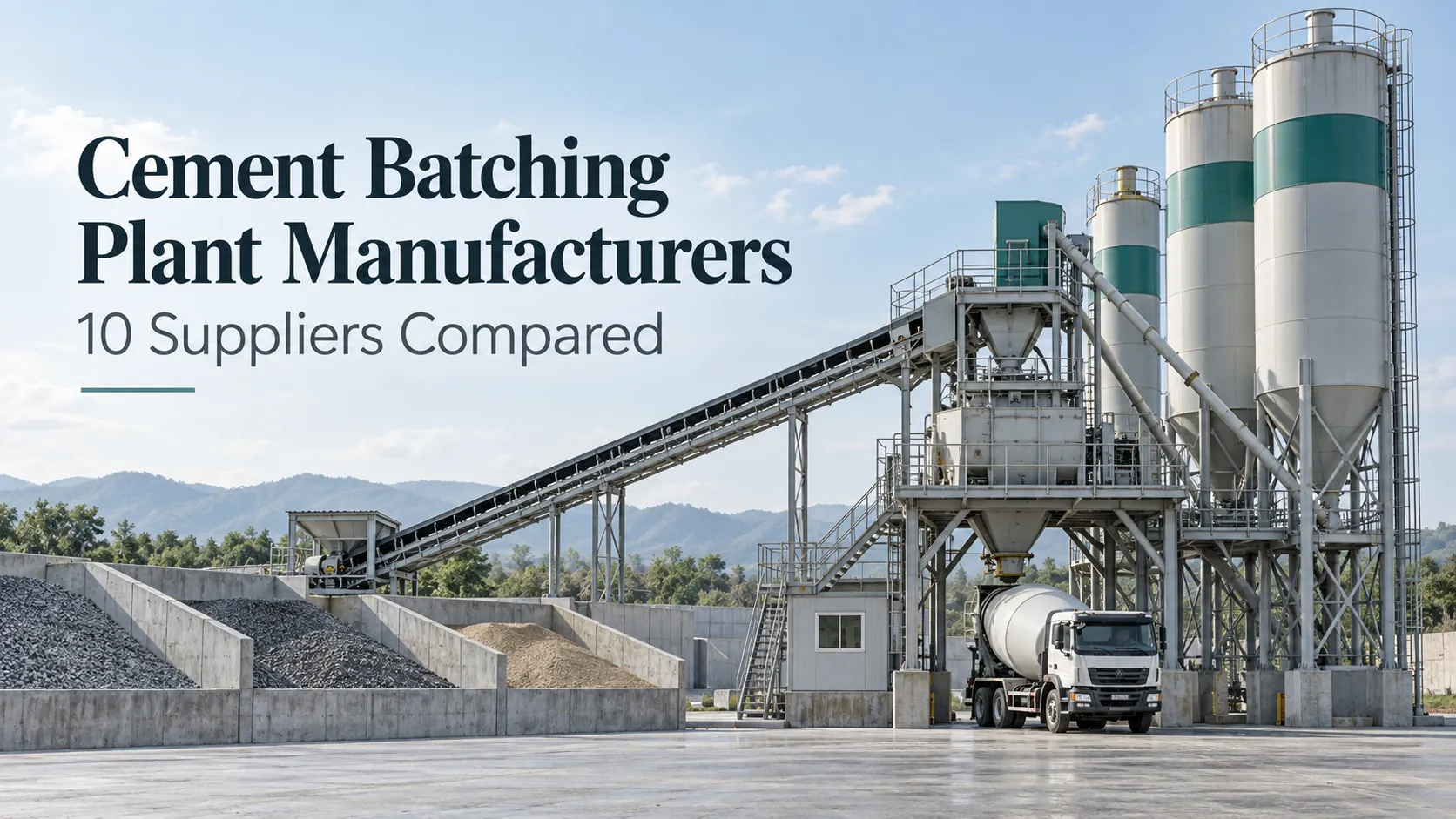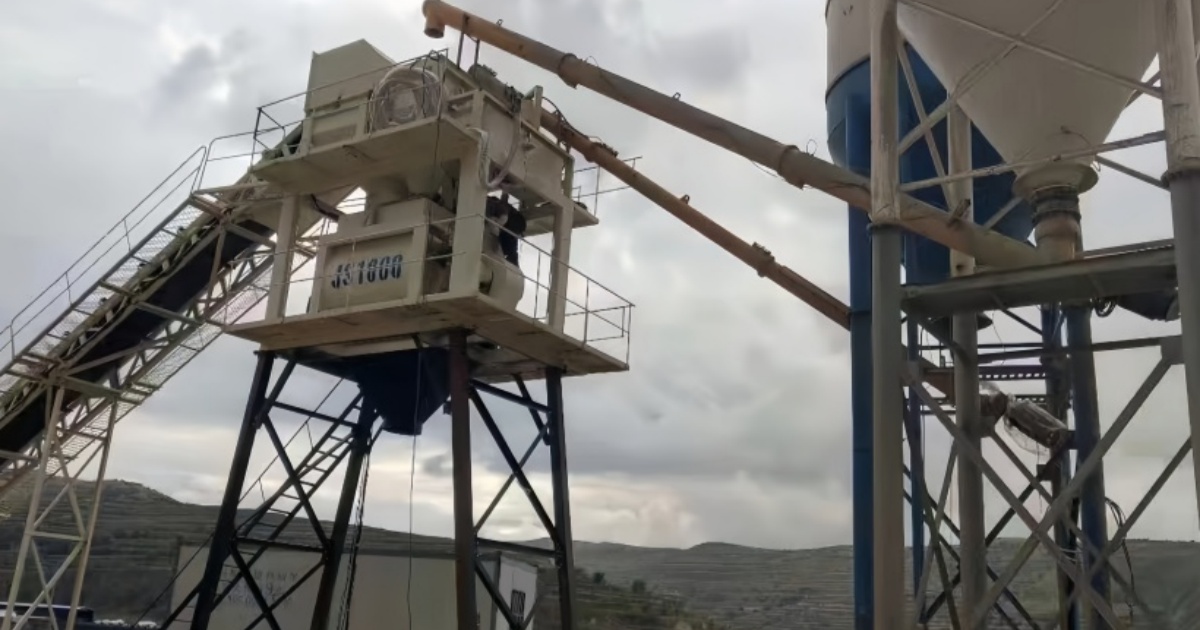

Tropical rainforest regions test construction equipment harder than almost anywhere else: annual rainfall often exceeds 2,000 mm, humidity stays above 90 percent, ground conditions change from site to site, and the ecosystems will not tolerate careless clearing. Traditional concrete batching plants need poured foundations, and in the jungle that means long construction cycles, high civil costs and erosion risk before the plant ever produces concrete.
Tongxin Machinery’s answer is a no-foundation concrete mixing plant built on containerised modules: it ships in standard boxes, assembles without a concrete foundation, and is designed for the humidity, insects and remote logistics of tropical sites. This guide covers the system, how it is verified, and what it means for your project.
Rainforest Construction Challenges: Why a No-Foundation Concrete Mixing Plant Wins
The table below summarises what a rainforest site throws at conventional plants, and how the no-foundation concrete mixing plant design answers each one.
| Rainforest condition | Traditional plant problem | No-foundation response |
|---|---|---|
| Rainfall over 2,000 mm/year, humidity above 90% | Weeks of foundation curing, rapid corrosion | Foundation-free deployment plus multi-layer anti-corrosion coating |
| Remote sites with poor roads | Oversized parts need special transport | Containerised modules move by barge or rough-road truck |
| Environmentally sensitive ground | Large footprint, vegetation cleared | Compact layout, dust control and wastewater recycling |
| Weak or absent power grid | Plant stops when the grid fails | Generator, solar-hybrid or off-grid power options |
Core Technology System Designed Specifically for Rainforest Environments
Rainforest sites punish equipment that was designed for open yards. Mud, humidity, insects and the difficulty of moving heavy machinery inland are why Tongxin Machinery builds its no-foundation concrete mixing plant differently: modules that travel by barge or rough-road truck, foundations that are not needed, and protection layers that survive years of wet season. The three systems below are what make the machine work.
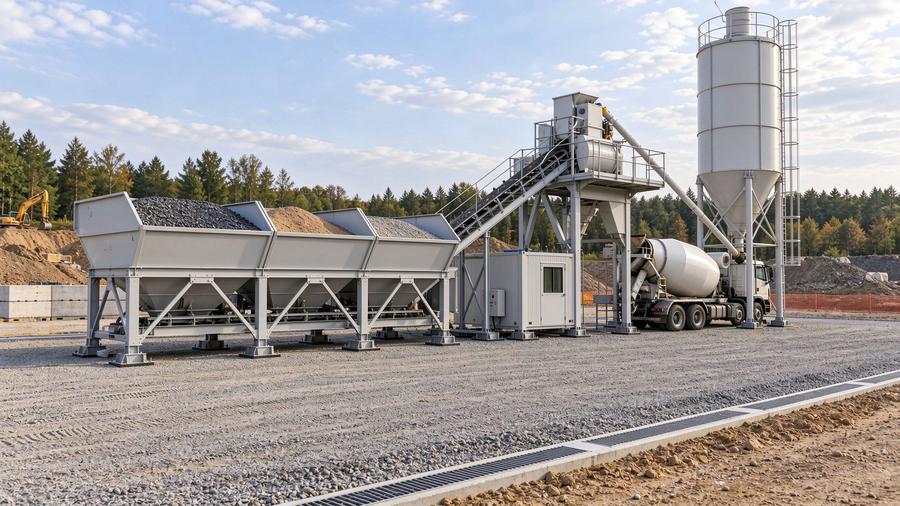
1. Foundation-Free Rapid Response System
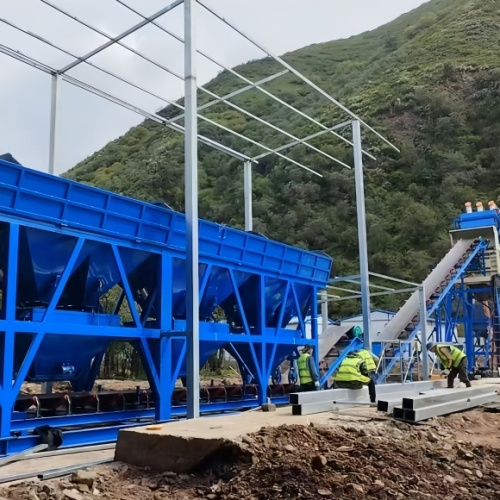
We started from the hardest part of any rainforest job: getting the plant there and getting it up. Every component is built to container standards, so a complete batching system ships in standard boxes and moves by river barge, rough-road truck or whatever transport the site allows. Once on site, the foundation-free design needs only simple ground preparation, not a poured concrete base with weeks of curing. Assembly is a sequenced, bolted process that a small technical crew can finish in days rather than the weeks a traditional plant needs, which shortens the gap between arrival and first production.
2. Specialized Protection Technology for Harsh Environments
Humidity above 90 percent, salt-laden rain and tropical insects attack steel and electrical gear equally hard. Our multi-layer anti-corrosion coating system is specified for these conditions and outlasts standard paint systems by a wide margin on coastal and rainforest sites. Electrical enclosures are fully sealed and rated for high-temperature, high-humidity operation, so control cabinets and motors keep working through wet-season cycles. We also seal the common tropical failure points, such as cable entries, vent panels and bearing seals, against insects and debris, which is where most premature breakdowns actually start.
3. Eco-Friendly Production Configuration
Rainforest projects increasingly run under strict environmental review, and the plant itself has to prove it can produce cleanly. The integrated dust control system captures fugitive dust at the silo and mixer, and the wastewater recycling loop keeps slurry out of local waterways. Because the modules are compact, the footprint stays small and more surface vegetation is preserved than a spread-out welded plant would allow. For remote sites, the no-foundation concrete mixing plant runs on generator power, a solar-assisted hybrid supply or grid power where available, so operation does not depend on a single energy source.
| Comparison | Traditional batching plant | No-foundation concrete mixing plant |
|---|---|---|
| Foundation work | Poured concrete base plus curing time | Simple ground preparation only |
| Transport | Oversized parts, special vehicles | Standard containers, barge or rough-road truck |
| Installation time | Weeks | Days |
| Site footprint | Large, more land cleared | Compact, vegetation preserved |
| Relocation | Effectively fixed | Dismantle, move and re-erect |
How the Rainforest Systems Are Verified
Verification starts in the engineering office, not in a brochure. Every system in the previous section is validated against the conditions a tropical site actually presents: barge and rough-road transport limits, months of heavy rainfall, insect pressure on enclosures, and lightning-prone wet seasons. This is how each requirement is checked before a no-foundation concrete mixing plant is shipped.
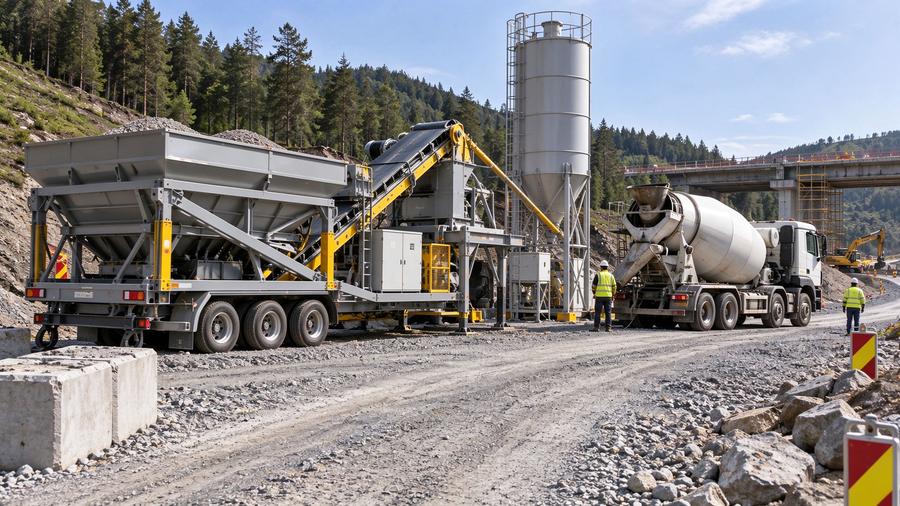
1. Transport and Foundation Verification
Container module dimensions are checked against real shipping options, including inland waterway barge limits and the widest vehicles a site road can take. Lifting points and assembly sequences are load-tested so a small crew with a normal crane can handle every section. The foundation-free option is validated with soil assumptions typical of rainforest areas, so the ground preparation package matches what a site actually offers rather than what a standard drawing assumes.
2. Wet-Season Reliability Verification
Electrical enclosures are tested to sealed, high-humidity ratings, and the coating system is checked against salt and condensation cycles before release. Cable entries, vent panels and bearing seals, the parts that fail first in humid climates, are inspected at every build. For sites with heavy thunderstorm activity, the grounding and lightning protection design is calculated for the full plant footprint, not added as an afterthought.
3. Environmental Compliance Verification
Dust control and wastewater recycling performance is measured in the factory test run, so the numbers a client quotes to an environmental review are numbers we have already seen on our own test stand. The compact footprint is confirmed in the layout drawing against the actual site boundaries, which is what lets a project preserve more of the surrounding vegetation.
Tongxin Machinery’s Distinctive Advantages
The no-foundation concrete mixing plant only matters if it is supported properly, and that support is where Tongxin Machinery’s practical edge shows. Four things set our tropical systems apart from a standard plant shipped into the jungle.
1. Extensive Tropical Project Experience
Tropical projects are not a side business for us; the conditions they create, deep mud, high humidity, long wet seasons and remote logistics, have shaped how we design, pack and support our equipment. Every rainforest delivery adds feedback to our engineering database: which seals survive, which coatings hold, which transport routes work. That feedback is what turns a first tropical job from an experiment into a routine.
2. Intelligent Operation and Maintenance Support
Remote plants fail quietly, so we make failures visible before they stop production. Our monitoring system tracks key operating parameters against environmental baselines and flags the drift that usually precedes a breakdown. Cross-border remote diagnostics let our engineers check a plant in another country in real time, and the spare-parts warehouse is stocked according to the failure patterns we actually see in tropical climates, so the parts that wear are the ones kept in stock.
3. Customized Solution Development
Two rainforest sites are rarely the same. We design the configuration around the specific conditions of each project: the plant layout for the terrain, the mixing process parameters for the local aggregates and cement, and the control interface for the people who will actually run it. A solution built that way installs faster, operates more reliably and trains more easily than a one-size-fits-all machine.
4. Sustainable Engineering Commitment
Green construction is not a marketing position; it is what the permits and the local communities require. Our dust control and wastewater recycling keep the site clean, the compact footprint limits land clearing, and the modular steel structure keeps material recyclable at the end of its life. Where a project is pursuing green building certification, we prepare the documentation trail for the plant’s environmental performance, so the client can present verified numbers rather than promises.
Professional Reasons to Choose Tongxin Machinery
If the previous sections sound like a long list, here is what they add up to for a project owner deciding between suppliers.
1. A System That Has Been Through These Conditions
The rainforest design is not a concept page; it is a built product with engineering feedback from real tropical deliveries behind it. When you choose Tongxin, you are not commissioning a prototype, you are buying the no-foundation concrete mixing plant version that already has its transport, assembly, humidity and maintenance problems solved.
2. Lower Total Cost, Not Just a Lower Price
The foundation-free installation cuts civil works before the plant produces its first cubic metre, and the containerised build keeps freight predictable even on difficult routes. Because the system is matched to the site, commissioning time stays short and output reaches design levels faster, which is where the real payback comes from.
3. Risk Managed Before It Reaches the Site
Logistics risk, climate risk, operator skill gaps and spare-part delays are the usual reasons a tropical project slips. Our support package covers them: transport planning, installation supervision, operator training, remote diagnostics and a spare-parts stock matched to tropical failure patterns. You get one responsible partner for the whole life of the plant, not several disconnected vendors.
No-Foundation Concrete Mixing Plant FAQ
These are the questions buyers ask most often before ordering a no-foundation concrete mixing plant from Tongxin Machinery.
Q1: What is a no-foundation concrete mixing plant?
A: It is a batching plant built on containerised steel modules that stands on simple ground preparation instead of a poured concrete foundation. It is designed for remote or sensitive sites where foundations are slow, costly or environmentally risky.
Q2: How is the plant transported to a rainforest site?
A: Every component is built to container standards, so the plant ships in standard boxes by ocean container, river barge or rough-road truck. No oversized loads or special transport permits are needed for the main structure.
Q3: How long does installation take?
A:
A: With simple ground preparation done in advance, a small technical crew typically assembles the system in days rather than weeks, compared to a traditional plant that needs foundation pouring and curing time first.
Q4: How does the plant survive high humidity and heavy rain?
A: Multi-layer anti-corrosion coating protects the steel structure, electrical enclosures are fully sealed for high-humidity operation, and tropical failure points such as cable entries, vents and bearing seals are specially sealed. Lightning protection is calculated for the full plant footprint on thunderstorm-prone sites.
Q5: Can the plant run without a reliable power grid?
A: Yes. The system can run on generator power, a solar-assisted hybrid supply or grid power where available. Power configuration is matched to the site in the planning stage.
Q6: What environmental support does Tongxin provide?
A: The plant ships with integrated dust control and wastewater recycling as standard, a compact footprint that limits land clearing, and documentation of environmental performance for projects pursuing green building certification.
Tongxin Machinery—Your Trusted Rainforest Construction Partner
We supply more than the machine; the package around it is what keeps a tropical project moving. Before the order, you get free technical consultation and a feasibility assessment of your site. During delivery, the configuration, layout and process parameters are matched to your ground conditions and materials. After arrival, installation guidance and operator training get the plant producing fast, and full-lifecycle technical support and maintenance keep it producing. For related reading, see our foundation-free concrete mixing station product page, the concrete batching plant range overview, and the HZS90 plant configuration. Concrete quality follows industry references such as the ASTM C94/C94M standard for ready-mixed concrete.
Start by sending your site location, expected output and power situation to our tropical project specialists. They will come back with a tailored configuration and a cost model, or you can browse the product range on our website first.
Tongxin Machinery · concrete batching plant production specialists for extreme environments
Specialized engineering solutions for tropical rainforest environments.