

Highway construction, urban road renewal, and municipal works all share the same bottleneck: they need reliable stabilized soil production, but the site where they can place the equipment keeps getting smaller. Land prices in city suburbs have climbed for years, environmental permits restrict noise and dust, and project timelines leave no room for a three-week installation phase.
The WBZ integrated stabilized soil mixing plant answers that squeeze directly. It packs material storage, metering, mixing, and control into one modular frame, so a full production line fits a footprint that a conventional plant cannot. This guide explains what the integrated design changes in practice: floor space, installation time, operating cost, and the type of projects where it pays off fastest.
Core Advantages of the WBZ Integrated Stabilized Soil Mixing Plant
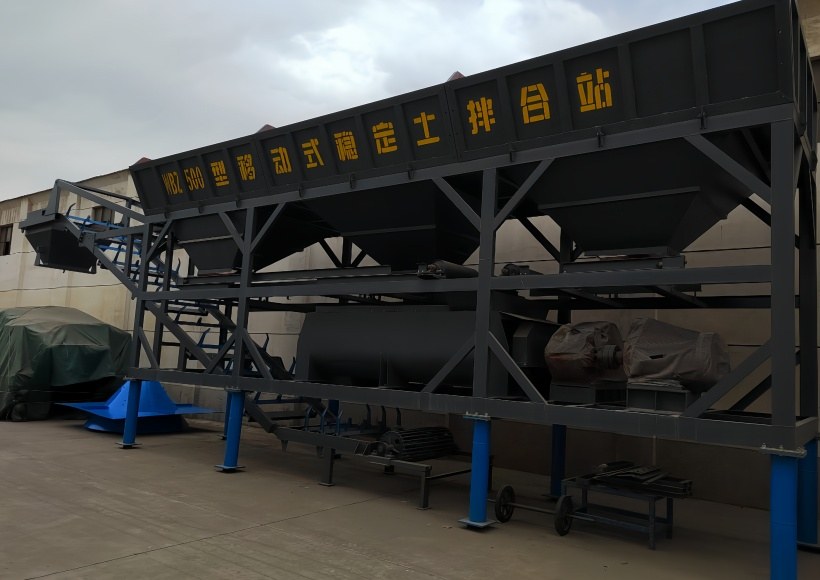
Highly integrated layout, roughly 40% less floor space
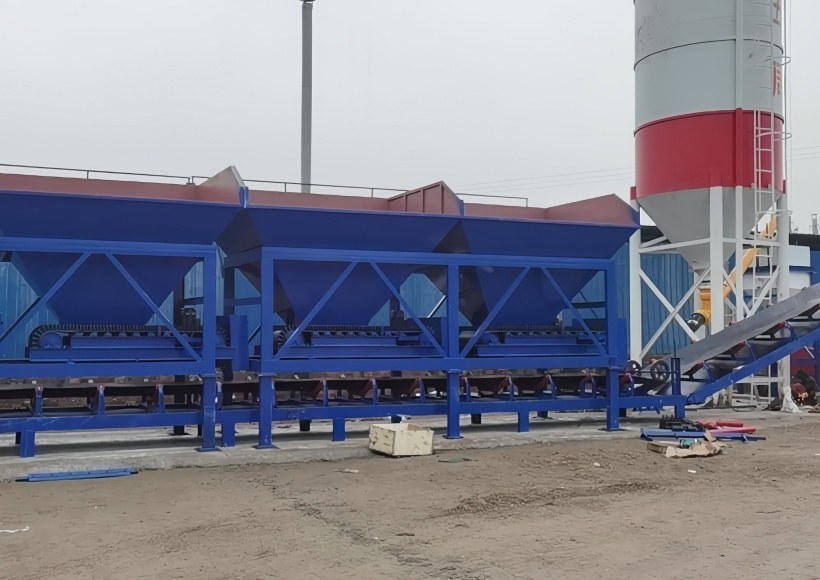
A conventional stabilized soil mixing plant spreads storage bins, metering scales, mixer, and control room across separate structures connected by conveyors. The WBZ integrated machine stacks these systems in a three-dimensional layout. Material storage sits above the metering system, and the mixer is mounted directly beneath, so the material flow uses height instead of horizontal distance.
The result is a footprint of about 500 m² or less — a saving of around 40% compared with traditional layouts. That number changes real decisions: a contractor working on a mountain highway shoulder or a narrow urban lot can now fit a full production line where a traditional plant would not go. It also cuts the land rental bill for the whole project duration.
Lower total cost: investment, operation, and labour
Cost savings on the integrated machine come from three separate lines, and they add up:
- Lower initial investment. The integrated structure eliminates most of the redundant steel frames, connecting conveyors, and separate foundations of a conventional plant. Purchase price and civil works both shrink.
- Lower operating cost. The high-precision metering system measures cement and aggregate within tight tolerances, so over-dosing is minimised and material is not wasted. Intelligent power management reduces idle energy draw between batches.
- Lower labour cost. The automated control system runs the whole batching, mixing, and discharging cycle from one operator station. Where a traditional line needs two or three people across shifts, the integrated machine is designed for single-person operation.
Strong and stable production capacity
The WBZ integrated machine uses a twin-shaft forced mixer, the same mixer architecture used on modern concrete batching plants. Twin-shaft mixing gives fast, uniform homogenisation even with high fines content. Single-unit production capacity reaches 300–600 t/h depending on configuration, which covers everything from small municipal jobs to continuous highway paving.
A PLC intelligent control system handles the full cycle: aggregate and cement weighing, recipe recall, mixing time, and discharge. Operators store multiple mix formulas and switch between them on the touch screen, and the system logs production data for quality records.
WBZ Integrated Stabilized Soil Mixing Plant: Main Technical Parameters
| Parameter | Specification | Notes |
|---|---|---|
| Production capacity | 300–600 t/h | Configurable for small, medium and large projects |
| Floor space | ≤ 500 m² | Over 40% saving versus traditional equipment |
| Mixing host | Twin-shaft forced mixer | Uniform mixing across varied mix ratios |
| Control system | Fully automatic + touch screen | Recipe storage and fault diagnosis |
| Installation cycle | 2–3 days | Against 7–15 days for conventional lines |
| Applicable materials | Cement-stabilized soil, fly ash, lime-stabilized soil | Wide compatibility with stabilized mixes |
Two numbers deserve a closer look. The 500 m² footprint figure assumes a standard configuration with 3–4 storage bins; a larger aggregate storage version will need more space, so confirm the layout drawing against your site before ordering. The 2–3 day installation figure applies when the foundation has been prepared in advance; the plant itself arrives as pre-assembled modules that bolt together, which is why the on-site phase is so short.
Integrated vs Conventional Stabilized Soil Mixing Plant: A Cost and Space Comparison
| Comparison Item | Conventional Mixing Plant | WBZ Integrated Mixing Plant |
|---|---|---|
| Floor space | 800–1,200 m² typical | ≤ 500 m² |
| Foundation works | Separate foundations per structure | Single integrated base |
| Installation time | 7–15 days | 2–3 days |
| Operators needed | 2–3 per shift | 1 per shift |
| Initial investment | Baseline | Typically 15–25% lower |
| Site relocation | Disassembly and re-erection | Module bolt-on relocation |
For contractors running short-term projects, the relocation advantage is often the deciding factor. The integrated machine is modular: when the job finishes, the units are unbolted, trucked to the next site, and re-assembled in days. A conventional plant often gets left behind because moving it costs nearly as much as a new build.
Typical Application Scenarios
The WBZ integrated stabilized soil mixing plant shows up in three recurring situations:
Highway construction with tight sites. Mountain highway widening projects in places like Yunnan and Guizhou run along slopes where flat land is scarce. The integrated machine fits into lay-bys and shoulder staging areas, keeping the material source close to the paving front and cutting trucking distance.
Urban road reconstruction. Central city worksites are surrounded by buildings and traffic. A compact plant reduces noise and dust exposure for residents and shortens the haul from plant to paver, which matters when the municipality limits truck movements during the day.
Municipal engineering with short deadlines. Airport extensions, water pipeline corridors, and utility projects often need stabilized soil for only a few months. The 2–3 day setup and modular relocation make the integrated machine economically viable for jobs that would not justify a permanent plant.
A real example: a highway shoulder job in Guizhou needed 400 t/h of cement-stabilized soil for a five-month paving season. The site had a 480 m² lay-by next to the pavement and a 60-day window before the first pour. A conventional line could not fit, so the contractor chose the WBZ integrated machine with four storage bins. Foundation was cast in one week, the plant was bolted together in two days, and a single operator ran both the mixing and the truck loading cycle for the whole season. The plant was then unbolted and trucked 200 km to the next project.
How to Choose the Right WBZ Configuration
Three questions decide which WBZ configuration fits a project, and they should be answered before any quotation:
- Daily production target. Multiply the paving plan by the working hours. A 300 t/h unit suits small municipal jobs; 400–500 t/h covers standard highway work; 600–800 t/h is for continuous, multi-front paving.
- Number of storage bins. Three bins are enough for cement, aggregate and water or lime; four bins add a second aggregate grade or fly ash without stopping the line to change material.
- Mix formula flexibility. If the project switches between cement-stabilized soil and lime-stabilized soil, choose the PLC version with more recipe slots and faster switchover.
- Site and relocation plan. Confirm the layout drawing against your site dimensions, and decide in advance whether the plant will move after the job. The modular bolt-on design makes relocation cheap, but only if the foundation is kept level and accessible.
| Model | Capacity | Best Fit |
|---|---|---|
| WBZ300 | 300 t/h | Small municipal and county road jobs |
| WBZ400–500 | 400–500 t/h | Standard highway and urban renewal projects |
| WBZ600–800 | 600–800 t/h | Continuous paving, multiple fronts, large contracts |
Maintenance and Relocation: Keeping the WBZ Plant Productive
An integrated stabilized soil mixing plant has fewer moving assemblies than a conventional line, but the maintenance discipline stays the same. The essentials:
- Daily: check mixer blade and liner wear, inspect the metering scale zero point, and clean the discharge chute.
- Weekly: grease the twin-shaft bearings and screw conveyor, check belt tension, and verify the dust removal system.
- Monthly: torque-check drive bolts, inspect the touch-screen control cabinet terminals, and recalibrate the weighing system with test weights.
- Relocation: keep the foundation level during operation, unbolt the modules in reverse order, protect the control cabinet and screw conveyor during transport, and re-level on the new base before bolting down.
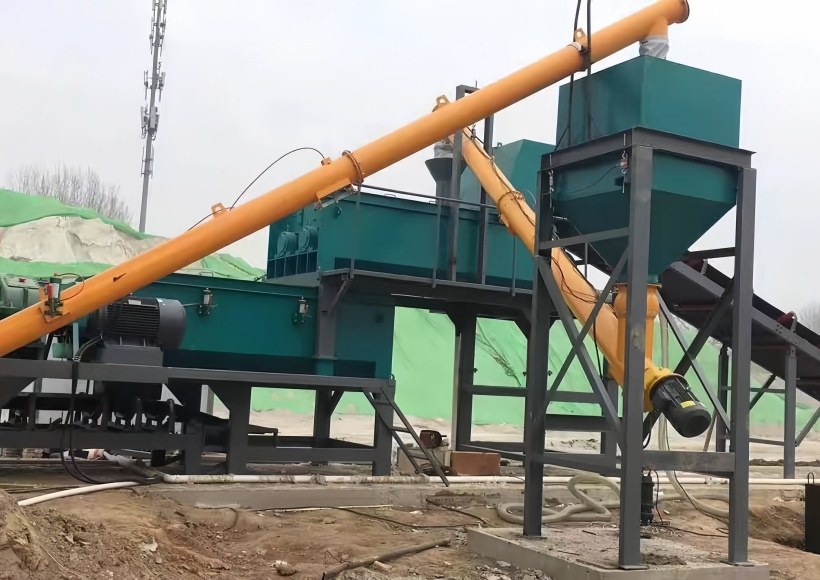
For the wider context on how stabilized soil plants are configured and serviced, the open soil stabilization overview on Wikipedia explains the material science behind the mix ratios these plants run.
FAQ: WBZ Integrated Stabilized Soil Mixing Plant
How long does installation actually take?
Under normal conditions, installation and commissioning complete within 2–3 days once the foundation is ready. That saves more than 60% of the time a conventional line needs, and it is the main reason short-deadline projects choose the integrated machine.
Does the integrated plant need a special foundation?
No. The all-in-one unit concentrates the load on a single base, which simplifies foundation design and significantly reduces civil engineering requirements compared with separate structures for each subsystem.
What materials can it process?
Cement-stabilized soil, fly ash stabilized soil, and lime-stabilized soil are the standard materials. Mix ratios are stored as recipes in the control system and can be adjusted between batches without recalibrating the line.
Can it produce at the same quality as a conventional plant?
Yes — quality is not traded for compactness. The twin-shaft forced mixer and the high-precision metering system are the same components used on full-size lines, so uniformity and accuracy are unchanged.
Is the plant environmentally compliant?
The fully enclosed structure and dust removal system keep emissions within environmental limits, which is one reason urban and near-residential sites approve it. If your local standard is stricter, confirm the dust removal configuration with the manufacturer before ordering.
Can one operator really run the whole line?
Yes. The PLC control system automates weighing, mixing, and discharging. The operator monitors from the touch screen and intervenes only for recipe changes or fault handling. For continuous paving shifts, one operator per shift is the standard setup.
What happens when the project moves to another site?
The plant disassembles into modules. After the job, the units are unbolted and transported, then re-assembled at the new location within a few days. Relocation cost is a fraction of what a conventional plant charges for a move.
What technical support does Tongxin Machinery provide?
Site planning, foundation layout drawing, installation guidance, operator training, and spare parts support are included. The service team also helps with the first commissioning on site.
Six Reasons to Choose Tongxin Machinery for a Stabilized Soil Mixing Plant
- Strong site adaptability — the integrated machine fits spaces a conventional plant cannot.
- Low initial investment and fast payback on short-term projects.
- Automated production with stable, reliable output across shifts.
- Over 20% reduction in material cost per ton through precise metering.
- Modular design for convenient site transfer.
- Environmentally friendly and energy-saving construction.
Conclusion: The Integrated Stabilized Soil Mixing Plant for Modern Sites
The WBZ integrated stabilized soil mixing plant solves a specific, growing problem: how to produce stabilized soil on sites where space, time, and budget are all limited. The 40% space saving, the 2–3 day installation, the single-operator control, and the modular relocation together change the economics of short- and medium-term road and municipal projects.
As a professional manufacturer of stabilized soil mixing plants, Tongxin Machinery supplies the WBZ all-in-one machine together with site layout drawings, capacity calculation, and operator training. If your project faces a tight site or a tight deadline, send us your site dimensions and daily production target — our engineers will confirm whether the integrated machine fits and what configuration matches your material mix.
Stabilized soil mixing station overview · HZS90 concrete batching plant manufacturer guide · Cement silo: types, sizing and cost · Screw conveyor for cement dosing