How can precise robotic welding improve the performance of concrete mixing equipment?
Dec 25,2025
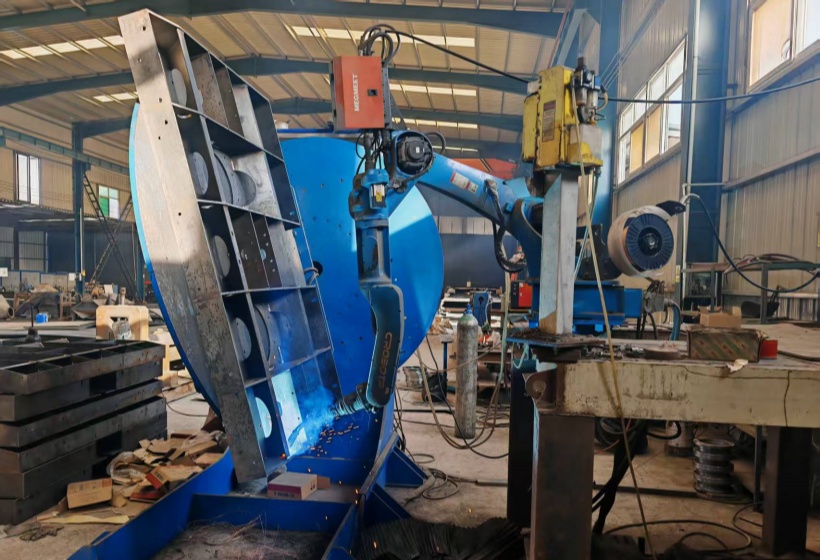
In the field of concrete mixer manufacturing, robotic automated welding technology is leading a profound technical transformation. By adopting intelligent welding systems, Tongxin Machinery—a leading domestic enterprise—has not only significantly enhanced the overall manufacturing quality of mixing drums but has also substantially extended the service life of transmission systems through optimized structural design. This technological innovation has set a new quality benchmark for the entire industry.
The Precision Advantage: From Artisanal Craft to Automated Excellence
Modern robotic welding represents a fundamental departure from traditional manufacturing approaches. Where manual welding introduced variability in large-drum fabrication, automated systems deliver consistent, measurable precision:
- Geometric Accuracy: Dimensional consistency improves significantly, with diagonal tolerance control enhanced from ±200mm to ±1.5mm
- Weld Integrity: Non-destructive testing shows defect rates decreasing to under 1%
- Structural Performance: Load-bearing capacity increases by approximately 20% in standardized testing
Operational Impact: This manufacturing precision translates directly to smoother equipment operation, with vibration reduction exceeding 70% and creating optimal conditions for power transmission components.
Engineering Synergy: How Manufacturing Precision Protects Power Systems
The relationship between drum fabrication quality and powertrain longevity represents a critical engineering consideration:
- Dynamic Balance: Unbalance reduction to approximately 15% of conventional levels
- Load Management: Impact forces on gearing decrease by approximately 40%
- Thermal Optimization: Bearing operating temperatures reduce by 15-20°C with improved lubrication stability
Performance Chain Reaction: Precision-engineered drums facilitate smoother material flow, reducing operational resistance by 15-22% and creating a sustainable cycle of "precision → efficiency → longevity" that protects the entire drive system.
Validated Performance: Data-Driven Quality Assessment
Comparative analysis demonstrates measurable improvements across multiple operational parameters:
Performance Metric | Conventional Welding | Robotic Welding | Improvement |
Dimensional Control | ±200mm | ±1.5mm | Precision Enhanced |
Weld Consistency | Variable | Highly Uniform | Quality Reliability |
Operational Resistance | Higher | 18% Reduction | Energy Efficiency | |
Maintenance Frequency | Quarterly | Annual | Cost Reduction |
Real-World Application: These laboratory-verified advantages translate directly to field performance enhancements observed in global operations.
Durability Validation: Documented Longevity in Global Operations
International operational data confirms extended service life across critical components:
Transmission System Enhancement
- Gearbox operational lifespan extended 150%+
- Drive motor bearing replacement cycles: 12-15 months
- Major component failure rates reduced 65%+
Documented Field Performance
- Continuous operation exceeding 30,000 hours without major overhaul
- Maintenance intervals extended to 800+ hours
- Unplanned downtime reduced by 80%
Extended Benefits: Enhanced durability translates to reduced operational interruptions and improved project scheduling reliability.
Holistic Efficiency: Thermal and Energy Performance Optimization
Precision manufacturing delivers comprehensive system benefits:
- Power system operating temperatures reduced 10-15°C
- Per-unit mixing energy consumption decreased 12-18%
- Overall equipment efficiency improved from 87% to 92%
Economic Translation: Performance gains systematically convert to measurable financial returns, creating compelling investment economics.
Lifecycle Economics: Total Cost of Ownership Analysis
Manufacturing precision fundamentally improves ownership economics:
- 3-year maintenance costs reduced by 60%+
- Equipment availability exceeds 98%
- Energy savings accelerate investment recovery
- Enhanced residual value in secondary markets
Value Creation Perspective: These economic benefits position automated welding technology as both technical advancement and strategic investment.
Strategic Advantages: Five Reasons for Global Adoption
International operators recognize multiple compelling benefits:
1. Enhanced Durability: Critical component lifespan extended 150%+
2. Reduced Operating Costs: Energy and maintenance expenses significantly lowered
3. Improved Reliability: Operational availability exceeds 98%
4. Superior Output Quality: Enhanced mix uniformity and consistency
5. Operational Flexibility: Consistent performance across diverse working conditions
Industry Evolution: Precision as Competitive Differentiation
As global infrastructure demands increase equipment performance requirements, automated welding technology establishes new industry standards while delivering tangible value throughout the equipment lifecycle.
Technical Considerations for Global Operators
Q: What specific advantages do robotically welded drums provide?
A: Enhanced dimensional accuracy, superior weld integrity, and improved dynamic balance directly translate to reduced operational resistance, extended equipment life, and minimized maintenance requirements.
Q: Which operational environments benefit most from this technology?
A: Commercial batching plants, major infrastructure projects, high-volume production facilities, and operations requiring exceptional equipment reliability across diverse conditions.
Q: What is the typical return on investment timeframe?
A: Most operations recover additional investment through efficiency gains within 12-24 months, with continuing benefits throughout the equipment lifecycle.
Conclusion: Engineering Excellence Creating Global Value
Robotic welding technology represents more than manufacturing advancement—it establishes new performance benchmarks for concrete equipment worldwide. From precision fabrication through extended operational life to reduced total cost of ownership, this engineering approach delivers measurable value across the global construction sector.
As infrastructure development accelerates internationally, equipment incorporating automated welding technology provides operators with competitive advantages through enhanced reliability, reduced operating costs, and improved project economics. Industry leaders continue to advance these technologies, driving sustainable improvements in equipment performance and creating lasting value for the global construction community.