
Buying concrete equipment is not like buying a hand tool. A batching plant or a twin-shaft mixer sits on your site for ten years or more, and the manufacturer behind it decides whether those years are profitable or painful. A machine that saves 8% on the invoice can cost you three times that in downtime, replacement parts and rework within the first two seasons. The reverse is also true: a supplier with disciplined welding, honest quality control and a spare-parts system that actually responds can keep your production line running while competitors are still waiting on a reply.
This guide walks through seven criteria to check before you commit to a concrete equipment manufacturer. Each section explains what to look for, why it matters in practice, and the question to put on the table. It ends with a one-page checklist you can take into negotiations, plus the questions buyers most often ask. The whole exercise takes about an hour of reading and a few direct questions to the supplier — and it has saved plant owners considerably more than that in avoided downtime.
Whatever your project size — a single mixer, a full batching line or a complete ready-mix setup — the same seven filters apply. Use them to compare two or three suppliers side by side, and the right concrete equipment manufacturer for your site becomes far easier to identify.
Manufacturing Process Transparency
The fastest way to judge a concrete mixer manufacturer is to see how the machine goes together on the line. Any factory can claim quality; few can show you the process behind it. Ask for a production-line walkthrough on video if you cannot visit in person, and note which steps they show willingly and which they skip.
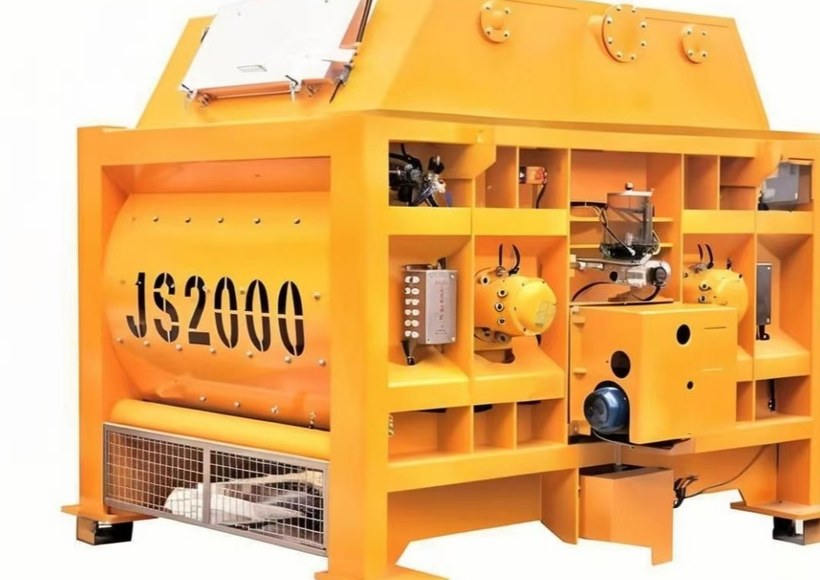
Start with welding. The drum, chassis and bracket of a twin-shaft mixer carry constant torque and vibration, and weld quality decides their working life. A manufacturer that relies on manual welding has a built-in variance problem: the same joint can be flawless on Monday and hollow on Friday, depending on the welder’s fatigue. Robotic welding removes that variable. Fixed speed, fixed angle, fixed parameters mean every weld is uniform, fully penetrated and defect-free. Deep penetration at critical stress points turns separate steel pieces into one continuous structure, which is the difference between a mixer that cracks in year three and one that runs past year ten.
Cutting accuracy matters just as much. Components cut with millimeter-level laser precision fit together with tight tolerances, which reduces abnormal wear, vibration and energy loss. Smooth, burr-free cuts also remove stress concentration points that shorten fatigue life. When steel utilization is optimized with intelligent nesting software, the same process also lowers material waste — a quiet signal of whether the factory manages cost honestly or skimps on the steps that do not show up in a photo. In practice, if a supplier cannot tell you how their steel is cut and welded, that silence is information.
Quality Control and Traceability
A concrete equipment manufacturer should be able to trace every key component back to its production batch. Look for a documented control chain that runs from steel plate to finished machine, with inspection points at each stage rather than a single final check. This is where a manufacturer’s quality management system shows up in practice — a factory that follows an audited quality standard will have the records to prove it.
Reference points worth asking about:
- How many quality control points exist between cutting and final assembly?
- Does each key component carry a traceability code?
- Is there a full-machine test before dispatch, or only a visual inspection?
- Who signs off the electrical cabinet, and against which standard?
A mature manufacturer will answer these directly, and most will show you the test records. In short, a factory that hesitates here is usually hiding an improvised process.
Product Range and Customization
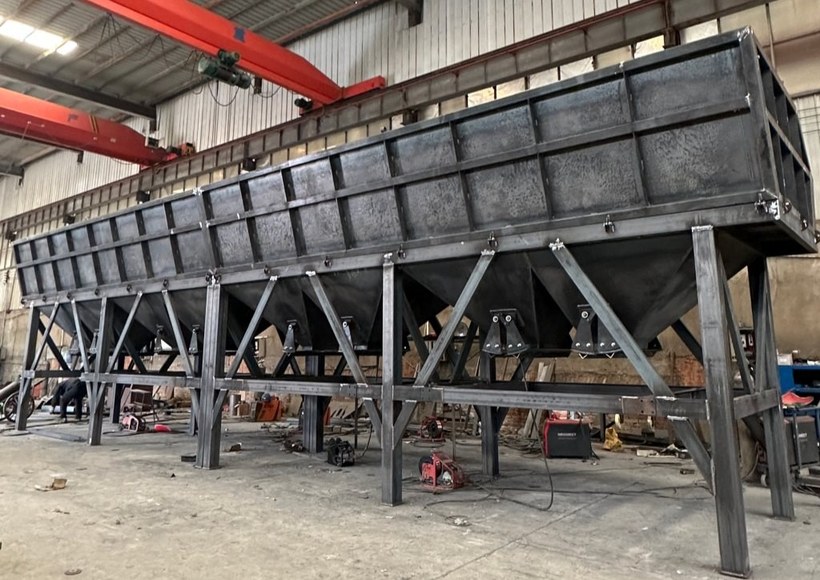
Your project needs a specific configuration, not a generic catalog unit. Check whether the manufacturer builds the full system or only assembles bought-in parts. A supplier with its own mixer, batcher, silo and control line can balance the whole plant properly. By contrast, one that buys components from multiple sources passes the compatibility risk to you.
Customization is where practical flexibility shows. Realistic examples include:
- Larger cement silo capacity for high-volume pours
- Specific electrical brands or voltage configurations for your market
- Corrosion protection for tropical or coastal sites
- Dust and noise control packages for urban projects
- Containerized or foundation-free layouts for remote locations
Ask for a written specification of what changes are possible and what they cost. A concrete equipment manufacturer that treats customization as a negotiation, not an engineering conversation, will be hard to work with later.
After-Sales Service and Spare Parts
Equipment fails. The question is not whether, but how quickly the manufacturer responds when it does. Before ordering, test the support system the same way you would test a sales team. For example, send a technical question about a wear part and time the reply. The team that answers in hours during the sales phase will answer in hours during year four of operation. The team that goes quiet will go quiet when your mixer is down.
Three specific things to verify:
- Spare parts inventory: are common wear parts stocked, and how fast can they ship? A 24-hour dispatch for routine parts is achievable for a serious exporter; if a manufacturer quotes “within weeks,” plan your maintenance calendar around that risk.
- Emergency channels: is there a direct line for urgent failures, and what is the response commitment?
- Warranty terms in writing: what exactly is covered, for how long, and what does the claim process look like? Verbal promises from a sales engineer are worthless; contract language is not.
Service network depth matters too. A concrete equipment manufacturer with a structured spare-parts supply chain — routine parts from stock, emergency channels for urgent cases — gives you a maintenance plan you can actually run. Ask who answers the phone outside business hours, and whether there is a documented escalation path.
For an exporter in particular, ask how the manufacturer handles service across time zones. A plant in Africa or the Middle East cannot wait for a Beijing working day to start before getting an answer.
Experience and Project References
Track record is the closest thing to a guarantee that exists in this industry. Ask for concrete examples: which countries has the manufacturer shipped to, and which project types are their reference base? A supplier who has delivered to ready-mix operations in Southeast Asia and highway projects in the Middle East has solved problems you will recognize. In contrast, one whose fleet has never left the home market is asking you to absorb that learning curve. The stronger the reference base, the easier it is to predict how a concrete equipment manufacturer will behave on your project.
Useful signals include:
- Highway, railway and ready-mix projects among their references, which stress equipment differently
- Repeat orders from the same region, which indicate that maintenance promises were actually kept
- Projects in climates similar to yours: tropical humidity, desert dust or high-altitude cold all expose different weaknesses
- A maintenance partnership or service record that goes back several years, not a single glossy installation photo
Be wary of a factory that shows only pictures of machinery and no sites. Real references have names, locations and dates. If the manufacturer will let you talk to a past buyer directly, treat that as a strong positive signal — most factories will not offer it because most factories cannot survive the conversation.
Documentation and Compliance
A concrete batching plant crosses borders, and documentation is part of the equipment. Confirm what the manufacturer delivers before shipment:
- Technical drawings and layout guidance for site preparation
- Operation and maintenance manuals in your language
- Electrical schematics and a clear compatibility statement
- Shipping and customs documentation in the required format
If the factory claims certification, ask to see it. A quality management certificate such as ISO 9001 means an external body audits the production process, which is a reasonable baseline for any serious concrete equipment manufacturer. For concrete itself, familiarizing yourself with the mixing and delivery standards referenced by ASTM helps you hold the supplier to the same technical language your inspectors will use.
Electrical compatibility deserves special attention. Voltage, frequency and local codes vary by country, and a responsible manufacturer provides basic specifications and wiring diagrams while requiring that a local qualified electrician confirms the connection. If a supplier claims their equipment works “everywhere, no questions needed,” treat the claim with suspicion.
Price vs. Lifecycle Cost
The cheapest quote is almost never the cheapest plant. Compare suppliers on total cost over ten years, not invoice price. That comparison has to include things the quotation page does not show: how often the mixer will stop, what a replacement set of wear parts costs and how long it takes to arrive, and how much energy the plant burns per cubic meter. It should also cover whether the machine can be relocated or expanded when your project grows.
| Cost component | What to compare |
|---|---|
| Purchase price | Quoted machine, freight and installation scope |
| Downtime cost | Design life of wear parts, weld quality, mixer reliability record |
| Maintenance cost | Spare parts availability, pricing, and whether parts fit without rework |
| Energy efficiency | Mixer drive efficiency, batcher cycle time, control system optimization |
| Residual value | Reputation of the brand for resale and site relocation |
Two practical notes. First, ask each concrete equipment manufacturer for the same specification and compare the answers side by side — a quote that is vague about motor power or silo capacity is a quote that expects you not to notice. Second, include the cost of changing suppliers later: a plant built around proprietary parts locks you into one vendor, while a plant built from standard, documented components stays negotiable. This is the same logic behind our ten-year cost analysis of bolted cement silos: the procurement decision that looks cheapest on paper often costs the most on site.
Quick Checklist Before You Order
| Criterion | Question to ask | Passing signal |
|---|---|---|
| Manufacturing process | How are critical welds and cuts made? | Robotic welding, laser cutting, documented parameters |
| Quality control | How many inspection points, and is there traceability? | Batch traceability codes and full-machine test |
| Product range | Do you build the complete system in-house? | Own mixer, batcher, silo and control line |
| Customization | Can you configure for my site and standards? | Written spec of available options and costs |
| Spare parts | How fast can routine parts ship? | Stocked inventory and 24-hour dispatch |
| References | Which countries and project types? | Named projects in climates like yours |
| Lifecycle cost | What is the ten-year cost, not the invoice? | Transparent TCO comparison, not just price |
Frequently Asked Questions
What should I check before buying from a concrete equipment manufacturer?
Verify four things in writing: the manufacturing process (welding and cutting method), the quality control chain (inspection points and traceability), the spare parts and warranty terms, and at least one reference project in a climate or market similar to yours.
How do I verify a concrete mixer manufacturer’s quality control?
Ask how many inspection points exist between steel cutting and final assembly, whether key components carry traceability codes, and whether the machine gets a full test before shipping. A serious concrete mixer manufacturer will show test records.
What documentation should a concrete equipment manufacturer provide?
At minimum: technical drawings, layout guidance, operation and maintenance manuals, electrical schematics with a compatibility statement, and shipping documentation. A local qualified electrician should confirm electrical compatibility against your country’s codes.
How long does delivery take for a custom concrete batching plant?
It depends on the configuration and the manufacturer’s production line. Standard models ship faster; custom builds take longer. A reliable supplier will give a written production schedule with milestones, not a vague “soon” — and a concrete equipment manufacturer that has produced your model before can usually quote more precise timing than one building it for the first time.
Should I choose the cheapest concrete equipment manufacturer?
Not on price alone. Compare total lifecycle cost: downtime, maintenance, energy and spare parts usually outweigh the initial price difference. The cheapest invoice often belongs to the most expensive plant over ten years.
What warranty and spare parts support should I expect?
Expect a written warranty covering manufacturing defects, a stocked inventory of common spare parts, and a stated dispatch time for routine parts. Emergency channels and a direct contact for urgent failures are important, especially for buyers outside the manufacturer’s home market.
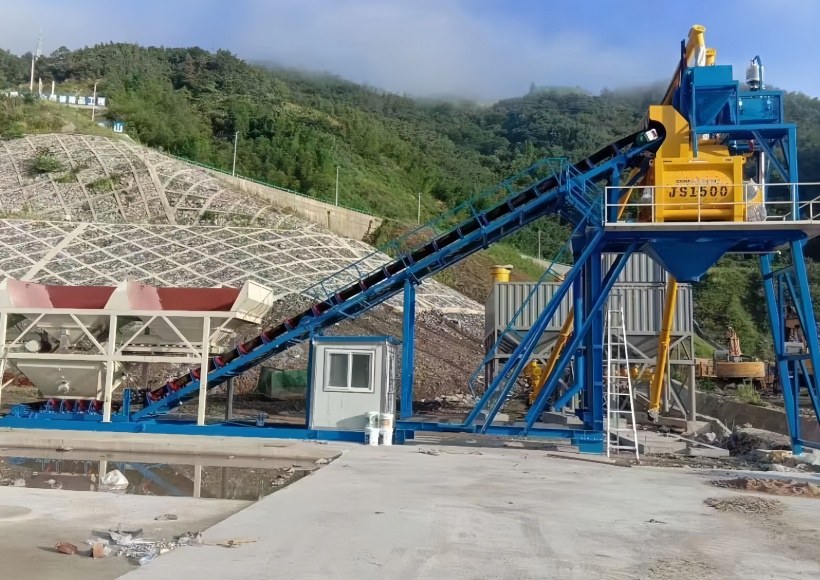
If you are evaluating suppliers for a new plant or an upgrade, our sales engineers can walk you through the specification, layout and ten-year cost picture for your site. Send your project details through the contact page, and you will get a written proposal rather than a brochure.
Price is the easiest variable to compare and the least useful one on its own. Service response, spare part stock and how fast a supplier answers a technical question decide what the plant costs across a decade. Why Txmixing is the preferred global partner sets out the criteria buyers apply when they weigh a Chinese supplier against European brands.