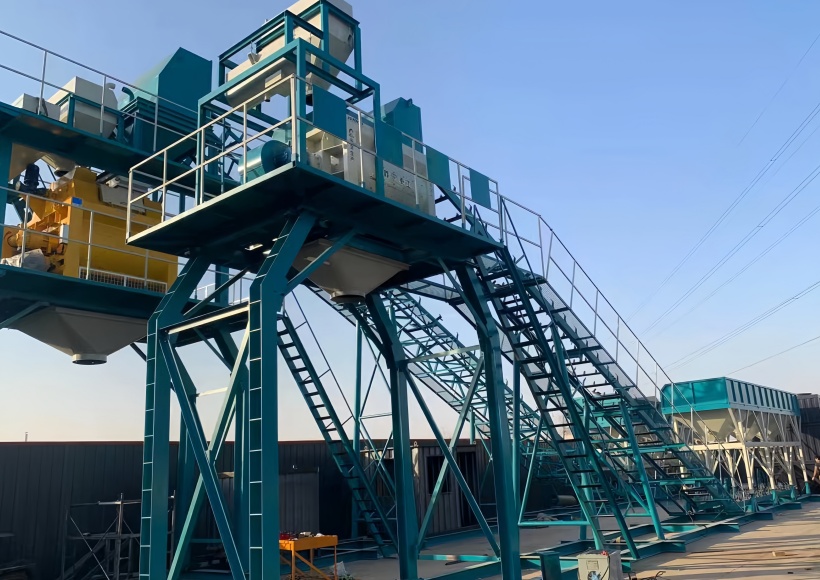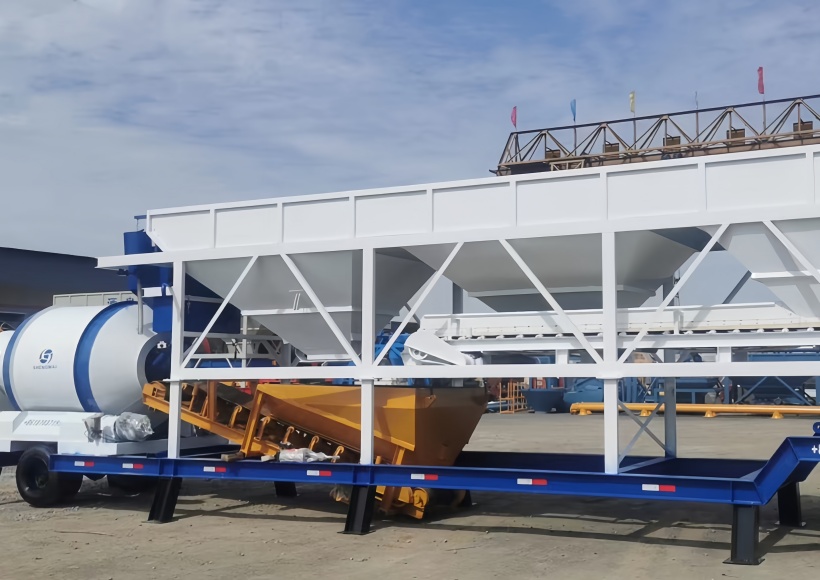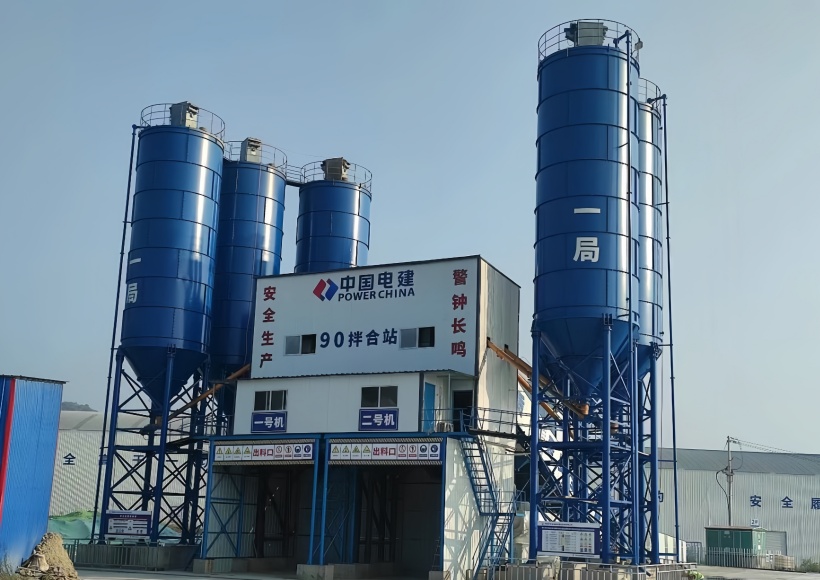









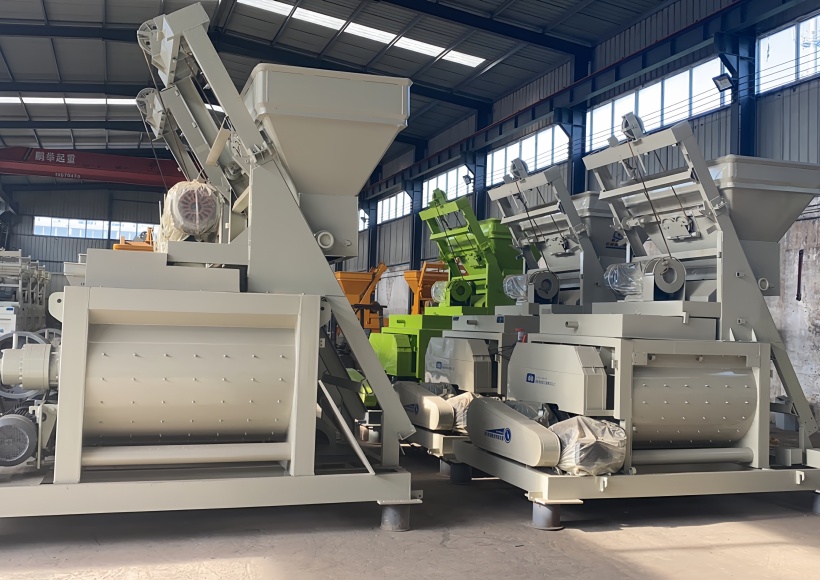
Forget the glossy brochures and the sanitized spec sheets. If you are operating a concrete batching plant, you already know that the mixer is not just the “heart” of your operation—it is the single point of failure that can bleed your margins dry. A breakdown during a 1000 m3 continuous pour doesn’t just cost you the batch; it costs you client trust, penalty fees, and grueling nights of jackhammering cured concrete out of a jammed drum.
When evaluating different twin shaft concrete mixer models, most procurement managers make the fatal mistake of shopping purely by batch capacity. They look at a JS1000 or a JS2000 and assume output volume is the only variable. As someone who has spent years dealing with cross-border equipment sourcing and tearing down failed mixing machines, I can tell you this: capacity is the least of your worries. The real battlegrounds are shaft-end sealing integrity, reducer torque limits under dry-hard concrete loads, and the abrasive reality of aggregate grading eating through your liner plates.
The Mechanics of Compulsory Mixing: Why Twin Shafts Fail
Before dissecting the specific tonnage of the JS series, we need to address the mechanical violence happening inside the drum. A twin shaft compulsory concrete mixer relies on two horizontally mounted shafts rotating in opposite directions. This counter-rotation creates a high-shear, boiling trajectory that forces cement, aggregate, and water into a homogenous state in under 60 seconds. High mixing efficiency is guaranteed, but the physical toll on the machinery is brutal.
The most critical vulnerability in any twin-shaft setup is the shaft-end sealing. The shafts must pass through the walls of the mixing drum to connect to the external gearbox and motors. If the multi-stage floating seal fails, highly abrasive cement grout will penetrate the bearing housing. Once grout enters the bearings, catastrophic failure is not a possibility; it is a mathematical certainty. You will hear a grinding howl, followed by a locked shaft, a tripped motor, and a ruined day. Premium manufacturers mitigate this with automated, centralized lubrication systems that maintain positive grease pressure inside the seal cavity. If the machine you are looking at uses manual grease points for the main shaft bearings, walk away.
Decoding the JS Series: Beyond the Discharge Volume
The JS series—spanning from the JS500 to the JS3000—is the industry standard for compulsory mixers. However, matching the machine to your production environment requires a cynical look at your actual material inputs and environmental variables.
JS500 and JS750: The Precast Factory Traps
The JS500 concrete mixer (0.5 m3 per batch) and the JS750 (0.75 m3 per batch) are fundamentally entry-level machines, often integrated into small and medium-sized HZS35 or HZS50 mixing stations. They are heavily utilized in small precast factories and temporary construction projects.
The trap here lies in the motor sizing. Small precast operations frequently run dry mix concrete or dry-hard concrete with very low slump to accelerate demolding times. Dry-hard concrete requires significantly more torque to shear than standard fluid commercial concrete. Many budget JS500 units come underpowered. When the blades hit a dry, heavy batch of light weight aggregate or coarse crushed stone, the planetary gearbox takes the brunt of the shock load. If you are producing dry-hard precast elements, you must over-spec your gearbox and ensure the motor has adequate thermal protection, or you will be replacing drive components quarterly.
JS1000: The Commercial Concrete Benchmark
Stepping into the 1.0 m3 territory, the JS1000 concrete mixer is where things get serious. This unit is the workhorse of the HZS60 concrete batching plant and represents the baseline for reliable commercial ready mix operations. At this scale, the twin shaft compulsory mixer must handle continuous, back-to-back batching without thermal failure.
When sourcing at this tier, the supplier’s engineering pedigree becomes obvious. For instance, Tongxin Machinery engineers their JS1000 models with advanced cycloidal pinwheel reducers or heavy-duty planetary gearboxes that distribute torque evenly across the shafts. A massive issue at the 1 cubic meter scale is sticky material buildup on the main mixing shaft. If the blade arrangement angle is off by even a few degrees, you will end up with dead zones in the drum. This not only increases your short mixing time arbitrarily but also throws off the homogeneity of the aggregate concrete mix. A properly calibrated JS1000 should clean itself during the discharge cycle, leaving minimal residue on the high chromium cast iron blades.
JS1500 and JS2000: The Heavyweight Margin Killers
If you are looking at the JS1500 (1.5 m3) or the JS2000 (2.0 m3), you are likely outfitting a large concrete batching plant (HZS90 to HZS120) for massive infrastructure projects: dams, highways, or high-rise foundations. Here, we aren’t just talking about mixing cement; we are talking about maintaining a highly synchronized material flow involving bolted cement silos, screw conveyors, and pneumatic aggregate batching machines.
The unique pain point for these massive twin shaft concrete mixer models is the discharge system. At 2.0 cubic meters per batch, dumping the load quickly and cleanly into a concrete mixer truck is critical for cycle time. Many buyers blindly accept standard pneumatic discharge doors. However, if your plant operates in freezing environments or deals with high humidity, compressed air lines can freeze or experience pressure drops. A sluggish pneumatic door will bottleneck your entire mixing system. For heavy-duty models like the JS2000, investing in a hydraulic discharge system is non-negotiable. It provides relentless, smooth force regardless of ambient temperature, preventing the door from jamming open and spilling expensive mortar and aggregate all over the loading bay.
Furthermore, the sheer kinetic energy inside a JS2000 requires extreme structural rigidity. The chassis and the drum shell must be welded from high-yield carbon steel. If the compact structure is compromised to save weight, the rotational vibration will eventually tear the mounting points right off the foundation.
The Reality of Wear Parts and Maintenance
Let’s talk about the dirty secret of the concrete mixer machine industry: aftermarket parts. The initial purchase price of a twin-shaft concrete mixer is just the down payment; the real cost is measured in replacement liners and blades over its service life.
Concrete is basically liquid sandpaper. Standard cast iron liners will erode within weeks if you are running highly abrasive crushed quartz or river rock. You must demand Ni-Hard or high-chrome alloy wear plates. Yes, they cost more upfront, but they extend the service life exponentially. When evaluating twin shaft concrete mixer models, physically inspect how the liners are bolted in. Can your maintenance crew swap a worn liner plate in under an hour using standard hand tools, or does it require a welder and a full shift of downtime? Easy maintenance and a reasonable structure are what keep a commercial concrete plant profitable.
This is exactly why partnering with a supplier who understands factory floor realities is critical. A vendor like Tongxin Machinery doesn’t just ship a mixer product and disappear; they provide a comprehensive after-sales service pipeline, ensuring that specialized components like shaft seals, specific gear ratios, and high-chrome blades are available when you hit your 5,000-hour maintenance window.
Automation and Future-Proofing Your Plant
We can’t ignore the shift towards a high degree of automation. The days of an operator eyeballing the mix consistency are over. Modern JS series twin-shaft mixers must integrate seamlessly with PLC-based batching software. This means precise moisture probes inside the drum, amp-draw monitoring on the main motors to gauge concrete slump in real-time, and automated washout cycles.
Low energy consumption and low noise are also becoming regulatory mandates rather than optional perks, especially for urban ready-mix plants. Advanced twin-shaft designs achieve this not by slowing down, but by optimizing the fluid dynamics inside the drum, ensuring that every kilowatt of energy is used for shearing mortar, not vibrating the chassis.
Ultimately, choosing between a JS750 and a JS1500 is less about the specs on paper and more about understanding the specific tortures your operational environment will inflict on the machinery. Don’t buy a mixer; buy a continuous, reliable flow of high-quality concrete. Analyze your aggregate, understand your torque requirements, mandate automated lubrication, and never compromise on shaft sealing technology.
Frequently Asked Questions
1. Why does my twin shaft concrete mixer keep leaking grout from the shaft ends?
Because your shaft-end seals are either shot or starved of grease. It’s that simple. In 90% of the teardowns I do, the plant operator ignored the automated grease pump, or the grease lines got clogged with hardened dust. When positive grease pressure inside the seal cavity drops, the abrasive cement slurry forces its way in. Once it hits the bearings, it’s game over. Stop patching it up. Tear down the housing, replace the floating seals, switch to an NLGI Grade 2 lithium grease, and actually check the pump reservoir daily.
2. Can I use a JS500 mixer for producing dry-hard precast concrete?
You can, but you’re asking a lightweight fighter to step into the heavyweight ring. Dry-hard zero-slump concrete is notoriously brutal to mix—it essentially acts like a solid wall against the blades. A standard off-the-shelf JS500 will likely trip its motor breakers constantly and eventually shred its planetary gearbox under the massive shear stress. If you insist on using a 500-liter drum for precast, demand a custom build with an oversized motor and a heavy-duty reducer. Otherwise, expect to be replacing drive components before the year is out.
3. What is the actual difference between pneumatic and hydraulic discharge doors?
It comes down to reliability versus budget. Pneumatic uses compressed air—it’s cheap and fine for a small indoor plant. But if you operate in cold weather, condensation in the air lines freezes, the pressure drops, and your door jams half-open while a two-ton batch cures inside the drum. A hydraulic system pushes incompressible oil. It doesn’t care if it’s freezing outside, and it doesn’t suffer from pressure lags. For anything over 1.5 cubic meters (like a JS1500 or JS2000), pneumatic is a massive liability. Pay the premium for hydraulic.
4. How often should I replace the mixing blades and liner plates in a JS1000?
Anyone who gives you a flat timeline in months is lying to you. It depends entirely on what you’re throwing into the drum. Pumping standard round river rock for fluid ready-mix? High-chrome liners might survive 60,000 batches. Running sharp, abrasive crushed granite or recycled concrete aggregate? You’ll be lucky to hit 25,000. Here is the only metric that matters: get inside the drum with a feeler gauge. The moment the clearance between the blade tip and the liner exceeds 8mm, your mixing efficiency tanks and wear accelerates exponentially. Swap them out immediately.
5. Why are cycloidal reducers preferred over standard gearboxes in large concrete mixers?
Think about the sheer mechanical shockload of a skip hopper dumping 2,000 kg of raw gravel directly onto static mixing blades. A standard parallel-shaft gearbox relies on one or two gear teeth to absorb that entire impact. They literally snap. Cycloidal pinwheel reducers, on the other hand, distribute that massive torque spike across dozens of internal contact points simultaneously. They don’t just transfer power; they absorb the mechanical violence of heavy batching. If you’re running a high-capacity plant, standard gearboxes are a ticking time bomb.