








I once watched a contractor in Mindanao lose 11 days of pour because his newly imported PLD1200 couldn’t clear the discharge height of a JS750 twin-shaft mixer he’d sourced separately. The batcher was spec’d correctly on paper. The mixer was spec’d correctly on paper. Nobody had checked the interface. That’s the kind of grief a clean spec sheet won’t save you from – but a field-tested selection process will.
This guide isn’t a brochure. It’s the checklist I wish someone had handed me before I spent seven years moving Concrete Batching Plant equipment out of Shenzhen and into job sites from Luzon to Lagos. We’ll cover PLD batching machine specifications the way a plant engineer actually needs them – with the failure modes, the cost traps, and the dimensional interfaces that decide whether your batch plant runs or bleeds money.
What a PLD Batcher Actually Does?
Strip away the marketing copy and a PLD series concrete batching machine is an aggregate weighing and dosing module. It sits between your stockpile and your concrete mixer, and its only real job is to dose the right mass of sand, gravel, and supplementary aggregate into the mixer at the right time. Everything else – the digital display, the controller, the belt conveyor, the batch compartments – exists to make that one job repeatable with high precision. Get it wrong and you don’t produce high-quality concrete. You produce expensive fill.
Here’s what most buyers miss: the “accuracy” of a PLD isn’t a single number. It’s a chain. Load cell, junction box, controller, batch gate actuator. Any weak link and your ±2% aggregate tolerance drifts to ±5% before lunch. I’ve seen plants in humid coastal environments lose calibration inside a week because someone bought batchers with unsealed load cells to save $400. On a 60 m³/hr line, that cement over-dose eats your margin before the first truck leaves the gate.
The Weighing Chain You’re Actually Buying
When you read a PLD batching machine specification sheet, the line that says “electronic weighing system” tells you almost nothing. What you need to ask the supplier, in writing:
- Load cell IP rating. Minimum IP67 for outdoor batch plants. IP65 will fail in monsoon season – I’ve replaced three sets in a single quarter on a Luzon site.
- Load cell count per weighing hopper. Three-cell hoppers tip under asymmetric load. Four-cell is the industry floor for serious work.
- Controller batch algorithm. Must include drop-value – in-flight – compensation. Without it, your last gate open dumps material you didn’t pay for, typically 2-4% aggregate overrun per batch.
- Calibration access. Can you zero and span without a factory tech on site? If not, you’ll pay for a service call every quarter.
If the supplier can’t answer those four questions in writing, walk. Tongxin Machinery publishes full load cell specs on their PLD series sheets – that’s the baseline, not a luxury.
Where PLD Fits in Plant Architecture?
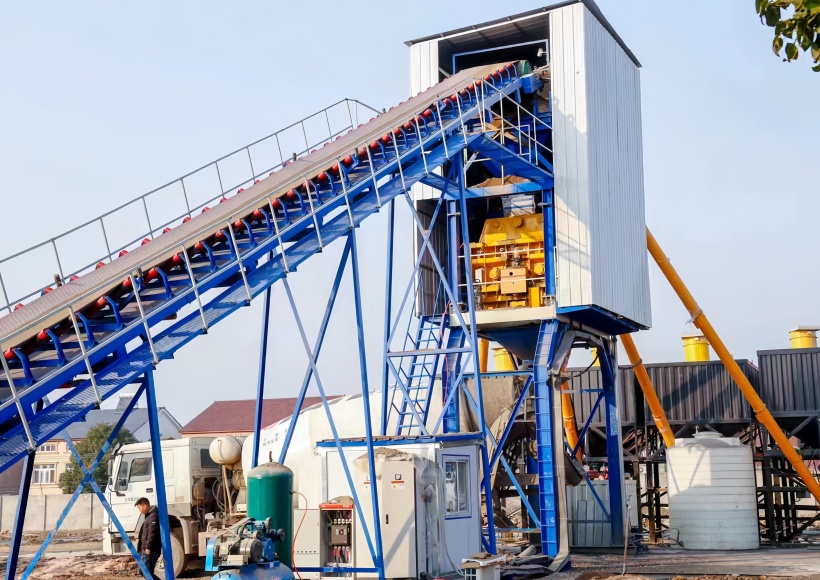
A PLD series concrete batching machine is not a concrete mixing plant. It’s the aggregate front end of one. The full architecture runs: storage bins or star batcher, PLD weighing module – the batching system – belt conveyor or skip hoist, concrete mixer, discharge. Your entire material handling chain and concrete mixing station moves at the speed of this sequence. Get it wrong and you’ll bottleneck a 200,000 plant on a 4,000 conveyor. I’ve seen it happen twice – once in Vietnam, once in Ghana. Same mistake, different continent.
Sizing the Machine to the Job
Most selection guides go soft here. They tell you to “match capacity to project scale” and leave it there. Let me give you the actual math.
Production Capacity – The Real Numbers
PLD model numbers track nominal batch capacity in liters of accumulated aggregate per cycle. A PLD800 nominally batches 800 L. A PLD1200 batches 1200 L. A PLD1600 batches 1600 L. But the theoretical productivity on the spec sheet assumes a 60-second cycle and a mixer that swallows the full batch in one drop. Neither assumption holds on a real construction site with various types of aggregate and real-world delays.
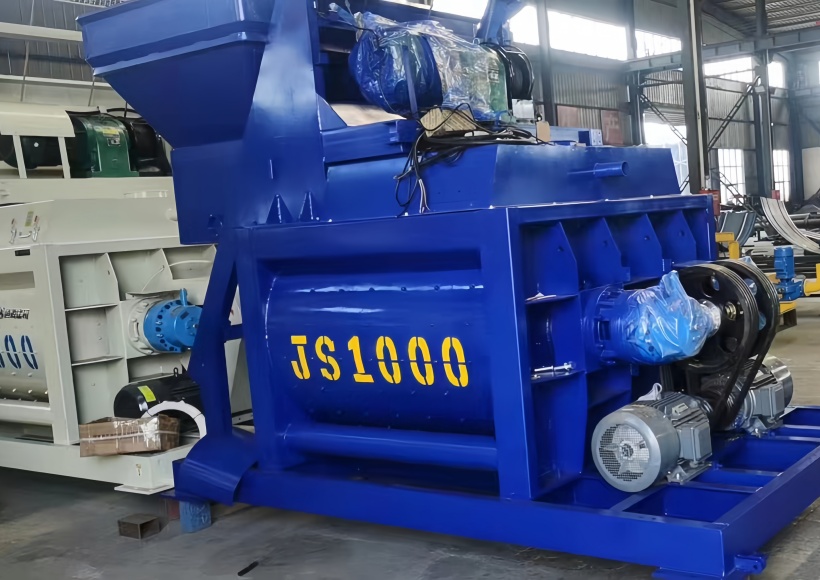
For a PLD1200 feeding an HZS35 concrete batch plant with a JS750 twin-shaft mixer, real-world throughput sits around 35 m³/hr, not the 60 m³/hr the brochure quotes. That 60 m³ figure is the aggregate dosing ceiling – it says nothing about mixer cycle time, discharge time, how fast you can produce concrete, or truck turnaround. When a client tells me they need 50 m³/hr for a slab pour and they’re shopping a PLD1200, I tell them to either drop the target or step up to a PLD1600. There’s no third option that ends well.
Compartment Count: 3-6 Materials
PLD series batchers come in 3, 4, or 6 compartment configurations. The spec sheets call this “3-6 materials” capability. What it actually means on the ground:
- 3 compartments. Sand plus two aggregate sizes. Fine for residential concrete, C25 and below. Most common on small stationary batching setups.
- 4 compartments. Sand plus three aggregate sizes, room for a supplementary bin. Commercial work, C30-C40. This is the sweet spot for most concrete producers.
- 6 compartments. Full mix design flexibility – lightweight aggregate, recycled crushed concrete, dedicated additive bin. Infrastructure construction projects and high-performance concrete for road construction and hydropower.
Buy more compartments than you need and you’re paying for steel you’ll never load. Buy fewer and you’re locked out of mix designs the moment a spec changes. My rule: if there’s any chance the job moves from building concrete to road or hydropower work inside three years, buy the 4-bin minimum. The retrofit cost of adding a compartment later is double the factory option.
PLD1200 – Worked Example for HZS35 Plants
The PLD1200 is the workhorse of small-to-mid concrete mixing plants. It’s the mixing machine most contractors actually buy, which makes it the one worth pulling apart.
Technical Specifications That Matter
| Parameter | PLD1200 Field Value |
| Nominal batch capacity | 1200 L accumulated |
| Matching mixer | JS750 twin-shaft (HZS35 plant) |
| Compartment count | 3 or 4, specify at order |
| Weighing accuracy | ±2% with sealed load cells, calibrated quarterly |
| Discharge height | 2300-2500 mm, confirm against mixer feed opening before PO |
| Belt conveyor width | 650 mm minimum for clean sand flow |
| Control system | PLC with drop-value compensation, digital display, optional remote control operation |
That discharge height number is the one that bit me in Mindanao. Memorize it. Write it on the PO.
Installation Realities
Foundation. The PLD1200 needs a heavy-duty reinforced concrete pad rated for the machine dead weight plus a full aggregate load in every compartment simultaneously. I’ve seen contractors pour for the empty machine weight and crack the pad when all four bins loaded wet sand. Budget for a 200 mm reinforced slab with perimeter drainage. Aggregate dust plus rainwater turns into a slurry that will rot your load cell cables inside a season.
Conveyor access. Leave 1.2 m of clearance on the belt side for tracking adjustment and belt replacement. A PLD1200 with a conveyor you can’t service is a PLD1200 you’ll shut down every three weeks. On modular and mobile concrete batching plant builds, this clearance is the first thing that gets sacrificed – don’t let it happen.
Power. Single control cabinet, typically 380V 3-phase, 15 kW connected load (roughly 20 horsepower). Confirm your site transformer holds voltage within ±5% under startup inrush. Voltage sag resets the controller mid-batch and you lose the cycle. For remote locations with unstable grid power, specify a voltage stabilizer or plan for generator-only operation with proper sizing.
The Selection Checklist Nobody Hands You
Before you sign a PO on any PLD concrete batching machine, run this list. To choose the right batch plant, you need the right batcher. Eight items. Miss one and you’ve bought a problem.
- Discharge height vs. mixer feed opening. Get both numbers in writing. This is the #1 integration failure internationally.
- Load cell IP rating and service access. IP67 minimum. Removable without dismantling the hopper.
- Controller batch algorithm. Must include drop-value compensation. Ask to see the parameter screen.
- Compartment count vs. 3-year mix design horizon. Don’t size for today’s pour – size for the spec change you don’t see coming.
- Foundation spec. Reinforced slab, drained, rated for full-load dead weight across all bins.
- Spare parts lead time. Load cells, batch gate cylinders, controller cards. If the answer is “we ship from factory, 6-8 weeks,” buy a critical spares kit on day one. No exceptions.
- Commissioning support. On-site calibration by the supplier’s engineer – not a video call. Automatic batching equipment and automated batching systems that aren’t calibrated on site are a guess, not a measurement.
- Power conditioning. Voltage stability within ±5% or specify a stabilizer. Computer control and automation systems don’t forgive dirty power.
Upgrading for High-Volume Production
When a client outgrows a PLD1200, the temptation is to bolt on a bigger batcher and keep the same mixer, same conveyor, same cement silo. That works about as well as putting a V8 in a Corolla chassis. The production line moves at the speed of its slowest component.
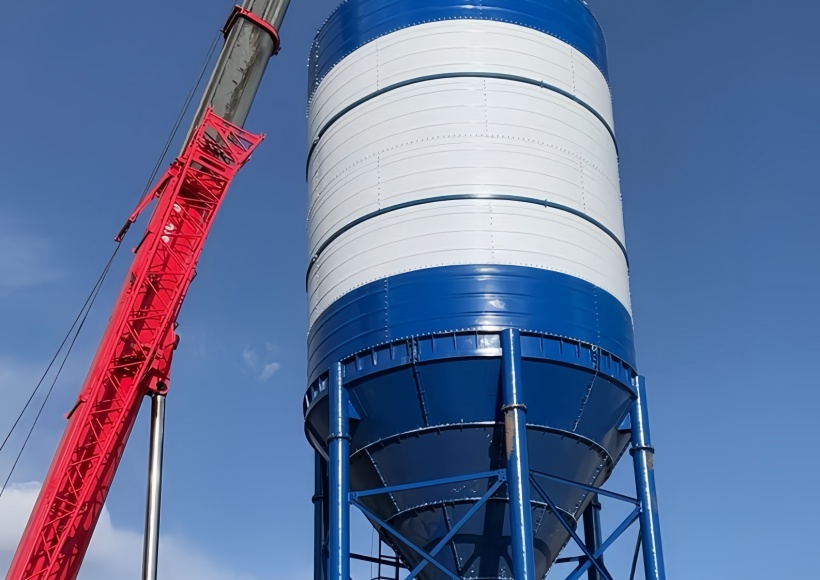
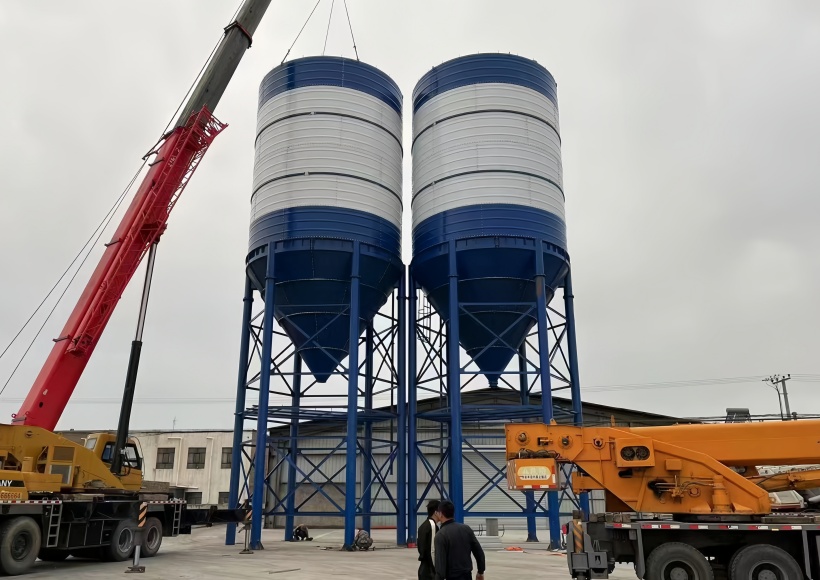
Real high-volume upgrades are systemic. A PLD1600 or PLD2400 stepping up to feed an HZS60 or HZS90 Concrete Batching Plant needs a matched twin-shaft mixer with horizontal shaft design, a wider belt conveyor (800 mm minimum), and cement silo capacity that won’t force mid-pour refills. I worked an upgrade in 2022 where the client kept a 50-ton cement silo on a 90 m³/hr line. They spent more time waiting for bulk tanker deliveries than on concrete production. The silo was the bottleneck, not the batcher.
If you’re moving into road construction or hydropower where large volumes of continuous pour are non-negotiable, spec the plant for 120% of your peak demand. Concrete producers who spec to 100% always lose the last pour of the day to a truck queue. The 20% headroom costs 15% more on capex and saves a missed-pour penalty on the first big job – profitability on these jobs is decided by uptime, not by the spec sheet’s theoretical ceiling.
For large-scale infrastructure with widely used mix designs, also weigh whether a stationary concrete batching plant or a mobile concrete batching plant with skid-mounted mobility serves you better. Mobile units trade some production capacity for maneuverability – the right call for remote locations and multi-site contractors, the wrong call for a single high-volume fixed plant. Match the architecture to the work, not the other way around.
Frequently Asked Questions
Q1: What discharge height do I need for a PLD1200 feeding a JS750 mixer?
Minimum 2300 mm, ideally 2500 mm. The JS750 feed opening sits at roughly 2100-2200 mm. You need clearance for the discharge gate swing plus a safety margin. Below 2300 mm and you’ll be modifying the frame on site – which voids the warranty.
Q2: How often should I calibrate the electronic weighing system?
Quarterly minimum, monthly in humid or high-vibration environments. Calibration drift of 1% per month is normal on unsealed load cells. On a C30 mix, that’s roughly 3 kg of cement per cubic meter – enough to fail a slump test.
Q3: Can a PLD800 batcher handle 6 aggregate compartments?
No. The PLD800 frame supports 3 compartments maximum. If you need 6-bin dosing, step up to a PLD1600 or PLD2400. The frame width and weighing hopper capacity won’t support 6 bins on an 800-class machine.
Q4: What’s the realistic throughput of a PLD1200 on an HZS35 plant?
Approximately 35 m³/hr, not the 60 m³/hr on the spec sheet. The 60 m³ figure is the aggregate dosing ceiling only. Real output is gated by the JS750 mixer cycle time (approximately 72 seconds per batch including discharge) and truck turnaround.
Q5: Do PLD series batchers work in remote locations without stable grid power?
Yes, but specify a voltage stabilizer (minimum 15 kVA for a PLD1200) or plan for generator-only operation with a genset rated at 1.5× the connected load. Controller cards are sensitive to voltage sag – without conditioning, you’ll lose batches on every generator switchover.