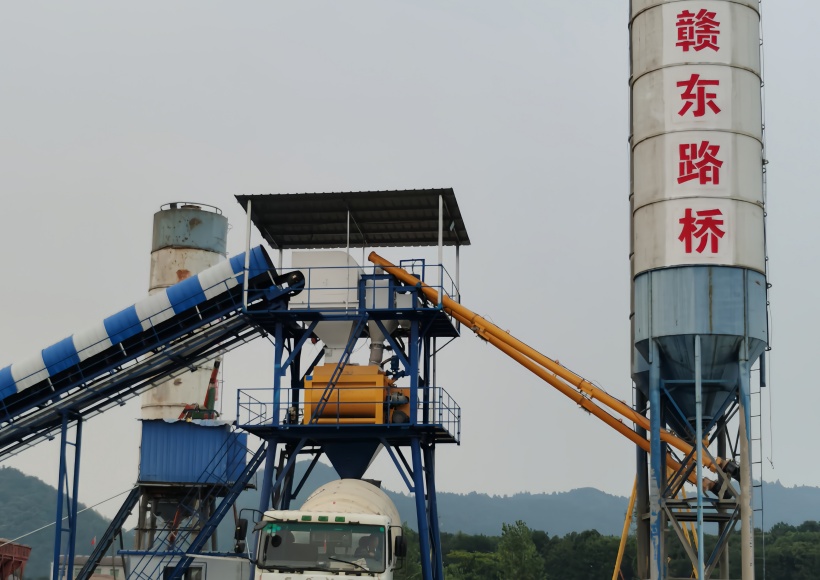









I watched a contractor in Inner Mongolia burn through ¥4.2 million on a cement stabilization project that should have cost ¥2.8 million. The culprit wasn’t material waste or labor overruns – it was a mismatched plant configuration running high-plasticity clay through dosing screws calibrated for sandy loam. By the time QC reports came back showing unconfined compressive strength at 1.2 MPa instead of the specified 3.0 MPa, they’d already laid 6 kilometers of subgrade that had to be milled and re-laid.
That’s the kind of failure mode that doesn’t show up in a market analysis report.
The Soil Stabilization Market Size Is Real – But the Numbers Hide Operational Reality
The global soil stabilization market sits at roughly 27 billion and is climbing toward 41 billion by 2030, depending on which analyst you trust. Growth is driven by infrastructure investment – highway expansion, rail corridors, industrial park development – all demanding better subgrade performance on marginal soil conditions. The demand for soil stabilization isn’t the question. The question is whether your plant configuration and material strategy actually capture that opportunity or bleed margin into rework.
Here’s what the market growth headlines miss: a significant chunk of stabilization budget gets eaten by plant downtime, material mismatch, and dosing inaccuracy. I’ve audited projects where 15-20% of the total stabilization budget went to fixing problems the mixing plant itself created – segregation in the stabilized soil mixtures, inconsistent cement content across batches, moisture deviation that turned a 7-day cure into a 14-day wait while the project bled schedule penalties.
The soil stabilization market size tells you the pie is growing. Market trends – the shift toward polymer-based soil stabilization, the tightening of fly ash supply, the push for lower carbon footprint construction materials – tell you the ingredients are changing. Neither tells you how to slice it profitably. That comes down to the plant, the operator, and the material strategy, in that order.
Breaking Down the Real Numbers: What a Mixing Plant Actually Costs
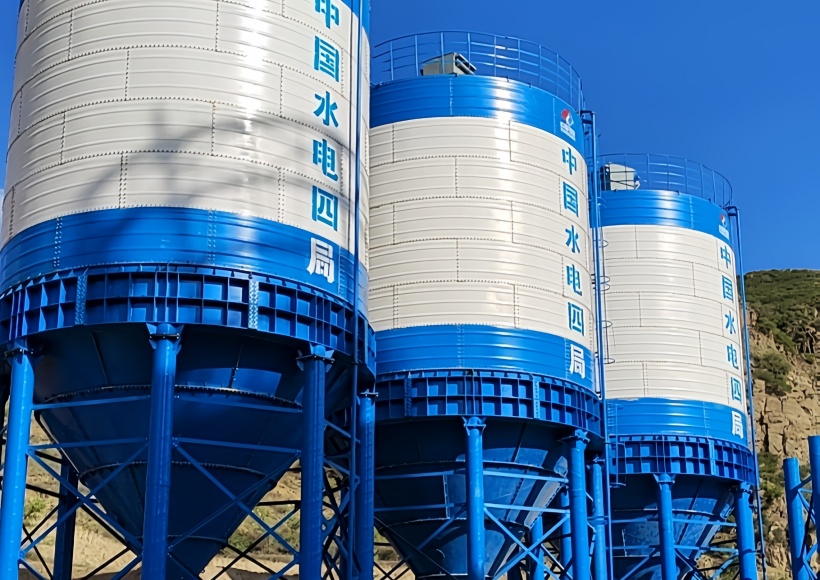
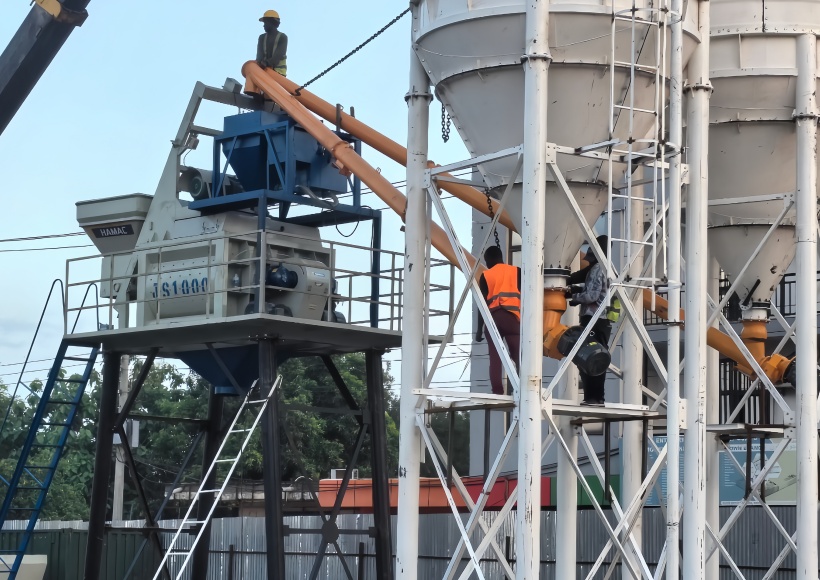
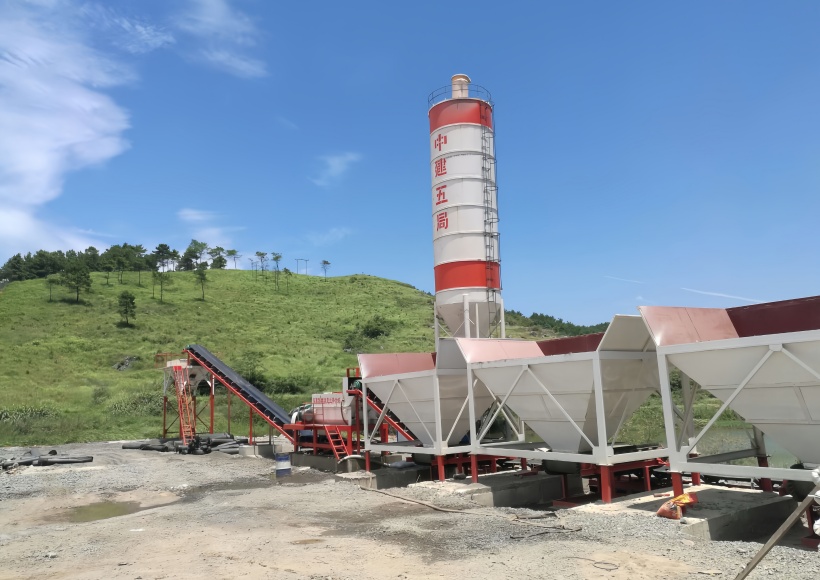
Let’s talk about stabilized soil mixing plant cost without the brochure spin. A mid-capacity continuous mixing plant (300-500 t/h) runs anywhere from 120,000 to 350,000 depending on automation level, dosing precision, and whether you’re buying from a Tier-1 European brand or a proven Chinese manufacturer like Tongxin Machinery. Add another 15-25% for site preparation, foundations, power supply, and environmental compliance – emission controls, dust collection, water recycling.
Capital Cost vs. Total Cost of Ownership
The sticker price is maybe 40% of your total cost of ownership over a five-year horizon. Here’s where the money actually goes:
Stabilization materials consumption. Cement, lime, and fly ash make up 50-60% of your operational spend. A plant with poor dosing accuracy – ±5% versus ±1% – doesn’t sound like much until you run the math on a 200,000-ton project. At 5% cement content, that’s 10,000 tons of cement. A ±5% deviation means you’re over-dosing by 500 tons. At 80/ton delivered, that’s 40,000 vanished into the subgrade with zero additional soil reinforcement benefit. Multiply that across a road construction season and you’ve funded a second plant.
Energy and water. Mixing, conveying, and dust collection consume 8-12 kWh per ton of stabilized soil produced. Plants with variable-frequency drives and recovered-water systems cut that by 20-30%. Most contractors I’ve worked with don’t meter energy per ton – they pay the bill and wonder why margins are thin. At 800 tons a day, that ignorance costs $60-90 daily.
Maintenance and wear parts. Pugmill liners, mixing blades, conveyor belts, and dust collector bags. A plant running abrasive coal fly ash will eat through liners 40% faster than one running cement-only stabilization. Budget 3-5% of capital cost annually for wear parts. Don’t let anyone tell you it’s less – I’ve seen the maintenance logs.
Dosing Precision: The Hidden ROI Lever
A well-configured Stabilized Soil Mixing Machine pays for the difference in dosing precision alone within the first project cycle. I’ve seen data from three contractors who switched from fixed-ratio batch plants to variable-rate continuous systems designed for soil stabilization – cement savings ranged from 8% to 14% per ton, with no loss in 7-day UCS. One recovered the $45,000 upgrade cost in 11 weeks on a single highway project.
Lime vs. Fly Ash: A Material Decision That Determines Your Plant ROI
The choice between lime and fly ash as your primary stabilizing agent isn’t just a soil mechanics question – it directly shapes your plant configuration, your supply chain, and your return on investment.
Lime: The Clay Tamer
Lime stabilization works exceptionally well for high-plasticity clay. The cation exchange and pozzolanic reaction flocculate clay soil particles, reducing plasticity and improving soil structure. But lime costs $90-130/ton delivered, and the calcination process carries a significant carbon footprint – roughly 1.2 tons of CO₂ per ton of quicklime produced. If environmental regulations in your jurisdiction cap emissions, that matters. Lime also requires a mellowing period – 24 to 72 hours after mixing – before compaction can begin. On a tight schedule, that’s a bottleneck.
Fly Ash: The Industrial By-Product That Saves Money – Until It Doesn’t
Fly ash – specifically coal fly ash from Class C sources – runs $25-55/ton delivered, sometimes free if you’re within trucking distance of a coal plant desperate to move it. It promotes the recycle of industrial by-products, reduces construction costs, and for silty and sandy soil types, it delivers excellent load-bearing capacity. Fly ash stabilization is particularly effective when mixed with the soil at 12-18% by weight, and the resulting stabilized soil mixtures gain strength steadily over 28-90 days.
The catch: fly ash supply is tightening as coal plants retire across North America and Europe. I’ve seen contractors lock in a fly ash strategy, build their entire plant and logistics around it, and then watch their supply source shut down 18 months later. Now they’re trucking fly ash 400 kilometers and the economics flip. If your project depends on fly ash, secure a multi-source supply agreement before you pour the foundation.
Cement: The Universal Workhorse
Cement stabilization splits the difference – higher cost than fly ash, faster strength gain than lime, universally available. For subgrade stabilization under heavy traffic loads, cement and lime blends often outperform either material alone. Cement stabilization typically uses 3-7% cement by dry weight of soil, achieving 3-5 MPa UCS at 7 days depending on soil properties.
The point: your plant needs dosing flexibility to handle all three. A single-agent plant is a trap. The market doesn’t care about your material preference – it cares about what the soil in front of you actually needs. Soil variability across even a single 10-kilometer road project can require three different mix designs.
Where the ROI Actually Shows Up
Contractors ask me for ROI models on soil stabilization plants, and most of them are looking at the wrong number. They calculate payback based on plant utilization rate – how many tons per hour, how many hours per season. That’s part of it, but it’s not where the money lives.
Rework Avoidance: The Invisible Profit Center
A properly stabilized subgrade with consistent compressive strength reduces pavement maintenance costs by 30-50% over a 20-year design life. The contractor who delivers that consistency wins the next bid. I’ve watched a single bad batch – moisture 4% above optimum, cement clumping in the pugmill – trigger $280,000 in milling and relay costs on a road construction project in Hebei. The operator didn’t catch it because the moisture sensor hadn’t been calibrated in six months.
Material Optimization: Eliminate the Import
On-site stabilization eliminates the need to import select fill – at $15-28 per cubic meter hauled, that’s the difference between profit and loss. I worked with a contractor in Gansu who saved ¥6.8 million on a single highway segment by stabilizing in-situ expansive clay instead of importing crushed aggregate. That’s the ROI argument in one sentence.
Pavement Life Extension: The Long Game
Stabilized subgrade extends pavement service life by 8-12 years in freeze-thaw environments – consistent with FHWA and state DOT studies. When you reduce construction costs up front and extend pavement life on the back end, the ROI conversation changes. Market size and forecasts tell you the opportunity exists. Your plant determines whether you capture it.
The Stabilized Soil Mixing Machine you choose is the chokepoint. Everything – material savings, rework avoidance, pavement longevity, the ability to improve soil strength and improve soil structure across a range of soil types – flows through the consistency of the mix it produces. Get that right and the rest follows.
Market Drivers, Market Challenges, and What Actually Moves the Needle
The global soil stabilization market is driven by three forces that show no sign of slowing: urbanization pushing road construction into marginal soil zones, environmental regulations demanding lower-emission construction materials, and the sheer economic pressure to reduce construction costs on mega-projects.
But the market challenges are real, and they’re mostly operational:
- Soil variability. You can design for soil stabilization in the lab and fail in the field because the soil changes every 200 meters. A plant that can’t adjust dosing on the fly is a liability, not an asset.
- Skilled operator shortage. Running a continuous mixing plant at consistent quality requires someone who understands both soil mechanics and plant hydraulics. That combination is rare. Market penetration of properly trained operators lags far behind equipment adoption rates.
- Regulatory friction. Environmental regulations on dust, noise, and water discharge vary by jurisdiction and can delay commissioning by 3-6 months if you haven’t planned for them.
Polymer-based soil stabilization and other high-performance stabilization technologies are gaining ground, particularly for soil remediation projects and sites where traditional chemical stabilization isn’t viable. But for the vast majority of road construction and infrastructure investment projects, cement, lime, and fly ash remain the workhorses – and the plant you choose to mix them determines whether you capture margin or bleed it.
Sustainable development pressures will push more projects toward fly ash and recycled material for soil stabilization. But it also means your plant needs to handle variable material densities and flow characteristics without operator intervention. The contractors who invest in that flexibility now will own the market. The ones who buy on sticker price will spend the next five years explaining why their margins disappeared.
The global soil stabilization market will keep growing. The contractors who profit from that growth will be the ones who bought the right plant, matched it to the right material strategy, and ran it with someone who knew what they were looking at. Everyone else is just contributing to market size without seeing a dime of it.
Frequently Asked Questions
1. What is the typical payback period for a stabilized soil mixing plant?
Based on projects I’ve tracked, a 300-500 t/h plant pays back in 14-22 months at 60% utilization, assuming stabilized soil billing at $18-28/ton and material cost staying within 50-60% of revenue. Below 40% utilization, payback stretches past 3 years.
2. How much cement deviation should I expect from a standard continuous mixing plant?
Un-calibrated plants typically run ±3-5% dosing deviation. With load-cell feedback and variable-speed screw feeders, you can hold ±1%. On a 200,000-ton project at 5% cement content, that difference is worth $30,000-60,000 in over-dosing alone.
3. Can I use the same plant for lime and fly ash stabilization?
Yes, but you need interchangeable dosing screws and moisture control calibrated for each material’s bulk density and flow characteristics. Fly ash is significantly more abrasive – budget for 40% faster liner wear and shorter service intervals.
4. What soil types are unsuitable for chemical stabilization?
Organic soils with >5% organic content, highly acidic peat, and soils with sulfite levels above 0.3% typically resist chemical stabilization. Mechanical stabilization or full soil replacement is usually more cost-effective for these soil conditions.
5. How do environmental regulations affect plant selection?
Most jurisdictions require enclosed mixing, baghouse dust collection (emission limits of 20-30 mg/m³), and processed water recycling. If your site is within 500 meters of residential zones, add 15-20% to your plant cost for additional enclosure and noise attenuation systems.