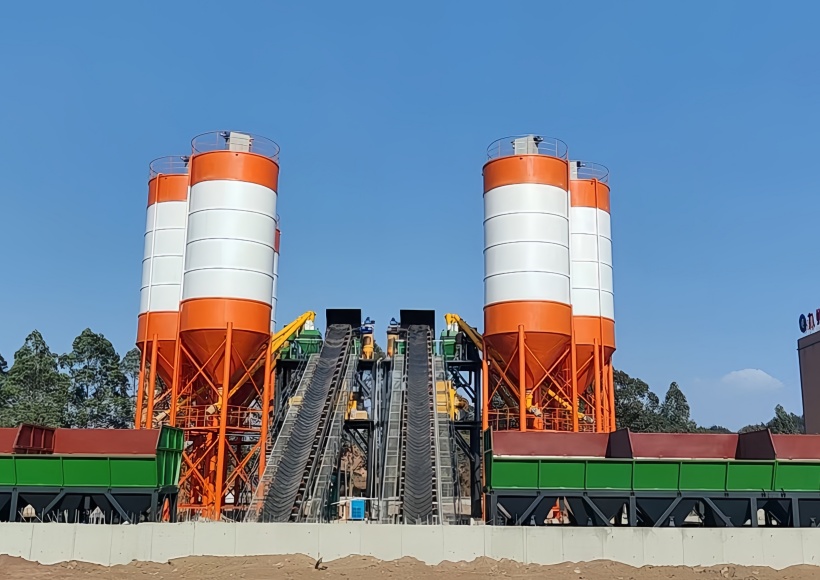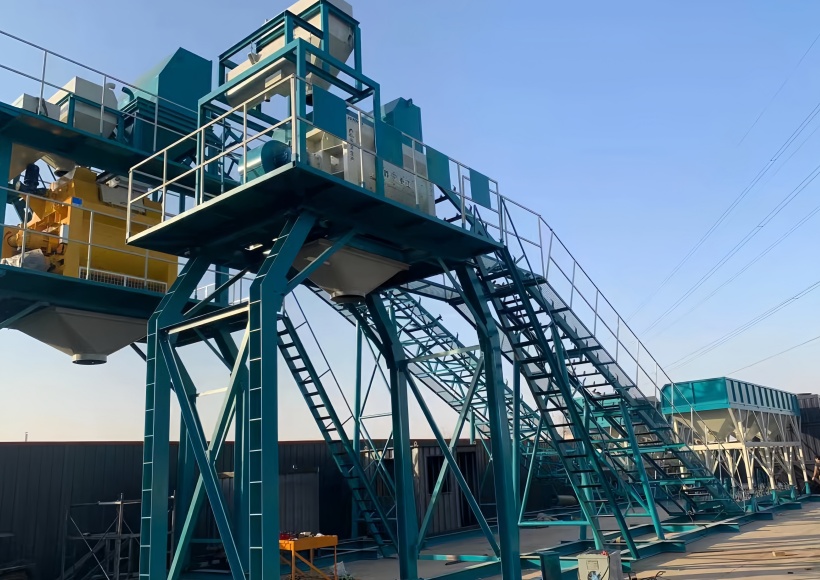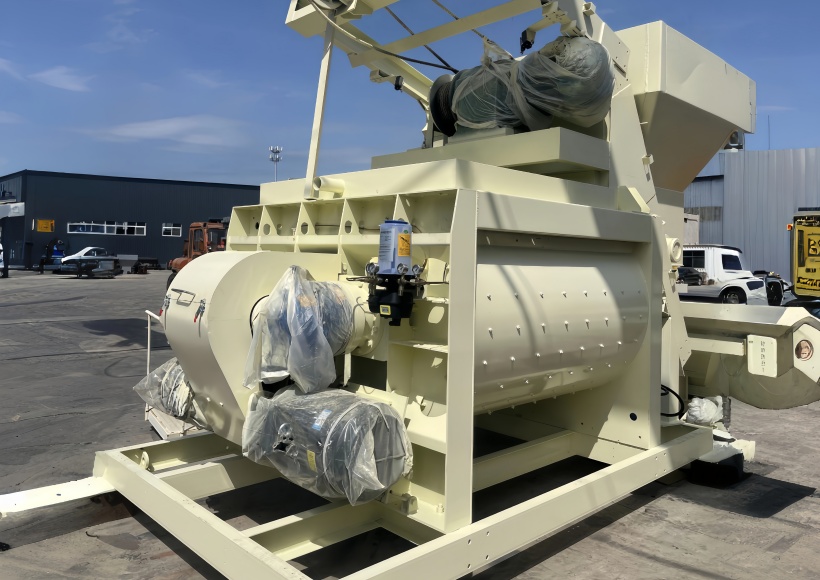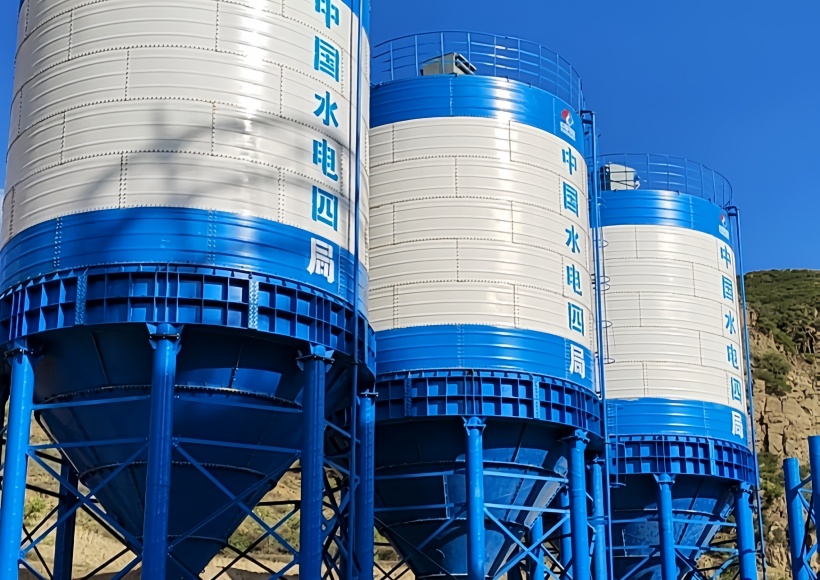









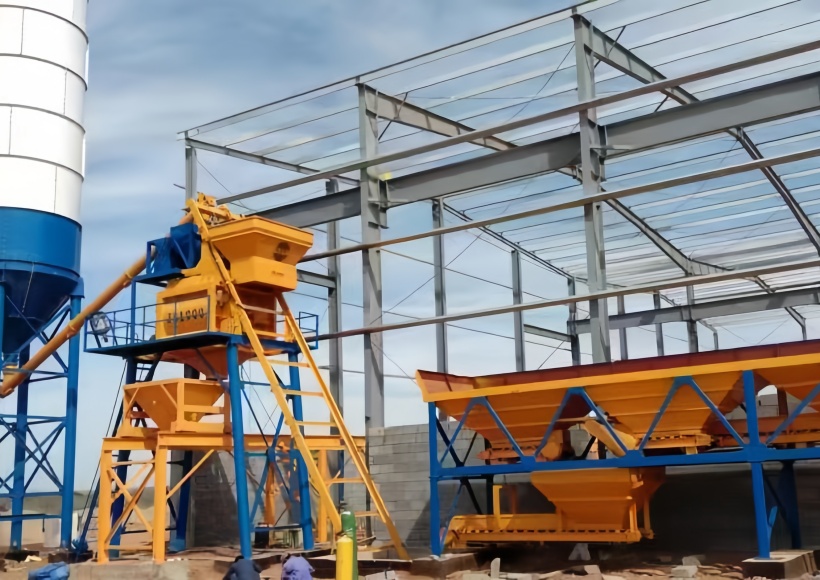
A client in Long An, Vietnam ordered a skip hoist бетонный дозатор two years back – HZS60 spec, 60 m³/h theoretical, single skip bucket, twin-shaft compulsory mixer. Smart footprint, smart capex. Eight months in, peak dry season, three ready-mix trucks queued at the gate by 6:40 AM and the skip couldn’t cycle fast enough to keep the discharge hopper above the trigger line. They asked us to quote a retrofit to inclined belt conveyor. The retrofit cost more than the original plant premium would have. That belt conveyor vs skip hoist decision in one sentence: pay now or pay later, but you will pay.
This is the trade-off nobody puts in the spec sheet. Let me break it down like an operator would, not a brochure.
Why the Feeding System Is Core Equipment? Not an Accessory
Most buyers fixate on the concrete mixer – JS1000, JS2000, twin-shaft compulsory, planetary mixers, the works. Fair enough, the mixer sets the theoretical m³/h ceiling. But the feeding system sets the realized ceiling. A 120 m³/h twin-shaft mixer fed by a skip hoist that cycles every 95 seconds will never clear 70 m³/h in steady state. The aggregates to the concrete mixer arrive in discrete 1.5-2.5 m³ buckets, not a continuous stream, so the batch cycle has a hard floor set by skip travel time.
This is why aggregate feeding – not the mixer – is the bottleneck on roughly 70% of underperforming concrete plants I’ve audited. The mixer is the heart; the feeding system is the coronary artery. Get that analogy right and the rest of the Concrete Batching Plant spec follows.
hw-remosaic: 0;
touch: (-1.0, -1.0);
modeInfo: ;
sceneMode: Auto;
cct_value: 0;
AI_Scene: (6, -1);
aec_lux: 0.0;
hist255: 0.0;
hist252~255: 0.0;
hist0~15: 0.0;
Belt Conveyor Type Concrete Batching Plant – Where It Earns Its CAPEX?
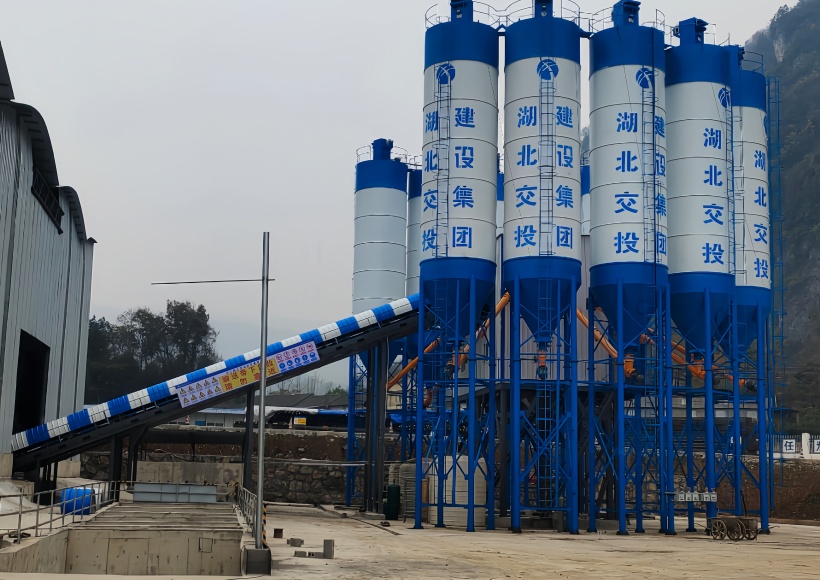
How an Inclined Belt Conveyor Actually Feeds Aggregate?
A belt conveyor type concrete batching plant runs a continuous rubber or PVC belt – 800 to 1200 mm wide for commercial concrete duty – over a string of carrying idlers, drive pulley at the head, take-up pulley at the tail, snub pulleys for wrap angle. Aggregate discharges from the batcher bins onto the belt at ground level, the belt climbs at 18° to 22° (steeper than 22° and the 5-31.5 mm coarse aggregate rolls back), and dumps into the weighing hopper or directly into the mixer charging chute.
Continuous is the operative word. The conveyor type concrete batching plant doesn’t have a “skip travel” dead time in its cycle. Once a batch is discharged, the next is already on the belt. For high-capacity, large-scale infrastructure, that’s the whole game.
Failure Modes the Brochure Won’t Mention
The sales rep quotes you 30 kW motor, 1.25 m/s belt speed, 180 m³/h theoretical. Here’s what he doesn’t quote:
- Belt tracking drift. In monsoon climates – Dongguan, Hanoi, Jakarta – humidity swings 60% to 95% daily. The belt absorbs moisture, lengthens asymmetrically, walks to one side. Left unchecked, it frays against the frame and you lose a $1,800 belt in three weeks. Tracking rollers need weekly adjustment in wet season.
- Idler bearing seizure. Cement dust plus aggregate fines ingress past the labyrinth seal on cheap idlers. After 4-6 months of high-cycle commercial operation, you’ll have 2-5 seized idlers on a 30 m gallery. Each seized idler becomes a belt sander. You catch it in the morning walkdown or you don’t.
- Dust containment. A belt running at 1.25 m/s with 5-31.5 mm granite aggregate generates dust at every transfer point. Environmental inspectors in developed markets – EU, Singapore, Korea – will shut you down without proper enclosure and dust extraction. That’s another 8-12% on CAPEX nobody puts in the headline number.
Where the Belt Earns Its Keep?
Belt conveyor type concrete batching is the only sane choice for HZS120 and above when the ready-mix concrete plant is supplying a metro line, a dam, or a precast yard running two shifts. The throughput ceiling and cycle stability pay back the higher civil work cost in 18-24 months on a properly loaded plant.
Skip Hoist Type Concrete Batching Plant – The Compact Workhorse
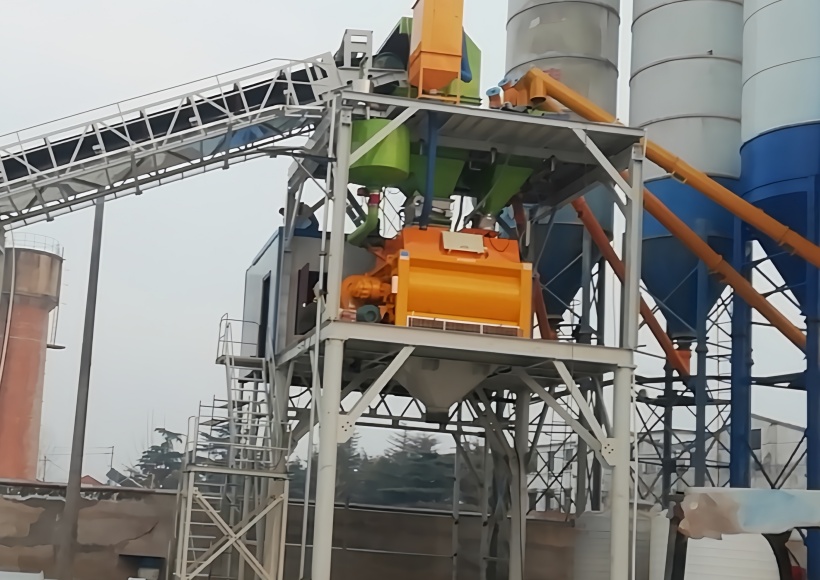
How the Skip Hoist Actually Cycles?
A skip hoist type concrete batching plant uses a steel bucket – typically 1.5 to 2.5 m³ for HZS60/HZS75, up to 3 m³ for HZS90 – running on a pair of guide rails, hoisted by a steel wire rope wound on a drum driven by an 18.5 to 37 kW motor. The bucket sits under the aggregate batcher at ground level, loads, climbs, dumps into the mixer, descends. One cycle: 90 to 120 seconds including load and dump.
The skip hoist type concrete batching is fundamentally batch-wise. That’s not a flaw – it’s the design point. It matches the batch-weighing logic of the plant and the discrete discharge of the cement and fly ash silos. In small-to-medium plants this is fine. In high-capacity plants it’s the constraint.
Cable, Bucket Liner, and the Maintenance Rhythm
Skip hoist plants get marketed as “low maintenance, fewer moving parts.” Half true. Fewer parts, yes. Lower vigilance, no.
- Steel wire rope. A high-cycle commercial plant (200+ batches/day) eats a rope every 6 to 12 months. Run it to failure and the bucket drops – there’s a mechanical catch, but you’ll still lose a shift and maybe a bucket. We spec replacement at 8,000 cycles regardless of visual condition, with Машины Tongxin sourced rope and Hardox bucket liners.
- Bucket lip wear. Coarse granite aggregate at 5-31.5 mm is abrasive. The Hardox liner on the bucket lip wears through in 18-30 months depending on aggregate type. Limestone is gentler, basalt is brutal.
- Guide roller seizure. Same dust-ingress story as belt idlers, just fewer of them. Cheaper to fix, easier to catch on the morning walkdown.
Where the Skip Earns Its Keep?
Compact footprint, small-to-medium capacity, urban or on-site deployment. Skip hoist concrete batching plant config fits where the inclined belt would eat 30 m of gallery you don’t have. Mobile batching plants, bridge piers, temporary job sites, urban ready-mix on a small plot – these are the skip’s home ground.
The Real Cost Math: CAPEX vs OPEX Across the Plant Life
Here’s the part that gets hand-waved. Numbers below are based on one-line experience estimates for Southeast Asia and Middle East markets over the last 18 months – not catalog figures:
| Cost Dimension | Belt Conveyor Type | Skip Hoist Type |
| CAPEX, HZS90 equivalent | ~$145,000-175,000 | ~$105,000-130,000 |
| Civil work premium | ~$25,000-45,000 higher | Baseline |
| Container count (40HQ) for export | 5-7 | 3-4 |
| Idler/roller annual replacement | $1,200-2,000 | N/A |
| Wire rope replacement | N/A | $400-800/event, 1-2×/year |
| Power per m³ produced | Lower (continuous load) | ~10-15% higher (intermittent peak draw) |
| Realized capacity at full demand | 85-95% of theoretical | 65-80% of theoretical |
Two things to notice. First, the FEU container count matters more than people think for export buyers – a belt conveyor gallery truss doesn’t pack dense, and LCL consolidation grief on long-span steel structure is real. Second, the realized-capacity gap is where skip hoist plants quietly lose money: the brochure says 90 m³/h, the operator sees 65. That gap is the cost of the intermittent cycle, and it only shows up in the cement-and-admixture bill when you’re maxed out and missing truck slots. Material waste from out-of-spec batches compounds the bleed.
The mixer tech choice – twin-shaft compulsory for stable concrete at high output, planetary for mix concrete batching where multiple aggregate fractions need careful homogenization, single-shaft for budget concrete mixing plant – is orthogonal to the belt-vs-skip decision. Same for cement and fly ash silo sizing, admixture dosing, the mixer truck loading bay. Don’t conflate them when you spec the plant. Dry mix vs wet mix is also orthogonal – that’s a water-addition-location decision, not a feeding decision.
Site Conditions That Decide It For You
Stop debating. These conditions make the decision for you:
- Available plot length > 35 m, peak demand > 90 m³/h → belt conveyor type. No debate.
- Urban plot, < 20 m gallery space, peak demand < 60 m³/h → skip hoist. Stop fighting the footprint.
- Mobile or temporary plant, project < 18 months → skip hoist on a towable chassis. Belt gallery mobilization cost is not justified.
- Commercial Concrete Batching Plant supplying RMC, two-shift, peak 120 m³/h+ → belt, twin-shaft compulsory mixer, cement and fly ash silos sized for 2 days. The skip will not keep up.
The automation and control layer (PLC, Hydec or Siemens) is the same either way. Don’t let a vendor sell you “more automatic” on one feeding type – automatic control logic sits on top of the feeding mechanism, not inside it. Same goes for twin-shaft vs planetary mixers, dry mix vs wet mix – those are orthogonal to the feeding decision.
Decision Framework: Belt vs Skip in Five Questions
- Peak hour demand in m³? Above 90, belt. Below 60, skip. Between, look at plot length.
- Plot length available for the gallery? Below 25 m, skip is your only sane option.
- Permanent or project-based? Project under 24 months, skip wins on mobilization.
- Aggregate type? Basalt + belt = high idler wear; budget it. Limestone is forgiving on both.
- Export packing reality? Belt gallery trusses eat containers. Skip packs in 3-4 FEU for an HZS60 plant.
Вопросы и ответы
1. What’s the maximum inclined angle for a belt conveyor feeding aggregate in a concrete batch plant?
18° for mixed 0-31.5 mm aggregate, 22° max for dry coarse material. Above 22°, the 5-31.5 mm fraction rolls back. Steeper galleries need chevron-cleated belts, which cost 40-60% more and wear faster.
2. What’s the realistic cycle time for a skip hoist on an HZS60 plant?
90 to 120 seconds per cycle including load, lift, discharge, and descent. That caps steady-state output at roughly 60-70 m³/h, not the 60 m³/h nameplate run continuously.
3. What’s the MOQ for export on a skip hoist vs belt conveyor concrete batch plant?
One unit. Both types are standard fabrication at most Chinese OEMs. Belt conveyor plants run longer lead times (35-50 days) due to gallery steel work; skip hoist plants ship in 25-35 days.
4. How often should I replace the skip hoist wire rope?
At 8,000 cycles or 12 months, whichever comes first, for high-cycle commercial duty. For intermittent job-site plants, 18-24 months is acceptable. Never run to failure – a dropped bucket costs a shift and a bucket, plus the rope.
5. Can I retrofit a skip hoist plant to belt conveyor feeding later?
Yes, but it’s expensive – you’re adding gallery steel, civil foundation, a new drive, and rewiring the PLC batching logic. The retrofit typically costs 60-80% of the original plant premium, so if you even suspect you’ll need belt throughput, spec it on day one.