








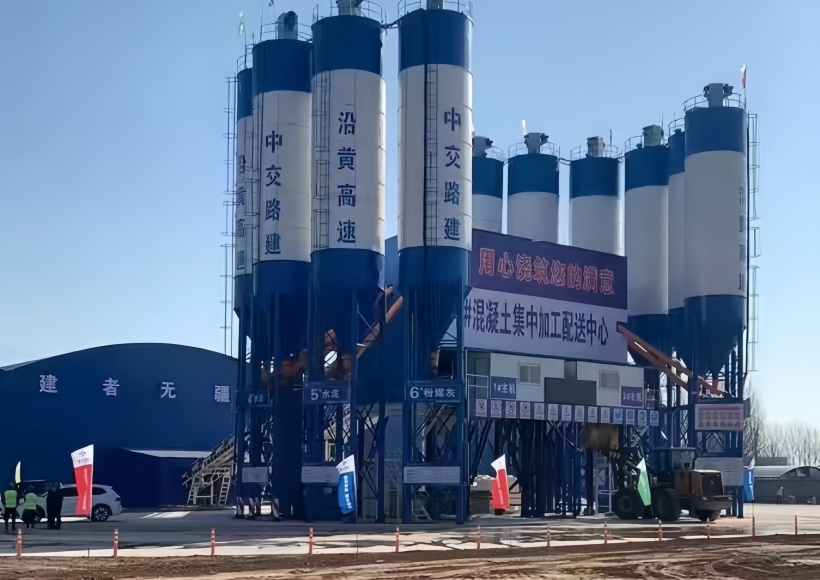
Most concrete producers lose their profit margins before a single cubic yard of wet mix ever hits the mixer truck. The culprit isn’t volatile cement pricing or labor costs; it’s a catastrophic failure in initial site planning. You can buy the most expensive twin-shaft mixer on the market, but if your load cells are drifting because your foundation is suffering from differential settlement, you are going to bleed money through rejected batches and relentless downtime.
When engineering a functional concrete batching plant layout, the blueprint requires far more than just fitting steel structures onto a piece of dirt. It demands a cynical, paranoid approach to material handling, water drainage, and traffic routing.
This comprehensive guide skips the generic fluff and dives into the brutal realities of plant installation.
Surviving the Zoning Board: Site Selection and Land Configuration
Forget the brochure layouts. In the real world, your concrete batch plant layout is dictated by local regulations, environmental compliance, and the turning radius of a fully loaded 10-yard mixer truck.
Traffic Flow: The Artery of Concrete Production
If your aggregate loaders and your mixer trucks cross paths, you have failed. A bottleneck in your yard during peak morning dispatch will destroy your daily productivity. Your land configuration must allow for a one-way, continuous loop. Raw material delivery (sand, gravel, cement pneumatics) should enter and exit without ever impeding the ready-mix concrete discharge lane.
Environmental Hostility and Compliance
Dust control isn’t just about being a good neighbor; it’s about avoiding immediate shutdown by local authorities. Your site selection must account for prevailing winds. If you place your cement silos upwind of a residential subdivision or a busy highway, your dust collector better be operating at 100% efficiency 24/7, or you will face crippling fines. Furthermore, washout pits and wastewater recycling systems require significant square footage and precise topographical grading. Gravity is your best friend for drainage—use the natural slope of your land rather than fighting it with expensive pumping systems.
Foundation Realities: Why Your Stationary Setup is Sinking
The foundation work for stationary plants is where cheap contractors go to hide their mistakes. A large-scale stationary concrete batching plant is not a static load. It is a violently dynamic environment.
The Threat of Differential Settlement
When you have a 100-ton cement silo standing next to an aggregate bin holding 200 tons of wet sand and gravel, the shear stresses on the soil are immense. If you rely on a standard slab without proper soil testing (Geotech reports), expansive clays or a high water table will cause differential settlement.
What happens then?
Your conveyor belts misalign, tearing the rubber edges against the idlers. Your weigh hoppers tilt, causing the load cells to bind and feed garbage weight data to your control system. Suddenly, your high-quality concrete becomes a rejected, out-of-spec disaster because the scale said 500 lbs of cement when it was actually 420 lbs.
Deep vs. Raft Foundations
For serious infrastructure projects and heavy stationary concrete installations, deep foundations (driven piles or drilled caissons) are often mandatory to reach bedrock or load-bearing strata. A raft foundation might suffice for a mobile concrete batching plant or temporary on-site setups, but for decades-long stationary operations, do not cut corners on the concrete and rebar underground. It is the cheapest insurance policy you will ever buy.
Utilities in the Trenches: Power Spikes and the Death of PLCs
An optimization strategy is useless if your infrastructure can’t handle the load. The utility requirements for a concrete plant are massive, erratic, and highly sensitive to disruption.
Water: Pressure, Volume, and Temperature
Water isn’t just an ingredient; it’s the lifeline of the batching process. You need high volume and high pressure to quickly dose the mixer and wash down the equipment. But the real insider secret? Temperature control. In summer, hot aggregate and hot water cause rapid slump loss and flash setting. You need chillers. In winter, you need massive boilers to produce hot water and steam to thaw frozen aggregate stockpiles. Your utility layout must accommodate these massive thermal management systems.
Dirty Power and Control Systems
The machinery in a concrete plant runs on heavy, three-phase industrial power. When a massive 150HP twin-shaft mixer motor starts across-the-line, it creates a massive voltage drop. If your PLC (Programmable Logic Controller) and automation systems are not isolated from this dirty power, the voltage spikes will fry your control boards.
Experienced concrete producers ensure that their automation control system is fed through dedicated, clean power lines with UPS (Uninterruptible Power Supply) backups and heavy-duty line conditioners.
The Iron and the Brains: Machinery Configuration That Actually Works
Choosing the right equipment isn’t about looking at the shiny paint; it’s about evaluating the thickness of the wear liners and the reliability of the pneumatic valves.
Aggregate Bins and Moisture Chaos
Your sand and gravel don’t behave nicely. Wet sand bridges and sticks. If your bins don’t have properly angled cones and aggressive pneumatic vibrators, the material will hang up. Your loader operator will spend half his shift banging on the side of the bin. Furthermore, real-time microwave moisture sensors in the sand bins are non-negotiable. Without them, your water-to-cement ratio is just a wild guess, destroying the strength and durability of the finished concrete.
Mixers and Material Handling
The heart of the production line is the concrete mixer. While drum mixers are common for mobile batching, a twin-shaft mixer is the gold standard for stationary plants demanding high throughput and intense mixing action. However, feeding that mixer requires flawless material handling.
Conveyors are superior to skip hoists for large-scale operations because they offer continuous, smooth delivery of raw material, reducing wear and tear on the electrical infrastructure. When configuring this equipment, partnering with battle-tested vendors is crucial. Manufacturers like Машины Tongxin understand that heavy-duty gearboxes, oversized bearings, and easily accessible maintenance points are what keep a plant running when the production schedule is tight.
Step-by-Step Guide to Plant Installation: A Blueprint for Avoiding Catastrophe
You don’t just “assemble” a plant; you engineer its integration into the site. Here is the unvarnished step-by-step guide to doing it right.
Step 1: The Pre-Installation Geotech and Civil Audit Before a single piece of steel arrives on the construction site, verify the foundation anchor bolt templates. A deviation of just half an inch in the concrete anchors will stall the entire plant installation, requiring custom fabrication and welding on-site, which destroys the anti-corrosion galvanization.
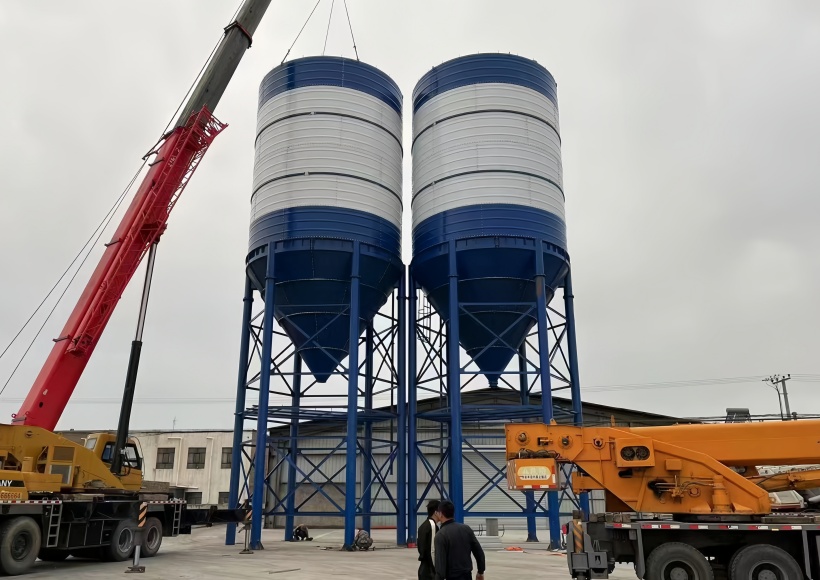
Step 2: Erecting the Silos and Heavy Iron Silo erection requires serious crane coordination. Wind speeds must be monitored aggressively. Once the cement silos are vertical, immediately install the dust collectors and pressure relief valves. Do not wait. A silo blow-top from pneumatic over-pressurization during the first cement delivery is a highly dangerous and expensive mistake.
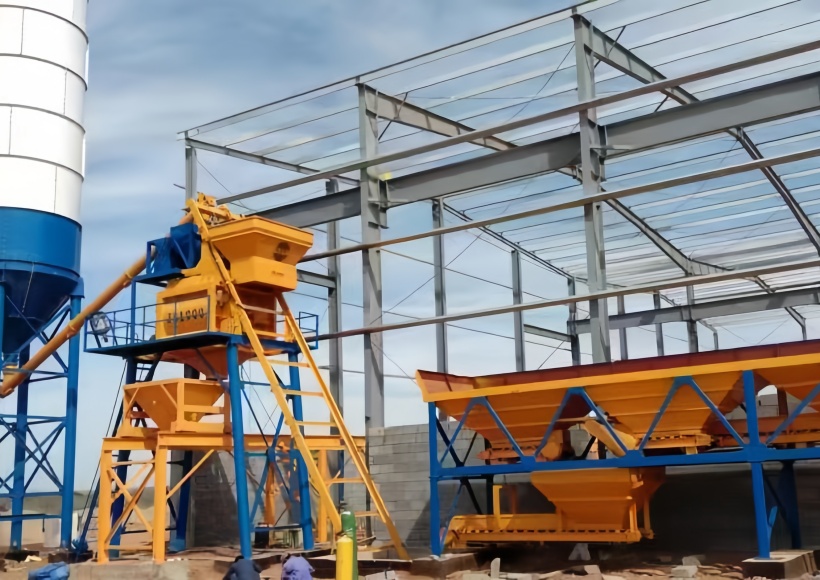
Step 3: Integrating the Conveyor and Mixer Chassis When placing the mixer chassis, laser alignment is critical. A resilient concrete batching plant layout separates the structural vibrations of the mixer from the weighing scales. If your platform vibrates excessively, your load cell readings will fluctuate wildly during the batching process.
Step 4: Wiring the Nervous System Route your low-voltage sensor cables completely separate from your high-voltage motor cables. Induced current from a 480V VFD (Variable Frequency Drive) cable will wreak havoc on your analog load cell signals. Quality manufacturers, such as Машины Tongxin, design their electrical harnesses with these harsh realities in mind, using shielded cables and NEMA 4X enclosures to block out the highly abrasive cement dust.
Step 5: Dry Testing and Wet Commissioning Never run a wet mix immediately. Dry cycle the plant for at least 48 hours. Check every pneumatic gate limit switch. Verify the calibration of every scale with certified test weights. Only when the automation sequence runs flawlessly in the dry state should you introduce aggregate, cement, and water to produce concrete.
Mobile vs. Stationary: The ROI Reality Check
The industry loves to debate mobile concrete batching vs. stationary plants. Let’s clear the air.
A mobile plant (or portable plant) is fantastic for remote highway infrastructure projects where trucking ready mix concrete from a commercial town is economically unfeasible. They offer rapid setup and tear-down. However, you sacrifice storage capacity and high-end automation features.
Stationary plants are your cash cows for urban markets. They offer massive aggregate storage, the ability to handle multiple chemical additives, and superior consistency. But they demand a permanent commitment to foundation work, utility infrastructure, and environmental zoning. Choose the right system based on your 10-year contract horizon, not just the initial capital expenditure.
Часто задаваемые вопросы
Q1: How much land do I actually need for a commercial stationary concrete batching plant?
While you can squeeze a compact plant into 1.5 acres, a true commercial operation requiring efficient loader movement, substantial aggregate stockpiles (separated by bulkheads to prevent cross-contamination), washout pits, and a dedicated queue lane for mixer trucks realistically requires 3 to 5 acres to operate without severe logistical bottlenecks.
Q2: What is the most critical aspect of your concrete batching plant layout to prevent weighing errors?
Vibration isolation. The structural steel supporting your aggregate, cement, and water weigh hoppers must be mechanically isolated from the steel supporting the twin-shaft mixer. If mixer vibration transfers to the hoppers, the load cells will experience “noise,” causing the PLC to either over-dose or under-dose raw materials, ruining your concrete quality.
Q3: How do we prevent cement silo over-pressurization during pneumatic delivery?
First, ensure your plant installation includes a high-level indicator linked to an audible alarm. Second, install an automatic pinch valve on the fill pipe that closes when the silo pressure exceeds safe limits. Finally, rigorously maintain your silo-top dust collector; if the filter bags are blinded with hardened cement, the displaced air cannot escape, causing the silo roof to rupture.
Q4: Can we rely on a municipal water line for our batching process?
Rarely. Municipal lines usually lack the GPM (Gallons Per Minute) surge capacity required to rapidly dose a 4-cubic-yard batch and wash down trucks simultaneously. You almost always need a large on-site buffer holding tank and a high-horsepower booster pump to ensure the required pressure and volume.
Q5: Why do wet mix plants require more robust waste recycling systems than dry batch plants?
In a wet mix setup, the central concrete mixer itself must be washed out daily, generating a massive volume of highly alkaline, cement-laden slurry. Local regulations strictly prohibit discharging this into municipal drainage. You must install a reclaimer system that separates the sand and gravel for reuse, and a settling weir system to clarify the gray water for use in future batches.