
Every peak season, ready-mix plant owners face the same two options. One supplier quotes a welded silo at a lower first price. The other offers a bolted cement silo that costs more upfront but can be extended by another ring section next year and moved to a second site if the contract moves. The question is always the same: which one is actually cheaper?
That question is exactly what this article answers. Bolted units are priced differently from a welded unit, and the difference shows up over years of operation, not at the first invoice. Below we break down the price structure, the 10-year cost comparison, and the questions to ask before you sign a quotation.
What Actually Drives the Price of a Bolted Cement Silo
The price of a bolted unit is set by a handful of technical parameters and configuration choices. Once you know which line items move the number, comparing quotes becomes much easier.
Capacity and Scale
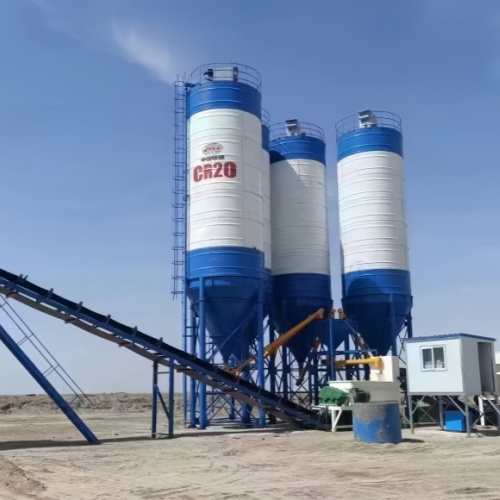
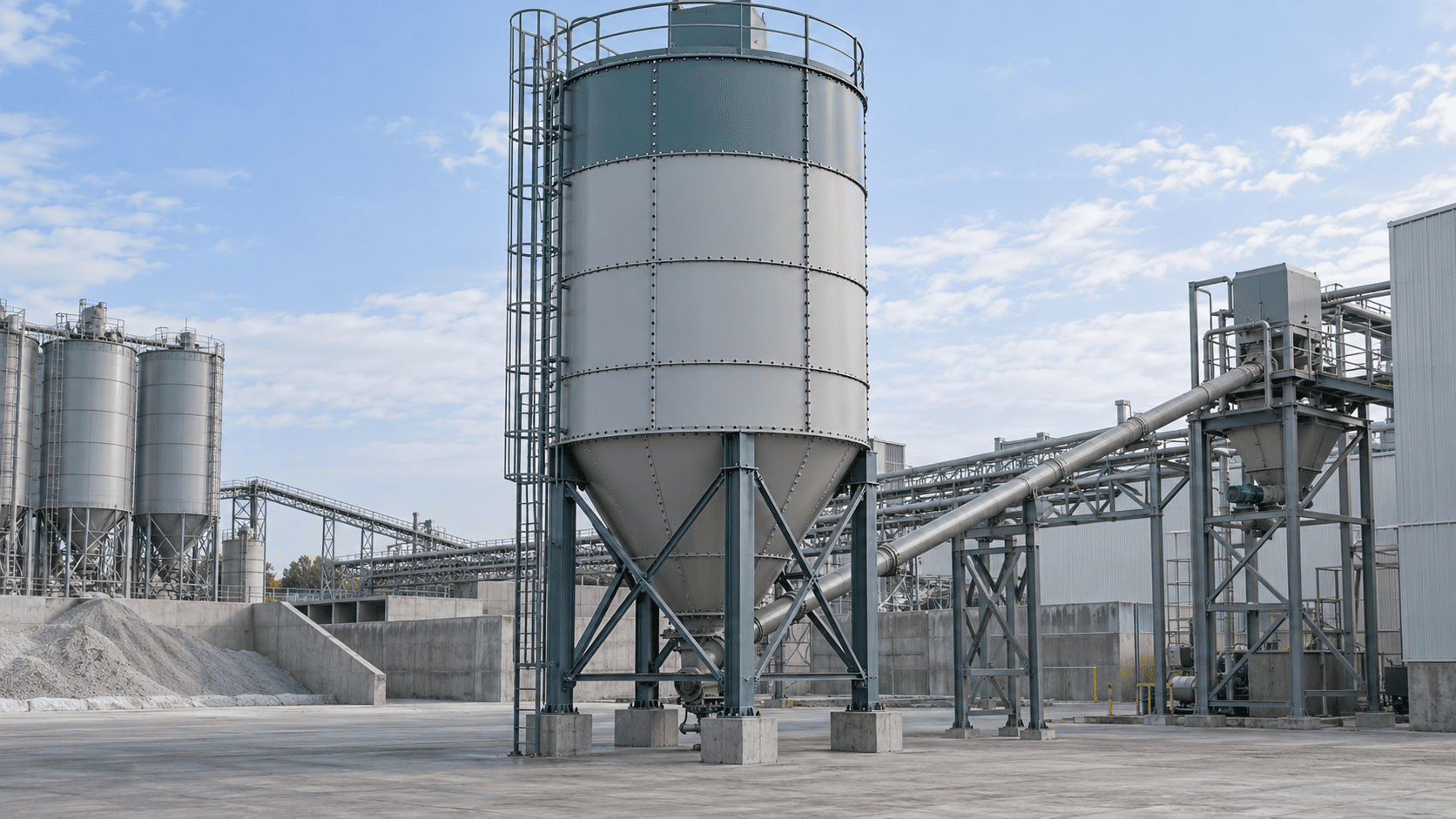
Bolted silos are built from 100 up to 10,000 tons. The per-ton cost drops as capacity rises, because the wall area does not grow as fast as the volume. A 300-ton unit costs noticeably more per ton than a 1,000-ton unit, so sizing for medium-term demand instead of today’s exact need usually pays for itself.
Structural Design and Steel Grade
The diameter-to-height ratio, cone angle and support frame all change how much steel goes into a bolted unit. Tongxin uses high-strength structural steel and adds extra plate thickness at the discharge zone, where abrasion and pressure are highest. Higher steel grade and plate thickness add to the factory cost but extend the working life by years.
Corrosion Protection
A bolted unit at a coastal site faces salt air; one in a humid or industrial region faces condensation and chemical attack. The coating system, whether high-performance paint or hot-dip galvanizing, is a real price driver. Do not strip it out of the comparison just to match a lower quote, because re-coating a silo on site is expensive.
Core Components and Automation
The dust collector, fluidising discharge device, level indicators and control system account for a large share of the price difference between quotes. A pulse-jet dust collector with a proper fan is more expensive than a simple mechanical unit, and the same logic applies to the weighing and automation package. Ask what brand and grade each component is, because that is where cheap quotes hide.
| Price factor | Why it moves the number | How to verify it in a quote |
|---|---|---|
| Capacity | Per-ton cost falls as capacity rises (economies of scale) | State today’s need plus the 5-year expansion plan |
| Steel grade and wall thickness | High-strength steel and thicker discharge-zone plates cost more and last longer | Ask for the plate grade and thickness in the quotation |
| Corrosion protection | Coastal, humid and industrial sites need heavier coating or galvanising | Confirm the coating system or galvanising spec, not just a line saying “painted” |
| Dust collector and discharge devices | Brand and grade differences are the largest hidden gap between quotes | Require brand and model of the dust collector, fluidising pads and valves |
| Automation and control | Basic manual control to intelligent batching spans a wide price range | Define the automation level you need before comparing |
| Freight and installation | Bolted sections ship in standard containers; site work is bolting and sealing | Keep freight, crane and erection in the comparison |
Bolted vs Welded: The 10-Year Cost Picture
The real advantage of a bolted cement silo is transport: the sections ship in standard containers, which is why it is the usual choice for overseas projects and remote sites. On the other side of the ledger, both the purchase price and the installation cost run higher than an integral welded silo, so a fair comparison has to run over the full service life. The table below is the same framework our engineers use when a customer asks for a cost comparison.
| Cost item | Bolted cement silo | Welded silo | Economic analysis |
|---|---|---|---|
| Initial purchase cost | Medium to high | Usually lower | Bolted units carry the cost of precision-punched plates and standardised factory production |
| Transport and lifting | Lower | Higher | Bolted sections ship in standard containers; no special vehicles or oversized permits |
| Installation time | Shorter and controllable | Longer, weather-dependent | Bolt-up erection keeps field welding to a minimum |
| Installation cost | Higher | Lower | Bolted assembly needs trained crews and precise torque-controlled bolting; an integral welded silo goes up in fewer site steps |
| Expansion and relocation | Add ring sections, or dismantle and rebuild at a new site | Effectively non-expandable | It keeps resale and reuse value |
| Long-term maintenance | Low | Medium to high | Modular panels and bolted joints allow local repair and part replacement |
When we run this comparison for a plant owner, the first-year invoice usually favours the welded silo. The picture flips once the plan includes an expansion, a second site or a major maintenance event, because the bolted unit reuses its own rings and panels instead of buying a new tank. That is why every quotation request to Tongxin gets a full 10-year cost model built around the actual plan.
How to Get a Quote You Can Trust
A bolted quotation only helps you if the line items are comparable. Follow these steps and use the checklist below to keep suppliers honest.
Define the Requirement First
Write down the required capacity and the likely expansion plan, the site location and climate, and the automation level you actually need. Sending the same requirement to three suppliers is the only way to get comparable numbers.
Demand an Itemised Quotation
Ask each supplier to break the quote into steel grade and thickness, coating system, dust collector brand, discharge device, level sensors, control cabinet and freight. If a supplier only offers a lump sum, ask for the breakdown; a price that cannot be itemised is usually missing something.
Run a 5–10 Year TCO Comparison
Put the quotes into a total cost of ownership model covering purchase, freight, installation, maintenance, and the value of relocation or expansion. The initial price difference between a bolted unit and a welded one often reverses within five years when expansion needs appear.
What Tongxin Machinery Includes in Every Quote
Tongxin Machinery responds to quotation requests within 24 hours and provides, at no charge, a techno-economic analysis for each project: two or three configuration options, a full-lifecycle cost model, and installation advice covering foundations, erection and operation. For related reading, see our cement silo product page, the HZS90 concrete batching plant configuration this storage commonly feeds, and the concrete batching plant range overview. Cement quality and sampling follow industry references such as the ASTM C150/C150M standard for Portland cement.
Bolted Cement Silo FAQ
These are the questions buyers ask most often before ordering one from Tongxin Machinery.
Q1: How much does a bolted cement silo cost?
A: The price depends mainly on capacity, steel grade, coating system and the dust collection and automation package. A 300-ton unit with standard components typically lands well below a fully automated 1,000-ton silo; ask for an itemised quotation rather than a lump-sum price.
Q2: Bolted vs welded cement silo: which is cheaper over 10 years?
A: On the invoice date the welded silo usually looks cheaper. Over 10 years, the bolted unit tends to win whenever the plant expands, relocates or needs local repairs, because those jobs reuse the existing silo instead of buying a new tank.
Q3: Can the bolted silo be moved or expanded later?
A: Yes. Ring sections can be added to increase capacity, and the silo can be dismantled, transported in standard containers and re-erected at a new site. Welded silos normally cannot do either without major cutting and re-welding.
Q4: What capacity of cement silo does a batching plant need?
A: A practical rule is three to five days of peak consumption. An HZS90 concrete batching plant typically pairs with 100–300 tons of cement storage per bin, while larger HZS120/HZS180 installations go to 500 tons or more depending on silo count.
Q5: What is included in a bolted cement silo quotation?
A: The quotation should itemise steel grade and thickness, coating, dust collector, discharge device, level monitoring, control cabinet, freight and installation. If the breakdown is missing, ask for it before comparing suppliers.
Q6: How long does it take to install a bolted cement silo?
A: With a prepared foundation and a normal crane, a mid-size bolted unit is typically erected in days rather than weeks, because the field work is bolting and sealing instead of welding. Site weather and foundation readiness are the main variables.
The Bottom Line
A bolted unit is not a cheap line item on day one; it is a storage asset that can grow with the plant and move with the business. When you compare quotes, compare the 10-year number, not the first invoice. Send Tongxin your capacity and site details, and we will reply within 24 hours with a bolted cement silo configuration and a cost model built around your actual project.