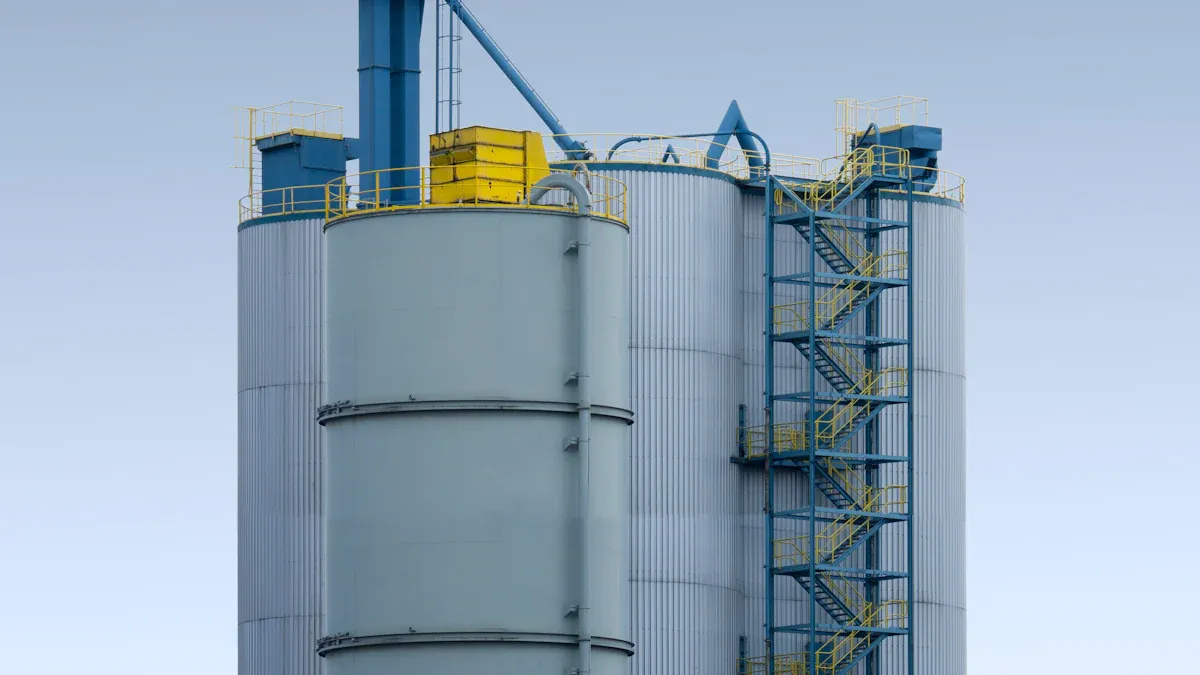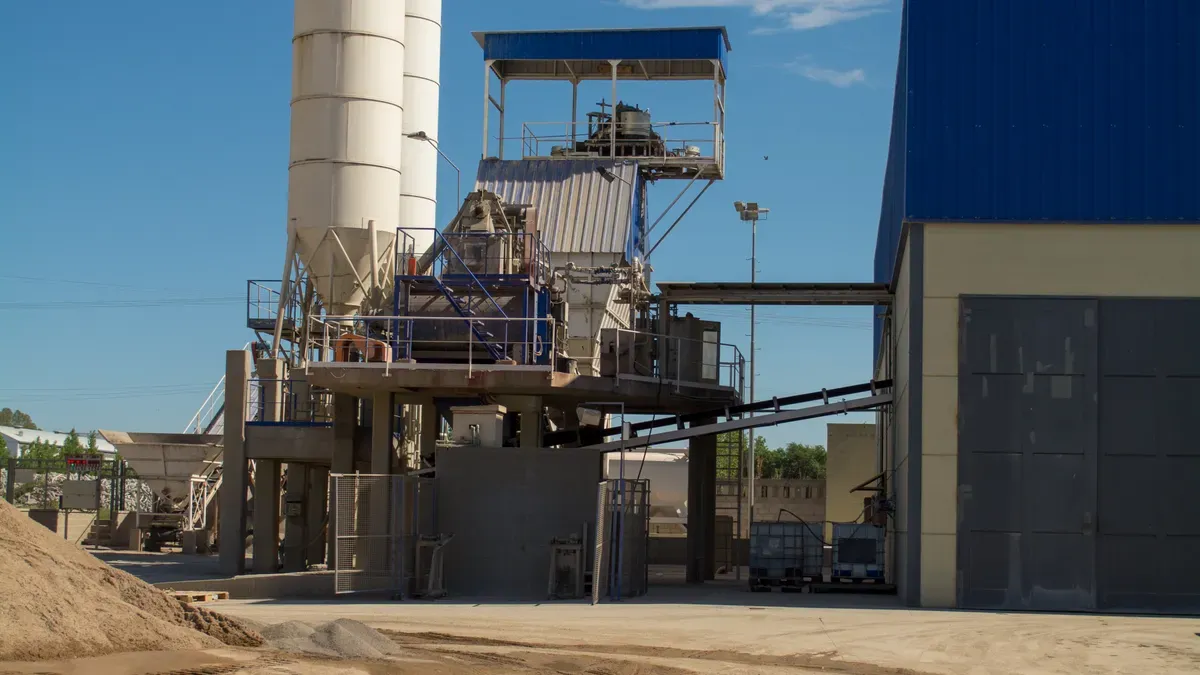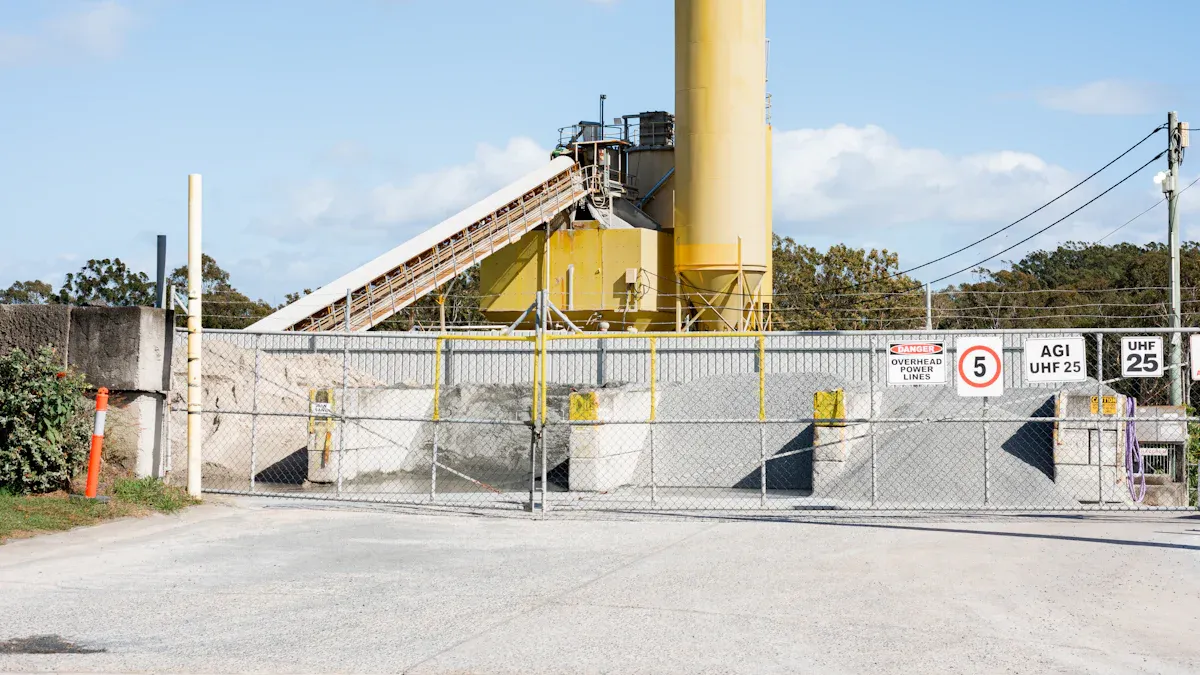

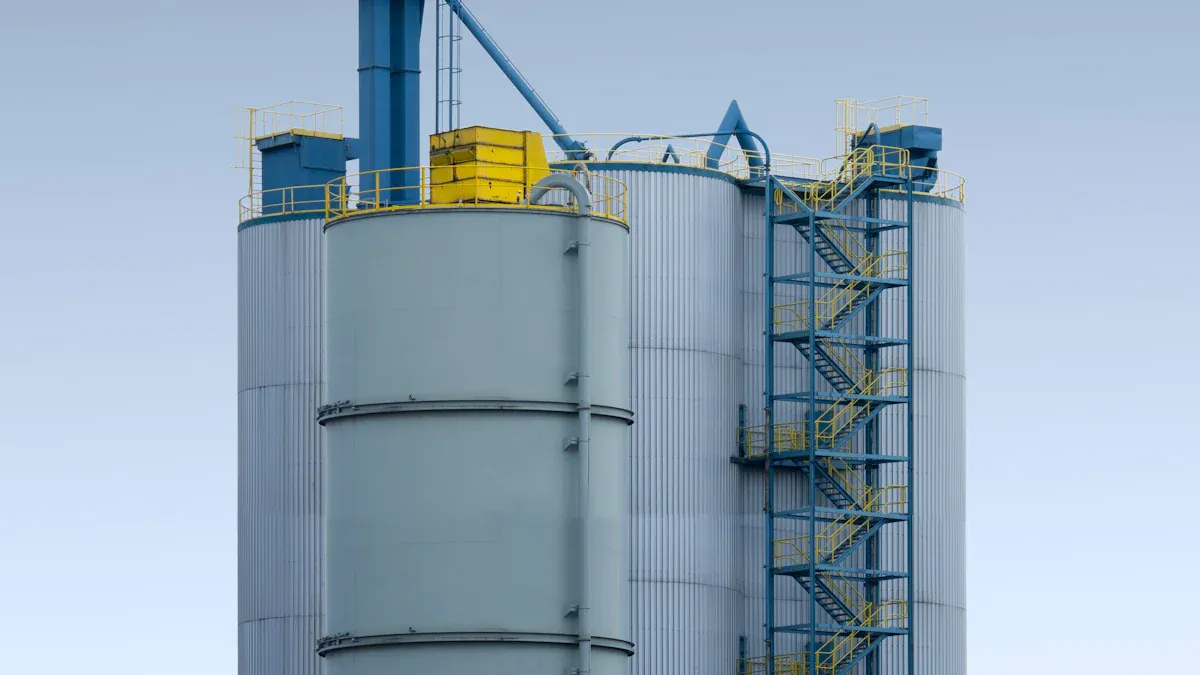
A cement silo is a sealed tank that holds bulk cement. To understand how does a cement silo work, it uses air pressure to load, aeration, and dust collection to keep the powder dry and flowing. The tank alone does not do the job. Filling, storage, venting, and discharge work as one connected system.
This guide explains how does a cement silo work at every stage, in plain language. Readers will see how cement goes in, how the tank stays dry, and how the material comes out when needed. The guide also covers the everyday problems that stop a concrete batching plant, like moisture, dust, and clogging, and the simple checks that prevent them.
How Does a Cement Silo Work: The Core Principle
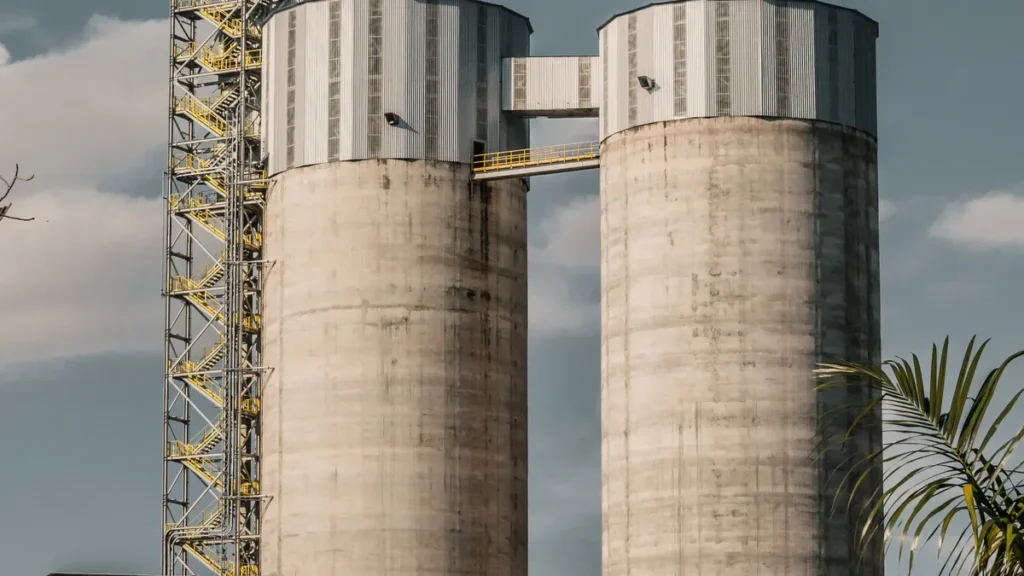
A Sealed System for Bulk Cement
A cement silo is a closed tank, and that closed design is the main point. The tank keeps bulk cement away from rain, wet ground, and moving air. Every opening — the fill pipe, the inspection hatch, the discharge outlet — has a seal for this reason. Roof exhaust holes, the lightning rod base, and pipe holes are common leak points. Builders seal them with sealant and add rain caps and water-blocking edges. Steel plate joints also need flexible sealing material to close tiny cracks caused by structural expansion.
Inside this sealed shell, the silo holds cement above a cone-shaped or controlled-discharge outlet. A standard silo pack supports the tank. A hand lever-controlled butterfly valve at the bottom stops material flow for screw conveyor servicing. Min/max level indicators tell the batch computer when the amount runs low or hits its maximum. A safety valve opens at the pressure limit and protects the tank from too much pressure. Aeration nozzles and airpipes keep material flowing toward the discharge area, and sensors check pressure and material quantity. Each part supports the seal, and the seal protects the cement.
The Synchronized Sequence
The working principle becomes clear when you follow one load of cement through the system. The sequence runs in six stages:
- A tanker moves cement through a pneumatic conveying line into the silo.
- Displaced air passes through a filter, and the dust collector traps fine cement particles.
- The sealed tank stores the cement above the discharge outlet.
- Level indicators show whether the silo is near empty, in operating range, or at maximum fill.
- Compressed air or mechanical anti-arching equipment loosens cement when flow becomes restricted.
- A valve releases cement to a screw conveyor, weigh hopper, or mixer at the required feed rate.
Three functions drive this sequence: pneumatic transfer, environmental filtration, and automated discharge. The venting filter does two jobs. It controls internal pressure during filling and emptying, and it filters dust from the displaced air. The pressure-relief valve stands by as a safety backup. Aeration is a separate job — it improves flow and never replaces the vent filter or relief valve.
The silo also ties discharging, storage, feeding, conveying, and weighing into one integrated operation. Smart conveying systems connect with the plant controls (PLC/HMI) to coordinate feed rates, filling sequences, pressure setpoints, filter cleaning cycles, safety interlocks, and diverter valve positions. This integration holds discharge flow rates steady and prevents bridging or rat-holing inside the tank. Screw conveyors move cement from the silo to the mixer or production line, and they come in different sizes for different applications. Anyone asking how does a cement silo work should picture this chain: material in, air out, dust captured, level checked, cement loosened, flow metered. The silo is a system, and each stage depends on the others.
How Cement Gets In
Pneumatic Loading
Cement comes to the silo as a dry powder inside a sealed tanker or a super sack. Air does the moving. A compressor or blower hooks up to the trailer air inlet and adds pressure to the tank. The cement turns fluid and flows through a discharge hose into the silo fill pipe at the top. A trained operator checks the delivery point and site readiness first, then connects the hose. The product valve controls how much powder enters the line, and the conveying air keeps that feed moving.
The loading sequence follows a steady pattern:
- Park the trailer next to the silo fill pipe and connect the discharge hose.
- Hook a pneumatic blower or compressor to the trailer air inlet.
- Add pressure to the tank so the cement turns fluid and starts flowing through the hose.
- Watch pressure and flow until the tank is empty, and keep the silo filter venting correctly.
- Release the pressure, disconnect, and close all hatches before the trailer leaves.
A correctly sized air supply gives the right flow and pressure. That match cuts unloading times, blockages, and energy use. Hose length, bends, and lift all affect flow. A short hose to a nearby inlet gives the mixture less distance and fewer fittings to pass through. Some systems use dense phase conveying, which moves material at higher pressure and lower gas speed in a plug-like flow. This gentler transport suits fragile or abrasive products and cuts wear at elbows.
Venting, Filtration, and Level Checks
Every load of cement pushes a large volume of air upward through the stored material. That displaced air carries fine particles. This air must leave through the dust collector filter at the silo vent, not through roof panel joints. The filter traps the dust and returns clean air to the atmosphere. A dust cake builds on the filter surface over time and can improve efficiency by catching finer particles. When the cake grows too thick, it blocks airflow and needs cleaning.
Silo backpressure matters here. Conveying air must escape through the vent filter. A partly blinded filter or too little vent capacity raises pressure inside the silo. The pressure relief valve stands by as a safety backup for abnormal conditions. It limits positive pressure and, on some models, lets air in when negative pressure develops during discharge. A valve that lifts during every delivery signals a problem worth investigating. It should not become the routine ventilation route.
Level indicators complete the picture. They tell the batch computer when the silo runs low or reaches maximum fill. Overfill protection strategies work alongside these indicators to prevent spills and pressure spikes during filling.
Keeping Cement Dry and Flowing
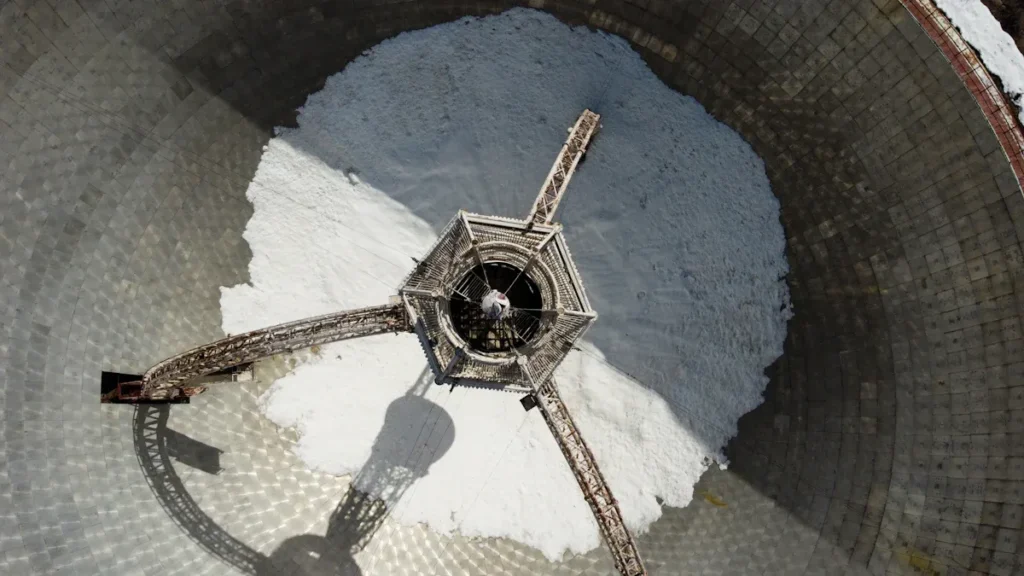
Sealing and Moisture Control
Moisture is the biggest threat to stored cement. A dry powder turns into hard cake once water reaches it. The sealed shell blocks rain and damp ground air. Roof seals, cladding, and hatches carry most of this duty. Steel silos need extra attention, because temperature swings cause condensation on the inner walls. The same rule applies to the aeration air. Wet air lines trigger immediate hydration of the product at the pads.
Routine checks keep the barrier intact. Inspect roof seals, the bin vent filter, and the pressure relief valve for gaps or wear. Confirm that the air supply to the fluidization pads stays dry. A blocked or saturated filter lets humid air creep in. Loose hatches do the same. These small openings explain most clumping at the outlet.
Aeration and Discharge
Aeration pads sit on the cone or lower section of the silo. Each unit holds a metal housing, an air chamber, and a porous membrane. Low-pressure air passes through the membrane and enters the powder. This action reduces friction between particles in that zone. The cement then moves more easily toward the outlet. Gravity still does the real work of pulling material down.
Cement needs this help. Left undisturbed for extended periods, powder near the lower cone packs down and stops flowing. Zoned aeration fights that settling. Operators activate one zone at a time, so cement from different spots joins the flow and dead zones shrink. The blower supplies steady, clean, low-pressure air. The pads assist movement; they do not push cement out on their own. A flow control gate then adjusts the opening to match downstream demand.
Common Problems and Fixes
Clogging and Moisture Issues
Most silo problems begin with water or with powder that will not move. Moisture gets in through broken roof seals, loose fill-pipe seals, rainwater, damp air, or condensation on cold inner walls. Warm air that meets a cooler steel wall leaves water drops, and cement near those spots hardens into lumps. Storing cement for a long time makes it worse, because powder near the lower cone packs down and stops flowing.
Bridging is a related problem. Powder forms a strong arch above the outlet, so the silo looks full but nothing falls out. Small outlets, a shallow cone angle, and poor flow features all make this more likely. An unbalanced discharge system also makes flow unsteady, since the cone, fluidizers, butterfly valve, screw conveyor, vent filter, and relief valve must all work as a team.
Fixes should work from outside the tank. Air cannons fire a strong blast that loosens material and breaks up buildup. Acoustic cleaners shake stuck powder loose without touching the walls. Flexing air pads and a steeper cone with a larger outlet fix the root cause. Hitting the shell with a hammer dents it and creates ledges that collect even more material, and going inside a silo to clear a bridge is dangerous. A bridge can fall without warning.
Maintenance Checklist
Routine checks catch all three problems early. A simple schedule covers the key parts:
- Check the vent filter regularly, watching the pressure difference curve and bag condition.
- Test the pressure relief valve and make sure it stays closed during normal filling.
- Clean the aeration pads and make sure the air supply stays dry.
- Check roof seals, hatch gaskets, and manway seals for cracks or gaps.
- Oil the discharge gate, bearings, and hinges, and check the butterfly valve for wear.
Operators should also use first-in, first-out storage and avoid holding cement for long periods. These habits cost little and prevent most caking, bridging, and dust problems.
The answer to how does a cement silo work fits in three steps. Cement enters pneumatically through a fill pipe. It stays dry inside a sealed shell, and a vent filter captures dust as displaced air escapes. Aeration pads and a screw conveyor then move it out at a steady rate.
Most silo troubles trace back to moisture, dust, or blocked flow. Routine checks prevent all three. Inspections catch cracks and roof wear before they grow, and they flag buildup while it is still easy to remove.
Match silo size to real plant capacity, powder consumption, conveyor length, and discharge height. Then keep aeration and filter care on a fixed schedule.
Frequently Asked Questions
How long can cement stay in a silo?
Cement stays in the best shape when it is kept dry and moved often. If it sits too long, the powder near the bottom cone can pack down and stop flowing. Operators should use first-in, first-out storage and not hold cement for long periods. A sealed shell and dry aeration air keep the product safe during that time.
Does a cement silo need a dust collector?
Yes. Each load of cement pushes displaced air upward, and that air carries fine particles. The vent filter catches the dust and sends clean air back into the atmosphere. Without it, dust leaks out through roof joints and pressure builds up inside the tank. The pressure relief valve is only a backup.
What causes a cement silo to over-pressurize?
A partly clogged filter or too little vent capacity raises the pressure inside during filling. A relief valve that opens on every delivery is a sign of this problem. Operators should check the filter and vent capacity instead of using the valve as the normal way to vent air.
How does an operator know when the silo is full?
Level indicators tell the batch computer when the silo is running low or has reached maximum fill. Overfill protection strategies work together with these indicators. Together they prevent spills and pressure spikes during filling.
Can a silo discharge cement without aeration?
Gravity does the real work of pulling material down, and aeration pads lower friction so cement moves toward the outlet. Without that help, settled powder can bridge above the outlet. The silo then looks full, but nothing comes out.