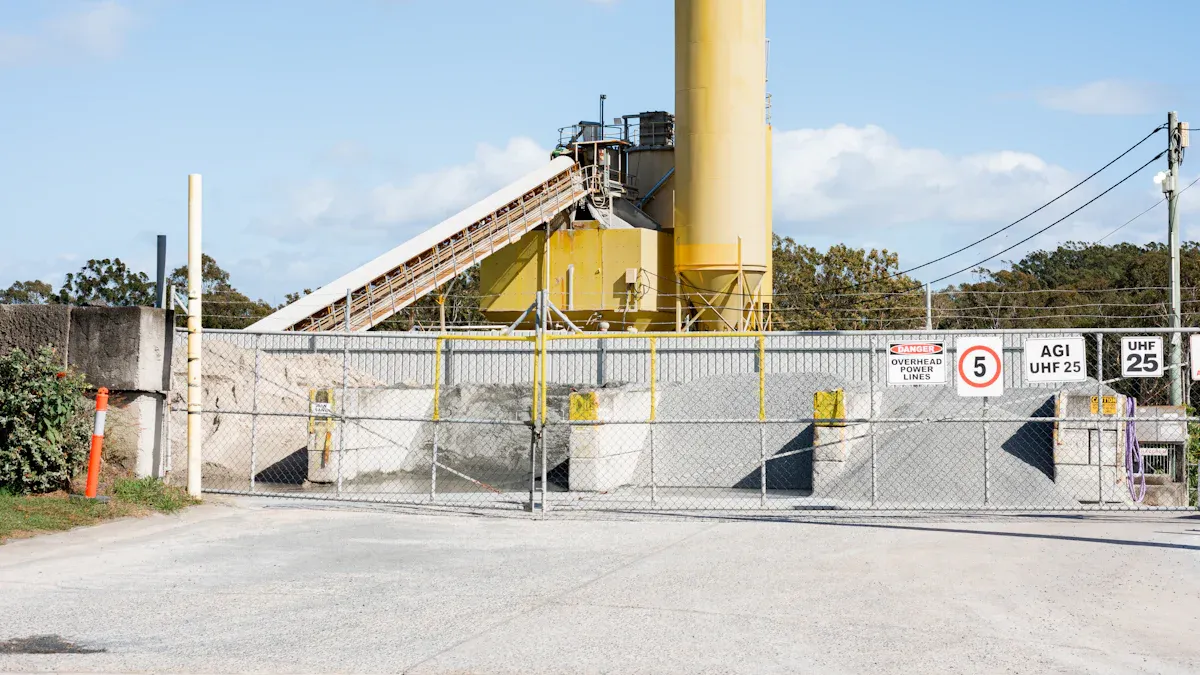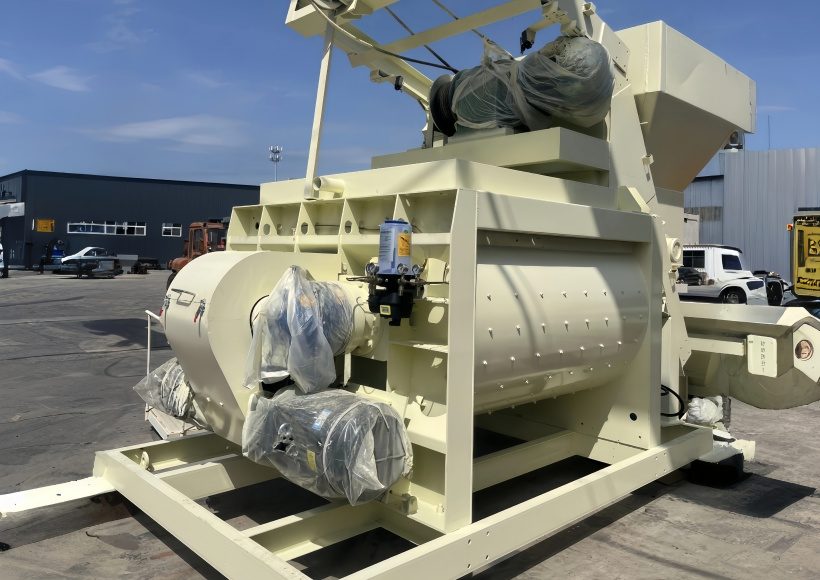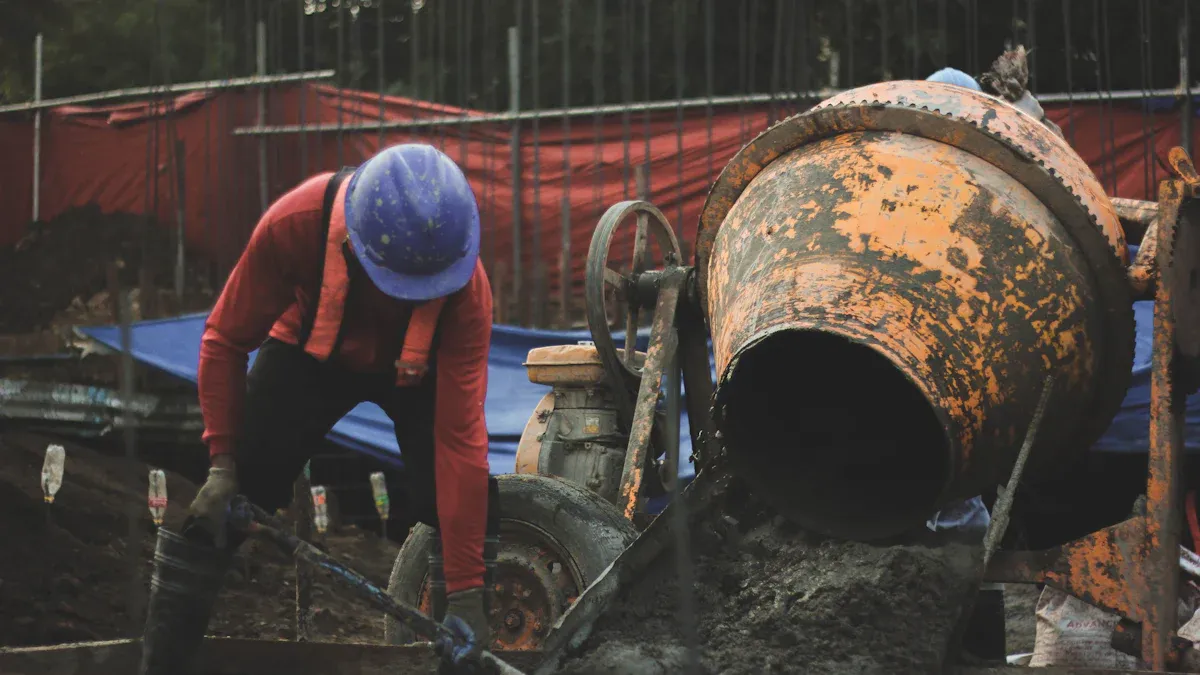

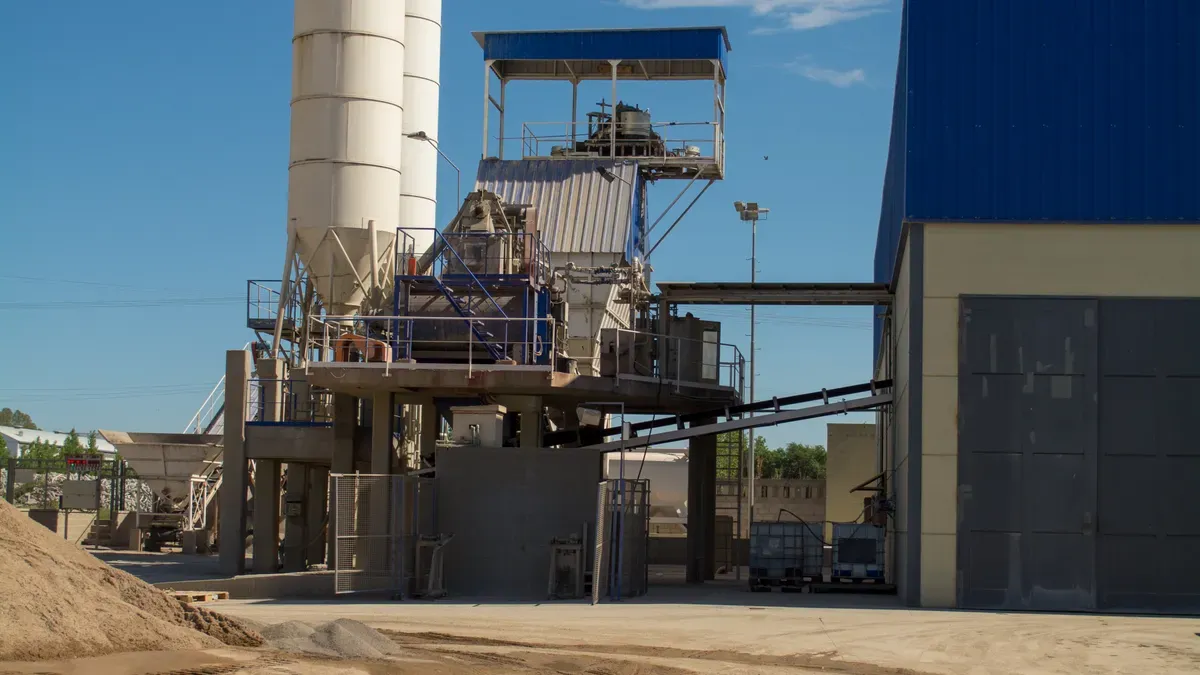
A stationary concrete batching plant is a fixed, all-in-one facility that brings concrete batching and mixing together in one place. People also call this stationary concrete batching plant a ready-mixed concrete plant, and it sits on a permanent foundation.
This post explains what a stationary concrete batching plant is made of and how it works step by step. Readers will see how the main parts of a stationary concrete batching plant work together. The sections also show how stationary concrete batching plants turn raw materials into steady, high-quality concrete.
What Is a Stationary Concrete Batching Plant?

Definition and Core Purpose
A stationary concrete batching plant is a large, permanent structure built for high-volume concrete production. It stays at one address for its whole service life. Crews do not move it between job sites.
The core purpose is simple. The plant gathers raw materials, weighs each one precisely, mixes them, and delivers uniform concrete on demand. Batching means measuring ingredients by weight in the right order. Mixing means blending them into a workable mass. A stationary concrete batching plant handles both jobs under one roof or on one steel frame.
A stationary concrete batching plant serves projects that need a steady supply day after day. Trucks arrive, load, and leave on a fixed cycle. That steady role sets the plant apart from equipment built for short-term work. The concrete plant acts as the hub of a delivery fleet, and the fleet’s schedule depends on its output. Dispatchers track each load, and the plant keeps producing while trucks are on the road.
Stationary vs. Mobile Concrete Batching Plant
The main difference comes down to location and output. A stationary concrete plant is installed fixedly on a foundation and runs at high capacity. A mobile unit travels on wheels or a skid. Mobile units suit short projects, remote sites, or jobs that shift location often. Each design fits its own setting well.
Setup effort tells the same story. A fixed plant needs site preparation, a poured base, and assembly work before the first batch. A mobile plant folds up, rolls onto a trailer, and starts producing soon after arrival. The trade-off is capacity and stability against speed and portability. Crews also need cranes for the fixed version, since silos and mixers arrive as heavy modules.
Contractors choose stationary batch plants when the work runs for months or years at one address. Mobile units make more sense for small crews that finish a site quickly. Neither option wins in every case. The project timeline and the required volume decide the match.
Permanent Foundation and Modular Design
A stationary concrete mixing plant rests on a poured concrete foundation. The foundation carries the weight of silos, bins, and mixers. It also absorbs vibration during mixing. Engineers size the base to match local soil conditions and the plant’s loaded weight. Anchor bolts tie each steel leg to the pad, and shims level the frame before crews tighten the nuts.
Modular design makes these systems practical to build and expand. Manufacturers ship the plant in sections. Crews splice the sections together on site with bolts and connecting frames. This approach keeps transport manageable and speeds up assembly. A concrete batching plant built this way can later gain extra silos or a second mixer line. Owners often plan the foundation with spare anchor points for that future growth.
The fixed base delivers real benefits. Heavy loads no longer stress a trailer frame. Operators can mount walkways, stairs, and service platforms permanently. The layout stays stable, so weighing accuracy holds steady over years of use. Wind bracing on tall silos also becomes simpler, because the structure ties into a rigid pad. Service crews reach every scale and valve without scaffolding.
Several concrete batching plants share this architecture. Buyers who compare stationary concrete batching plants often notice the same pattern: steel modules on a concrete pad, with material flow arranged for gravity. Gravity feeding cuts power use and simplifies maintenance. Smaller concrete batching plants may run a single mixer line, while larger ones add parallel lines.
A stationary concrete batch plant also supports deep storage. Large aggregate bins hold several grades of stone and sand at once. Tall silos store cement and fly ash in bulk. This storage depth lets the site run longer shifts without constant deliveries. Belt conveyors or skip hoists then lift the aggregates to the top of the bins. Most stationary concrete batching plants place the mixer directly under the weighing hoppers, so discharge relies on gravity rather than pumps.
Any concrete batching plant needs a stable base for accurate weighing. A stationary concrete batching plant is installed fixedly, and that fixed footing keeps the scales level. The same logic holds for every unit built this way.
Composition of Stationary Concrete Batching Plant
The parts of a stationary concrete batching plant are arranged to follow the path of the materials. Each group of parts moves raw ingredients from storage to the mixer. Together, they form one connected line.
Aggregate Storage and Handling
Aggregate Bins and Hoppers
An aggregate storage bin holds sand and crushed stone in separate compartments. Most units have three to five compartments, so crews can keep several grades on hand. The steel walls slope down toward a discharge gate at the bottom. A gate opens and drops material onto the next stage.
Hoppers sit below the bins and catch the falling stone. Their funnel shape guides material into a narrow outlet. This design stops piles from forming in corners. Clean, steady flow keeps the batch weight repeatable.
Conveyors and Skip Hoists
Belt conveyors carry aggregates upward at a steady rate. A skip hoist lifts a bucket along a rail and tips it at the top. Both methods feed the weighing hopper above the mixer. Belt systems work well for long runs and high output. Skip hoists take up less floor space and handle sticky mixes well.
Cement and Fly Ash Storage
Silos and Screw Conveyors
Cement storage silos stand tall beside the main frame. Each silo keeps powder dry and lets it flow out through a cone bottom. Fly ash often gets its own silo, because crews add it as a separate ingredient. A screw conveyor then moves powder from the silo to the scale. The enclosed tube keeps dust inside and protects the material from weather.
Weighing and Feeding Systems
Aggregate, Cement, and Water Scales
The weighing system measures every ingredient before it enters the mixer. Aggregate and cement scales use load cells under each hopper. A load cell turns weight into an electrical signal. The controller reads that signal and closes the feed gate at the target weight. Water meters and flow valves handle the liquid side.
Accuracy at this stage drives concrete quality. A small error in cement weight shifts strength across the whole load. Operators calibrate the scales on a set schedule and check them against test weights. The mixing mainframe then blends the weighed materials into a uniform batch. Every concrete batching plant depends on this chain, and stationary concrete batching plants build it into a fixed, gravity-fed layout. Modern concrete batching plants link all scales to one controller, so a single recipe sets every gate and valve. Aggregate silos and the other storage units complete the picture.
How the Batching Process Works
The batching process follows a fixed path. Materials enter storage, get measured, blend in the mixer, and leave as finished concrete. Each stage hands off to the next in a set order. The concrete production process runs on this rhythm, batch after batch, all day long.
Material Intake and Storage
Raw materials arrive by truck and go straight into storage. Sand and stone drop into the aggregate bins. Bulk tankers blow cement and fly ash into the silos through a pipe. Water fills a holding tank or connects to a supply line. Admixtures sit in small tanks near the mixer.
Storage keeps each ingredient ready and dry. Bins hold several grades of aggregate apart, so a recipe can call for coarse stone and fine sand at the same time. Silos protect powder from rain and damp air. A damp silo clogs the screw conveyor and spoils the flow. Good housekeeping at this stage keeps every later step on schedule.
Proportioning and Weighing
Proportioning sets the recipe. The controller reads the mix design and decides how much of each ingredient the batch needs. Then the weighing system measures each one.
- The aggregate gates open and drop stone and sand onto the aggregate scale.
- Load cells read the weight and signal the controller.
- The controller closes each gate once the target weight arrives.
- Cement and fly ash feed from the silos onto their own scale.
- Water meters measure the liquid, and admixture pumps add their dose.
Precise weighing is the first quality driver. A batch with too much cement gets brittle and costly. A batch with too little loses strength. The scales catch these errors before the materials ever meet. Operators calibrate the scales on a schedule and check them against test weights. A concrete batching plant lives or dies by this accuracy, and a stationary concrete batching plant builds the scales into a rigid frame that holds its level for years.
Mixing and Discharge
The weighed materials drop into the mixer. Mixer blades spin and fold the mass until every particle of cement coats the aggregate. Homogeneous mixing is the second quality driver. A short mix leaves dry pockets. An overlong mix wastes fuel and slows the truck queue. The controller times the cycle to match the mix design.
Discharge comes next. The mixer gate opens and releases the batch into a truck chute or a transfer belt. The truck pulls away, and the next batch begins. A concrete plant repeats this loop dozens of times a day, and each loop must match the last.
Wet Mixing vs. Dry Batching
Wet mixing blends water into the concrete inside the plant. The truck receives a finished, workable mix and drives straight to the pour. Central-mix plants work this way, and the method gives tight control over water content.
Dry batching weighs the dry ingredients and loads them into the truck without water. The driver adds water at the site and mixes in transit. This method suits longer hauls, because the concrete stays fresh until the driver starts the drum. Both approaches rely on the same accurate scales upstream. Stationary concrete batching plants handle either method, and many switch between them as jobs demand.
The full sequence — intake, proportioning, weighing, mixing, discharge — runs under one controller. Concrete batching plants that follow this flow deliver repeatable results. Stationary concrete batching plants add a fixed frame and gravity feed, so the flow stays steady shift after shift.
Concrete Types It Can Produce
Ready-Mix and Central-Mix Concrete
A stationary plant can send ready-mix concrete right to the job site. The plant weighs the ingredients, mixes them, and loads the wet concrete into a truck. The driver then takes the load to the pour. This method works well for projects that are a reasonable drive from the plant.
Central-mix concrete takes the same idea one step further. The plant finishes the full mixing cycle before the truck ever leaves. Every load arrives fully blended and ready to place. Crews get tight control over water content and blend uniformity. A concrete batching plant that runs central-mix production gives contractors a dependable product, load after load.
Dry-Batched Concrete for Transit Mixers
Dry batching offers a second path. The plant weighs the sand, stone, and cement and loads them dry into the transit mixer. The driver adds water at the site and lets the drum turn during the trip. The concrete stays fresh until the moment of use.
This method fits longer hauls and jobs with uncertain timing. A driver can hold the dry load and start the clock when the crew is ready. Stationary concrete batching plants support both wet and dry output, so one facility can serve several job types. Operators simply change the recipe settings and the discharge routine.
Custom Mix Designs and Admixtures
Modern plants store many recipes in their control systems. A crew can call up a high-strength mix for a bridge deck and a flowable mix for a foundation pour. Each recipe sets its own weights, water ratio, and cycle time. The operator selects the design, and the plant handles the rest.
Admixtures add another layer of control. Small tanks near the mixer hold retarders, accelerators, air entrainers, and water reducers. Dosing pumps inject each one at the exact moment the recipe calls for it. These chemicals change how the concrete sets, flows, or resists frost. Concrete batching plants with admixture systems give crews the flexibility to match local conditions. A hot-day pour may need a retarder, while a cold-weather job may call for an accelerator. The plant adapts without a major changeover.
Control Systems and Automation
Manual, Semi-Automatic, and Fully Automatic Modes
The control system decides how much of the batch cycle a person runs and how much the machine runs. In manual mode, an operator opens gates and starts the mixer by hand. This mode works well for testing, troubleshooting, or small runs. It needs constant attention, and output stays low.
Semi-automatic mode divides the work. The controller handles weighing and timing, and the operator confirms each step. Fully automatic mode runs the whole loop by itself. The controller opens gates, checks weights, starts the mixer, and releases the batch. One operator can then watch several lines at once. Most high-volume sites pick full automation for steady output.
Recipe Management and Accuracy
A recipe stores the target weight of every ingredient, the water ratio, and the cycle time. The controller recalls a recipe with one selection. It then sets every gate, valve, and pump to match. This takes the guesswork out of the shift and keeps each batch the same as the last.
Accuracy depends on the scales and on regular checks. Operators calibrate load cells against test weights on a set schedule. They also watch for drift, which shows up as batches that run heavy or light. A concrete batching plant with a well-kept control system holds its targets closely. Poor calibration wears down quality quietly, batch after batch.
Monitoring and Quality Control
Sensors send live data to the control panel. Load cells report weights, flow meters track water, and level probes watch silo contents. The system logs each batch and flags any value outside the recipe limits. Operators can then fix the fault before the next load leaves.
Reports help managers spot trends over time. A slow rise in water demand may point to damp aggregate. A drop in cement weight may signal a clogged screw conveyor. Stationary concrete batching plants often link these records to dispatch software, so each truck carries a traceable batch record. Many concrete batching plants also add moisture probes in the aggregate bins. These probes adjust the water dose during mixing, and the batch stays on target despite wet sand or stone.
Advantages of Stationary Concrete Batching Plant
High Volume and Consistent Quality
The biggest draw of a fixed plant is output. A stationary concrete batching plant runs large batches on a short cycle, hour after hour. Trucks line up, load, and leave without long waits. That steady rhythm suits high-volume concrete production projects, where the pour cannot pause for a supply gap. A single plant can feed a whole fleet of mixers across a large site.
Quality holds steady across those long shifts. The scales sit on a rigid frame, so weighing stays accurate from the first batch to the last. The controller repeats the same recipe with the same timing. Crews get uniform concrete load after load, and test results stay predictable. That repeatability is one of the clearest advantages of stationary concrete batching plant setups for structural work.
Reliability and Easy Maintenance
A fixed frame removes much of the wear that comes from constant movement. Heavy modules rest on a poured pad, and vibration from mixing drains into the foundation. Fewer parts work loose, so the failure rate stays low. An efficient and reliable concrete batching plant keeps the delivery schedule intact, even through long production runs.
Maintenance also becomes simpler. Walkways and platforms give crews safe access to every scale, valve, and conveyor. Technicians reach the mixer, the silos, and the weighing hoppers without scaffolding. They can swap a load cell or clear a clogged screw conveyor during a planned stop. A concrete plant built this way rewards routine care with years of steady service.
Common Applications and Projects
Stationary concrete batch plants shine on long, large jobs. Bridge construction needs huge, consistent pours for piers and decks. Dams demand tight control over mix design and water content across months of work. Road construction calls for steady output of pavement concrete. Medium-to-large building projects rely on daily deliveries to keep crews moving. These concrete production projects all reward a fixed plant’s capacity and repeatability.
Flexibility rounds out the list. One facility can switch recipes, run wet or dry batches, and dose admixtures as jobs change. Mobile units still fit best for short projects, remote sites, or work that moves often. Stationary concrete plants simply serve a different need: a long-term hub for steady, large-scale supply. Buyers who weigh both options usually match the machine to the timeline, and the fixed design wins whenever the work stays put.
A stationary concrete batching plant is a fixed, all-in-one facility that stores, weighs, mixes, and delivers concrete from one permanent site.
The operation follows a clear order. Materials move from storage into the scales, then into the mixer, and finally out to the truck. A control system manages every step and keeps each batch on recipe.
That fixed, permanent setup supports consistent, large-scale concrete supply. Stationary concrete batching plants hold their accuracy over long shifts, and concrete batching plants built this way keep mixing on schedule. Crews who need steady output for months rely on a stationary concrete batching plant for exactly this reason.
Frequently Asked Questions
How long does it take to set up a stationary plant?
Setup takes weeks, not days. Crews pour the foundation, let it cure, then bolt the steel modules together. Silos and mixers arrive as heavy sections, so the site needs a crane. Soil conditions and plant size change the schedule, so planners build in buffer time.
Does a stationary plant need a large piece of land?
Yes. The layout needs room for aggregate bins, silos, the mixer frame, and truck lanes. Trucks must enter, load, and exit without blocking each other. Designers also leave space for stockpiles and future expansion. A tight site slows the whole delivery cycle.
Can one plant produce several concrete mixes in a day?
Yes. The controller stores many recipes, and the operator switches between them with one selection. A crew can run a high-strength mix in the morning and a flowable mix in the afternoon. Each recipe sets its own weights, water ratio, and cycle time.
How does the plant keep weighing accurate over time?
Load cells sit under each hopper and turn weight into a signal. Operators calibrate the scales against test weights on a set schedule. They also watch for drift, which shows up as batches running heavy or light. Moisture probes in the aggregate bins correct the water dose.
What happens when aggregate arrives wet?
Wet sand carries extra water, and that water shifts the mix. Moisture probes read the dampness and adjust the water dose during mixing. The batch stays on target despite rain or damp stockpiles. Operators still check the probes on a routine schedule.
Do concrete batching plants run at night?
Many do. A fixed plant can run long shifts, and the control system repeats the same recipe without fatigue. Lighting and staffing decide the schedule, not the machine. Night runs suit large pours that cannot pause for a supply gap.
How much maintenance does a stationary plant need?
Routine care keeps the line running. Crews grease bearings, check belts, and clear screw conveyors on a planned stop. Walkways and platforms give safe access to every scale and valve. A well-kept plant rewards that care with years of steady service.
Can a stationary plant switch to dry batching?
Yes. The operator changes the recipe settings and the discharge routine. The plant then weighs dry ingredients and loads them into the transit mixer without water. One facility can serve both wet and dry jobs, and concrete batching plants that support both modes give contractors more flexibility.