

Concrete mixer
Tongxin Machinery
Concrete mixer
Explore TXMixing JS series twin-shaft concrete mixers for batching plants, precast production and construction projects. Compare batch capacities, feeding arrangements and installation requirements to find a mixer suited to your concrete recipes and production schedule. For an existing plant upgrade, share your current mixer details to discuss compatibility, maintenance access and equipment scope.


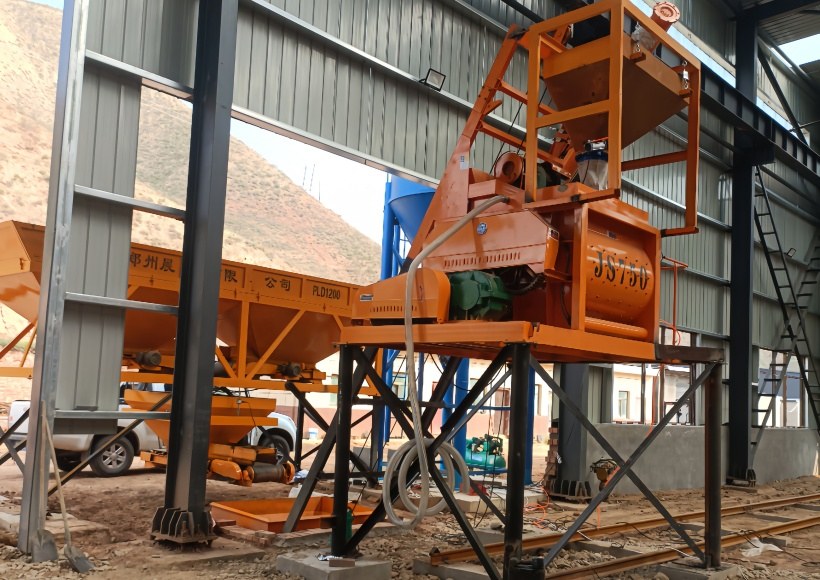
Twin-Shaft Concrete Mixers for Your Production Line
Choosing a concrete mixer involves more than comparing motor power or drum volume. The machine needs to mix your concrete recipe, keep pace with production and fit the way materials enter and leave your line.
TXMixing JS series concrete mixers use twin-shaft forced mixing, with rotating blades working through the materials inside a stationary mixing chamber. They can be considered for standalone mixing installations or integration into a concrete batching plant, subject to the required feeding, weighing and control arrangements.
Explore the models above, then compare batch capacity, recipe suitability and maintenance requirements before selecting your configuration.
Compare Concrete Mixer Batch Capacities
Start with the amount of concrete required per batch. Keep feed capacity separate from discharge capacity: the volume of loose materials loaded into a mixer is not the same as the volume of mixed concrete discharged.
| JS Mixer Model | Published Discharge Capacity | What to Check Next |
|---|---|---|
| JS500 | 500 L / 0.5 m³ per batch | Whether the batch size and complete production cycle meet your daily demand. |
| JS750 | 750 L / 0.75 m³ per batch | Whether feeding and downstream handling can keep pace with the larger batch. |
| JS1000 | 1,000 L / 1.0 m³ per batch | Available loading capacity, installation space and receiving equipment. |
| JS1500 | 1,500 L / 1.5 m³ per batch | Material supply, discharge arrangements and plant integration requirements. |
These are nominal discharge capacities, not guaranteed hourly production rates. The operating batch size and cycle should be confirmed for your concrete mix and equipment configuration.
For smaller batch requirements, review the JS500 concrete mixer and JS750 concrete mixer specifications.
Choose a Mixer That Addresses Your Production Bottlenecks
When Actual Output Falls Below Expectations
A mixer can spend a significant part of its cycle waiting for materials or downstream equipment. Increasing batch capacity alone will not resolve slow loading, restricted discharge or delays in moving fresh concrete.
Assess the complete cycle: loading, mixing, discharge and any waiting time. Match the proposed mixer to your aggregate batching system and the equipment receiving the concrete.
For an existing line, record where time is being lost before deciding whether you need a larger mixer.
When Concrete Consistency Varies Between Batches
Uneven results are not always caused by the mixer itself. Material weighing, aggregate moisture, loading sequence, mixing time and worn components can all affect consistency.
Provide your mix design, aggregate size, required workability and any fibres or specialist admixtures when discussing equipment selection. For demanding recipes, agree on an appropriate mixing trial or performance assessment rather than relying on a general suitability claim.
When Cleaning and Maintenance Reduce Working Time
Concrete buildup and difficult service access can turn routine maintenance into a lengthy interruption. Consider the daily cleaning procedure and the space needed to inspect the chamber, discharge gate and wear components.
Before ordering, ask how blades, liners and shaft seals are serviced, which parts should be stocked and what access the installation must provide. Cleaning or internal maintenance must follow the manufacturer’s isolation and safety procedures.
Replacing a Concrete Mixer in an Existing Plant
A replacement mixer needs to fit the structure, material flow and controls of the existing installation. A matching batch capacity does not make two mixers interchangeable.
| Compatibility Check | Information to Provide |
|---|---|
| Existing equipment | Mixer make, model, nameplate details and photographs. |
| Mounting arrangement | Support-frame dimensions, mounting points and available drawings. |
| Material entry | Aggregate, cement, water and admixture inlet positions. |
| Concrete discharge | Outlet position, discharge height and receiving hopper or vehicle clearance. |
| Electrical and controls | Supply voltage, frequency, available power and control-system details. |
| Service access | Clearance for inspection, cleaning and replacement of major components. |
If the upgrade also involves material weighing or feeding, review the aggregate batching machine alongside the mixer. This helps identify whether the bottleneck sits in the mixing unit or elsewhere in the line.
Compare Concrete Mixer Costs Beyond the Initial Quote
Concrete mixer price depends on the model and equipment package. A quotation for the main mixing unit may not include a loading hoist, support structure, control panel or installation work.
Before comparing offers, clarify:
- Equipment scope: Main unit, feeding equipment, discharge mechanism, supports and controls.
- Wear parts: Blade and liner specifications, replacement costs and part identification.
- Lubrication and seals: Maintenance requirements and the components included.
- Cleaning arrangements: Required access, cleaning equipment and washout handling.
- Installation support: Drawings, electrical connection responsibilities and commissioning scope.
- After-sales arrangements: Warranty coverage, consumable exclusions and spare-parts lead times to your destination.
A lower purchase price may be offset by difficult installation or extended downtime while waiting for replacement parts. Compare the expected maintenance workload and supply arrangements as well as the initial cost.
Concrete Mixer FAQs
What is the difference between a twin-shaft mixer and a drum mixer?
A twin-shaft concrete mixer uses powered blades inside a stationary chamber to force materials to mix. A rotating drum mixer relies on the drum’s movement to lift and tumble the materials.
The appropriate choice depends on the concrete recipe, batch requirements and production arrangement. TXMixing’s JS range uses twin-shaft forced mixing.
How do I estimate a concrete mixer’s hourly output?
Use the confirmed discharge volume per batch and the complete operating cycle, including loading, mixing, discharge and waiting time.
For example, a 0.5 m³ batch completed every two minutes gives a calculated rate of 15 m³/h before allowing for additional interruptions. This is an illustration, not a production guarantee for a particular model.
Include cleaning, replenishment and planned downtime when estimating daily output.
Can a JS concrete mixer handle dry or low-slump concrete?
A twin-shaft forced mixer may suit these applications, but suitability needs to be checked against the actual recipe, batch loading and required mixing performance.
Provide the water-to-binder ratio, aggregate characteristics and any fibres or additives. Specialised mixes may require trials before the operating conditions can be agreed.
How long do concrete mixer blades and liners last?
There is no single service life that applies to every installation. Wear depends on aggregate abrasiveness, material throughput, mix characteristics, component specification and maintenance.
Ask for inspection guidance, adjustment limits and replacement-part information for the selected mixer. Avoid comparing lifespan claims unless the operating conditions and measurement basis are comparable.
Can I replace only the mixer instead of the whole batching plant?
It may be possible if the existing structure, feeding equipment, discharge arrangement and controls are compatible with the replacement.
Send drawings and equipment details for an integration review. If several parts of the line need upgrading, compare the retrofit scope with a coordinated concrete batching plant configuration.
Discuss Your Concrete Mixing Requirements
Tell TXMixing what concrete you produce, the batch size you need and your target daily output. Include your aggregate size, loading method and installation location.
If you are replacing an existing mixer, share its model, photographs and the main problem you want to solve—limited output, inconsistent mixing, difficult maintenance or equipment wear.
Batch capacity and model selection
JS series twin-shaft mixers scale from small precast yards to high-output ready-mix plants. The JS500 handles half a cubic metre per batch for precast products and small sites, the JS750 and JS1000 cover medium plants, and the JS1500 supports continuous production above ninety cubic metres per hour when paired with a matched batching plant.
Cycle time decides real output more than batch size. A shorter cycle lifts nominal capacity, yet aggressive mixing strains blades and liners, so discharge gate timing and wear checks belong in the maintenance plan. Read the JS1500, JS1000, JS750 and JS500 specifications, then confirm the hopper and skip arrangement on the concrete batching plant page.
Find the Right Mixing Plant for Your Project
Tell us what you need to produce, your target output and where the plant will operate. Our team can help you explore equipment configurations, layout options and pricing.
Built Around Your Project
Equipment and plant layouts tailored to your materials, output requirements and available space.
Precision Manufacturing
Laser cutting and robotic welding support component accuracy and consistent fabrication quality.
Proven Project Applications
Equipment supplied for railway tunnels, mountain expressways and overseas infrastructure projects.
Support Beyond Delivery
Installation, commissioning and maintenance support to help you set up and operate your plant.
Discuss Your Plant Requirements
Whether you have a model in mind or are still comparing options, share a few project details to start the conversation.
Not sure which model to choose? Describe your application, and we can discuss the options with you.
Do You Have Any Questions!
- +86 135 9266 6878
- info@txmixing.com
- Room 401, Building 9, No. 1187 Kexue Avenue, Shangjie District, Zhengzhou, Henan 450041, China