

Screw conveyor
Tongxin Machinery
Screw conveyor
Explore TXMixing LSY screw conveyors for cement and powder transfer in concrete batching plants. Select a tubular screw conveyor around your material, required feed rate, conveying length and installation angle. For a new silo connection or an existing conveyor replacement, share your layout and equipment details to discuss a suitable configuration.
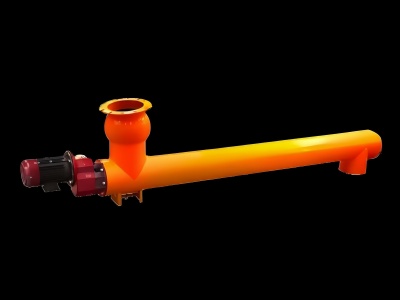
Cement Screw Conveyors for Concrete Batching Plants
A cement screw conveyor transfers powder from storage towards the weighing system. Its performance affects how quickly the plant can prepare each batch: slow or irregular feeding can leave the mixer waiting even when the rest of the equipment has sufficient capacity.
TXMixing LSY screw conveyors use an enclosed tubular structure with a rotating screw to move material along the conveying route. Selection should account for the powder being handled, the installation geometry and the feeding time available within your batching cycle.
For a new installation, plan the conveyor together with the cement storage silo, weighing hopper and supporting structure.
Select a Conveyor That Keeps Pace with Your Plant
Avoid Delays in Cement Weighing
Start with the quantity of cement required per batch and the time available to deliver it. A conveyor that meets average hourly consumption may still be too slow during the shorter filling period of each batching cycle.
Also check whether the silo supplies material consistently. Restricted discharge, uneven flow or downstream interruptions can limit performance independently of the conveyor size.
Account for the Installation Angle
An inclined screw conveyor should be selected for its actual working angle. Increasing the incline can reduce conveying efficiency and change the drive requirements.
A capacity figure quoted for a horizontal arrangement should not be assumed to apply to a steep silo-to-hopper connection. Provide the horizontal distance and vertical rise so the proposed route can be assessed.
Match the Equipment to the Powder
Cement, fly ash and other mineral powders can differ in bulk density, flow behaviour and abrasiveness. The same volumetric flow does not necessarily deliver the same mass of each material.
Specify the material rather than requesting a conveyor by diameter alone. Moisture, lumps, temperature and any tendency to compact should be included in the selection discussion.
How to Choose an LSY Screw Conveyor
Use the following information to define the required configuration before comparing equipment proposals.
| Selection Factor | Information to Provide |
|---|---|
| Material | Powder type, bulk density, moisture condition and any known flow problems. |
| Required feed rate | Material quantity per batch and the time available to fill the weighing hopper. |
| Conveying route | Inlet and outlet positions, horizontal distance, vertical rise and installation angle. |
| Connection dimensions | Silo outlet, receiving inlet, flange dimensions and connection orientation. |
| Feeding conditions | Whether the inlet receives controlled flow or is directly loaded from a silo or hopper. |
| Operating pattern | Start-stop frequency, operating hours and whether loaded restarts may occur. |
| Electrical supply | Site voltage, frequency and control-system requirements. |
| Access and support | Available mounting points and clearance for inspection, servicing and removal. |
Conveyor diameter is only one part of the selection. Screw geometry, speed, material properties, inclination and inlet conditions also influence the achievable feed rate.
Ask for the proposed capacity to be stated against your material and installation conditions.
Address Blockages and Unplanned Downtime
Repeated blockages should be investigated before selecting a larger motor or replacing the conveyor with a similar unit. The underlying problem may be material condition, restricted discharge, inconsistent feeding or an unsuitable installation arrangement.
For an existing conveyor, record:
- When the problem occurs: During startup, normal operation, shutdown or restart after a stoppage.
- Material condition: Whether the powder is damp, lumpy or different from the material originally specified.
- Upstream flow: Whether material leaves the silo steadily or arrives in surges.
- Downstream conditions: Whether the receiving hopper or outlet restricts discharge.
- Equipment history: Changes in noise, leakage, drive loading or maintenance frequency.
Share these observations with the equipment supplier. Inspection and blockage removal should follow the manufacturer’s isolation procedures; repeated restarting is not a substitute for identifying the cause.
Replacing an Existing Screw Conveyor
A replacement needs to match more than the tube diameter and overall length. Small differences in connection positions or drive orientation can create substantial installation work.
Before ordering, provide photographs, the existing nameplate and a dimensioned drawing showing the inlet, outlet and supports. Confirm:
- Connection geometry: Flange sizes, bolt patterns and inlet/outlet orientation.
- Installation dimensions: Connection-to-connection distance, overall envelope and operating angle.
- Drive arrangement: Motor position, available clearance and electrical compatibility.
- Supporting structure: Mounting locations and the support requirements of the replacement.
- Control sequence: Coordination with silo discharge equipment and the powder weighing system.
If conveyor replacement forms part of a wider upgrade, review the complete concrete batching plant cycle to identify where additional capacity is actually needed.
What Affects Screw Conveyor Price?
Screw conveyor price depends on the conveying duty and the supplied configuration. Similar-looking units may differ in drive specification, construction, connections and maintenance requirements.
| Quotation Item | What to Compare |
|---|---|
| Conveyor assembly | Diameter, conveying length, screw configuration and housing specification. |
| Motor and gearbox | Suitability for the material, incline, operating cycle and starting conditions. |
| Connections and supports | Included flanges, couplings, support components and site modifications. |
| Sealing and service parts | Seal arrangement, bearing details and replacement-part availability. |
| Controls | Included electrical components and responsibility for plant integration. |
| Delivery and installation | Packing, freight, assembly requirements and commissioning support. |
Compare quotations against the same material, feed rate and installation drawing. This makes it easier to identify differences in scope before the equipment reaches site.
Screw Conveyor FAQs
Can the same screw conveyor handle cement and fly ash?
It may be suitable for either material, but the conveying duty must be checked separately. Differences in bulk density and flow behaviour can change the mass delivered per hour and the required equipment configuration.
If materials must remain segregated, separate conveying routes may be needed. Do not assume that changing the stored powder leaves performance unchanged.
Why is my screw conveyor delivering less material than expected?
Possible causes include an installation angle different from the quoted conditions, restricted silo discharge, inconsistent inlet feeding, material buildup or downstream restrictions.
Check whether the quoted capacity refers to the same material, bulk density and operating arrangement. The cause may sit outside the conveyor itself.
Can I increase capacity by fitting a larger motor?
Not necessarily. A larger motor does not automatically increase the volume the screw can move or resolve an inlet restriction.
Changes to speed or drive power require an engineering review of the screw, shaft, gearbox, bearings and operating conditions. Establish the cause of low output before modifying the drive.
Is a screw conveyor the same as a screw feeder?
The terms are sometimes used interchangeably, but their duties differ. A conveyor transfers material supplied to it, while a feeder is designed to control withdrawal from a hopper or silo.
Where the inlet is directly loaded by stored material, feeding conditions and starting loads need specific consideration. Describe the actual installation when requesting equipment.
What information is needed for a replacement conveyor quote?
Provide the existing model, material handled, required feed rate and installation dimensions. Include photographs of both connections, the drive and the supports.
State any current problems, such as slow filling, leakage or difficult restarts, so the replacement can be assessed against the operating requirements rather than copied from dimensions alone.
Discuss Your Powder Conveying Requirements
Send TXMixing your material type, required feeding rate and the distance between the silo outlet and receiving hopper. Include the vertical rise, connection dimensions and site power supply.
For an existing installation, share photographs and describe the problem you want to solve. These details help define the conveyor configuration and quotation scope.
Diameter, length and angle selection
The LSY cement screw conveyor is specified by tube diameter, conveying length and working angle. A 219 mm tube covers short runs from silo outlet to mixer hopper, while 273 mm and 323 mm tubes handle longer distances and higher feed rates. Inclination above forty five degrees cuts throughput, so a horizontal run with a short vertical lift stays the most efficient arrangement.
Motor power follows the length and material density, and a slight oversizing protects the drive during cold starts. Check the LSY screw conveyor specification for flight pitch and bearing options, then confirm the outlet height on the cement silo page before ordering.
Find the Right Mixing Plant for Your Project
Tell us what you need to produce, your target output and where the plant will operate. Our team can help you explore equipment configurations, layout options and pricing.
Built Around Your Project
Equipment and plant layouts tailored to your materials, output requirements and available space.
Precision Manufacturing
Laser cutting and robotic welding support component accuracy and consistent fabrication quality.
Proven Project Applications
Equipment supplied for railway tunnels, mountain expressways and overseas infrastructure projects.
Support Beyond Delivery
Installation, commissioning and maintenance support to help you set up and operate your plant.
Discuss Your Plant Requirements
Whether you have a model in mind or are still comparing options, share a few project details to start the conversation.
Not sure which model to choose? Describe your application, and we can discuss the options with you.
Do You Have Any Questions!
- +86 135 9266 6878
- info@txmixing.com
- Room 401, Building 9, No. 1187 Kexue Avenue, Shangjie District, Zhengzhou, Henan 450041, China