

Cement silo
Tongxin Machinery
Cement silo
Explore TXMixing’s cement storage silos for concrete batching plants and bulk powder handling. Our bolted cement silo design uses modular steel panels assembled on site, allowing the silo body to be shipped in sections. Discuss your required storage capacity, material, discharge height and plant layout with TXMixing to define the silo and supporting equipment for your project.
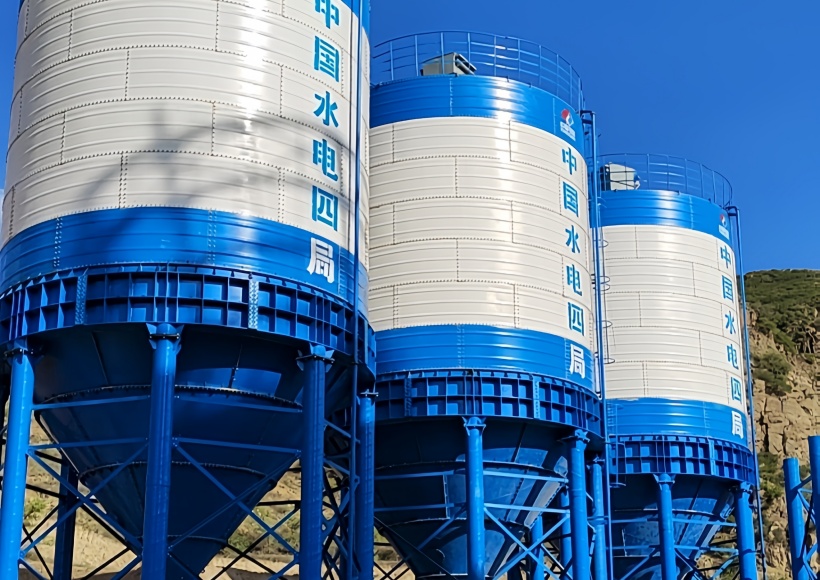
Bolted Cement Silos for Concrete Batching Plants
A bolted cement silo stores bulk cement in a steel structure assembled from individual panels. Also known as a sectional or modular cement silo, this design allows the silo body to be transported in sections and assembled at the project site.
Explore the TXMixing bolted cement silo for product details and configuration information. When planning your installation, consider the storage requirement together with delivery access, foundation conditions and the equipment that transfers material from the silo to the batching system.
Why Choose a Modular Cement Silo?
Sectional Construction for Transport
The panelised structure avoids transporting the complete silo body as one large vessel. This can be useful for export projects and sites where transporting a fully assembled silo would be difficult. Packing arrangements and freight requirements should be confirmed for the selected size.
On-Site Assembly
Bolted panels are assembled at the destination according to the installation drawings. Plan for suitable lifting equipment, assembly access, joint sealing and inspection. Installation time depends on the silo dimensions, site preparation and available crew.
Integration with Your Batching System
A cement storage silo needs to work with the plant’s material transfer and weighing equipment. Confirm the outlet position, discharge height and screw conveyor route before finalising the layout.
Level monitoring, dust filtration and flow-assistance equipment should be specified as part of the agreed supply scope.
How to Choose the Right Cement Silo Capacity
Choose storage capacity around your cement consumption and delivery schedule. A larger silo is not automatically the best option if it adds unnecessary height, foundation work or installation constraints.
| Selection Factor | What to Confirm |
|---|---|
| Material to be stored | Identify cement, fly ash or another powder and provide its bulk density and handling characteristics. |
| Daily consumption | Estimate material use during normal production and peak demand. |
| Delivery schedule | Consider tanker load size, delivery frequency and the reserve stock required between deliveries. |
| Usable storage | Ask how nominal capacity relates to usable volume and the material density used in the calculation. |
| Site dimensions | Check available footprint, height restrictions, filling access and maintenance clearance. |
| Discharge arrangement | Match the silo outlet and supporting structure to the conveyor route and downstream equipment. |
If your plant uses cement and fly ash, plan separate storage for materials that must remain segregated. The number and size of silos should reflect the mix designs and stock levels required by your operation.
Equipment to Confirm with Your Cement Storage Silo
Compare the complete storage and discharge package, rather than the silo body alone.
- Dust collection: Confirm the filter specification and its suitability for the filling conditions and local requirements.
- Level monitoring: Clarify the included indicators, high-level alarms and connections to the control system.
- Flow assistance: Discuss whether the stored powder requires aeration or another discharge aid.
- Pressure protection: Confirm the required pressure and vacuum protection for the proposed filling system.
- Material transfer: Check the discharge valve, screw conveyor capacity, length and installation angle.
- Access and maintenance: Review ladders, platforms, inspection points and safe maintenance access.
Ask for the quotation to distinguish included components from optional equipment, installation work and items supplied locally.
Cement Silo FAQs
What is the difference between a bolted and a welded cement silo?
A bolted silo is delivered in sections and assembled on site. A welded silo may be transported as an assembled structure or fabricated on site, depending on its size and design.
The practical choice depends on transport restrictions, storage requirements, lifting access and the installation resources available at the destination.
Can the silo store fly ash as well as cement?
A silo can be designed for fly ash storage, but material suitability must be confirmed. Bulk density, flow behaviour, filtration and discharge requirements may differ from those of cement.
Provide the intended material specification before selecting a silo or changing the material stored in an existing unit.
How much does a cement silo cost?
Cement silo price depends on capacity, structural design, accessories and the delivery scope. Freight, foundations, lifting equipment and installation can also affect the total project cost.
For a useful comparison, request an itemised quotation covering the silo body, supporting structure, filters, monitoring equipment, discharge components and installation services.
What information is needed before installation?
Prepare the site layout, required storage capacity, material details, discharge height and filling arrangement. The supplier also needs the destination and relevant site design conditions to define the structure and foundation requirements.
Complete foundation design and site preparation against the approved project drawings before assembly begins.
Can a cement silo be connected to an existing concrete batching plant?
It may be possible after reviewing the layout and equipment interfaces. Check the available space, discharge height, conveyor route, weighing system and controls.
Share photographs, drawings and existing equipment details so the connection requirements can be assessed before ordering. If you are planning a complete production line, explore our concrete batching plants alongside your silo requirements.
Discuss Your Cement Storage Requirements
Planning a new batching plant or adding storage to an existing line? Send Tongxin Machinery your material type, required capacity, project location and available site layout.
Include any requirements for discharge height, screw conveyors, dust collection and installation support so the quotation can address the complete equipment scope.
Silo capacity and model selection
Storage capacity follows daily cement demand and delivery rhythm rather than site size alone. A 50 t silo suits a small batching plant that receives cement every day, a 100 t silo covers a mid-size plant working on two-day delivery intervals, and 200 t or larger serves projects with long haul distances or restricted delivery windows.
Discharge arrangement shapes the rest of the line. A screw conveyor feed suits short runs into the mixer, air aeration keeps fine powders moving in humid weather, and a dust collector protects the filling point. Review the bolted cement silo specification for panel sizes and discharge heights, then match the silo to the cement screw conveyor and the plant layout before confirming the order.
Find the Right Mixing Plant for Your Project
Tell us what you need to produce, your target output and where the plant will operate. Our team can help you explore equipment configurations, layout options and pricing.
Built Around Your Project
Equipment and plant layouts tailored to your materials, output requirements and available space.
Precision Manufacturing
Laser cutting and robotic welding support component accuracy and consistent fabrication quality.
Proven Project Applications
Equipment supplied for railway tunnels, mountain expressways and overseas infrastructure projects.
Support Beyond Delivery
Installation, commissioning and maintenance support to help you set up and operate your plant.
Discuss Your Plant Requirements
Whether you have a model in mind or are still comparing options, share a few project details to start the conversation.
Not sure which model to choose? Describe your application, and we can discuss the options with you.
Do You Have Any Questions!
- +86 135 9266 6878
- info@txmixing.com
- Room 401, Building 9, No. 1187 Kexue Avenue, Shangjie District, Zhengzhou, Henan 450041, China