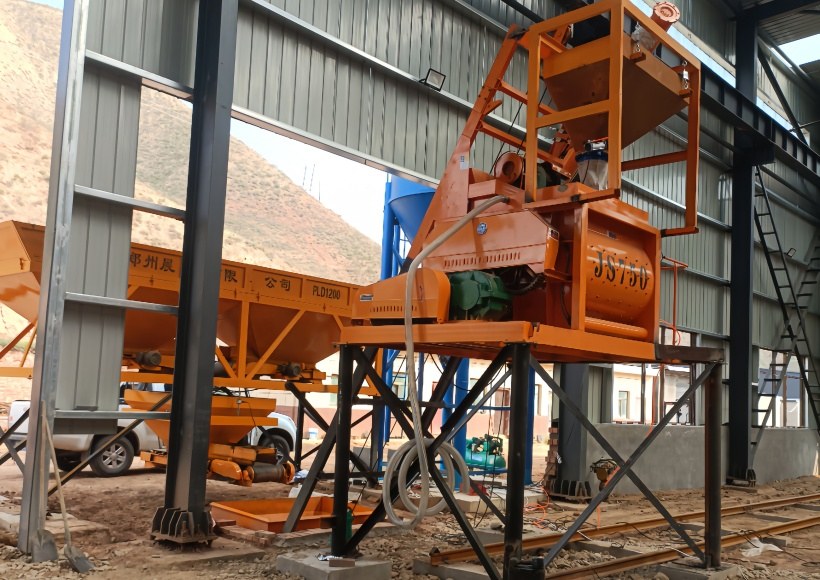
JS500 Twin-Shaft Concrete Mixer for Small-Scale Production
The TXMixing JS500 concrete mixer is designed for small-scale concrete production, precast manufacturing and construction applications. Its twin-shaft forced mixing system combines aggregates, cement, water and other mix components through mechanical mixing, helping produce consistent batches for different concrete applications.
Unlike a standalone gravity mixer, the JS500 uses rotating mixing blades to move materials through the mixing chamber. This makes it suitable for a range of concrete formulations, from dry-hard mixes to plastic and flowable concrete.
The mixer can operate independently or work as the main mixing unit in a compact concrete batching system. For buyers looking to establish a small production line, it can be integrated with a suitable PLD aggregate batching machine and supporting material supply equipment.
Key Features of the JS500 Concrete Mixer
Twin-Shaft Forced Mixing System
The JS500 uses two horizontal mixing shafts with staggered mixing blades. During operation, the blades move and turn materials throughout the mixing chamber, helping distribute aggregates, cement and water evenly.
This mixing principle is suitable for different concrete formulations and supports controlled batch production in precast plants and construction operations.
Wear-Resistant Mixing Components
Mixing blades and chamber liners are exposed to continuous contact with aggregates and cement. The product information describes these as wear-resistant components designed for demanding mixing conditions.
Shaft-end sealing is also incorporated to help prevent cement slurry leakage during operation. These details are worth considering when comparing mixer construction and long-term maintenance requirements.
Flexible Concrete Mixing Applications
The JS500 is designed to handle several types of concrete and mortar, including:
- Dry-hard concrete: Used in precast manufacturing and applications requiring relatively low-workability mixes.
- Plastic concrete: Commonly used in building construction and general concrete production.
- Flowable concrete: For applications requiring a more workable concrete mix.
- Lightweight aggregate concrete: For concrete formulations using lightweight aggregates.
- Mortar: For suitable cement-based mortar mixing applications.
The actual material suitability should be checked against the mix design and aggregate characteristics.
Practical Operation and Maintenance
The existing JS500 configuration includes an inspection window for checking the mixing process, a water supply arrangement for flow regulation and electrical protection features.
For routine maintenance, operators should pay particular attention to mixing blades, chamber liners, shaft seals, lubrication and the discharge mechanism. Easy access to these working components helps simplify inspection and replacement.
Applications of the JS500 Concrete Mixer
The JS500 is suitable for smaller concrete production operations where a dedicated mixing unit is required.
- Precast concrete plants: For producing concrete blocks, pipe piles and other precast components.
- Small construction projects: For concrete preparation at building sites and local infrastructure projects.
- Road and bridge construction: For concrete mixing in supporting construction operations.
- Water conservancy projects: For concrete production used in water-related civil engineering works.
- Small commercial batching plants: For compact production facilities supplying concrete to nearby construction projects.
JS500 as the Main Mixer in an HZS25 Concrete Batching Plant
The JS500 can be used as the main mixing unit in an HZS25 concrete batching plant. In this arrangement, it works with an aggregate batching machine, material weighing equipment, feeding systems and a central control unit.
For a typical HZS25 configuration, TXMixing identifies the PLD800 aggregate batching machine as a matching option for the JS500. The batcher handles aggregate proportioning before the materials are transferred to the mixer.
When planning the complete system, buyers should consider the number of aggregate grades, raw material storage, feeding method and the coordination between batching and mixing cycles.
Read more about the PLD concrete batching machine and model selection to understand how the batching equipment works with a twin-shaft mixer.
For a complete production solution, discuss the required plant layout and supporting equipment with Tongxin Machinery.
What to Consider When Selecting a JS500 Mixer
Before purchasing a JS500 concrete mixer, consider the following aspects of your production requirements.
Concrete Mix Requirements
Identify the concrete types you intend to produce, including aggregate grading, cement content and required workability. These details help determine whether the mixing arrangement is suitable for your application.
Standalone or Batching Plant Operation
Decide whether the mixer will operate independently or form part of an HZS25 batching plant. An integrated system requires compatible aggregate batching, material feeding and discharge equipment.
Aggregate Batching Arrangement
Consider how many aggregate types need to be stored and proportioned. The choice of batching machine should reflect your concrete mix designs and material handling requirements.
Installation Conditions
Check the available installation area, foundation, material feeding access and discharge arrangements. For an existing production facility, provide the supplier with photographs and equipment drawings where available.
Maintenance and Replacement Parts
Ask about the availability of mixing blades, liners, shaft seals and other wear components. Understanding maintenance access and replacement requirements is important for planning equipment operation.
Frequently Asked Questions
What type of mixer is the JS500?
The JS500 is a twin-shaft forced concrete mixer. It uses rotating mixing blades to combine materials mechanically rather than relying on gravity mixing.
What materials can the JS500 mix?
It is designed for dry-hard concrete, plastic concrete, flowable concrete, lightweight aggregate concrete and suitable mortar formulations.
Can the JS500 operate independently?
Yes. The JS500 can operate as an independent mixing unit when suitable material feeding and batching arrangements are provided.
Can the JS500 be used in an HZS25 concrete batching plant?
Yes. It can serve as the main mixer in an HZS25 system, working with aggregate batching and supporting equipment to coordinate material preparation and concrete production.
Which batching machine is suitable for the JS500?
The PLD800 is identified by TXMixing as a typical matching aggregate batching machine for the JS500 in an HZS25 configuration. The final arrangement should be confirmed against the required aggregate types and production process.
What maintenance does the JS500 require?
Routine maintenance includes checking mixing blades and liners, inspecting shaft seals, maintaining lubrication and checking the discharge mechanism. Follow the manufacturer’s maintenance instructions for the selected configuration.
The detail behind this unit is collected in three companion articles: JS500 concrete mixer manufacturing quality, JS500 concrete mixer price analysis and how to mix concrete on site. Each records how the plant was set up, measured and maintained on real jobs, with the figures our engineers check before quoting.