
Blades, liners and shaft seals wear on a schedule, not by accident. A JS1000 concrete mixer wear parts plan turns that schedule into hours on a calendar, so a plant never waits two weeks for a liner plate. This guide covers what wears, when it wears, what to stock and how to price it per cubic metre produced.
JS1000 Concrete Mixer Wear Parts That Actually Fail
Four groups of parts cause almost every unplanned stop on this machine. Blades and arm tips move the load, drum liners protect the shell, seals keep dust out, and bearings carry the shafts. Nothing else on the JS1000 concrete mixer wear parts list fails nearly as often or costs as much in lost output.
Mixing Blades and Arm Tips
Blades push aggregate against the drum wall, so the leading edge takes the heaviest load of any surface inside the drum. A worn edge stops folding the mix into itself, and the batch then needs longer to homogenise. Most operators notice the blade only after batch time has climbed by several seconds.
Arm tips wear faster than the blade body, because the tip leads the sweep through the load and meets the stone first. Measure tip thickness against the drawing every two hundred hours of batching. Changing tips early keeps the blade body in service and cuts the cost of every change by a useful margin.
Drum Liners
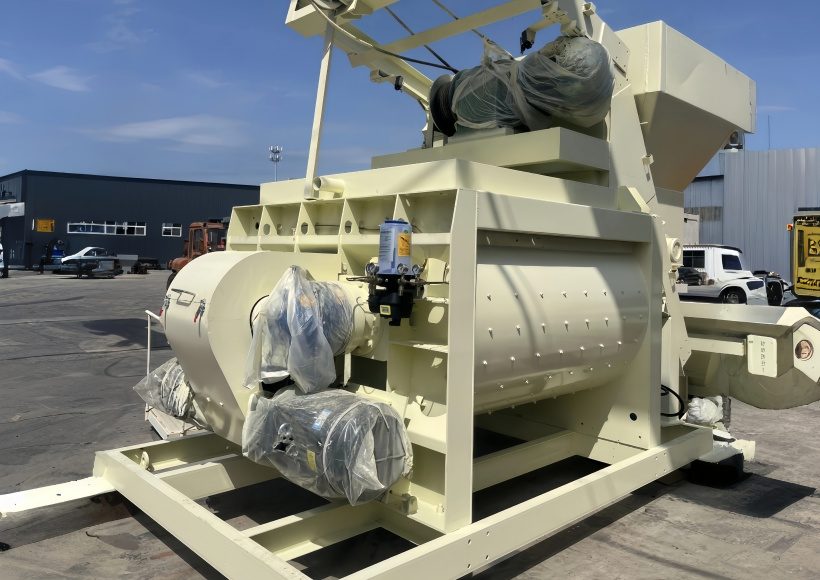
Liners protect the shell, and the gaps between plates decide how fast the shell wears underneath them. One plate that has lost half its thickness has already stopped protecting the wall behind it. Measure at three points per plate and write the numbers into the inspection sheet at each visit.
Bolt heads wear flat and quietly lose torque, which is hard to see without a wrench. A loose plate hammers the shell and starts cracks at the fixing holes within a season. Torque every bolt on the JS1000 concrete mixer wear parts schedule, not when a plate begins to knock under load.
Shaft Seals and Bearings
Seals sit between the shaft and the drum end plate, where dust is always present in quantity. A seal that has begun to leak lets fines into the bearing housing behind it. That damage does not creep forward slowly, it finishes the bearing within a few weeks of batching.
Bearings tolerate load, heat and vibration, but they do not tolerate dust or moisture in the housing. Grease them on schedule with the specified grade, and treat any temperature rise above baseline as an early warning. An early replacement costs a fraction of a seized shaft and a lost week.
Replacement Schedule by Working Hours
Hours are a better clock than calendar days, because two plants running the same machine wear it at very different rates. Feed material, batch size and shift length all change the rate in ways a calendar cannot see. A JS1000 concrete mixer wear parts plan tied to hours can be adjusted to the site.
First 500 Hours
The first stretch is bedding in rather than wearing out, so it rewards attention more than parts. Check blade bolts, liner torque and seal condition at fifty hours, then again at two hundred. Loose fixings found in this window point to a build issue rather than a wear issue.
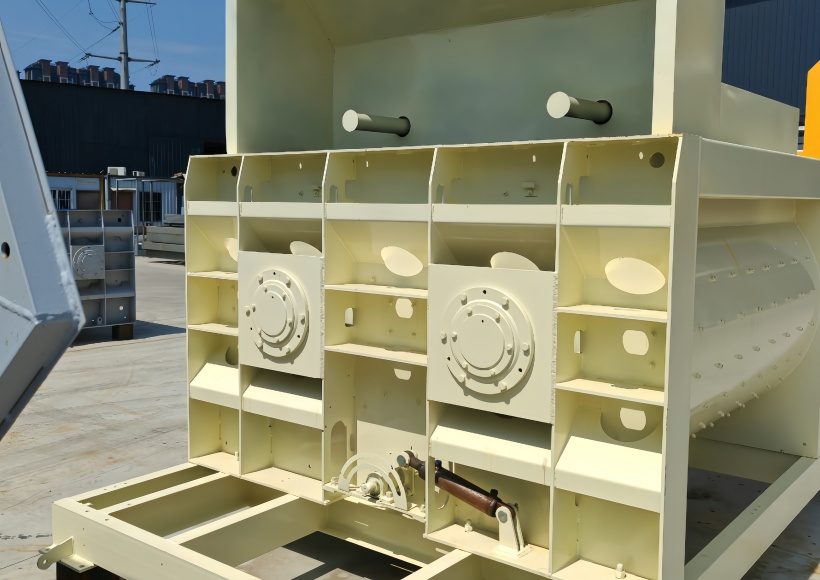
Record the baseline current draw at the end of this period, with the drum loaded rather than empty. Every later reading is compared against that number, which turns a vague sense of trouble into a figure. Baseline data is the cheapest diagnostic tool any plant owns, and it costs one afternoon.
500 to 2,000 Hours
Here the working parts begin to earn and lose their keep, and inspection intervals matter more than opinions. Inspect blades every two hundred hours and liners every five hundred, then shorten the interval for abrasive feed. River gravel and crushed stone do not wear a drum at the same rate at all.
Check seal leakage at every inspection, because a dry looking seal can still be passing fines into the housing. Replace blades as a set when the inspection says so, never one at a time. Mixing new blades with worn ones disturbs the flow pattern and adds seconds to every batch.
Beyond 2,000 Hours
After two thousand hours the whole wear package needs review, not just the plate you can see when the door opens. Shaft run out, gear backlash and shell thickness all matter at this point in the machine’s life. A drum outside tolerance will consume new liners very quickly indeed.
Plan the overhaul before the season starts, never in the middle of the busiest month. A plant that stops for a scheduled two days loses output it can plan around and quote for. A plant that stops for an unplanned week loses contracts it cannot recover.
Stocking List for a Single Mixer
Stocking is a decision about hours saved rather than money held in a bin. A plant that carries one wear set spends a little to avoid a long stop in the middle of a pour. The right JS1000 concrete mixer wear parts stock covers a normal change and one bad Friday.
Parts You Should Always Hold
Hold one full set of blades and tips, two liner plates and one spare seal kit per mixer. That inventory covers a normal wear change without a purchase order or a phone call to the supplier. It also covers the failure that always arrives at the end of a busy week.
Add fasteners, because bolts and washers disappear during every change and are never in the box. A missing bolt stops a plate change as effectively as a missing plate does. Keep them in a labelled bin beside the drum, never in a central store across the yard.
Parts to Order on Lead Time
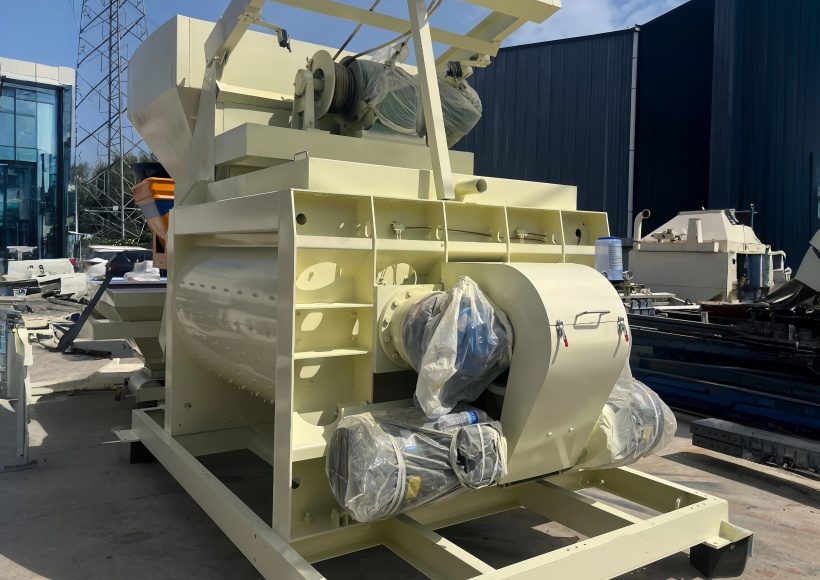
Bearings, shaft assemblies and gearbox parts are ordered on lead time rather than on failure. Write the supplier lead time in weeks beside each item and place the order when inspection shows the trend. A bearing with thirty percent of its life left is a scheduling decision, not a purchase.
For imported machines, hold one gearbox seal set locally, because the seal is small and the freight is not. Our JS1000 concrete mixer ships with a numbered parts list, so an order carries the correct reference on the first attempt rather than the third attempt with freight already booked.
Consumables and Tools
Grease, sealant, anti seize compound and a torque wrench belong on the same shelf as the parts themselves. Without them the crew improvises, and improvisation on a liner bolt is how shells crack at the fixing holes. Keep a thickness gauge beside the inspection sheet, ready to use without a search.
Signs You Left a Part Too Long
The machine usually announces wear before it fails, and the announcement arrives in numbers rather than in noise. Current, batch time, grease condition and mix quality all move before a breakdown. Reading them early is the whole point of a JS1000 concrete mixer wear parts routine.
Current Rise and Batch Time
Worn blades increase drag, so motor current climbs before anything becomes audible to the operator. A rise of five to eight percent against the recorded baseline deserves a same week inspection. Batch time creeping up by ten seconds is the same signal wearing a different coat.
Noise, Leakage and Mix Quality
Knocking at the drum wall means a loose liner or a worn bolt seat, and both worsen with every batch. Grease leaking at the end plate means a failed seal and dust already inside the housing. Both are cheap to fix this week and expensive to fix next month, and neither improves by waiting.
Downstream Damage
Wear almost never stays local to the part that started it. Fines passing a failed seal reach the bearing, and a thin liner lets the shell crack under load at the weld seam. The cost curve stays flat for a long time, then it turns nearly vertical without warning.
Buying JS1000 Concrete Mixer Wear Parts Without Guesswork
Most parts problems begin with a vague purchase order written in a hurry. A part number, a hardness range and a tolerance are the three things that make an order repeatable across years. Ask for all three before comparing any two quotations on price alone.
Material and Hardness Questions
Ask for the material grade and the hardness range in writing, not in conversation on a factory visit. A blade made from a harder alloy can wear the liner instead of the aggregate it is meant to move. Hardness without a matching liner specification simply moves the problem across the drum.
Ask whether the plate is cast or rolled, because the two behave differently under impact and abrasion. Cast plates resist abrasion well, rolled plates tolerate shock better and suit large stone. A plant feeding big aggregate needs the second property as much as the first one.
Dimensions and Tolerances
A part five millimetres out of position will fit and will not work properly under load. Ask for drawing numbers and check the first delivery against them before installing anything. Establish that habit once and every later JS1000 concrete mixer wear parts order becomes predictable.
Tolerance on bolt holes matters most, because a misaligned hole distorts the plate when it is torqued down. A supplier who quotes the tolerance is a supplier who measures the plate before shipping it. A supplier who says standard is telling you something quite different about the workshop.
Supplier Lead Times and Minimums
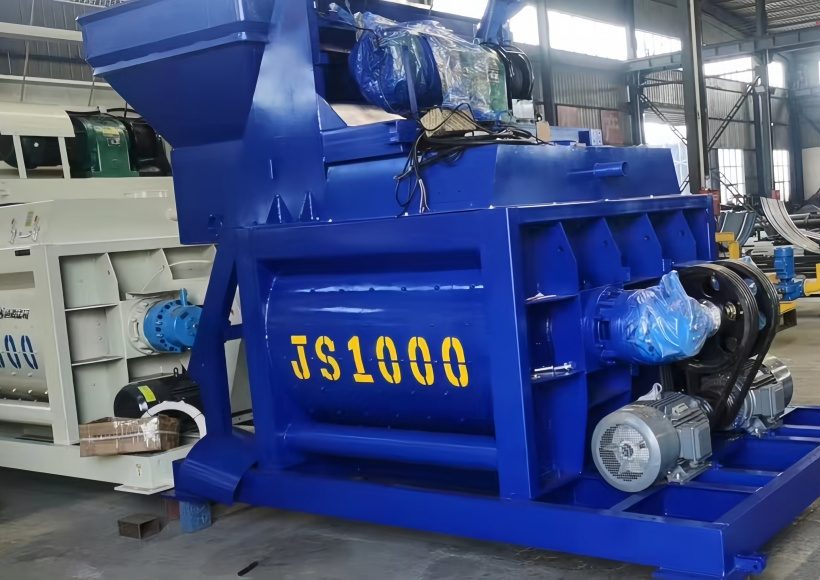
Ask for lead time in weeks and minimum order quantity in units, then compare two suppliers on both figures side by side. A short lead time with a high minimum is worse than a longer one with none. Only the combination of the two shows the real cost of holding stock.
Cost of Wear Parts per Cubic Metre
List price is a poor measure, because a cheap plate that fails early costs more than an expensive one that lasts. The useful number is cost per cubic metre produced over a full year. That number lets you compare suppliers, materials and maintenance habits honestly.
How to Calculate It
Add the annual spend on blades, liners, seals and bearings, then divide by annual cubic metres produced. The result is the honest wear cost of the machine, usually a small number that surprises most owners. Compare that figure across suppliers rather than comparing list prices.
Include labour hours, because a change taking two hours longer is not cheaper at the same part price. Our HZS60 plant and the HZS90 plant both run this mixer, so one stock list serves both machines on the same yard, whatever the batch size happens to be.
Where Plants Overspend
Overspending usually comes from changing one blade at a time or buying the cheapest plate on the list. Mixed wear disturbs the flow, and the cheap plate often arrives with the wrong hardness for the liner. Neither mistake appears in the purchase ledger as an error, which is why it repeats.
The JS750 mixer and the JS500 mixer use smaller versions of the same wear set, so a yard running several sizes can hold one supplier relationship. Send the serial number and the latest inspection sheet through the contact page, and we will confirm the JS1000 concrete mixer wear parts list against it.