
Required capacity = peak daily cement consumption × days of cover + safety margin. That line answers how to calculate cement silo capacity for a concrete batching plant.
You can give the result in tons, tonnes, barrels, or cubic meters. Check the unit before you order, because buyers differ.
Volume follows the silo shape: cylinder volume = π × radius² × cylinder height, plus cone volume = one-third × π × radius² × cone height. Mass = total volume × bulk density, usually 650 to 1600 kg/m³ for powders.
Split large silos when delivery trucks cannot reach the site. Check every figure with your supplier.
Cement Silo Sizing Factors
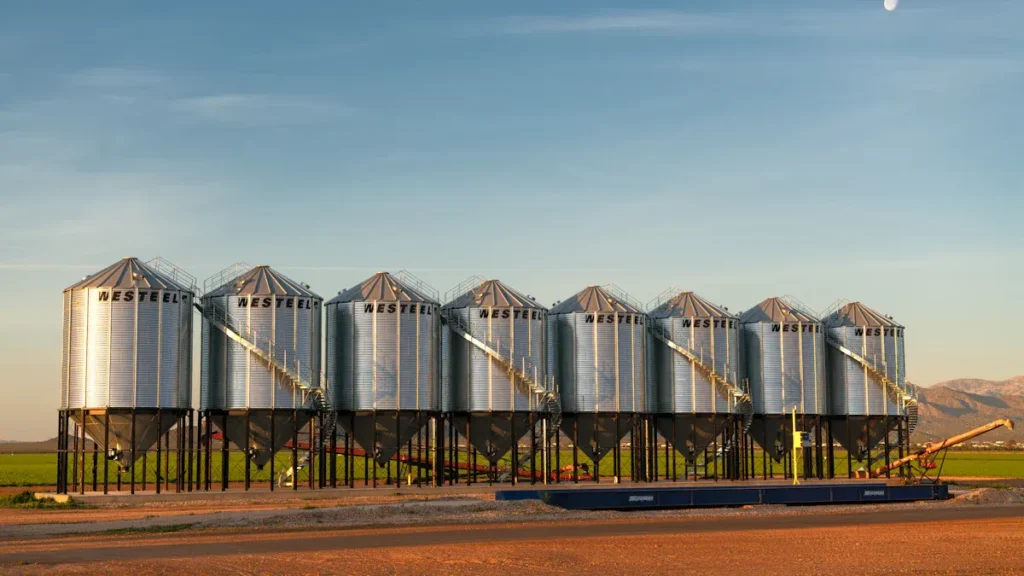
Sizing starts with two numbers: how much cement you use in a day, and how many backup days of storage you need. Capacity should match production needs, material use, and project requirements. You do not pick a silo size from a catalog first and then fit the plant around it.
Peak-Day Consumption and Plant Output
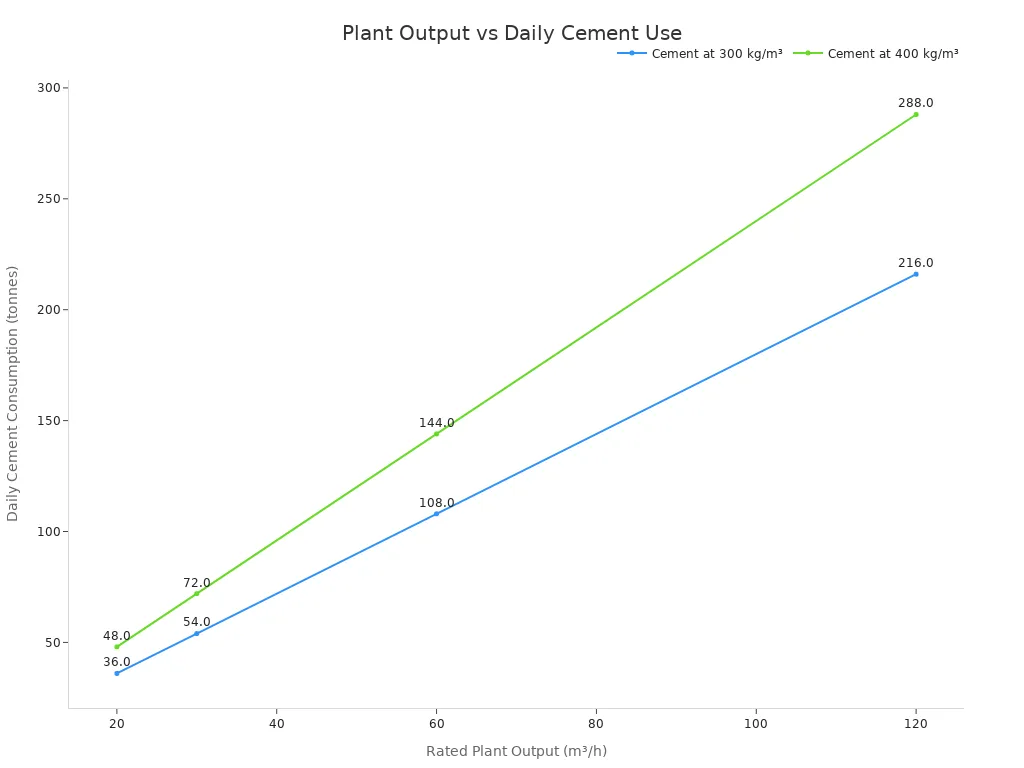
Plant output drives daily cement use. One cubic meter of concrete usually holds 300 to 400 kg of cement, depending on the mix design. A plant rated at 100 m³/h therefore uses about 30 to 40 tonnes of cement per hour.
Plan on 75% of rated output, not the nameplate figure. The table below shows cement used in one 8-hour shift.
| Rated plant output | Planning output (75%) | Concrete in 8 hours | Cement at 300 kg/m³ | Cement at 400 kg/m³ |
|---|---|---|---|---|
| 20 m³/h | 15 m³/h | 120 m³ | 36 tonnes | 48 tonnes |
| 30 m³/h | 22.5 m³/h | 180 m³ | 54 tonnes | 72 tonnes |
| 60 m³/h | 45 m³/h | 360 m³ | 108 tonnes | 144 tonnes |
| 120 m³/h | 90 m³/h | 720 m³ | 216 tonnes | 288 tonnes |
A 30 m³/h plant at the code minimum uses 6.75 tonnes of cement an hour, so a 60-tonne silo lasts about nine hours of batching. Run two shifts and it needs about 108 tonnes a day.
Estimate peak-day consumption per cement type or binder, never as one blended figure. Higher-grade concrete often uses more cement and specialty types such as Type III for early strength. Fly ash or slag may need their own silos. Each powder has a different bulk density, so each one needs its own volume check.
Delivery Lead Time and Site Limits
Cement delivery lead time sets your days of cover. A plant with reliable daily deliveries needs fewer backup days than a remote site with weekly tanker runs. Match the reserve to the real pattern, not a rule of thumb.
Site limits decide what you can install. Check space, foundations, and truck routes before you fix a size.
Larger silos need stronger foundations and enough room for delivery trucks, as well as safe access for maintenance.
Give your supplier the usable length and width of the plant area, not the total property size. Mark boundaries, overhead limits, and future work zones. Describe soil, slopes, and drainage. Show entrances, road width, turning areas, and tanker unloading positions. Plan maintenance clearance for filters, screws, and inspection points.
| Silo layout factor | Risk if ignored |
|---|---|
| Tanker unloading, screw-conveyor alignment, foundation loads, and filter access | Blocked roads, awkward transfer angles, or restricted maintenance space |
A project using two silos needs a different arrangement from one using four or more powder silos. Cement silo sizing therefore depends on plant capacity, cement types and location together. No standard size fits every project.
How to Calculate Cement Silo Capacity Step by Step
The order is fixed: list your cement types and binders, estimate peak-day use for each, set reserve days, add a safety margin, then divide the result across silos. Follow the steps below in order.
List Cement Types and Estimate Peak Use
Start with a written list of every powder you will store. Ordinary Portland cement, fly ash, slag, and specialty binders each need separate storage, so each one gets its own line in the calculation.
Next, estimate peak-day use for each material. Multiply daily concrete output in cubic meters by cement use per cubic meter from your actual mix design. Convert kilograms to tonnes before you continue, or the result will be wrong by a factor of 1,000. A plant pouring 300 m³ a day at 300 kg/m³ uses 90 tonnes of cement daily.
Set Days of Cover, Add Margin, Split Silos
Now decide reserve days. A common rule of thumb is to hold one to two days of cement at normal production, with enough free space to accept a full tanker before you run low. Your supplier’s delivery schedule, mix designs, and permit limits may push that number up or down.
Multiply daily use by reserve days to get the target tonnage. The 300 m³ example at three days of cover needs 270 tonnes. Add a safety margin for weather, road delays, and sudden orders. Long storage risks moisture effects, so do not oversize without reason.
Divide total capacity across silos using available sizes. Two or more cement types force separate silos. Then convert tonnage to volume with bulk density.
| Material | Bulk density |
|---|---|
| Ordinary Portland cement | 1,100–1,400 kg/m³ |
| Fly ash | 650–800 kg/m³ |
Cement at 1.4 t/m³ means 100 tonnes needs roughly 77 cubic meters of effective space. Capacity is often quoted in tonnes, tons, barrels, or cubic meters, so confirm the unit. Powder density also varies with compaction, and material in the lower cone can run 20–40% denser than the upper cylinder. Check calculated mass against weighbridge readings over several fill cycles.
Once your inputs are set, a cement silo capacity calculator can verify the arithmetic. This is how to calculate cement silo capacity without guesswork, and the same method supports cement silo sizing for any plant layout.
Choosing the Right Cement Silo Type
Vertical, Mobile, and Bolted Silos
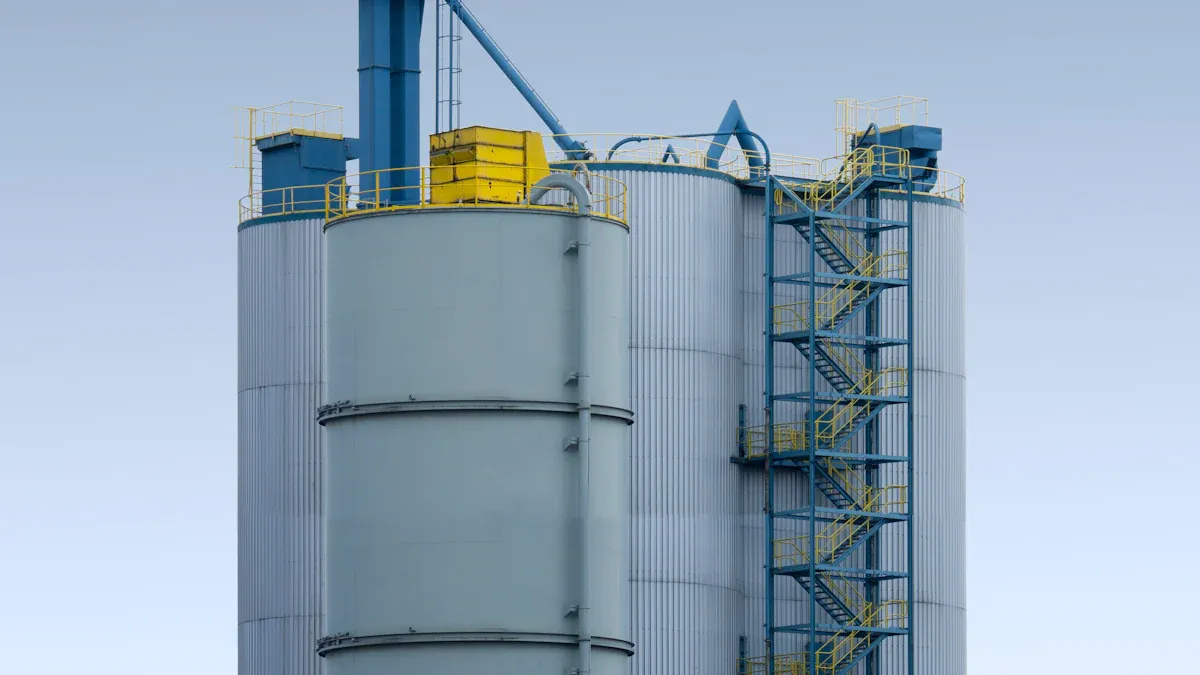
Your cement silo selection starts with how you plan to install, move, and fill the unit. Bolted cement silos come as pre-made panels and are put together on site with bolts. They grow easily and move without much trouble, which works well for plant-scale and mobile jobs. Integrated silos show up already built at the factory and start working right away. Horizontal silos sit lower, need less from the foundation, and ride on a truck or flatbed without being taken apart.
How the bottom is built matters just as much as the shell. Cone-bottom silos let free-flowing cement drop out by gravity in a steady way. Flat-bottom silos store more volume for less money, but you need aeration to pull the material out. Pick the type that fits your site, your foundation budget, and how you empty the silo.
One Large Silo vs. Several Smaller Silos
One big silo usually wins for a large plant that makes a single main cement grade. It costs less to build, takes up less land, and keeps conveying and dust control systems simple. Material flow stays steadier for bulk cement storage.
Several silos suit a plant that handles multiple grades or powders like clinker, fly ash, slag powder, limestone powder, and pozzolanic additives. You get more storage options and backup for operations. Fixing one unit does not shut down all production. The downside is higher cost and more complex upkeep.
Weigh space against flexibility before you decide. A tight site with steady single-grade demand points to one vessel. A plant with varied products points to several. Check silo capacities and standard capacity specs with your supplier, then make sure each unit still meets your days-of-cover target.
Silo Components in a Concrete Batching Plant
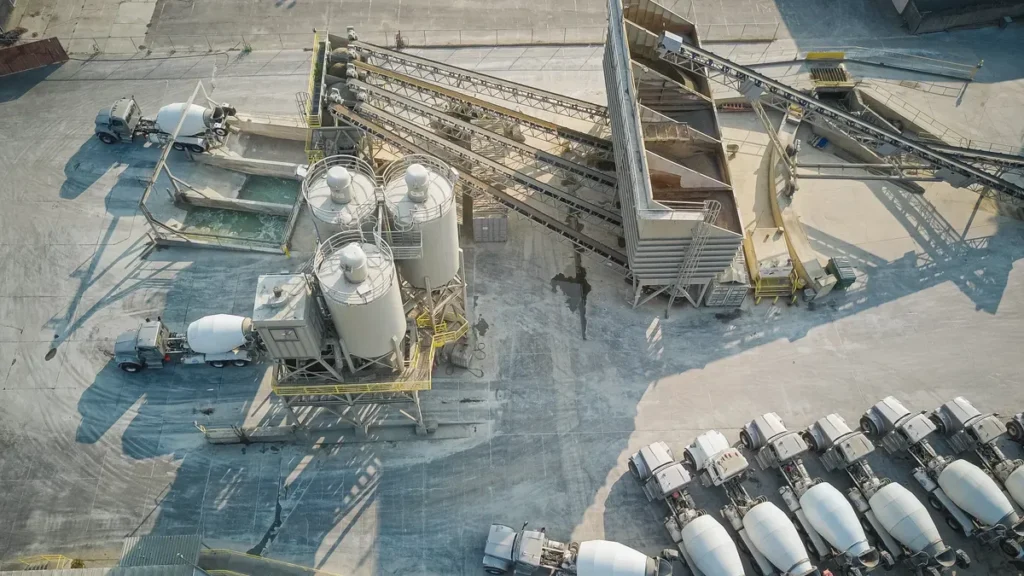
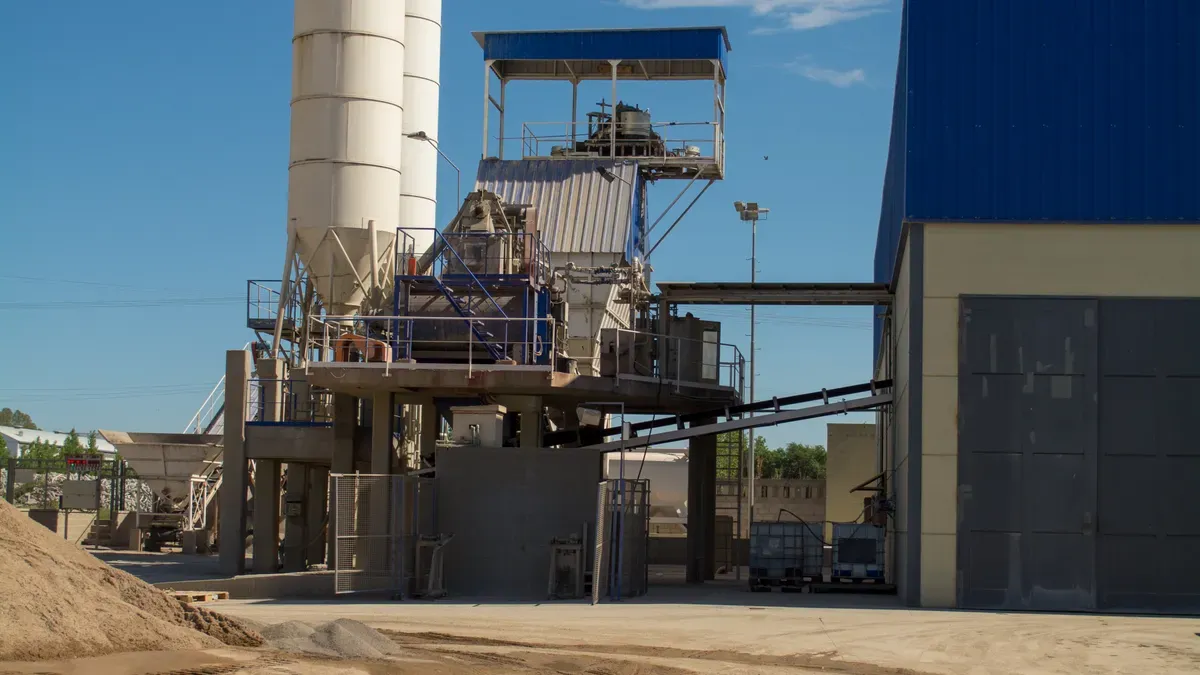
Cement goes through four stages in your plant: loading, storage, discharging, and weighing before mixing. Each stage relies on equipment you must plan for along with capacity. A silo that is the right size but has poor aeration or a weak dust collector will still slow down your concrete batching plant.
Aeration, Dust Collection, and Level Indicators
Cement sits in storage and packs down under its own weight. Aeration pads blow in controlled air to keep the powder flowing. Without them, material settles and blocks discharge. Vibrators mounted on the lower silo shell break up clumps and packed material. An air compressor powers the aeration pads and dust collection system, so steady air pressure keeps cement moving freely.
The roof dust collector filters particles from air pushed out during filling. Its airflow capacity must match your feeding method, especially when a bulk tanker moves cement with air pressure. A pressure-relief device gives a controlled release path when internal pressure gets too high, though it does not replace normal venting. Level indicators track fill levels and tell operators when to reorder. A continuous-level sensor helps with stock monitoring, while a high-level alarm gives a separate signal at the upper limit and can stop incoming material.
Discharge, Safety, and Access Equipment
Discharge equipment moves cement from the cone to the mixer. A screw conveyor or auger moves material by machine, and you size it to prevent bottlenecks during high-capacity batching cycles. A flow-control valve controls discharge, and an air slide uses aeration and gravity to move powder. A bulk loading spout fills road tankers with proper sealing and dust collection.
Safety and access equipment protect your team during inspection and maintenance. You need inspection openings, ladders, roof platforms, handrails, manholes, and fall protection. A coating system made for your project protects the silo shell from rust. Plan these components along with capacity, because adding access equipment to a silo already built costs far more than including it at the design stage.
| Component | Function |
|---|---|
| Auger / Screw Conveyor | Moves cement from the cone into the batching plant or mixer |
| Aeration Pads | Blow in air to keep cement flowing and prevent packing |
| Level Indicators | Track fill levels and prevent overfilling during delivery |
| Dust Collector | Captures fine particles and controls air release during filling |
| Fill Pipe | Connects to the delivery truck’s blower for pneumatic conveying |
| Manhole | Allows inspection, cleanout, and maintenance access |
Common Cement Silo Sizing Mistakes
Underestimating Peak Demand or Lead Time
Most sizing mistakes begin with the tanker, not the silo. A normal cement tanker carries 30-40 tons, and unloading takes 30-45 minutes. That includes hooking up, building pressure, and clearing the line. This means you can receive 40-50 tons per hour. A 100 m³/h plant using 320 kg/m³ of cement goes through 32 tons per hour. So you need a delivery every 45-60 minutes just to keep up.
Here’s a question I didn’t ask enough in my first five years: how much cement can you really get into the silo?
If you miss two deliveries in a row, the concrete batching plant shuts down. One project put two 60-ton silos behind a top-spec plant. They lost a full day of output when a tanker sat at a weighbridge 40 kilometers away. A practical minimum is six hours of peak use, which means 192 tons for that 100 m³/h plant. Design the receiving system for 1.5 times peak use, and add about 10% as a safety margin for settling and uneven distribution. If you overlook future cement types, you will face costly retrofits later, because each binder needs its own storage.
Confusing Total Volume with Usable Capacity
The shell volume on a drawing is not the cement you can actually draw out. With funnel flow and a cohesive powder, the live capacity may reach only 10-20 percent of total storage. The rest sits in dead zones and never reaches the discharge point. Ignoring bulk density causes the same error in reverse. Cement near 1,400 kg/m³ packs much tighter than fly ash near 700 kg/m³, so identical shells hold very different tonnages.
| Material (typical) | Bulk density (kg/m³) |
|---|---|
| Cement (loose) | 1,400 |
| Fly ash (loose) | 700 |
Compaction adds another layer. Material in the lower cone can run 20-40% denser than the upper cylinder. Check your cement silo sizing against weighbridge readings over several fill cycles. Also, treat cement silo selection as a flow decision, not just a volume decision.
You now know how to figure out cement silo capacity: peak daily cement use times days of cover, plus a safety margin. The five steps are list your binders, estimate peak use for each, set reserve days, add margin, and split the total across silos.
Set days of cover and the safety margin based on your plant’s real delivery and demand patterns. Review them whenever demand or lead times change, and at least every three months. A number set once and never checked again stops matching how your suppliers really act.
Run your own numbers for the concrete batching plant, then check the result with a silo supplier or engineer. Ask for a sizing consultation or download a capacity worksheet to check your figures before you order.
Frequently Asked Questions
What is the basic formula for silo capacity?
Multiply peak daily cement use by your days of cover, then add a safety margin. That gives your target tonnage. Convert it to volume with bulk density before you order. This is the main way to figure out cement silo capacity for any concrete batching plant.
How do I convert tonnage to cubic meters?
Divide the target tonnage by the material’s bulk density. Ordinary Portland cement runs 1,100 to 1,400 kg/m³, so 100 tonnes needs about 77 cubic meters of usable space. Fly ash sits near 650 to 800 kg/m³ and needs much more room for the same weight.
Why does usable capacity differ from total volume?
Funnel flow leaves dead zones, and live capacity may reach only 10 to 20 percent of total storage. Material in the lower cone also runs 20 to 40 percent denser than the upper cylinder. Check your silo sizing against weighbridge readings over several fill cycles.
How many silos do I need?
Count your cement types and binders first. Each powder needs its own storage, so two or more materials mean separate silos. A single-grade plant can run one large unit. A plant with different products needs several smaller silos for flexibility and backup.