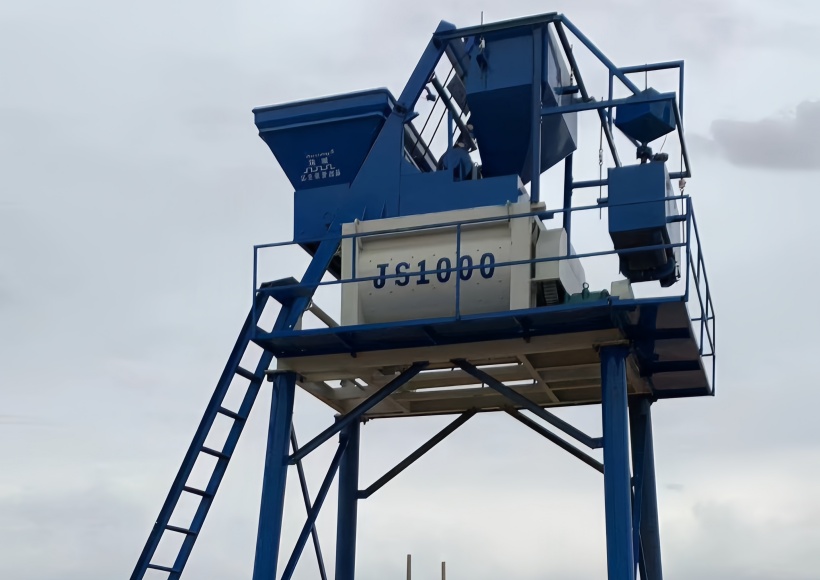
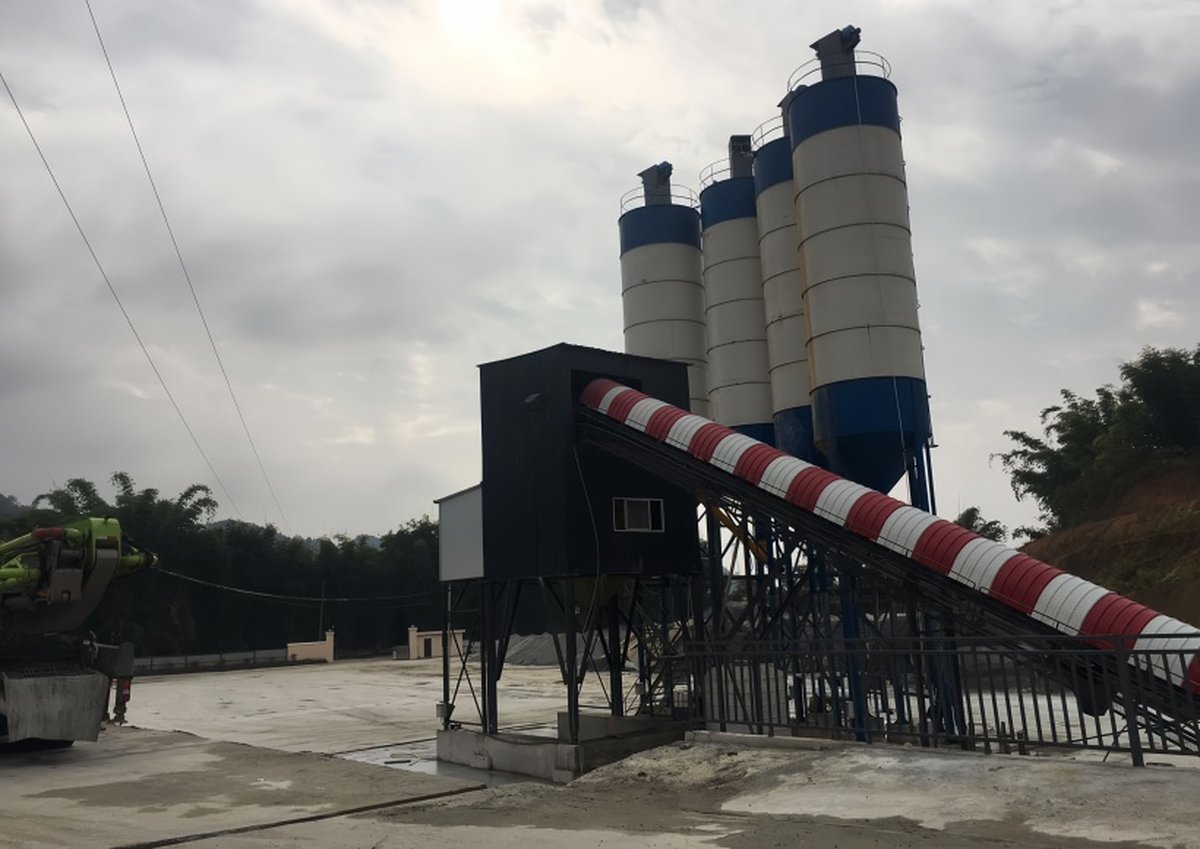
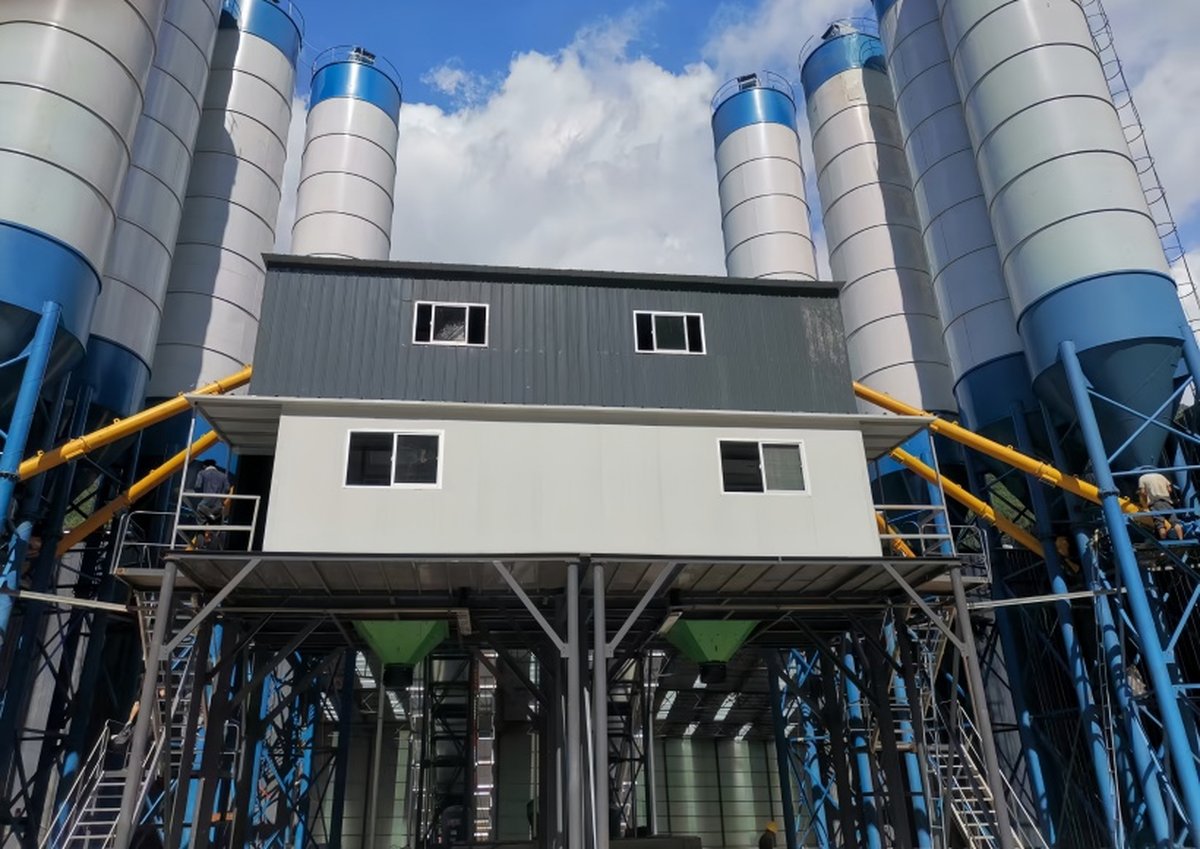
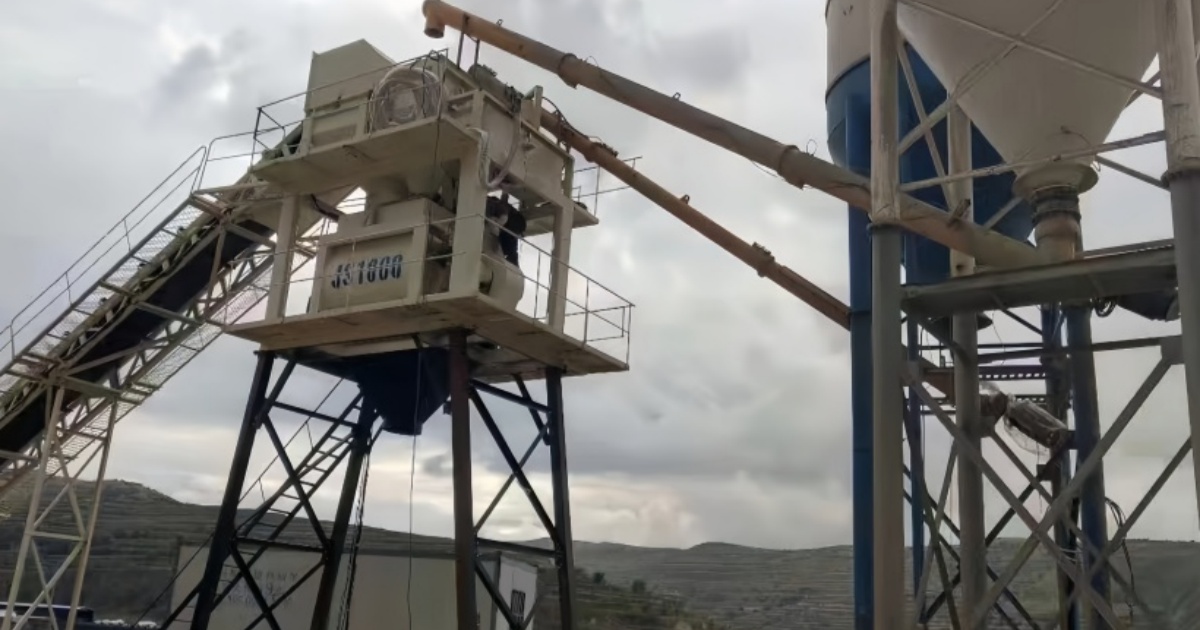
This concrete batching plant troubleshooting guide starts with a real scene: at 3 a.m. on a bridge job in Henan, the twin-shaft mixer of an HZS90 concrete batching plant stopped mid-cycle. The night shift crew did three things within two minutes: cut the main breaker, put a padlock on the panel, and called the site manager. Nothing else. That habit alone saved them from a worse failure — a jammed shaft can crack a liner plate or burn out a 30 kW motor if the operator keeps hitting the start button.
Every concrete batching plant will break down eventually. What separates a bad shutdown from a minor one is how the first ten minutes are handled. Tongxin Machinery’s field engineers have walked through hundreds of these incidents across China, Vietnam, Uzbekistan and Nigeria, and this concrete batching plant troubleshooting guide compiles the quick-response procedures we actually hand to site managers — the same checklist our 24-hour hotline walks you through when the call comes in.
HZS90 concrete batching plant ready for a rapid-response check at a Tongxin site
Stop First, Think Second: The 3-Minute Safety Lockdown
When the plant throws an abnormal sound, trips the breaker, or simply stops, do not touch any button until the machine is fully dead, the first rule of concrete batching plant troubleshooting. The sequence below is what we tell every operator, in order:
Isolate the power. For electric drives, switch off the main breaker at the distribution box and hang a lockout tag (LOTO) so nobody re-energises it. For diesel-powered units, kill the engine and pull the emergency brake.
Guard the zone. Rope off a safety perimeter around the plant — at least two metres beyond the mixer platform — and post a warning sign. No one works alone inside the guarded area.
Report with evidence. Call the site manager immediately and describe three things: what the machine sounded like before it stopped, whether there was smoke or a burnt smell, and which stage of the mixing cycle it stopped at (weighing, charging, mixing or discharging). A photo or 10-second video of the panel and the drum position helps the repair team arrive with the right parts.
Why the lockdown matters: the most dangerous moment in any breakdown is the restart. In one case we serviced in Hebei, an operator tried to jog the mixer twice to “free” a stuck load; the second attempt welded the main shaft seal and turned a two-hour job into a full gearbox replacement. Never force a restart on a plant that stopped on its own.
Time window
Action
Who
T+0–1 min
Cut main power, lock out the panel
Operator
T+1–2 min
Guard the area, warn the crew
Operator
T+2–5 min
Report symptoms to site manager
Operator
T+5–15 min
Safe no-tool diagnosis
Operator / manager
T+30 min
Repair request sent with photos and parts list
Manager
T+120 min onward
Engineer on site (typical domestic response)
Service team
Read the Machine: On-Site Diagnosis Before the Technician Arrives
The core of concrete batching plant troubleshooting on site is four safe, no-tool checks a trained operator can run while waiting for the repair team. All of them are done with the power off and the panel locked.
Power side. Touch the motor housings. If a motor is hot enough that you cannot hold your palm on it for five seconds (roughly above 80 – 90 °C), it has likely tripped on overload. Let it cool; do not restart it within 30 minutes.
Mixing chamber. Look into the discharge opening with a torch. A jam is usually caused by oversized aggregate, a stuck conveyor paddle, or hardened mortar from an overnight clean-up that was skipped. Never put a hand or a steel bar inside while the drum can still rotate.
Drives and belts. Check V-belts and chain tension by pressing the longest span: deflection should be roughly 10 mm at mid-span for a typical 30 kW drive. Listen for a loose coupling before the stop — a metallic knock every revolution points to a sheared key or worn pin.
Hydraulics. Look at the gauge and the lines. Normal pressure for the discharge cylinder is usually in the 10 – 16 MPa band; a reading near zero with oil pooling on the floor means a ruptured hose or a failed pump, and the site should be cleaned of oil before anything else.
If none of these shows an obvious cause, stop inspecting and wait for the professionals. The goal of this step is not to fix the plant — it is to hand the engineer a shorter list of suspects, which cuts repair time by hours on remote sites.
Concrete Batching Plant Troubleshooting: Common Failures Quick Reference
The table below summarises the failures we see most often in concrete batching plant troubleshooting calls across concrete batching plants, their typical symptoms, the emergency response, and what the professional repair will involve.
Failure area
Typical symptom
Emergency response
What the repair involves
Mixer motor overload
Breaker trips, motor housing too hot to touch
Lockout power, let motor cool >30 min
Check phase balance, reset protection, test under load
Shaft / paddle jam
Mixer stops mid-cycle, dull grinding sound
Power off, never jog the motor
Clear foreign material, inspect liner plates and shaft seal
Belt / chain failure
Squealing, slipping, visible slack or shredded belt
Stop plant, isolate drive
Replace belts, re-tension, align pulleys
Hydraulic leak
Pressure gauge drops, oil pooling under plant
Stop pump, clean spill, barricade area
Replace hose/seal, purge air, re-test pressure
Weighing error
Mix proportions visibly off, load cells erratic
Hold production, log the reading
Calibrate load cells, check wiring and moisture compensation
Air system fault
Discharge door won’t open, low air pressure
Manual override only if trained, else wait
Service compressor, check pneumatic cylinders and valves
Keep the Concrete Flowing: Production Coordination During Downtime
A stopped batching plant does not stop the contract, which is why production coordination belongs in any concrete batching plant troubleshooting plan. While repairs run, the site manager should be on the phone, not standing at the machine.
Re-sequence the pour. Talk to the concreting crew immediately. If the current pour is structural (column or slab), arrange a standby truck mixer or order ready-mix from the nearest commercial plant; a 30-minute window usually exists before the concrete in transit goes beyond its working life.
Send a proper repair request. The fastest service call contains: plant model and serial number, the fault description from the operator, the three photos you took, and which spare parts you suspect. A technician with the right parts on the truck beats two trips.
Handle the material in the drum. Fresh concrete in the mixer should be discharged and cleaned if downtime will exceed 90 minutes. Hardened residue is the number one cause of secondary damage — chipped blades and scored liners — after a breakdown, so budget the clean-up time into the repair plan.
Operator checking the HZS90 control panel during a scheduled inspection
Fix It Right the First Time: What Professional Repair Looks Like
When the Tongxin service engineer arrives, the handover makes the difference in concrete batching plant troubleshooting. The operator walks the engineer through what happened, the readings taken, and any parts already suspected; then the repair follows a standard sequence:
Diagnosis confirmation. Re-check the suspected fault with instruments (clamp meter for current, pressure gauge, temperature gun) before opening anything.
Controlled disassembly and replacement. Repairs follow the manufacturer’s torque specs — mixing blade bolts on a JS1500 twin-shaft mixer are torqued to specification, never “tightened by feel” — and seals, bearings or liners that show wear are replaced while access is open.
No-load test first. Run the plant empty for 30 minutes, watching current draw, vibration and temperature before any load is introduced.
Load test and safety sign-off. Load-test with a partial batch, verify the weighing accuracy, then have the site safety officer re-inspect guards and interlocks before full production resumes.
This sequence is why we insist on qualified technicians rather than quick patches: a concrete batching plant that goes back to work with a misaligned drive or an untorqued blade will fail again within weeks, and the second failure is always more expensive.
Learn From Every Breakdown: Preventive Maintenance That Pays Off
Every unplanned stop is free diagnostic data, and a mature concrete batching plant troubleshooting process turns that data into maintenance action. The plants that break down least are the ones that keep a simple fault log: date, symptom, cause, repair action, and what to watch next. Review it monthly with the crew and two patterns will appear — the same part failing repeatedly, and the same operator error resurfacing.
Adjust the maintenance calendar. If V-belts fail every nine months on your plant, replace them at seven. If the discharge door sticks every winter, add a monthly lubrication and a weekly air-line water drain.
Train on the failure, not the theory. Run a 30-minute toolbox talk on the actual incident: what it sounded like, what the operator did, what should have been done. This is the cheapest insurance a concrete batching plant has.
Keep critical spares on the shelf. Mixing blades, liner plates, V-belts, hydraulic hoses, and a set of fuses cover 80% of unplanned stops and cost a fraction of one emergency shipping charge.
Below are the questions site managers ask us most during concrete batching plant troubleshooting calls.
Frequently Asked Questions
Q1: What should I do first when a concrete batching plant stops suddenly?
A: Isolate the power and lock out the panel, guard the area, then report to the site manager with a description of the sound, smell, and stop stage. Do not attempt a restart before the machine is inspected.
Q2: How long should I wait before restarting an overheated mixer motor?
A: If the motor housing is too hot to hold your palm on for five seconds (roughly above 80–90 °C), let it cool for at least 30 minutes, then check the overload relay and phase balance before restarting under observation.
Q3: What causes concrete mixer jamming and how do I clear it safely?
A: Oversized aggregate, a stuck paddle, or hardened mortar from a skipped overnight clean are the usual causes. With power locked out, clear the material through the discharge opening with a torch and approved tools — never by jogging the motor.
Q4: How do I check if the hydraulic system is the problem?
A: Read the gauge with the pump running: normal discharge pressure is roughly 10–16 MPa. A near-zero reading with oil on the floor means a ruptured hose or failed pump; stop the pump, clean the spill, and call for parts.
Q5: When should I clean the drum instead of waiting for the repair?
A: If downtime will exceed 90 minutes, discharge and clean the drum promptly. Hardened residue damages blades and liner plates and is the most common cause of secondary damage after a breakdown.
Q6: How long does a professional repair usually take?
A: With a good handover and the right parts, common failures (belts, seals, hydraulic hoses, load-cell calibration) are typically back in production within 4–8 hours. Shaft or gearbox damage can take 1–3 days depending on parts availability.
Tongxin Machinery: 24/7 Support Behind Every Plant
A concrete batching plant is only as reliable as the service network behind it, and that network is exactly what Tongxin brings to every concrete batching plant troubleshooting case. Tongxin Machinery, a concrete batching plant manufacturer with nearly 30 years in the industry, keeps a 24-hour technical hotline, a stocked spare-parts warehouse, and field engineers who can reach most Chinese sites within 48 hours. We also offer remote diagnosis by video and preventive-maintenance training for your crew, so the next breakdown — if it comes — is shorter, safer, and cheaper.
For related reading: our complete concrete batching plant buyer’s guide covers selection and setup, and the HZS90 power system guide explains transformer sizing and energy optimisation. If your concrete batching plant troubleshooting needs help beyond your own crew, call the hotline — we will walk you through the lockdown procedure before the engineer is even on the road.
If you’re looking for a concrete batching plant, stabilized soil batching plant, or other construction machinery and equipment, please contact us and we’ll respond within 24 hours.