








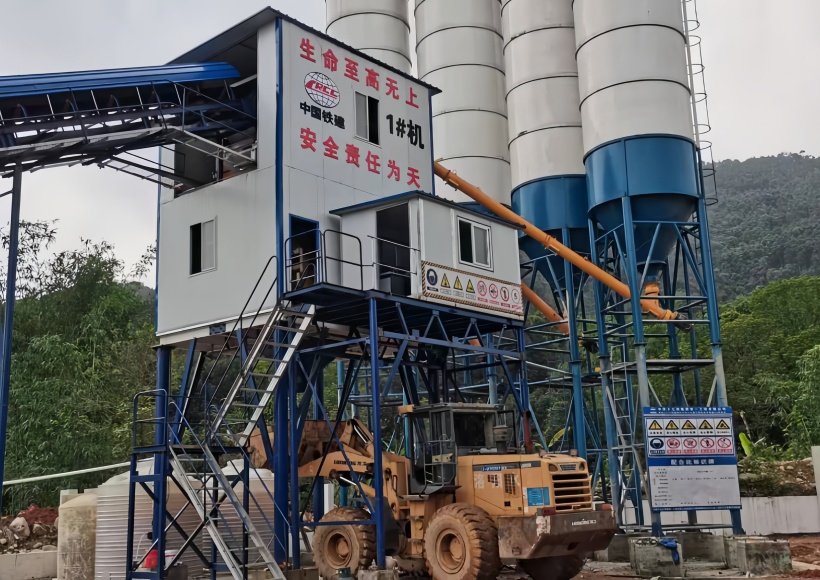
Let’s be honest about commercial concrete production. Your margins are tight, and your schedules are tighter. When you have a massive pour scheduled, equipment failure isn’t just an inconvenience—it’s a financial disaster. You’ve got mixer trucks lined up, a crew burning hourly wages, and an engineer breathing down your neck. You simply can’t afford a breakdown.
This brutal reality is why experienced project managers don’t gamble on unproven concrete mixing equipment. They want heavy iron. They want reliability. Designed for large-scale concrete production, the HZS series stationary concrete batching plant is built exactly for this kind of relentless environment. It is engineered to punch out high-quality concrete, batch after batch, without stalling.
If you want a breakdown of how we build these things at Tongxin Machinery to survive the worst site conditions, check out our standard Concrete Batching Plant line. Below, we are going to tear down the technical specifications, look at the core components, and explain what actually matters when you are looking for a plant for sale.
The Reality of Stationary Concrete Plants
First, let’s clear up the difference between setups. A mobile concrete unit is great if you are doing small, scattered jobs and need to tow your rig down the highway every week. But if you are setting up for a multi-year infrastructure project or running a permanent precast concrete yard? Mobile won’t cut it. You need a stationary concrete batching plant.
A stationary setup gives you massive aggregate storage, larger cement silos, and a heavier chassis that absorbs vibration. Vibration is the enemy of accurate material weighing. When you bolt a plant down to a proper foundation, your scales stay zeroed, and your concrete mix stays consistent.
The HZS series is the industry standard here. The acronym itself tells you what you are getting. “HZS” indicates a stationary mixing plant that uses a horizontal shaft forced mixer. The number that comes after it—like HZS50 or HZS120—tells you the theoretical production capacity in cubic meters per hour. From the compact HZS25 all the way up to the massive HZS240, the design philosophy remains the same: keep it modular, keep it accurate, and make it easy to fix.
Breaking Down the Machinery
A concrete plant isn’t just one machine; it’s a synchronized assembly line. It takes raw aggregate, powder, and water, and forces them into a specific recipe. Here is how the HZS series handles it.
Aggregate Batching Systems
You can’t get high-quality concrete production if your rock and sand ratios are wrong. The plant adopts the PLD series batching machine. Depending on your production requirements, you can set this up to handle two, three, or four kinds of concrete aggregates.
Forget about the old mechanical dials. Our aggregate batching uses independent electronic load cells. This weighing system is critical. Mechanical scales drift over time and cause cumulative errors. Electronic sensors give you precise material weighing every single time, guaranteeing the stability of concrete quality.
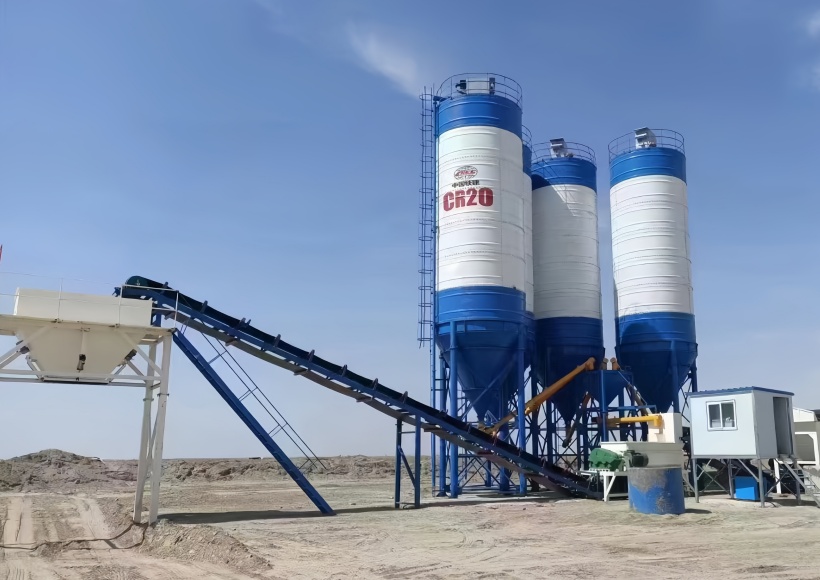
Once weighed, you have to move that rock. For smaller setups like the HZS50 concrete batching plant, we use a skip hoist bucket. It saves space and gives the plant a compact design. But if you are chasing serious production efficiency—like with an HZS120 concrete batching plant or larger—you need a belt conveyor. A belt conveyor delivers a continuous flow of aggregate into a waiting hopper above the mixer. This slashes your cycle time.
Powder and Cement Handling
Cement and fly ash are a headache to handle because they bridge, clump, and create severe environmental pollution if you aren’t careful.
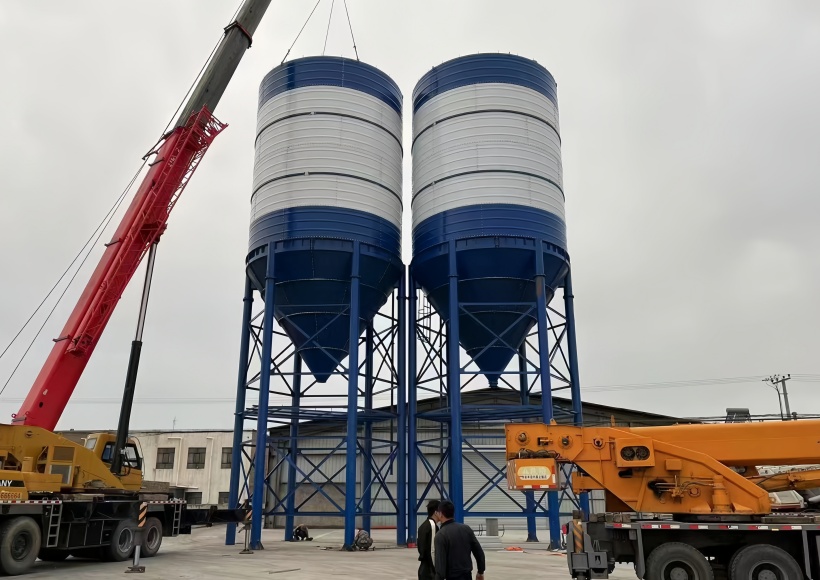
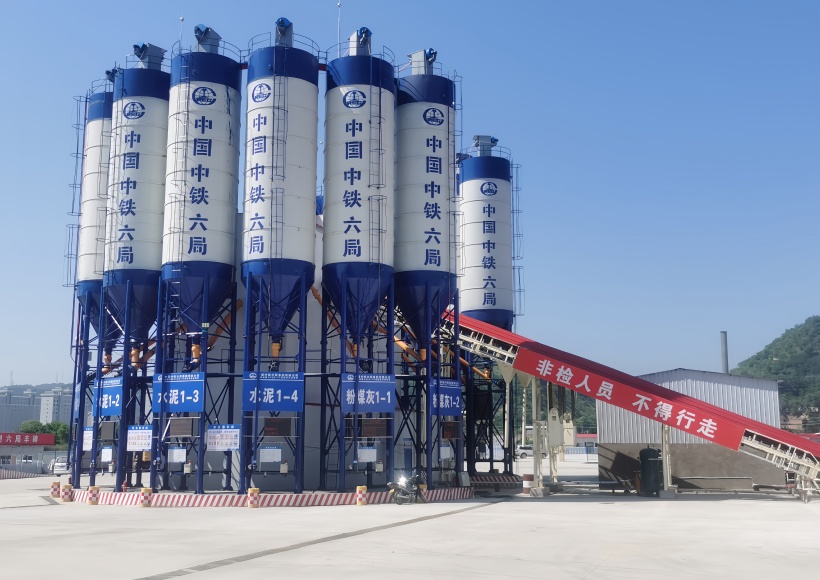
We store powders in heavy-duty vertical silos. To keep the material flowing, the plant is equipped with pneumatic arch-breaking pads that inject air into the silo cone, keeping the cement loose. From there, enclosed screw conveyors drag the powder up to the weighing hopper. Keeping this entire conveying system sealed is a key component in keeping dust off your site and keeping the local environmental inspectors happy.
The Horizontal Shaft Forced Mixer
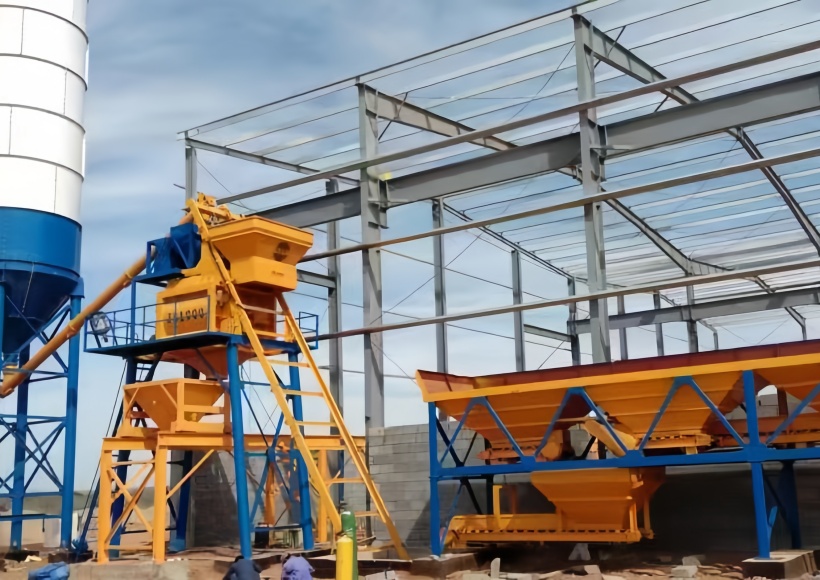
This is the heart of your concrete machinery. A concrete batching plant adopts different mixers, but the HZS series relies exclusively on the JS series twin-shaft forced concrete mixer.
Why not a drum mixer? Because drum mixers just tumble the material. A horizontal shaft forced mixer actively violently rips and folds the cement, sand, and water together. The twin-shaft design creates aggressive radial and axial currents inside the drum. This means you get a perfectly homogenous, mixed concrete batch in a fraction of the time.
Mixing performance comes down to wear parts. Concrete is essentially liquid sandpaper. It eats cheap steel for breakfast. We cast our mixer liners and blades from high-chromium alloy. It costs more upfront, but it ensures a long service life. When you do eventually wear them out, the modular design means your maintenance crew can swap the plates out quickly and get back to pumping out concrete.
Once mixed, a pneumatic discharge gate drops the load. We use pneumatics instead of hydraulics because air systems react faster and don’t leak hydraulic fluid into your ready mix concrete if a hose blows. You can adjust the door angle to control the flow, whether you need to fill a transit truck quickly or gently feed a concrete pump hopper.
Plant Features: HZS50 vs. HZS120 Specifications
Contractors often ask us which specification to choose. It always comes down to your daily volume and your site footprint.
The HZS50 Concrete Batching Plant
This is your workhorse for mid-sized construction projects. It pushes out 50 cubic meters an hour. It uses a JS1000 concrete mixer, giving you one cubic meter per batch. Because it uses a skip hoist for the aggregate, it fits in incredibly tight spaces. It’s perfect for regional infrastructure jobs or if you need reliable concrete production but don’t have acres of land to spare.
The HZS120 Concrete Batching Plant
This is built for serious volume. Think highway paving, dams, or commercial ready-mix operations. It’s rated for 120 cubic meters an hour and runs a massive JS2000 mixer. It uses a wide, inclined belt conveyor to feed the aggregate. Because it holds the next batch of rock in a waiting hopper while the current batch is mixing, the plant can provide a relentless, continuous output. If you have a fleet of trucks to load, this is what you want.
The Automated Control System
Operating a modern mixing plant manually is a recipe for bad concrete and wasted cement. Today, an automated control system isn’t a luxury; it’s mandatory.
Our plants use an industrial PLC (Programmable Logic Controller) tied to an intuitive computer interface. It’s fully automatic. Your operator types in the mix design, hits start, and the system takes over. It manages the aggregate batching, the screw conveyors, the water scales, and the mixing time.
- Real-time monitoring: The screen shows a live animation of the entire plant. If a cement silo runs empty or a gate jams, the automatic control system instantly flags the exact sensor that tripped. No guessing.
- Precision Additives: Modern various concrete mixes require chemical admixtures to adjust curing time. The plant’s liquid weighing scales can inject micro-doses of chemicals directly into the water line with incredible accuracy.
- Data tracking: Every single batch is logged. You know exactly how much cement, water, and sand went into truck number four on Tuesday afternoon. This data is bulletproof evidence for your quality control team and your clients.
Dealing with Environmental Protection
You can’t ignore the environmental rules anymore. Dust and noise will get your site shut down fast. Stationary concrete batching plants are engineered with this in mind.
We tackle dust pollution right at the source. The cement silos feature active pulse-jet dust collectors. When a bulk truck blows cement into the silo, the displaced air is pushed through filter cartridges. The automated control pulses compressed air to knock the trapped dust back into the silo. Zero waste, zero dust clouds.
Furthermore, the main mixing tower is completely enclosed in steel profiling. This contains the dust during aggregate dumping and significantly muffles the noise of the forced mixer and the air compressor. We also strongly recommend setting up a slurry water recycling basin. Washout water from the mixer and transit trucks can be settled and pumped back into the plant to be reused. It cuts your water bill and prevents toxic runoff.
Built for the Grind
Unlike an asphalt mixing plant that deals with extreme heat, a concrete batch plant deals with extreme, continuous vibration and sheer weight. The structural frame of an HZS series plant uses oversized H-beams. We don’t skimp on the steel. A rigid frame prevents the weighing sensors from shaking out of calibration when the twin-shaft mixer kicks on.
Whether you are looking to mix concrete plants for a small bridge repair or you need a massive rig to supply a skyscraper pour, the fundamentals don’t change. You need consistent concrete, you need durable machinery, and you need a system that won’t quit when the pressure is on. That is why the concrete batching plant is widely used across the globe. It just works.
Frequently Asked Questions (FAQ)
1. Do I need a massive foundation for the HZS50?
Yes, you always need a flat, reinforced concrete foundation. Stationary plants vibrate heavily. Without a proper poured slab, your electronic weighing scales will quickly fall out of calibration and ruin your mix accuracy.
2. How long do the mixer blades actually last?
It depends entirely on your aggregate. If you’re mixing hard crushed river stone, expect to change the high-chromium blades every 40,000 to 50,000 cubic meters. Keep an eye on the clearance gap weekly.
3. Belt conveyor vs. skip hoist—which is better?
Neither is “better”—it’s about your site. Skip hoists save massive amounts of ground space. Belt conveyors take up a huge footprint but offer much higher continuous production efficiency for large-scale operations.
4. Can the control system handle complex custom recipes?
Absolutely. The industrial PLC can store hundreds of unique mix designs. Your operator just selects the specific grade from a drop-down menu, and the automated system instantly adjusts all material weighing parameters.
5. Why is my aggregate scale showing the wrong weight?
Nine times out of ten, it’s mechanical interference. Check if a rock is jammed against the weigh hopper, preventing it from hanging freely on the load cells. Also, check for moisture in the sensor junction box.