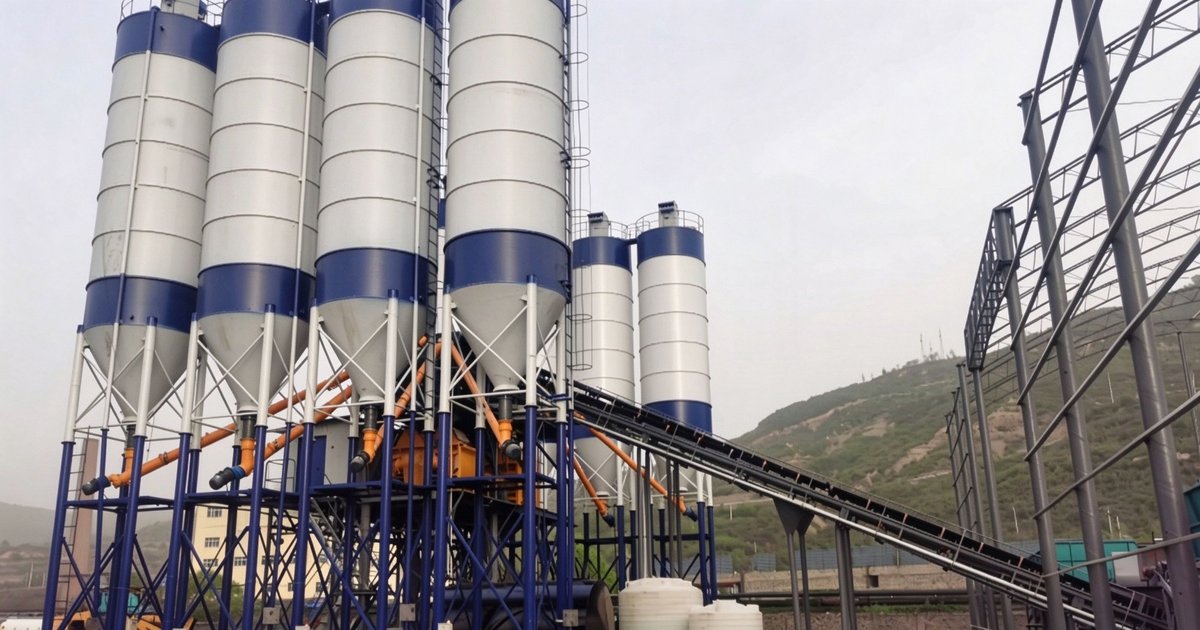


In Indonesia, a foundation-free concrete mixing plant supplied by Tongxin Machinery was fully installed and commissioned in 15 days. For a project owner used to waiting weeks for concrete foundations to cure before any equipment could be assembled, that number changes the entire project plan. This is the practical reality behind the foundation-free concept, and the reason it keeps coming up in industry discussions.
This guide explains what a foundation-free concrete mixing plant actually is, the engineering behind it, what it costs compared with traditional stations, and the situations where it clearly wins. The information below reflects field experience from projects across Asia and Africa, not marketing material.
What Is a Foundation-free Concrete Mixing Plant?
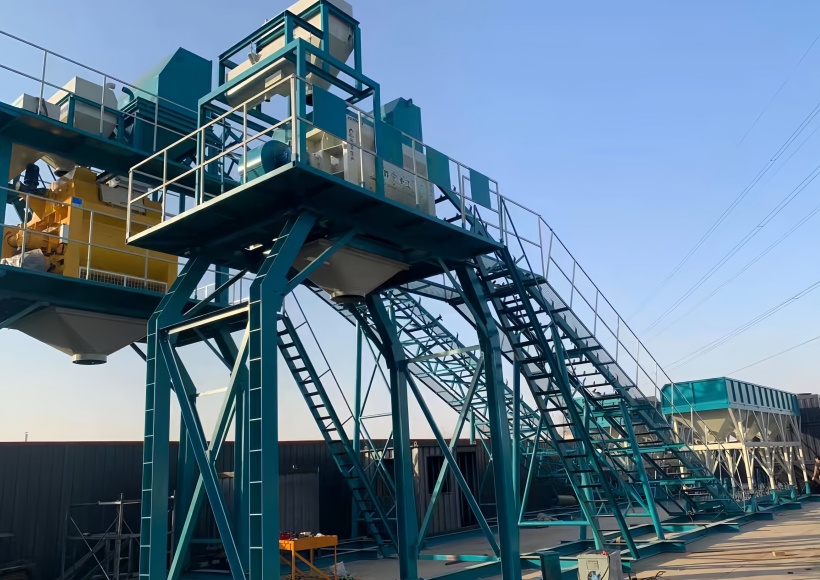
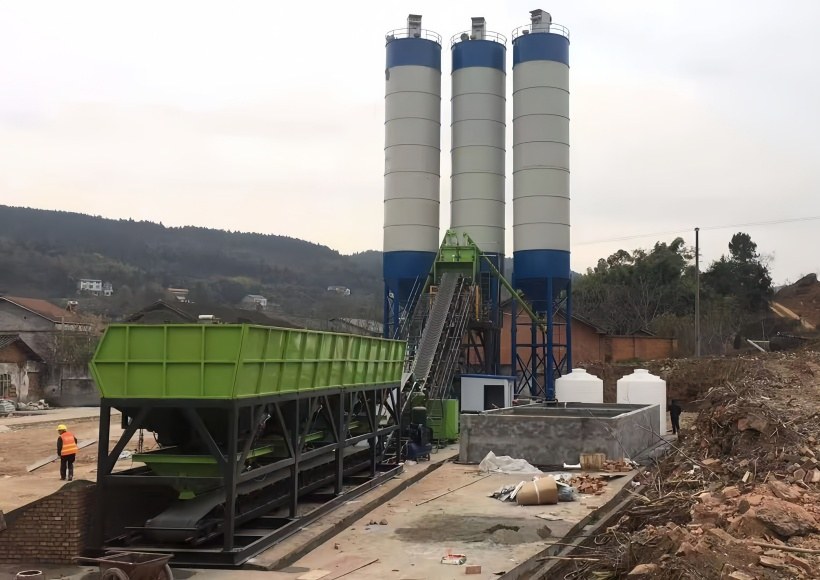
A foundation-free concrete mixing plant abandons the traditional cast-in-place concrete foundation entirely. Instead of pouring a large concrete base and waiting for it to cure, the plant stands on a steel base frame built from 300×300 H-beam steel. The whole station is delivered in modular sections, bolted together on a levelled hardstand, and can be dismantled and moved when the project ends.
The practical consequence is simple: fixed production equipment becomes a mobile production unit. For contractors who move between sites, this changes both the schedule and the balance sheet.
| Comparison | Traditional Mixing Plant | Foundation-free Mixing Plant |
|---|---|---|
| Foundation work | Cast-in-place concrete base, curing time required | 300×300 H-beam steel base, no concrete curing |
| Installation time | Long, dependent on site works | Shortened by 30–40% vs traditional |
| Relocation | Effectively fixed; relocation means major demolition | Dismantle and re-erect at a new site |
| Relocation cost | High | Reduced by around 40% |
| Site requirements | Deep excavation, flat concrete base | Level hardstand only, suits hard geology |
The steel-frame design also passes engineering verification for anti-overturning capability, foundation bearing capacity and resistance to uneven deformation during installation and operation — the same structural safety expectations that guide permanent concrete construction under ACI practice — so the lighter footprint does not come at the cost of stability.
Technical Advantages That Show Up on Site
Beyond the foundation itself, a foundation-free concrete mixing plant carries several engineering details that buyers ask about most often:
- Modular structure: plug-and-play connections between modules cut installation time by about 40% compared with conventional stations.
- Steel aggregate batching machine with a 35° inclined belt conveyor: more stable feeding than hopper-style conveyors, especially on uneven ground.
- Reusable steel foundation: the base frame is recovered at every relocation, which is both economical and more environmentally friendly than abandoning concrete.
- Intelligent control system: one-click commissioning and fault diagnosis reduce the skilled-labour burden at remote sites.
In our field tests, the anti-overturning capability of the foundation-free structure is improved by about 20% compared with traditional equipment, which addresses the main safety concern buyers raise about a plant without a concrete base.
Foundation-free Concrete Mixing Plant Price and Long-term Value
The most frequent question is whether a foundation-free concrete mixing plant costs more than a conventional station. The honest answer is that the initial investment is roughly 10–15% higher than an equivalent traditional plant, because of the precision steel structure. The economic picture flips when the full project horizon is included:
| Cost Item | Traditional Plant | Foundation-free Plant |
|---|---|---|
| Initial equipment cost | Baseline | About 10–15% higher |
| Foundation construction | Full concrete base, excavation and curing | Not required |
| Relocation | Demolition and rebuilding | Dismantle and re-erect; cost reduced ~40% |
| Overall return on investment | Baseline | Reported ROI improvement of more than 50% |
For a single fixed site, a conventional plant can still be the cheaper choice. For contractors who relocate after one project — which is common in tunnelling, rural road work and emergency infrastructure — the foundation-free plant typically pays back the price difference within the first project cycle. If you are still comparing output classes, our HZS75 concrete batching plant guide and the HZS50 complete analysis cover the configuration trade-offs at each capacity.
Where the Foundation-free Plant Fits Best
Based on how our customers actually deploy a foundation-free concrete mixing plant, the strongest use cases are:
- Multiple-site alternating construction, where the station moves with the project
- Emergency-schedule projects that cannot wait for concrete foundation curing
- Confined sites and hard geology where excavation for a foundation is impractical
- Environmentally sensitive areas where minimising construction waste matters
In practice this covers rural civil construction, township and new rural building, mining and highway tunnels, water conservancy work, geological disaster slope treatment and other applications with large pouring volumes or tight space.
Selection Checklist Before You Buy
When comparing quotes for a foundation-free concrete mixing plant, work through these four points:
- Construction period — short and urgent projects benefit most from the foundation-free schedule advantage.
- Site conditions — the design is the preferred solution for complex geology and sites where excavation is difficult.
- Environmental requirements — zero concrete waste from the base is a clear advantage where disposal is regulated.
- Budget range — compare configuration and relocation plans, not only the headline price.
Frequently Asked Questions
Q1: How stable is a foundation-free concrete mixing plant?
A1: The structure has passed anti-overturning, foundation bearing capacity and uneven-deformation verification. Anti-overturning capability is improved by about 20% compared with traditional equipment.
Q2: How long does relocation take?
A2: In actual projects, transferring and reinstalling the main station takes 1–3 days, far faster than moving a conventional plant.
Q3: Does the price include installation?
A3: Tongxin Machinery provides complete packages, including installation guidance and commissioning support. Contact our team for a full quotation for your project.
Q4: What are the main advantages over a traditional concrete mixing plant?
A4: Installation speed, relocation convenience and overall lifetime cost. The foundation-free type saves 30–40% on installation time and around 40% on relocation cost.
Q5: Which projects suit the foundation-free type?
A5: Multi-site alternating projects, urgent schedules, confined or hard-geology sites, and environmentally regulated areas are the best matches.
Q6: Has the design been technically verified?
A6: Yes. The HXGJ type foundation-free mixing plant has passed structural anti-overturning verification, foundation bearing capacity testing and uneven-deformation resistance checks.
Final Summary
A foundation-free concrete mixing plant is not a compromise — it is a different way of deploying production capacity that pays off for contractors who move, build fast, or work on difficult ground. If you are comparing it with a conventional station for your next project, contact Tongxin Machinery for a configuration proposal and a concrete batching plant cost comparison based on your actual schedule and site conditions. Our engineers will tell you honestly whether the foundation-free option is worth the premium for your case.