

Every week we get the same question from buyers comparing HZS50 batching plant quotes: “Should I take the rope hoist or the belt conveyor feeding system?” It is a fair question, because the HZS50 batching plant feeding system you choose looks similar on a spec sheet but behaves very differently over five years of operation. This guide compares the HZS50 batching plant feeding system options on the numbers our customers actually track — speed, power, noise, maintenance cost and safety — and explains which one fits which kind of project.
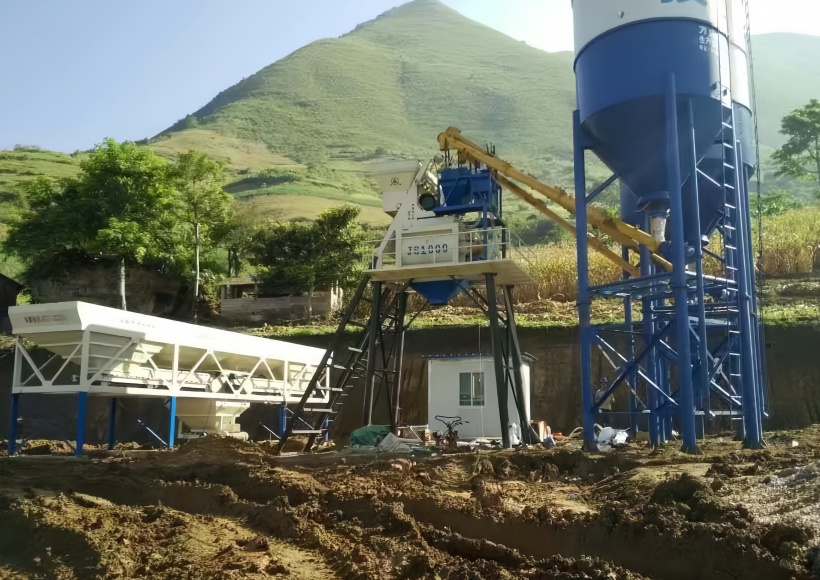
The Two HZS50 Batching Plant Feeding Systems, Explained
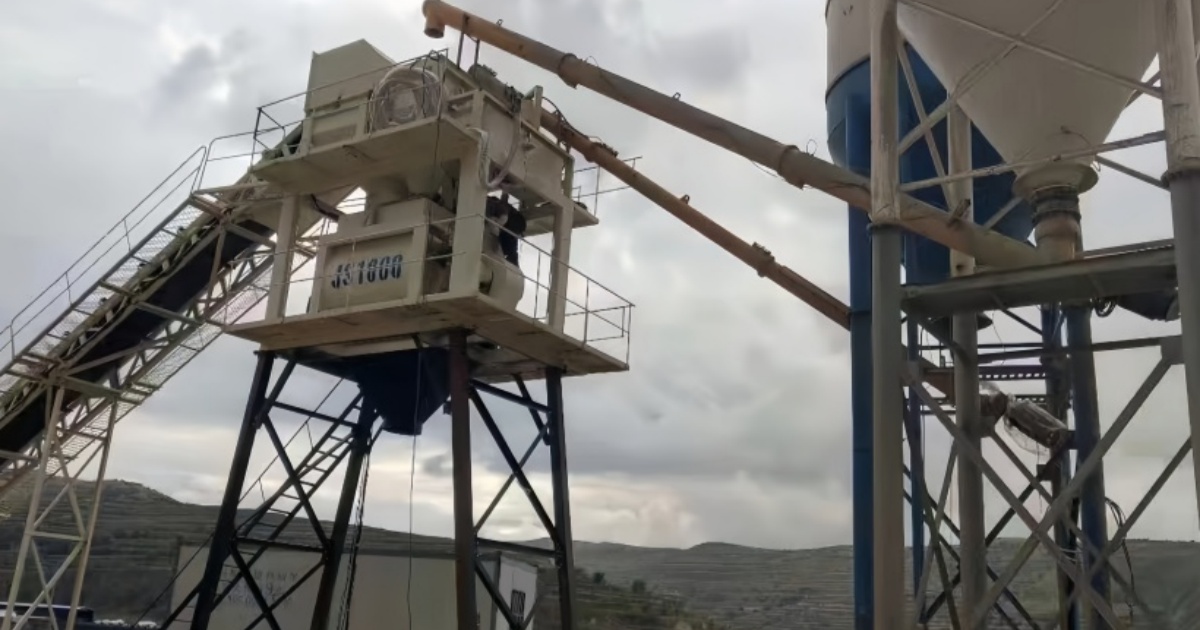
The HZS50 batching plant feeding system moves weighed aggregate from the batcher up to the mixer. Two proven solutions dominate the market:
- Rope hoist feeding — a winch pulls a hopper up a steep track, usually at around 60°, and tips the aggregate into the mixer.
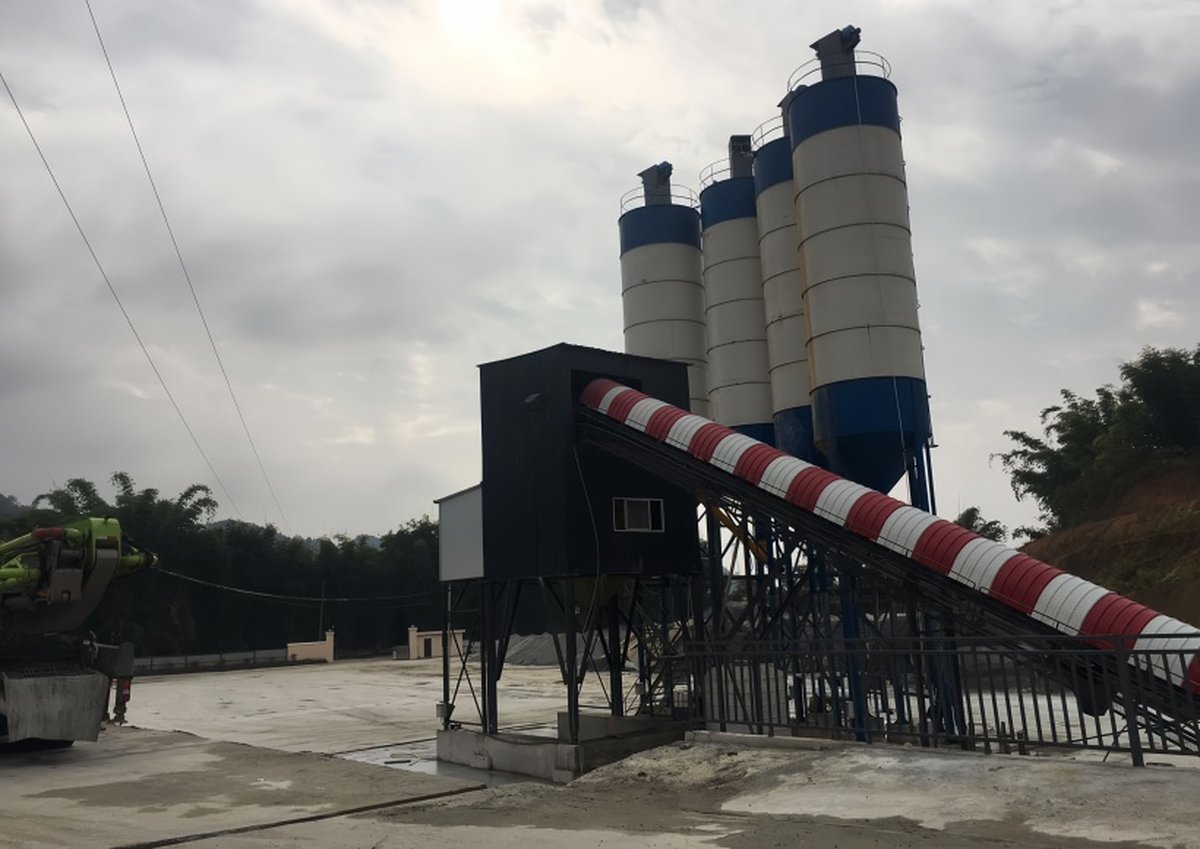
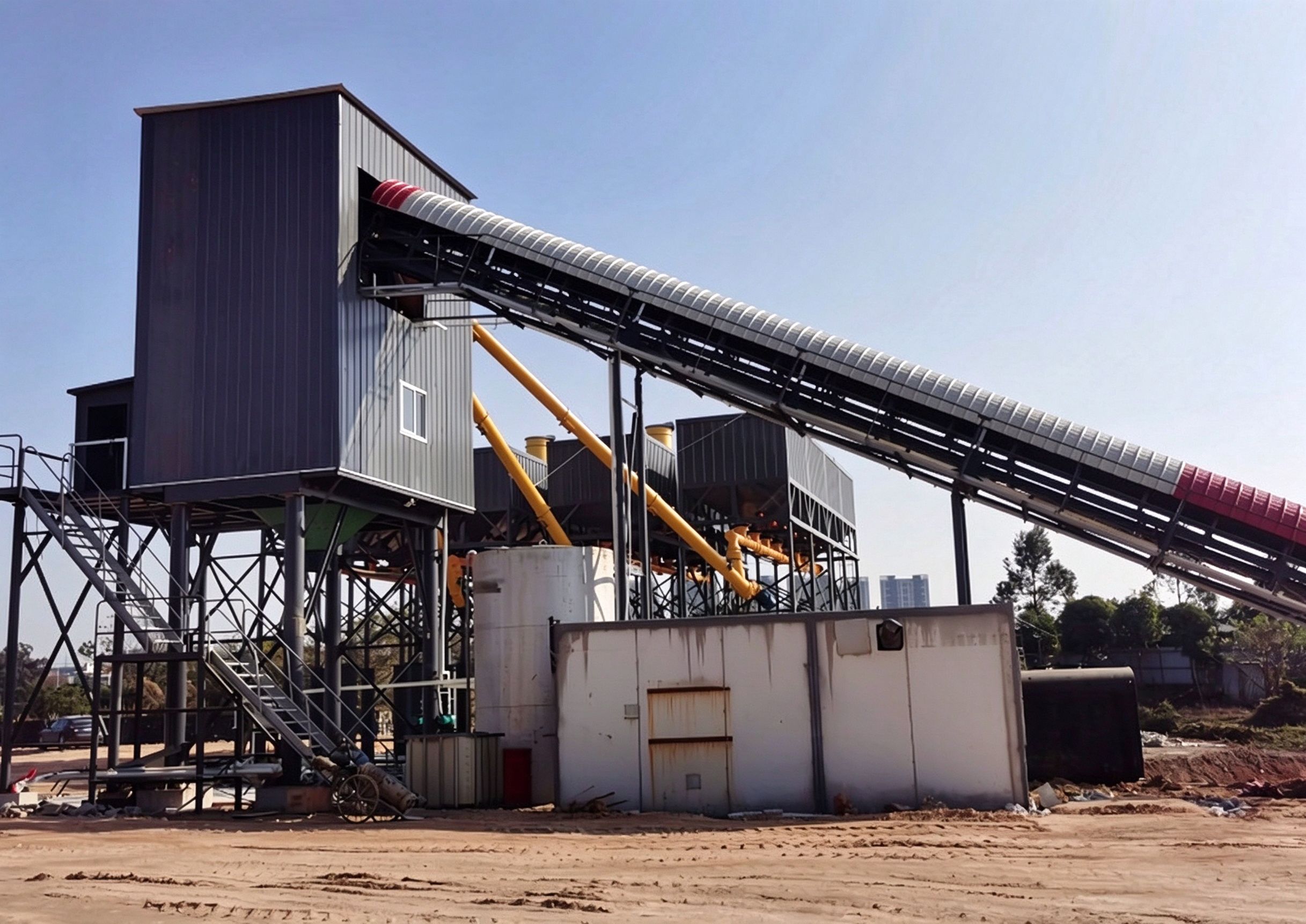
- Belt conveyor feeding — an inclined belt, typically 26–30°, carries material continuously to a discharge point above the mixer.
The engineering trade-off is simple: the rope system is compact and cheap to build but wears quickly and carries moving parts that need attention; the belt system costs more upfront but runs smoother, quieter and longer. The parameter table below is the one our engineers show customers first.
| Comparison Item | Wire Rope Feeding | Belt Conveyor Feeding |
|---|---|---|
| Transmission mode | Winch + wire rope + hopper | Electric drum + belt + rollers |
| Feeding speed | 0.8–1.2 m/s | 1.5–2.5 m/s |
| Power requirement | 15 kW | 22 kW |
| Inclination angle | About 60° | 26–30° |
| Operating noise | 75–85 dB | 60–70 dB |
| Typical service life | Wire rope 1–2 months; pulley 6–12 months | Belt 3–5 years; rollers 2–3 years |
Two figures deserve attention. The belt system moves material at roughly twice the speed, and its wearing components last years rather than months. That gap is where the long-term cost difference comes from.
Operating Cost: The Numbers That Matter
Running cost is where the HZS50 batching plant feeding system options really separate. Based on typical HZS50 operation and the maintenance records our customers share, the table below summarises what each system costs over a year.
| Cost Item | Wire Rope Feeding | Belt Conveyor Feeding |
|---|---|---|
| Primary wear parts | Wire rope ¥150–200 each, replaced 1–2 times per year | Belt lasts 3–5 years; rollers 2–3 years |
| Pulley / component service | Pulley assembly ¥800–1,200 per set, 2–3 times per year | Periodic belt tensioning and roller checks |
| Brake / drive upkeep | Brake renewal over ¥100, roughly every two years | Drive maintenance on a normal schedule |
| Safety inspection | Monthly wire rope wear checks; replace above 10% wear | Routine monitoring; fewer failure points |
| Relative equipment price | Baseline | Typically 15–20% higher upfront |
The honest summary: a belt-equipped plant carries a higher initial invoice, but the replacement and labour cycle on a rope system recurs several times a year. For plants running steadily, customers report that the belt option recovers the price difference within about three years once daily output passes 200 m³.
Safety and Reliability Considerations
Safety records are the strongest argument in the HZS50 batching plant feeding system debate. The rope hoist has three failure modes that show up in field data:
- Wire rope wear: monthly inspection is required, and the rope must be replaced once wear exceeds 10% — an easy check to skip on a busy site.
- Hopper derailment: industry feedback indicates around 20% of rope-fed systems have experienced a derailment-type failure at some point.
- Brake degradation: braking performance weakens with frequent use and needs scheduled renewal.
A belt feeding system removes most of this exposure. The modular belt design runs smoothly, and modern installations add an intelligent monitoring system with multiple sensors covering belt deviation, over-tension and blockage — the same kind of quality-control thinking applied to permanent industrial conveyor standards. Layout flexibility is another practical plus: the belt supports multi-directional discharge, so the plant can be arranged around an awkward site instead of the reverse.
Choosing the Right Feeding System for Your Site
There is no single right answer — the right answer depends on production volume and site geometry. Use this checklist to match the HZS50 batching plant feeding system to your project:
- Daily output above 200 m³: choose the belt system. The speed and lower maintenance make it the economical choice at this intensity.
- Lower production volume: the rope system reduces initial investment and may suit occasional or short campaigns.
- Space-constrained sites: the rope hoist’s steep 60° lift fits tight yards where a long incline cannot be placed.
- Open sites: an inclined belt conveyor gives better speed, quieter operation and lower running cost.
Before you decide, it is worth checking the whole HZS50 concrete batching plant configuration rather than the feeding system alone — mixer, batcher and control choices change the picture too. Our HZS75 plant guide shows how the same logic scales to a larger station.
Frequently Asked Questions
Q1: Which HZS50 batching plant feeding system is best?
A1: For daily output above 200 m³, the belt conveyor system is recommended for its speed, quieter operation and much longer service life. For low-volume or space-constrained sites, the rope hoist remains a cost-effective choice.
Q2: How much faster is belt feeding than rope feeding?
A2: Belt conveying runs at about 1.5–2.5 m/s versus 0.8–1.2 m/s for rope hoists — roughly twice the material speed.
Q3: How often must wire rope be replaced?
A3: Typically 1–2 times per year at ¥150–200 per rope, with mandatory replacement once wear exceeds 10%. Pulley assemblies need service 2–3 times a year.
Q4: How much more does a belt feeding system cost?
A4: Roughly 15–20% more than a rope system upfront. For steady production above 200 m³ per day, the difference is usually recovered within three years through lower maintenance.
Q5: Is the rope hoist safe?
A5: It is safe when maintained properly — monthly wear inspection and brake checks are essential. Field feedback suggests about 20% of rope systems have experienced a derailment-type failure, which is why many operators move to belt feeding.
Q6: Does site space affect the choice?
A6: Yes. The rope hoist’s 60° lift suits confined yards, while an inclined belt needs more length but delivers better speed and lower running cost on open sites.
Final Takeaway
For most steady-production HZS50 projects, the belt HZS50 batching plant feeding system wins on long-term cost, safety and output — and the 15–20% price premium is recovered through fewer breakdowns and quieter, faster operation. The rope system still earns its place on tight sites and low-volume work. If you are finalising an HZS50 concrete batching plant order, ask Tongxin Machinery for a feeding system recommendation matched to your daily output and site layout, together with a detailed quote for both options.