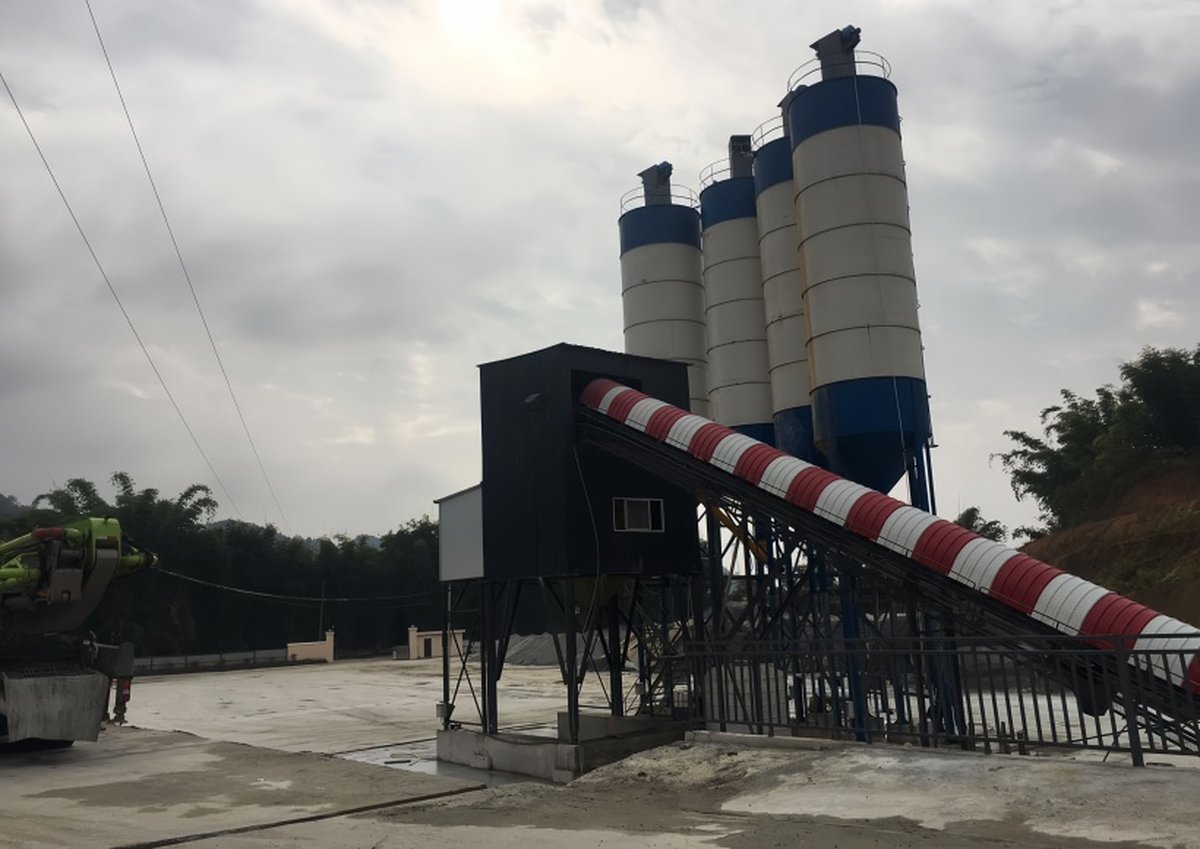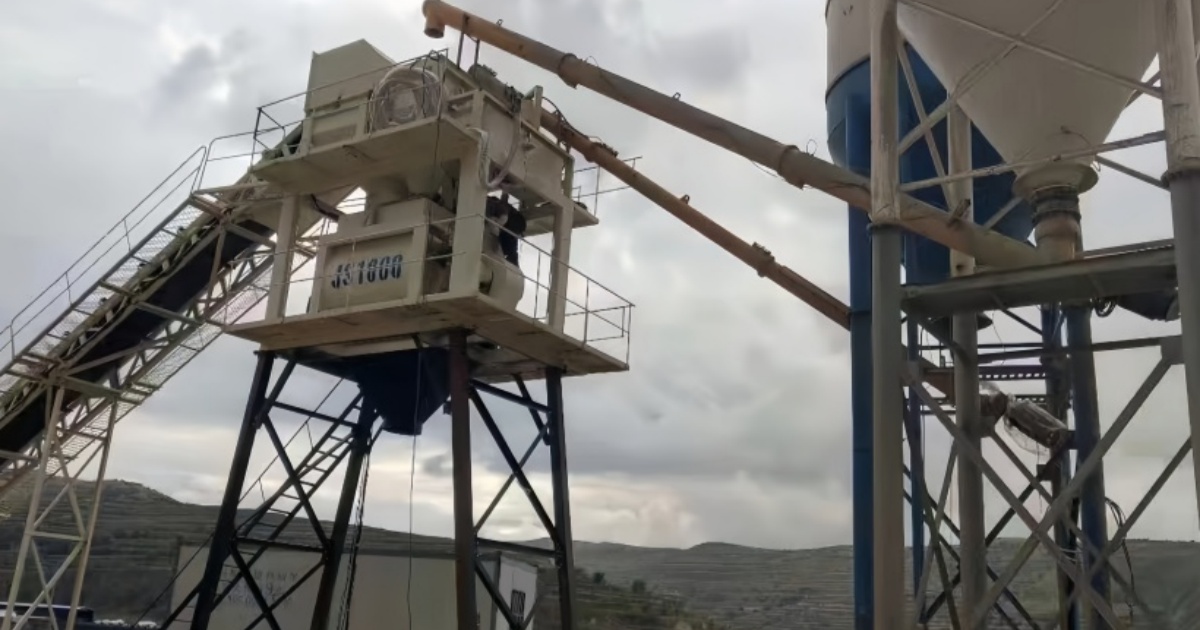




The HZS60 concrete mixing plant power system runs on roughly 110 kW of installed power and a 150–200 kVA transformer. Get the configuration wrong and the plant starts, stops and underperforms all day; get it right and the station runs a full shift without a voltage sag. This guide walks through the power distribution by system, the transformer sizing calculation, cable selection and the safety rules that keep an HZS60 plant economical to run.
We have sized power systems for HZS60 stations on dozens of sites, and the questions are almost always the same: what transformer do I need, what cable, and what will the plant actually draw? Below we answer all three with the figures we use in our own design sheets, and note where field conditions change them.
HZS60 Concrete Mixing Plant Power System: Key Numbers at a Glance
- Total installed power: ≈110 kW (mixer 43 kW, inclined belt 22 kW, screw conveyor 11 kW, flat belt 7.5 kW, air compressor 7.5 kW, dust removal 1.5 kW)
- Hourly consumption: ≈100 kW·h in normal production
- Transformer: 150–200 kVA (calculated ≈154.4 kVA at 85% load factor)
- Main cable: 50 mm² copper
- Power supply: 380 V, 50 Hz, three-phase
HZS60 Concrete Mixing Plant Power System: Overview
The HZS60 concrete mixing plant is a fully automatic complete concrete mixing system with a theoretical production capacity of 60 cubic meters per hour, capable of meeting the concrete needs of medium-sized construction projects. The plant consists of a mixing system, batching system, conveying system, and control system. Its modular design allows for quick installation and commissioning.

HZS60 Concrete Mixing Plant Power Configuration
Understanding the power configuration of a concrete mixing plant is fundamental to power system design. The following is the power distribution of each system in the HZS60 concrete mixing plant:
1. Total Installed Power
Based on the equipment configuration, the total installed power of the HZS60 concrete mixing plant is approximately 110 kilowatts (kW). This value includes the total power of all electrical equipment within the plant and is an important factor in transformer selection.
2. Power Distribution by System
– Main Mixer: JS1000 concrete mixer, equipped with a mixing motor, water pump, and admixture pump motors, with a total power of approximately 43 kW.
– Conveying System: Includes belt conveyors and screw conveyors. The screw conveyor motor has a power of approximately 11 kW, the inclined belt motor has a power of approximately 22 kW, and the flat belt motor has a power of approximately 7.5 kW.
– Air System: The air compressor motor has a power of approximately 7.5 kW.
– Auxiliary System: Includes the dust removal motor (approximately 1.5 kW) and other auxiliary equipment.
3. Actual Power Consumption Analysis
The HZS60 concrete mixing plant consumes approximately 110 kilowatt-hours (kW·H) of electricity per hour. Please note that actual power consumption will vary depending on factors such as production intensity, equipment condition, and maintenance level. Compared to other small and medium-sized concrete batching plants, the HZS60’s energy consumption is moderate:
| Plant Model | Power | Hourly Power Consumption (kW·h) |
| HZS50 | 100kW | ≈95 |
| HZS60 | 110kW | ≈100 |
| HZS75 | 130kW | ≈110 |
| HZS90 | 150kW | ≈130 |
Table 1 — Power consumption comparison across the HZS series
Table 1 — Power consumption comparison across the HZS series. For the larger HZS90 station, a separate HZS90 power system configuration guide covers load tables, transformer sizing schemes and a real Vietnam retrofit case.
Transformer Selection for the HZS60 Concrete Mixing Plant Power System
The transformer is the core of a concrete batching plant’s power system. Selecting the right transformer is crucial for ensuring stable production and reducing operating costs.
1. Transformer Capacity Calculation
The HZS60 concrete batching plant is recommended to be equipped with a 150-200 kW transformer. The transformer capacity calculation method is as follows:
According to the “Electrical Power Engineering Design Manual,” transformer capacity should be selected based on the calculated load. For a single transformer providing stable power, the load factor is generally around 85%. The calculation formula is:
β = S / Se
Where:
— β: Load factor (typically 80%-90%)
— S: Calculated load capacity (kVA)
— Se: Transformer capacity (kVA)
For the HZS60 concrete batching plant, the calculated load capacity is approximately 105 kW. At a power factor of 0.8, the apparent power is:
S = P / cosφ = 105 / 0.8 = 131.25 kVA
At an 85% load factor, the transformer capacity should be:
Se = S / β = 131.25 / 0.85 ≈ 154.4 kVA
In addition, a margin must be allowed to accommodate the transient voltage increase during startup. Generally, the safe voltage value should be 30%-50% higher than the total power. Therefore, a 150-200 kVA transformer is appropriate.
2. Transformer Selection Considerations
— Voltage Level: Concrete batching plants require a 380V, 50Hz, three-phase, four-wire, or three-phase, five-wire power supply.
— Installation Location: The distance between the transformer and the concrete batching plant should not be too far to minimize line losses.
— Load Characteristics: Considering the high starting current of the concrete batching plant motor, increase the capacity margin appropriately.
— Environmental Conditions: Consider the impact of local ambient temperature, altitude, and other factors on transformer operation.

Cable Selection and Power Distribution for the HZS60 Concrete Mixing Plant
1. Cable Cross-Section Selection
For the HZS60 concrete mixing plant with a total installed power of approximately 110 kW, 50 mm² copper cable is recommended. The following factors should be considered when selecting cable cross-section:
– Rated current carrying capacity
– Line voltage drop
– Short-circuit thermal stability
– Mechanical strength
2. Power Distribution System Protection Devices
The concrete mixing plant’s power distribution system should be equipped with appropriate protection devices, including:
– Circuit breakers: Provide short-circuit protection, overload protection, leakage protection, and isolation functions
– Contactors: Selected based on the motor’s rated current and voltage
– Fuses: Provide overcurrent and short-circuit protection
– Current transformers: Used to detect current levels and work in conjunction with measurement and protection devices
Measured Power Draw on a Working HZS60
A 24-hour energy log from an HZS60 at a commercial ready-mix station showed 1.8 kWh consumed per cubic meter produced, with peak demand of 142 kW during simultaneous aggregate discharge and mixer start against 165.6 kW installed. Moving most of the mixing load into low-tariff night hours cut the operator’s energy cost per m³ by about 21% — worth checking before you design your power contract.
Energy-Saving Tips for the HZS60 Concrete Mixing Plant Power System
Reducing a concrete mixing plant’s power consumption can significantly improve economic efficiency. The following are some effective energy-saving measures:
1. Rational production scheduling: Avoid frequent equipment starts and stops and reduce idle time.
2. Regular equipment maintenance: Keep equipment in good operating condition and reduce friction losses.
3. Optimize process parameters: Optimize mixing time and conveying speed to avoid excessive energy consumption.
4. Use Energy-Saving Equipment: Select high-efficiency motors and energy-saving transformers to reduce basic energy consumption.
Safe Electricity Use: HZS60 Concrete Mixing Plant Power System
Ensuring safe electricity use in a concrete mixing plant is a crucial aspect of production management. The following key points should be noted:
1. Grounding: All electrical equipment should have reliable grounding.
2. Lightning Protection: Lightning protection devices should be installed in substations and distribution rooms.
3. Insulation: Regularly inspect the insulation condition of cables and equipment.
4. Operating Standards: Operators must receive professional training and adhere to safe operating procedures.
5. Emergency Stop: Provide a clearly visible and easily accessible emergency stop button.
Designing the power system for an HZS60 concrete mixing plant is a comprehensive project that requires comprehensive consideration of factors such as equipment power characteristics, operating characteristics, and site conditions. Properly configuring the transformer capacity is crucial for ensuring efficient and stable operation of the plant. Selecting a 150-200 kVA transformer, equipped with appropriate cables and protective devices, can both meet production needs and achieve economical and efficient operation. It is recommended that before constructing a concrete mixing plant, consult Tongxin Machinery‘s professional electrical engineers for detailed design and calculation to ensure the best power system configuration.
HZS60 Concrete Mixing Plant Power System FAQ
About the Author
This guide was prepared by the batching plant engineering team at Tongxin Machinery (TXMixing), the manufacturer behind the HZS series from 25 to 240 m³/h. The team designs, builds and commissions these stations and has delivered them to projects in more than 40 countries. Figures in this article reflect engineering drawings, PLC logs and on-site commissioning records; contact us for site-specific data for your project.