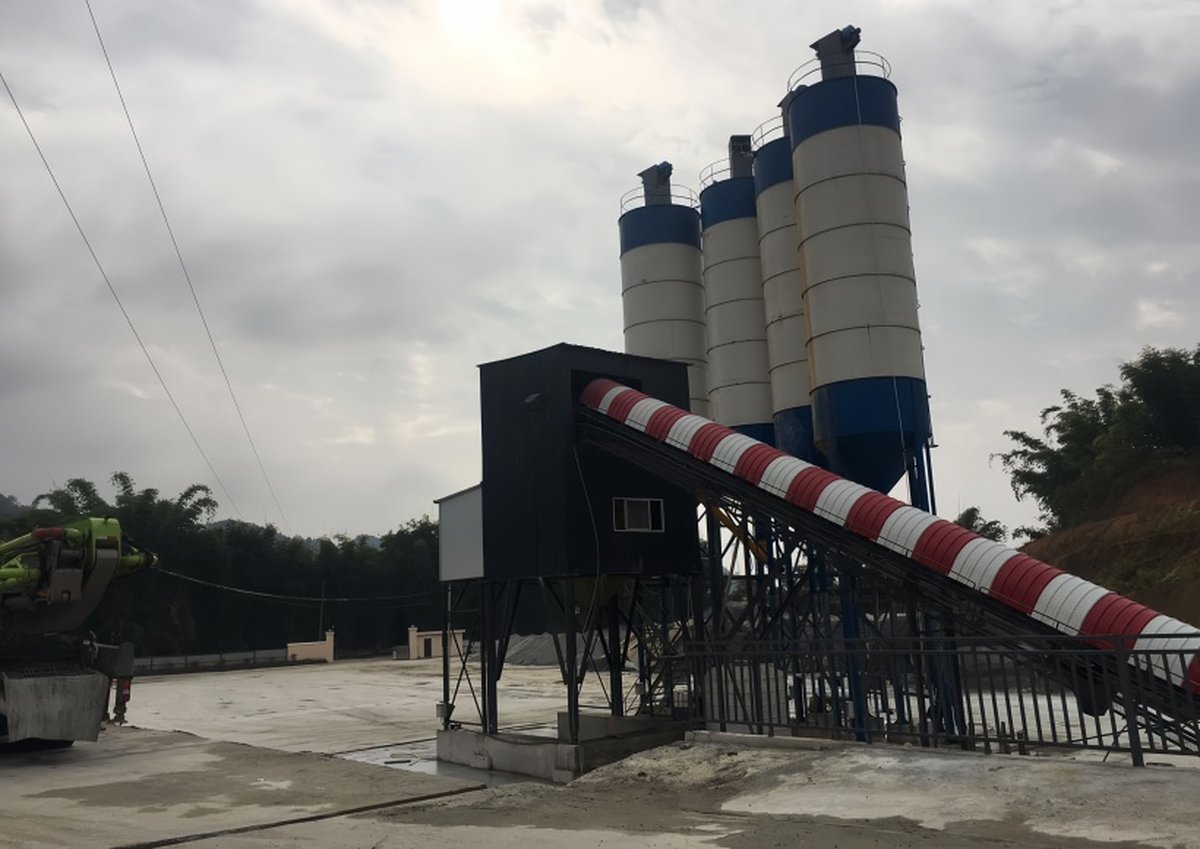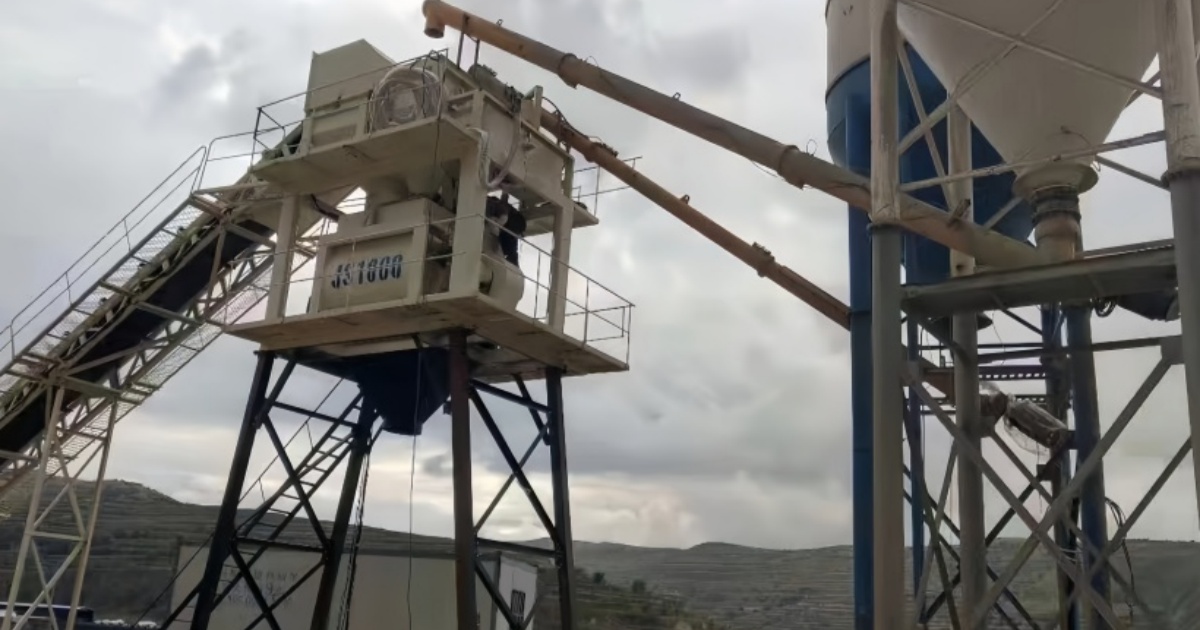




An HZS120 concrete mixing plant carries a theoretical rating of 120 m³/h. On a real job site, expect roughly 84–96 m³/h — about 70–80% of the nameplate figure. This article explains how that theoretical number is calculated, why actual output always falls short, the six factors that create the gap, and five strategies that narrow it. It is written for contractors and ready-mix operators comparing محطات خلط الخرسانة before they request a quote.
HZS120 Concrete Mixing Plant: Key Capacity Numbers
- Theoretical capacity: 120 m³/h (60 batches of 2 m³ per hour at a 60-second cycle)
- Actual output: 84–96 m³/h in normal production — 70–80% of theoretical
- Best case: 90–100 m³/h in fully automatic, non-stop operation
- Cycle time: 60 s standard; 52 s with pre-feeding technology
- Biggest loss factor: transport vehicle turnaround — every 2-minute delay costs roughly 4 m³/h of output
HZS60 vs HZS120 vs HZS180: Capacity at a Glance
| الطراز | Theoretical Capacity | الناتج الفعلي | Daily Output (8–10 h) | Best Fit |
|---|---|---|---|---|
| مصنع خلط الخرسانة HZS60 | 60 m³/h | 40–50 m³/h | 400–500 m³ | Medium projects, ready-mix yards |
| HZS120 concrete mixing plant | 120 m³/h | 84–96 m³/h | 670–960 m³ | Medium-large projects |
| HZS180 concrete mixing plant | 180 متر مكعب/ساعة | 126–144 m³/h* | 1,000–1,400 m³* | Large projects, high-demand sites |
*HZS180 figures assume the same 70–80% efficiency factor measured on the HZS60 and HZS120. Before you size a plant, confirm the practical output for your mix designs and truck dispatch with the manufacturer.

HZS120 Concrete Mixing Plant: Theoretical vs Actual Capacity
1. نموذج حساب السعة النظرية
The “120” in the HZS120 model name refers to its theoretical maximum output of 120 m³/h. Here is the calculation basis we use when checking a plant’s capacity:
- سعة التفريغ الفردي: 2 متر مكعب (التكوين القياسي لخلاط JS2000)
- دورة العمل المثالية: 60 ثانية/دورة العمل المثالية
- دورات في الساعة 60 دقيقة ÷ 1 دقيقة/دورة = 60 دورة
- الناتج النظري: 60 دورة × 2 م³ = 120 م³/ساعة
2. نطاق الإخراج الفعلي
In real production, output typically settles between 84 and 96 m³/h — 70% to 80% of the theoretical value. That gap is not a defect; it is the normal cost of transport intervals, manual operations and the occasional stoppage:
| شروط الإنتاج | نطاق الإخراج الفعلي | معدل استخدام الكفاءة |
| ظروف التشغيل المثلى (أوتوماتيكي بالكامل/دون انقطاع) | 90-100 متر مكعب/ساعة | 92% |
| الإنتاج العادي (بما في ذلك فترات النقل) | 80-90 م³/ساعة | 80% |
| الظروف المحدودة (صعوبات التحميل/الفشل في التحميل) | 60-70 م³/ساعة | 55% |
Six Factors That Limit HZS120 Concrete Mixing Plant Output
1. تنسيق جدولة النقل والتنسيق
- أفضل الممارسات: زمن دوران شاحنة الخلاط في غضون دقيقتين (الطاقة الإنتاجية أكثر من 100 متر مكعب/ساعة)
- الاختناقات الشائعة:
- جدولة مركبات النقل في غير موعدها (كل تأخير لمدة دقيقتين يؤدي إلى انخفاض الإنتاج بمقدار 4 أمتار مكعبة)
- تخطيط منطقة التحميل غير العقلاني
2. استقرار إمدادات المواد الخام
- ارتفاع محتوى الرطوبة في الرمل والحصى يؤدي إلى ازدحام النقل
- التكتل في صوامع الأسمنت يؤثر على التفريغ المستمر للمواد
- تشويش الناقل اللولبي
3. تحسين دورة الخلط
- وقت المعالجة القياسي (إجمالي 60 ثانية):
- مرحلة التغذية والخلط: 30 ثانية
- وقت عملية التفريغ: 15 ثانية
- وقت تحضير الطعام: 15 ثانية
- ترقية التكنولوجيا: تقنية التغذية المسبقة يمكن أن تقلل زمن الدورة إلى 52 ثانية
4. تأثير خواص المواد
- اختلافات درجة القوة: تتميز الخرسانة C30 بزمن خلط أقصر من 10-15 ثانية لكل دفعة من C50.
- محتوى رطوبة الركام الزائد: يؤدي ذلك إلى انخفاض 20% في كفاءة القياس.
• Specialty concrete production: Fiber-reinforced concrete requires a longer mixing time (resulting in an approximately 25% reduction in production).
5. صيانة المعدات
- تأثيرات الفشل الشائعة:
- تآكل البطانة (انخفاض كفاءة 10% عند الخلوص > 5 مم)
- تعطل المستشعر (مما يتسبب في حدوث أخطاء في القياس، مما يؤثر على الإنتاج الآلي)
- فشل ختم الأسطوانة (تأخير التفريغ من 3-5 ثوانٍ لكل دفعة).
6. العوامل البيئية والبشرية
- التأثير المناخي: 30% انخفاض في الإنتاج في درجات حرارة أقل من -10 درجة مئوية تحت الصفر (تتطلب تسخينًا إضافيًا للركام الكلي).
- مهارات التشغيل: المشغلون المبتدئون أقل كفاءة من المشغلين المتمرسين بمقدار 15-20 متر مكعب/ساعة.

Five Practical Ways to Boost HZS120 Concrete Mixing Plant Capacity
1. ترقية المعدات
• Use larger transport vehicles (reduces turnover frequency)
• Install a real-time aggregate moisture content monitoring system
• Improve moisture-proofing facilities (to prevent cement compaction)
2. تحسين إدارة الإنتاج
- جدولة المركبات: الاحتفاظ بمركبتين جاهزتين للتحميل (لضمان استمرار التحميل)
- نظام الصيانة: تنظيف المحرك الرئيسي يومياً
- تدريب الموظفين: يمكن أن تؤدي العمليات الموحدة إلى تحسين الكفاءة من خلال 8%
3. تحسين العمليات
- تنفيذ عملية الخلط المسبق لتقليل وقت الخلط
- تحسين تصنيف الركام لتحسين كفاءة النقل
- اعتماد أنظمة قياس وتحكم متقدمة
4. تطبيقات المراقبة الذكية
- تركيب أجهزة استشعار لمراقبة المعدات حالة التشغيل
- تنفيذ نظام جمع بيانات الإنتاج في الوقت الحقيقي
- إنشاء آلية إنذار مبكر لاكتشاف الأعطال مسبقًا
5. تقييمات الأداء المنتظمة
• Conduct monthly production capacity analysis
- اختبار أداء المعدات ربع سنويًا
- تخطيط الإصلاح والتحديث السنوي
Common Problems and Fixes for the HZS120 Concrete Mixing Plant
1. أسباب الاختلافات بين المخرجات الفعلية والنظرية
الإخراج النظري هو قيمة حدية محسوبة في ظل ظروف زمن انتظار صفري وأتمتة كاملة ونسب خلط مثالية. يتأثر الإنتاج الفعلي حتمًا بعوامل مثل فترات النقل والتشغيل اليدوي واستكشاف الأخطاء وإصلاحها.
2. دليل اختيار المعدات
- مصنع خلط الخرسانة HZS120 سيناريو قابل للتطبيق: مشاريع متوسطة الحجم مع طلب إنتاج يومي أقل من 800 متر مكعب
• محطة خلط الخرسانة HZS180 Applicable Scenario: Large-scale projects with daily production demand greater than 1000 m³
3. معايير تقييم الإنتاج
- مؤشر التأهيل: الحفاظ باستمرار على معدل إنتاج يبلغ 80 متر مكعب/ساعة أو أكثر (بما في ذلك الفاقد العادي)
- عملية استكشاف الأخطاء وإصلاحها:
① تحقق مما إذا كان زمن الدورة يتجاوز 60 ثانية
② التأكد من أن وقت انتظار مركبات النقل أقل من 5 دقائق
③ التحقق من استمرارية الإمداد الكلي
④ التحقق من دقة نظام القياس
HZS120 Concrete Mixing Plant FAQ
What is the actual capacity of an HZS120 concrete mixing plant?
In normal production, an HZS120 concrete mixing plant delivers about 84–96 m³/h, roughly 70–80% of its 120 m³/h theoretical rating. Under optimal conditions it can reach 90–100 m³/h.
Why does actual output fall below theoretical capacity?
Theoretical capacity assumes zero waiting time, full automation and ideal mix ratios. In practice, transport vehicle turnaround, material supply interruptions, operator skill, maintenance condition and weather all reduce output.
How can I increase the output of an HZS120 concrete mixing plant?
Shorten the mixing cycle with pre-feeding technology (from 60 to 52 seconds), keep two trucks waiting at the loading point, monitor aggregate moisture, schedule preventive maintenance, and run monthly production capacity analyses.
HZS120 Concrete Mixing Plant: Final Verdict
The realistic working range for an HZS120 concrete mixing plant in good condition is 80–100 m³/h. Equipment configuration, production management, maintenance and intelligent monitoring each pull output in a different direction; improve all four and the gap between rated and actual capacity narrows noticeably. Set up a monthly capacity check and a quarterly production review, and treat every drop below 80 m³/h as a fault to investigate, not a number to accept.
One last note from our workshop: never size a plant from the nameplate alone. The HZS120 is a strong fit for medium-sized projects with daily demand under 800 m³, but the same machine under-delivers on a site with poor truck flow. ماكينات تونغشين offers free on-site surveys and production plan design; our engineers help you match the التكوين to the job so you get the output you are paying for. Contact our technical team for a personalized solution.